
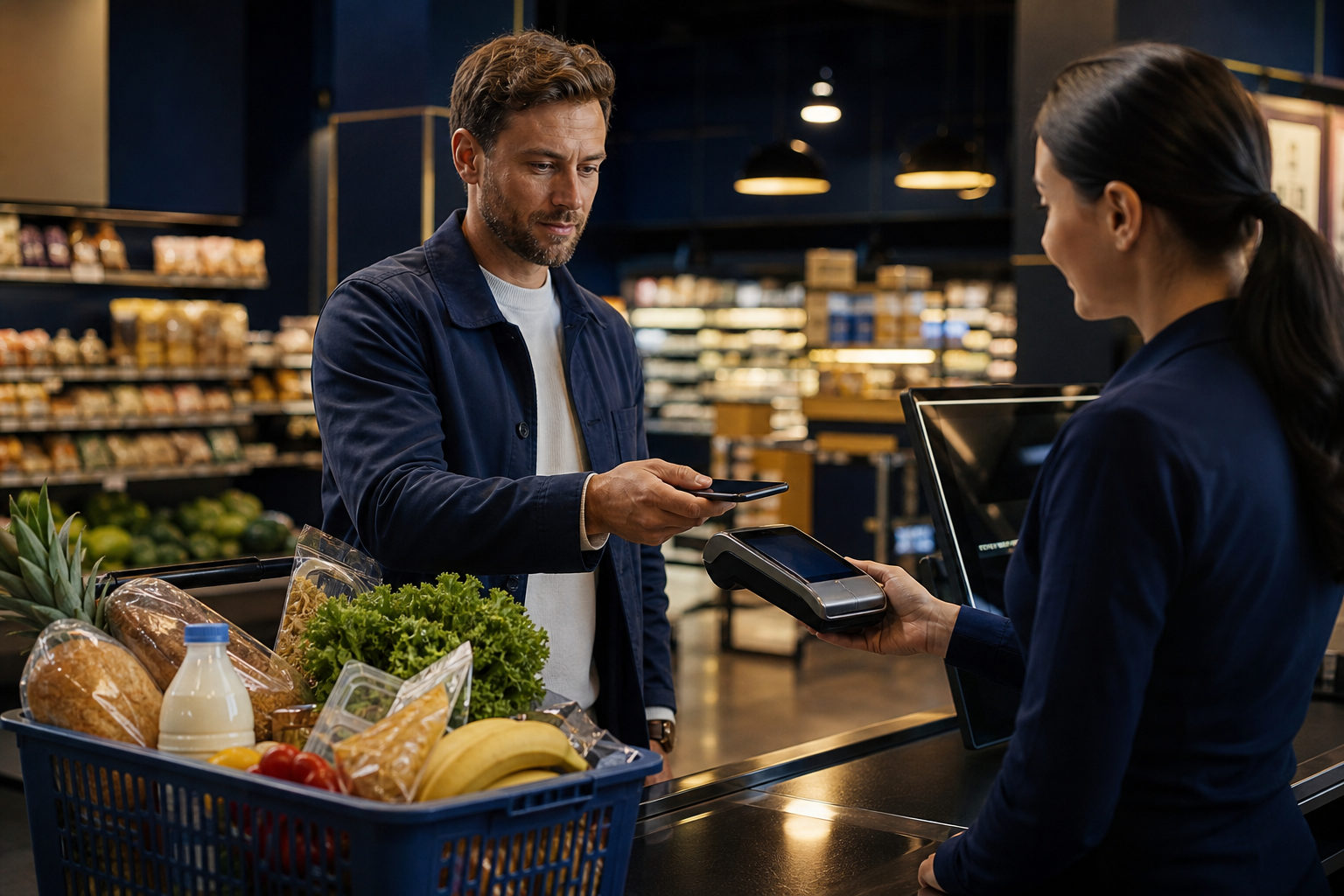
Yes, you can buy groceries with bitcoin if the store accepts it directly or uses a checkout service that converts it during payment. The real issue is not whether bitcoin can be used at all, but whether the payment path is clear, affordable, and safe.
When buying groceries with bitcoin actually works
In practice, grocery purchases with bitcoin usually happen in one of three ways. A merchant may accept bitcoin directly, a third-party service may process the payment for the merchant, or you may convert bitcoin into fiat first and then pay through a standard checkout method.
That difference matters more than many first-time users expect. A store may say it accepts crypto, yet only support certain wallets, certain networks, or online orders instead of in-person checkout. Before you try to pay, confirm exactly how the store handles bitcoin payments.
Step by step: how to check if you can use bitcoin for groceries
Step 1: Confirm that the merchant really accepts bitcoin
Start with the checkout page, store signage, or customer support. You want to know whether the merchant accepts bitcoin itself, accepts only selected cryptocurrencies, or relies on a payment processor in the background.
The reason is simple: marketing language and actual checkout support are not the same thing. Some businesses display crypto-friendly branding, yet the live payment flow includes regional limits, wallet restrictions, or product exclusions.
Step 2: Find out whether it is direct payment or a service in the middle
If the merchant takes bitcoin directly, you may see a wallet address or a QR code at checkout. If a service sits in the middle, it may issue a payment code, sell a gift balance, or convert your bitcoin into fiat before the merchant gets paid.
This affects refunds, timing, and dispute handling. Direct payment can feel straightforward, but a wrong address or a wrong network can be hard to fix. A middle service may be easier for everyday shopping, though you need to read its rules before sending funds.
Step 3: Use a wallet you control and understand
For groceries, payment tends to be small and time-sensitive. That is why it helps to use a wallet you already know how to operate, including how to check balance, review fees, verify the recipient, and confirm a transaction.
A rushed checkout is a bad time to learn a wallet interface for the first time. If you keep bitcoin in a custodial account and wait until the last minute, you may run into withdrawal checks, login prompts, or account restrictions while standing in line.
Step 4: Check the amount, address, and payment window before sending
Right before you pay, review three things: the total due, the receiving details, and the time limit on the order. Some systems keep a quote active only for a short window. If you send funds too late, the store may no longer match that payment to the order automatically.
Use copy and paste or a QR scan rather than typing long strings by hand. Then compare the first and last characters of the destination details before you approve the transfer. If the checkout page names one payment method, do not assume another route will work the same way.
Step 5: Save proof of payment and order details
After the transaction is sent, keep the order number, checkout screen, and wallet record. If the merchant reports no payment, or a processor delays settlement, those records give you something concrete to show support.
Be careful with what you share. Proof of payment is useful; your seed phrase, private keys, and full security codes are not. No legitimate grocery payment should require you to hand over wallet control.
Why grocery payments with bitcoin can feel harder than expected
The main reason is that bitcoin does not behave like a standard card payment. Timing, confirmation, merchant settlement, and support processes all work differently, which means the experience depends on preparation more than impulse.
There is also the question of cost. You may think you are simply using bitcoin for groceries, yet the full process can include network fees, service fees, exchange conversion, and waiting time. For a routine household purchase, that friction can matter.
- Merchant support may be limited: one brand may handle locations and order channels differently.
- Checkout windows can expire: if you wait too long, the order may need to be created again.
- Refunds may be less direct: some services do not return funds the same way you paid.
- Small purchases may feel inefficient: fees can weigh more heavily on everyday shopping.
Scam prevention matters more than convenience
When people ask "can I buy groceries with bitcoin," the biggest risk is often not price movement. It is sending funds to the wrong person, a fake checkout page, or a fake support agent who claims to help with payment.
Scammers like urgency. They may tell you to send bitcoin to a personal wallet first, promise a manual order update later, or offer a discount that only works if you pay outside the normal checkout flow. That is where many losses happen.
- Pay only inside the merchant's official checkout process: do not trust wallet addresses sent through private chat.
- Be careful with extreme discounts: grocery margins are usually thin, so unrealistic offers deserve extra scrutiny.
- Never share wallet secrets: no real support team needs your seed phrase or private key.
- Avoid random browser tools and add-ons: malicious software can replace copied addresses.
- Test with a small order first: if you are trying a new service, confirm the flow before relying on it.
Is bitcoin a good fit for groceries?
It can be, depending on your goal. If you want to use bitcoin where it is supported, or you want a direct way to spend part of your holdings, grocery purchases are possible in some cases. If your priority is the simplest refund path, the fastest checkout, or the least friction, standard payment methods may still be easier.
There is also a budgeting angle. Groceries are recurring household spending, while bitcoin is often treated as an asset people manage separately. Many users prefer not to mix the two unless the checkout experience is clear and the store's rules are easy to verify.
FAQ
Can supermarkets accept bitcoin directly?
Some can, but many do not. Acceptance depends on the merchant, the store system, and the payment setup in that location or order channel.
Check before you start shopping or before you reach the register. That saves time and avoids checkout surprises.
What is the usual way to use bitcoin for food and grocery items?
The common routes are direct merchant acceptance, a payment processor, or a gift balance system. Each route handles fees, timing, and refunds in its own way.
If you are trying this for the first time, make sure you understand the full payment path before sending funds.
Should I pay for groceries straight from an exchange account?
That is usually not ideal. Exchange accounts can trigger withdrawal checks, extra verification, or temporary restrictions at the worst possible moment.
A wallet you control is usually better for a live checkout because you can review and send the payment without extra account steps.
What if the merchant says the payment never arrived?
Start by checking the transaction record, receiving details, and order reference. Then contact the merchant or payment service with those records ready.
If you paid outside the official checkout flow, recovery can be much harder. That is one more reason to avoid private wallet requests.
How do I decide if bitcoin is worth using for groceries?
Focus on four things: real merchant support, ease of payment, acceptable fees, and a clear refund policy. A store that technically supports bitcoin may still be a poor fit for frequent small purchases.
Look at those points before you send anything. That one habit can prevent most avoidable mistakes.
If you want to try it, start with a small order at a merchant you have already checked, use a wallet you understand, and stop immediately if the address, network, or payment instructions do not make sense.
Disclaimer: This article is for informational and educational purposes only and is not investment, financial, or legal advice. Crypto assets are highly volatile and you could lose your entire investment. Do your own research and decide carefully.