
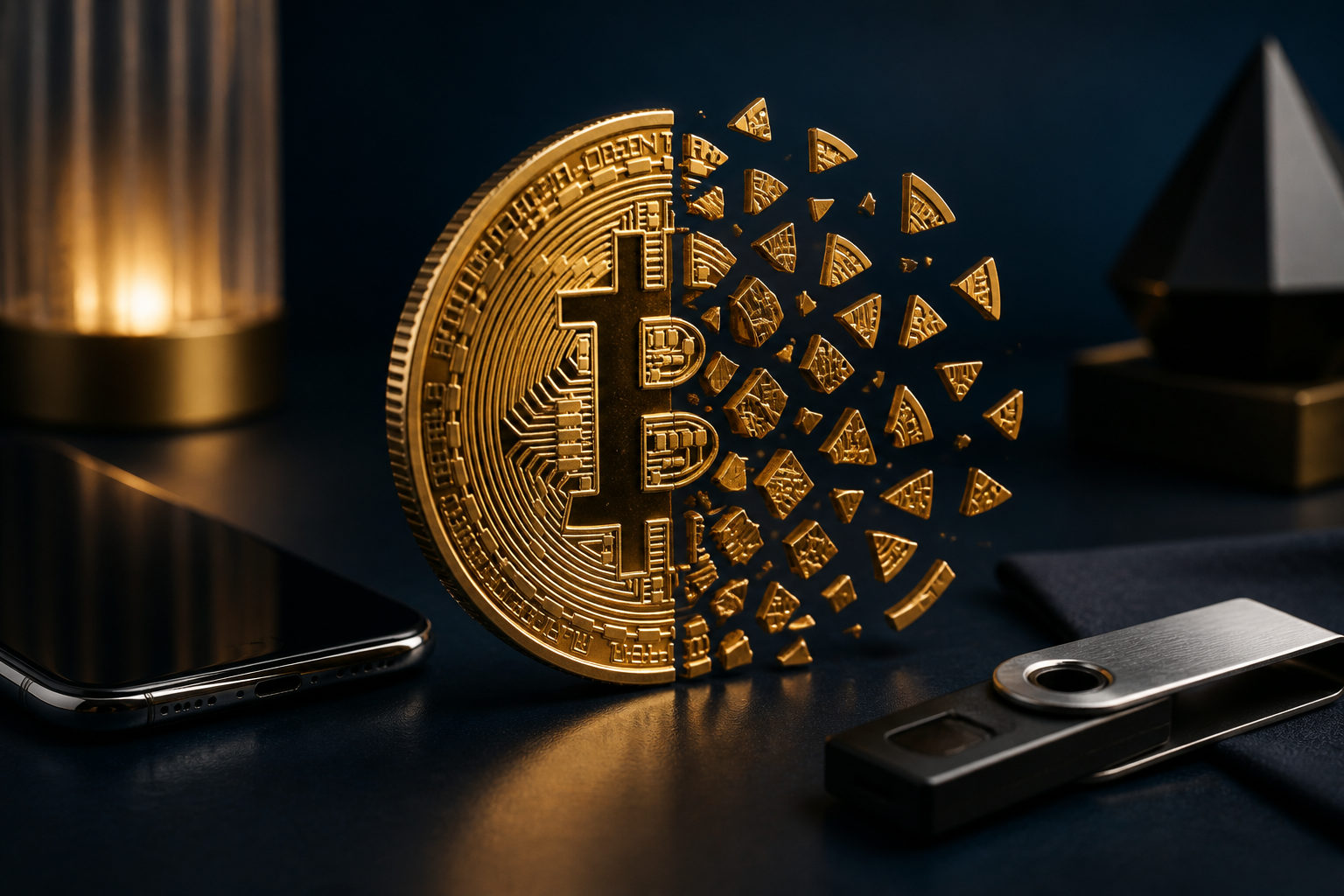
Yes, you can buy less than 1 bitcoin. In fact, buying a fraction of BTC is normal, and for many beginners it is the safer way to start.
Why you do not need to buy a whole bitcoin
Bitcoin is divisible, which means it can be split into much smaller units instead of being traded only in whole coins. The smallest unit is called a satoshi, and 1 satoshi equals one hundred millionth of a BTC. That is why exchanges and wallets can show balances with many decimal places.
This matters because many first-time buyers think owning bitcoin only “counts” if they can afford a full coin. That idea creates pressure, and pressure leads to bad decisions. A beginner who tries to force a full-coin purchase may ignore risk limits, skip security checks, or rush into a product they do not understand.
The better way to think about it is simple: if you buy real BTC, even a small fraction is still bitcoin. The key question is not whether you own a full coin. The real question is whether you bought actual spot BTC that you can hold, transfer, and verify.
How to buy less than 1 bitcoin, step by step
Step 1: Make sure you are buying spot BTC
Start by checking the product type before you place any order. You want spot bitcoin, not a leveraged position, not a derivatives product, and not a packaged yield product using BTC as a marketing label.
The reason is straightforward. Many beginners search for a simple answer to whether they can buy a fraction of bitcoin, then end up inside a trading section built for speculation rather than ownership. If you see terms tied to margin, liquidation, leverage, or guaranteed returns, pause and reassess before doing anything else.
Your goal at this stage is ownership, not complexity. Buying real BTC first gives you a clean starting point and makes the next steps easier to understand.
Step 2: Start small on purpose
Once you confirm you are in the right place, begin with an amount you can afford to lose without stress. The point is not to prove commitment. The point is to learn how the process works while limiting the cost of mistakes.
A small purchase lets you see how order entry works, how balances appear after execution, and how your account records the asset. It also helps you learn how you react to price moves. Bitcoin can swing sharply, and that emotional side matters more than many new buyers expect.
One caution here: do not let “whole coin” culture push you into overspending. Bitcoin’s divisibility is a feature. You are not doing it wrong because your balance is a fraction.
Step 3: Review fees and withdrawal rules before buying
Before you click buy, check the fee structure, the spread, and the withdrawal policy. Small purchases can be perfectly reasonable, but they are easier to mishandle if you ignore costs or platform restrictions.
You do not need to hunt for promotions. What matters more is whether the pricing is clear, whether the platform allows BTC withdrawals, and whether there are conditions that make moving your coins difficult later. A smooth purchase means little if the asset is stuck in a system you do not control.
This is also where many people discover the difference between “I bought exposure to bitcoin” and “I bought bitcoin I can actually move.” That difference is worth checking before funding the account, not after.
Step 4: Secure the account before treating it as a long-term holding
After buying any amount of BTC, set up account security immediately. Use a strong password, turn on two-factor authentication, review device access, and pay attention to login alerts if they are available.
The reason is practical. New users often focus on market risk and forget operational risk. Yet stolen credentials, phishing pages, fake support agents, and malicious software can do more damage than short-term price moves.
Keep one rule in mind: verification codes, private keys, and seed phrases should never be shared. No legitimate buying process requires you to hand over control of your account or wallet to another person.
Step 5: Learn how to withdraw a small amount to your own wallet
If you plan to hold BTC beyond a short experiment, learn how withdrawal works. Moving a small amount to your own wallet teaches you what self-custody really means and forces you to understand addresses, backups, and transaction confirmation.
Go slowly. Double-check the address after pasting it. Do not rely only on the first and last few characters. Test with a small amount first, then confirm that the wallet receives it as expected before doing anything larger.
One more caution: never store your seed phrase in a chat app, cloud note, or random document on an internet-connected device. A tiny bitcoin balance can still teach expensive lessons if basic wallet hygiene is ignored.
What you actually own when you buy a fraction of BTC
If you buy less than 1 bitcoin, you own a fraction of the same asset, not a lesser version of it. A partial BTC balance is still bitcoin as long as it represents real BTC that can be held and transferred.
This may sound obvious, but many people get distracted by the fiat value shown next to their balance. They watch the dollar amount and forget to understand the BTC amount itself. For learning purposes, it helps to focus first on how much bitcoin you own, how it is stored, and whether you can move it.
If your next question is the quoted query “how much is bitcoin today,” the honest answer is that the price changes with market supply and demand and must be checked in real time through mainstream market data tools or a trading platform. Without live data, no specific number would be reliable. The right habit is learning where to verify the current price, not memorizing a stale figure.
Why starting with less than 1 bitcoin often makes sense
First, it lowers the learning pressure. You can practice account funding, buying, reviewing balances, making a withdrawal test, and receiving BTC in a wallet without taking a large financial hit if you make a mistake.
Second, it gives you room to build judgment. New buyers often underestimate how quickly emotion takes over when an asset moves sharply. A smaller starting position gives you time to observe your own reactions instead of being dragged around by them.
Third, it improves scam resistance. People who begin with modest amounts are more likely to test withdrawals, verify addresses, and question suspicious claims. People who arrive in a hurry, worried about missing out, are easier targets for fake support staff, account takeovers, and off-platform payment schemes.
There is also a practical reason. Buying a fraction lets you learn the full cycle of ownership. Not just purchase, but storage. Not just storage, but transfer. Not just transfer, but verification. That sequence matters more than the size of your first order.
The biggest mistakes to avoid when buying a fraction of bitcoin
Confusing convenience with safety
Some people let a friend, chat contact, or “advisor” buy and hold BTC for them because it seems easier. That may reduce effort at the start, but it also gives someone else control over the asset. If they hold the account access, wallet, or recovery data, your ownership may exist only on paper.
Believing guaranteed return claims
Bitcoin is volatile by nature. Anyone claiming they can turn a small BTC purchase into steady, risk-free gains should be treated with caution. A promise of protection plus easy profit is one of the oldest hooks in crypto fraud.
Skipping the withdrawal test
Even if your bitcoin amount is small, a transfer mistake can still be permanent. Sending a test withdrawal is not a sign of fear. It is a simple quality check for the address, the wallet setup, and your own process.
Saving recovery words in the wrong place
A seed phrase is not a note to keep anywhere convenient. It is the key to the wallet. If it leaks, the coins can be moved by someone else, and there may be no way to reverse that loss.
Learning how to buy, but not how to hold
Many guides stop at the purchase screen. That leaves beginners with a dangerous gap in understanding. Buying less than 1 bitcoin is easy. Holding it safely is the part that deserves more attention.
FAQ
Does buying part of a bitcoin count as owning bitcoin?
Yes. If you bought real spot BTC and not a separate high-risk product, a fractional balance is still bitcoin. A useful test is whether you can withdraw it to a wallet you control.
Do I need to save up for a full bitcoin before buying?
No. Bitcoin is divisible, so there is no rule that ownership starts only at 1 BTC. What matters is your budget, your risk tolerance, and whether you understand the custody setup.
Will a small amount of BTC be harder to sell later?
That usually depends on platform rules such as minimum trade sizes or withdrawal limits, not on whether you own a full coin. Check those rules before buying so you do not discover limits at the wrong time.
Should I move my BTC to a wallet right away?
If you understand wallet backups and address handling, learning self-custody can be useful. If you are still new, test the process with a very small amount first rather than rushing a transfer you do not fully understand.
How can I tell if I am dealing with a scam?
Be very cautious if someone asks for your verification code, seed phrase, private key, or asks you to send funds to a specific address under pressure. Promises of guaranteed profits or “safe” managed buying are also major warning signs.
If you want to buy less than 1 bitcoin, keep the order of operations clear: confirm it is spot BTC, understand fees and withdrawal rules, secure the account, and test withdrawals with a small amount first. The amount comes after the process, not before.
Disclaimer: This article is for informational and educational purposes only and is not investment, financial, or legal advice. Crypto assets are highly volatile and you could lose your entire investment. Do your own research and decide carefully.