
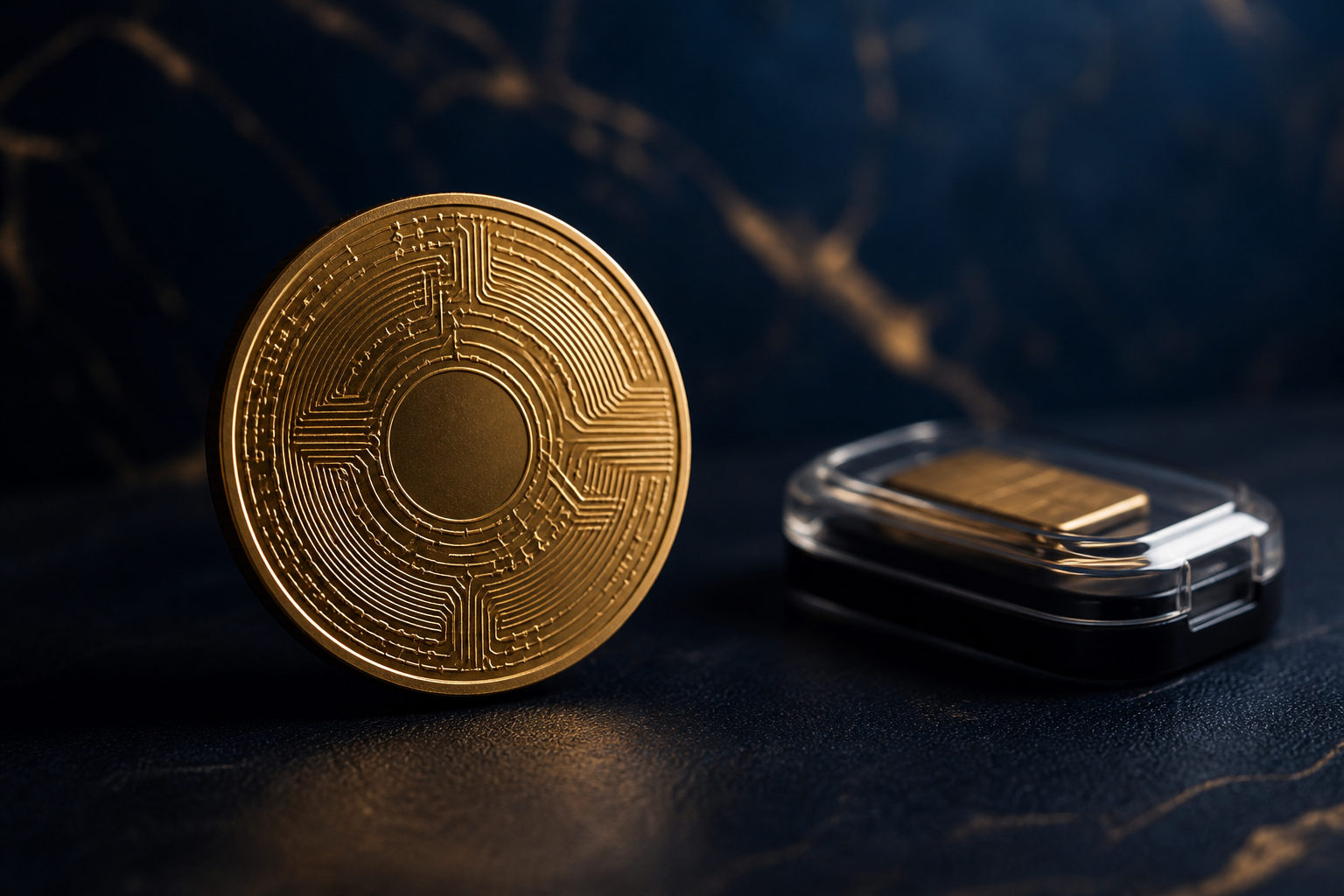
Yes, you can buy physical bitcoins, but most of them are collectibles rather than Bitcoin you directly control on-chain. The real question is whether the item includes a verifiable wallet, whether the private key has stayed secure, and whether you can move the BTC into your own wallet right away.
What a “physical bitcoin” usually is
Bitcoin itself is digital. It exists on the blockchain, not as a metal coin that carries value by its physical form alone. That is why the phrase “physical bitcoin” can be misleading for first-time buyers.
In practice, these items usually fall into a few groups. Some are simple novelty coins or display pieces with the BTC symbol on them. Others are physical carriers for wallet details, such as a coin, card, or metal plate that stores a public address and hides a private key or redemption code. A third group is marketed as a premium collectible that claims to contain Bitcoin, which means you need to verify far more than the packaging.
So if you are asking whether you can buy a physical bitcoin, the short answer is yes. If you are asking whether buying one means you safely own BTC, that depends on how the item is built and whether you can independently verify what is inside.
How to evaluate one before you buy
Step 1: Decide whether you want a collectible or actual BTC exposure
If your goal is decoration, gifting, or collecting, then the item should be judged like a collectible. Material, finish, condition, and rarity matter more than anything on-chain. In that case, the product is closer to memorabilia than a financial holding.
If your goal is owning Bitcoin, your focus has to change. What matters is not the coin-shaped object but who controls the private key. Sellers often blur that line, and that is where many buyers get confused.
Step 2: Ask whether there is a public address you can check yourself
If the product is sold as containing BTC, there should be a public address that lets you inspect the balance and transaction history through a blockchain explorer. This matters because it replaces seller claims with information you can verify on your own.
Do not confuse a public address with a private key. The address is meant to be visible. The private key or seed phrase must stay secret. If a seller will not provide even the public side for verification, you should treat that as a major warning sign.
Step 3: Examine how the private key is sealed
Some physical bitcoin products hide wallet credentials under tamper-evident seals, holograms, or covered layers. The point is not whether the packaging looks premium. The point is whether opening it would leave a clear trace.
This step matters because the entire product becomes risky if someone has already seen the private key. Even if the seal looks intact, you still have to consider the production chain, shipping path, storage conditions, and any previous owner. A sealed surface is useful, but it is not a guarantee that the key has only ever been known by you.
Step 4: Move the BTC into your own wallet as soon as possible
If you confirm that the item really holds Bitcoin, the safer move is to transfer that BTC into a wallet you created yourself. The reason is simple: once wallet credentials have been part of manufacturing, packaging, resale, or delivery, you should assume they may have been exposed at some point.
Create a fresh wallet under your own control, then transfer the funds. Keep your seed phrase backed up offline and avoid storing it casually on connected devices. After the transfer, the physical item is better treated as a souvenir or collectible than as long-term storage for meaningful value.
Step 5: Think about premium pricing and resale risk
Many buyers overpay because they mix collectible value with Bitcoin value. A metal coin may look rare, come in elaborate packaging, or carry a story about early crypto culture, yet still offer weak proof that any BTC remains attached to it.
That is why you should look beyond terms like limited, rare, or vintage. Ask whether the on-chain funds can be checked, whether ownership can be transferred cleanly, and whether another buyer would accept the same evidence later. If the story is strong but the verification is weak, the risk is high.
Why many people do not use them as a main way to hold Bitcoin
Physical objects feel intuitive. People often assume that holding a metal item in hand is safer than relying on something digital. With Bitcoin, that instinct can lead you in the wrong direction.
Control comes from the private key, not from the object wrapped around it. A physical bitcoin can be lost, damaged, stolen, opened without your knowledge, or misunderstood by heirs who do not know how to extract and secure the funds. For beginners, it often adds extra failure points rather than removing them.
There is also a valuation problem. One buyer may care about the collectible shell. Another may only care about the BTC inside. When those expectations do not match, disputes over price and authenticity become much more likely.
If you still want one, use this order of operations
Decide first whether you are buying a collectible item or a product meant to hold redeemable BTC.
Request verifiable public wallet information rather than relying on descriptions alone.
Inspect seals and tamper evidence once the item arrives, then compare that with the on-chain record.
If real BTC is attached, transfer it into a wallet you created yourself without delay.
Keep records of the listing, messages, and the unboxing process in case questions come up later.
The common thread is independence. If you can verify something yourself, do not replace that with trust in presentation, branding, or seller confidence.
FAQ
Does buying a physical bitcoin mean I own Bitcoin?
Not by itself. Many products are only collectibles with Bitcoin branding. It only relates to actual BTC ownership if the item is tied to a real wallet and you can securely take control of the funds.
Can a metal bitcoin coin hold real BTC?
Yes, but only if it is linked to wallet credentials or a redeemable balance on-chain. The metal piece alone has no blockchain value unless there is a real, verifiable wallet behind it.
Are tamper-evident seals enough to make it safe?
No. A tamper-evident seal can help show whether something was opened, but it cannot prove the private key was never copied earlier. That is why moving the BTC into your own fresh wallet is usually the safer step.
Is a physical bitcoin a good gift?
It can be a good gift if it is clearly a collectible. If it includes real BTC, the recipient also needs to understand redemption, wallet control, and safe storage. Without that, a gift can create confusion instead of value.
How can I check whether the seller’s BTC claim is real?
Ask for the public address and verify the balance and transaction history through a blockchain explorer. If the seller cannot provide enough information for basic public verification, do not treat it as a product that truly contains BTC.
If your priority is secure ownership, creating your own wallet and controlling your own private keys is usually the cleaner path. If your priority is collecting, treat physical bitcoins as collectibles first and avoid paying for chain value you cannot verify.
Disclaimer: This article is for informational and educational purposes only and is not investment, financial, or legal advice. Crypto assets are highly volatile and you could lose your entire investment. Do your own research and decide carefully.