
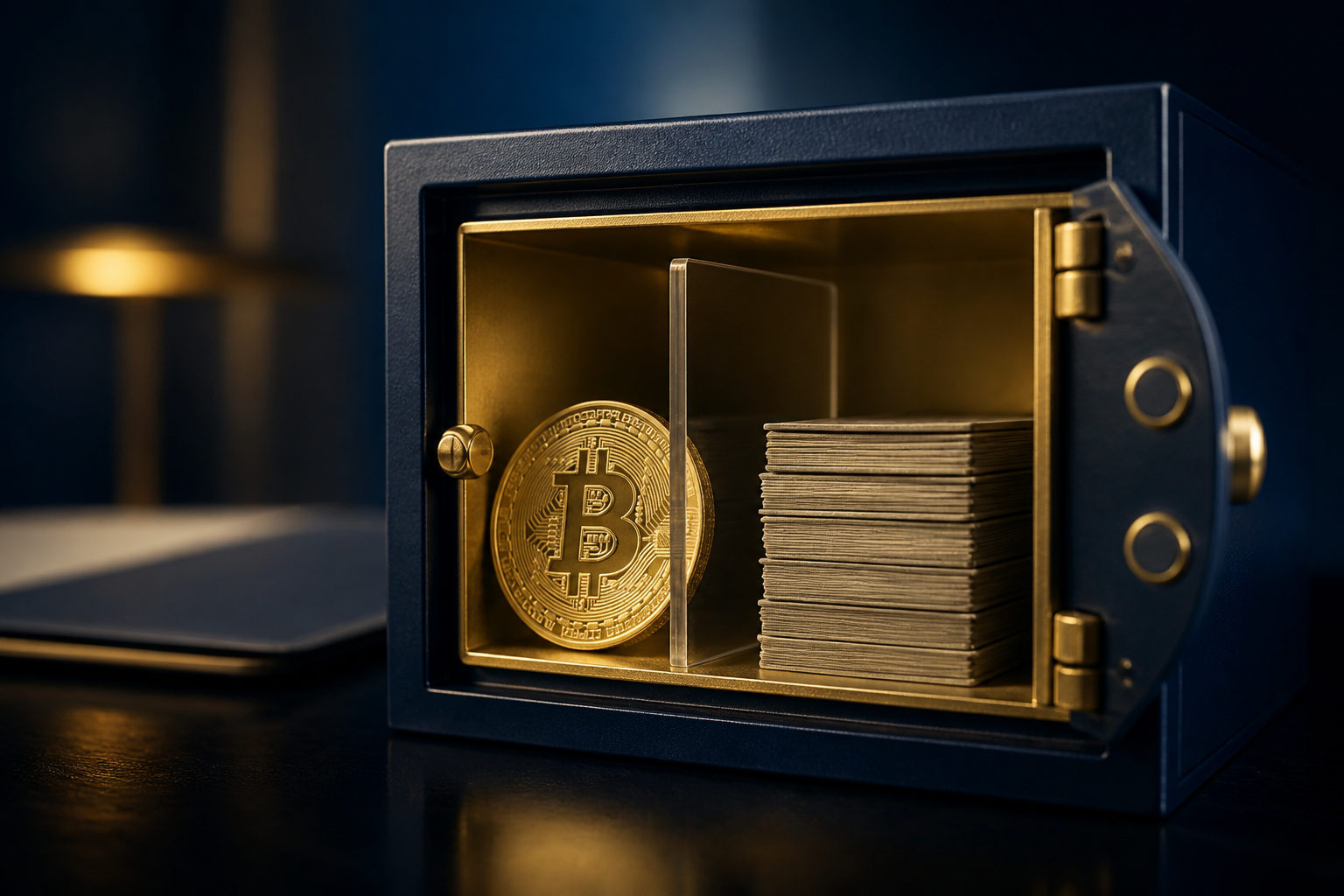
Usually, no—you generally cannot contribute bitcoin directly to an IRA the same way you would move cash into a retirement account. The real question is whether the IRA custodian accepts crypto as an in-kind contribution, or only allows cash funding and then investment inside the account.
Why direct bitcoin contributions usually do not work
An IRA is a tax-advantaged retirement account with strict custody and contribution rules. In many standard IRA setups, the provider accepts cash, account transfers, or rollovers in approved forms, then limits investments to what its platform supports.
That creates a practical barrier for someone who already holds BTC in a personal wallet. Even if the blockchain transfer itself is easy, the IRA custodian may have no process for receiving that asset, valuing it for account records, and holding it under its own compliance framework.
| Situation | Common outcome | Main issue |
|---|---|---|
| Send bitcoin from a personal wallet straight into a traditional IRA | Usually not allowed | Most custodians accept cash or standard retirement-account transfers instead |
| Buy bitcoin inside an IRA through an approved provider | Sometimes possible | Depends on the account structure and custody model |
| Sell personal bitcoin, then contribute cash to an IRA | Often the simpler path | The sale may have tax consequences, and IRA contribution rules still apply |
| Use a self-directed IRA for bitcoin exposure | Potentially possible | More moving parts, more review, and higher complexity |
“Contribute bitcoin” and “hold bitcoin in an IRA” are different goals
Many people searching this topic mean one of two things. One is moving existing BTC they already own into a retirement account. The other is opening an IRA that permits crypto-related investing and then building a bitcoin position within that account.
Those paths sound similar, but they lead to different legal, tax, and operational questions. If you want to preserve the exact coins you already hold while also placing them inside the IRA wrapper, that is often where the friction starts.
A personal wallet and an IRA may both belong to you in everyday language, but they are not the same container in regulatory or custody terms. Because of that, a transfer that feels like a simple internal move may be treated as something entirely different under retirement-account rules.
| What people say | What they often mean | What to verify first |
|---|---|---|
| Put bitcoin into an IRA | Move personally held BTC into the retirement account | Whether the custodian accepts crypto assets directly |
| Use an IRA to buy bitcoin | Create bitcoin exposure inside the account | Whether the IRA supports that investment type |
| Transfer my crypto account to an IRA | Move both the account value and the asset position | Whether the transfer fits permitted retirement-account rules |
| Keep my coins and still get IRA tax treatment | Avoid selling first | Whether in-kind crypto funding is supported at all |
Main paths people consider
The first path is to deal with the bitcoin in your personal account, then fund the IRA with cash under the account's normal rules. That is often easier to execute because cash is the standard input for many retirement providers. The tradeoff is that disposing of your bitcoin outside the IRA may create a taxable event, and the contribution itself still has to fit IRA requirements.
The second path is a self-directed IRA that allows crypto exposure. This route appeals to people who want retirement-account access to bitcoin more directly, but it also asks more from the account owner. You need to review custody arrangements, trading mechanics, account fees, storage practices, and what kind of claim on bitcoin you are actually getting.
A third path is to move existing retirement funds into a setup that offers bitcoin-related exposure. For some investors, that is close enough; for others, it falls short because they want actual BTC rather than a product tied to its price behavior.
| Path | Who it may fit | Advantage | Constraint |
|---|---|---|---|
| Sell personal BTC, then fund the IRA with cash | People who want a clearer operational process | Works within the standard funding model of many IRAs | May trigger taxes outside the IRA and still faces contribution limits |
| Open a self-directed IRA with crypto support | People seeking bitcoin inside the retirement account itself | Closer to direct bitcoin exposure | More due diligence, more fees, more complexity |
| Move retirement assets, then choose bitcoin-related exposure | People who already have retirement funds elsewhere | Keeps the activity inside a retirement-account framework | The asset may not be withdrawable as personal BTC |
What to check before taking action
Start with the custodian. If the IRA provider does not accept bitcoin as an asset contribution, the idea of contributing BTC directly stops there. This sounds obvious, yet many people spend time on wallet logistics before checking the account rule that matters most.
Next comes tax treatment. If you plan to sell personally held bitcoin and then contribute cash, those are separate steps with separate consequences. One concerns the sale of an asset you own; the other concerns whether your retirement-account funding method is allowed.
Fees deserve a close look as well. A crypto-friendly IRA may involve setup charges, custody charges, trading fees, or ongoing administrative costs. A structure that sounds attractive at first can become far less appealing if the account is expensive to maintain over time.
Then there is control. Some people only want bitcoin price exposure in a retirement wrapper. Others care about something closer to direct ownership. If your goal includes the freedom to move coins to a personal wallet on demand, many IRA structures will not match that expectation.
| Checkpoint | Why it matters | Risk if ignored |
|---|---|---|
| Custodian support for bitcoin | Determines whether direct asset acceptance is even possible | Failed transfer or wasted setup work |
| Funding format | Clarifies whether the account takes cash, assets, or only approved transfers | Mistaking a wallet transfer for a valid IRA contribution |
| Tax handling | Affects sales, transfers, and possible reporting obligations | Unexpected tax cost or filing problems |
| Fees and control rights | Shapes long-term usability and value | Ending up with a product that does not fit your goal |
FAQ
Can I move bitcoin I already own into an IRA without selling it?
In many cases, no. Most standard IRA custodians do not accept BTC from a personal wallet as a direct contribution, so the first step is to confirm what kinds of assets the account can actually receive.
If an IRA offers bitcoin investing, does that mean it can accept my BTC deposit?
Not necessarily. An IRA may let you buy bitcoin or bitcoin-related exposure inside the account while still refusing direct deposits of crypto you hold elsewhere.
Is selling bitcoin first and contributing cash the easier route?
Operationally, it often is. Cash funding is the normal language of many retirement accounts, but the sale outside the IRA may carry tax consequences that change the overall result.
Does a self-directed IRA solve the problem?
It may solve part of it, especially if your aim is crypto access within a retirement account. It also adds more responsibility on your side, including provider review, fee comparison, and a clear understanding of custody.
Can I keep full control of my coins and still place them inside an IRA?
That is where many expectations run into account rules. Retirement accounts rely on custody and compliance boundaries, so direct personal control and IRA treatment do not always fit neatly together.
The most useful next step is simple: ask the target IRA provider whether it supports bitcoin, whether it accepts in-kind crypto contributions, and what approved route it expects if the answer is no. That answer determines whether you should use cash funding, look at a self-directed setup, or choose a different form of bitcoin exposure inside retirement savings.
Disclaimer: This article is for informational and educational purposes only and is not investment, financial, or legal advice. Crypto assets are highly volatile and you could lose your entire investment. Do your own research and decide carefully.