
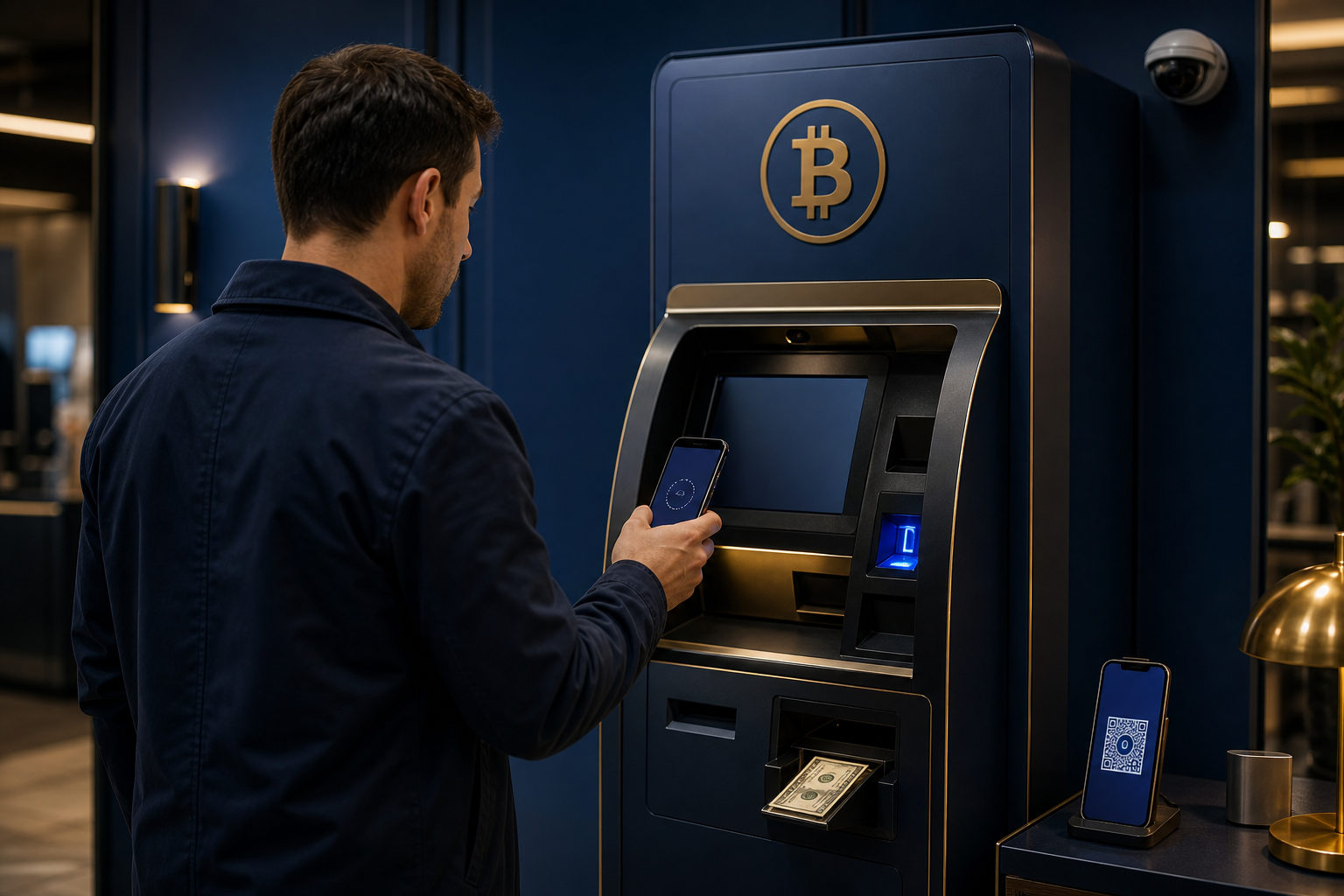
Yes, you can sell Bitcoin at some ATMs, but only if that machine supports selling. The real issue is not whether a Bitcoin ATM exists nearby, but whether it offers two-way service, what identity checks it requires, how payout works, what fees apply, and whether the setting is safe enough to use.
The short answer: some Bitcoin ATMs support selling, many do not
People often treat a Bitcoin ATM as if it were a standard machine with the same functions everywhere. It is not. Some machines only let users buy Bitcoin, while others support both buying and selling. A terminal may also look like an ATM while following a slightly different cash-out process.
That is why the answer to “can you sell bitcoin at atm” is yes, but only in specific cases. If you show up assuming every machine can cash you out, you may waste time, feel rushed, and make a bad transfer decision under pressure.
Before you start: what to confirm first
Step 1: verify that the machine actually offers Bitcoin selling
Your first action should be simple: read the on-screen menu and confirm there is a sell option for BTC. Wording varies, but the machine should clearly show that it accepts Bitcoin for a cash-out or sale process.
The reason is obvious. Machines with similar branding can have very different functions. The main caution here is to trust the screen, not assumptions, not the machine's appearance, and not a stranger who says, “this one works.” If the interface is unclear, stopping is safer than guessing.
Step 2: use a wallet you control yourself
When you sell Bitcoin through an ATM, you usually send BTC from your own wallet to an address displayed by the machine. The best setup is a wallet you fully control, or at minimum one that lets you send funds directly, review the transaction, and pass any needed security checks without delays.
This matters because on-site transactions can be time-sensitive. If your BTC sits in an account with transfer restrictions or slow withdrawal review, the machine may be ready while your funds are not. A practical caution: make sure you have enough BTC for the sale and enough balance to cover network fees, or the transfer may fail before it starts.
Step 3: understand identity verification requirements
Some machines ask for a phone number, a text message code, an ID check, or another compliance step before you can sell. You should know that in advance and decide whether you are comfortable with those terms before you enter anything.
The reason is that selling at a physical machine is not always a no-questions-asked process. The caution is just as important as the step itself: only submit personal information through the machine's official interface. Do not hand over ID photos, login codes, or wallet screenshots to anyone standing nearby.
Step 4: confirm how you will receive the payout
Some machines dispense cash directly. Others may print a receipt, give you a code, or require one more step before cash is released. You need to know the payout method before you send Bitcoin, not after.
This matters because many disputes begin with mismatched expectations, not with a broken blockchain transaction. If the machine's instructions do not clearly explain how cash is delivered, or what happens after you send BTC, that is a reason to walk away.
Step 5: expect convenience to come with a cost
A Bitcoin ATM can be attractive because it offers a short, direct path from BTC to cash. That does not mean it offers the best exchange terms. Fees, spread, and the practical cost of waiting for transaction processing can all affect what you finally receive.
The reason is straightforward. Physical machines have operating costs, cash handling demands, compliance obligations, and fraud controls. The caution is to look beyond the headline rate. What matters is the final payout rule, not just the promise of quick cash.
How the selling process usually works
Step 1: choose the sell option on the machine
Once you begin, the machine may show the asset, the amount entry method, identity prompts, and payout instructions. Read everything on the screen before scanning anything. Make sure the machine is asking for BTC and not another asset with a similar ticker or menu position.
Why this step matters: stress makes people click fast and read late. A simple caution can save you trouble here. Do not use a QR code sent by someone else, and do not process the transaction through a chat app while standing at the machine.
Step 2: get the machine's receiving address or QR code
In most cases, the machine will display a QR code or print a receipt containing the address where you must send Bitcoin. Use your own wallet to scan it and confirm that the code comes from the machine itself.
The reason is that selling still depends on a blockchain transfer. The caution is critical: never let a stranger hold your phone, scan for you, or substitute another QR code. If the destination address is changed, recovery is often unrealistic.
Step 3: review the transfer details before sending
Before you press send in your wallet, check the asset, destination address, amount, network fee setting, and payout expectation one more time. If your wallet offers a transaction preview, read it carefully instead of skipping through it.
The reason is simple. Once a Bitcoin transfer is broadcast, it usually cannot be reversed the way some ordinary payments can. The caution is not to let a queue, a countdown, or social pressure push you into a blind confirmation.
Step 4: wait for the machine to recognize the transaction state
After you send BTC, the machine may not finish the process immediately. Some devices first detect that a transaction has been broadcast, then continue according to their own rules. Others may ask you to keep a printed receipt or note a code for the final step.
This exists for a reason: the operator needs to manage transaction risk and avoid abuse. The practical caution is to leave only after you have a record of what happened, whether that is a receipt, a code, or a visible transaction reference in your wallet.
Step 5: collect cash or complete the last verification step
At the end, the machine may dispense cash right away, or it may ask for a code, an extra scan, or one final confirmation. Your job here is not to rush. Your job is to verify that the final instruction matches what the machine said earlier.
The caution is serious. This is often the moment when scammers try to step in with claims that the system is stuck, another transfer is needed, or your receipt must be checked by them. Ignore that pressure. Keep your records and use only the operator's official support route if there is a problem.
Why some people still choose this method
There are reasons people use a Bitcoin ATM to sell. The process can feel more direct than navigating an exchange order book, and some users prefer handling the transaction in person rather than moving through a multi-screen trading interface.
Still, that simplicity comes with tradeoffs. You may face less favorable pricing, stricter verification, less room to compare terms, and higher physical safety concerns because cash may be involved.
- Main appeal: the path from BTC to cash can be easy to understand.
- Main tradeoff: convenience may cost more than other selling methods.
- Main judgment call: if you value speed and a direct offline process, it may fit; if you value tight cost control and comparison shopping, be careful.
The biggest risk is often not the machine, but the people around it
Most Bitcoin ATM trouble does not begin with the hardware. It begins with distraction, social pressure, fake support, bad QR codes, and poor physical security. You are handling money in a public place. That alone changes the risk profile.
Risk 1: a stranger offers to help
This is one of the oldest and most effective setups. Someone says they know the machine, can make the process faster, or can show you the correct button. What they may really want is your phone screen, your wallet flow, your text message code, or a chance to swap the receiving details.
The safe rule is strict and easy to remember: no one else touches your phone, your wallet app, your ID, your login codes, or any recovery information. A legitimate machine process does not require a stranger's hands.
Risk 2: fake support information on or near the machine
A machine may have stickers, printed notes, or outside signage with what looks like a support number or messaging handle. If you contact that number, the person on the other end may ask you to send another transaction, reveal account details, or share sensitive images.
The safe approach is to trust only support information shown clearly within the machine's own interface or from the operator's verified materials that you already know. External stickers and handwritten notes should raise suspicion, not trust.
Risk 3: using the machine in a bad location
If the sale ends in cash, your blockchain transaction risk can quickly turn into an in-person safety issue. A poorly lit area, a quiet corner, or a place with no sense of order is the wrong setting for handling a visible cash-out.
A safer choice is a bright, public location with regular foot traffic and normal business activity. Once the transaction is done, do not linger at the machine, count cash for too long, or discuss your funds within earshot of others.
Risk 4: confusing a delay with a failed transaction
Blockchain transfers and machine processing can take time. A waiting screen does not mean failure, and it certainly does not mean you should send BTC again because someone nearby says that is the fix.
This scam works by turning your anxiety into a second payment. If you already have the transaction record and any receipt or code, follow the machine's stated process and contact official support if needed. Do not improvise a second transfer.
How to check whether the sale terms make sense
If your real question is whether selling through an ATM is worth it, compare the machine's terms with live pricing shown on major market data pages or in a wallet quote view you already trust. The key point is not just the reference price of Bitcoin. You need to look at the final cash you receive, the fee disclosure, any limit on the transaction, and any verification requirement tied to payout.
That approach matters because a Bitcoin ATM sale is not only about the market price of BTC. It is also about convenience, friction, privacy tradeoffs, and execution risk. If the machine explains those terms poorly, that alone is a valid reason to stop.
FAQ
Can I sell Bitcoin at any Bitcoin ATM?
No. Some machines only support buying, while others support both buying and selling. Always confirm the sell option on the screen before doing anything else.
If I sell BTC at an ATM, do I get cash immediately?
Not always. Some machines dispense cash directly, while others require a receipt, a code, or another verification step first. Read the payout instructions before you send Bitcoin.
Do I need ID to sell Bitcoin at an ATM?
Sometimes, yes. A machine may ask for a phone number, a text message code, or an ID check, depending on the operator's rules. Enter that information only through the machine's official process.
What is the biggest mistake when scanning the QR code?
The biggest mistake is sending BTC to the wrong address, whether by your own oversight or because someone replaced the real code. Scan with your own phone and review the destination details before confirming.
If the machine does not react right away, should I send the Bitcoin again?
Usually, no. A delay can be part of normal transaction handling, and a second transfer can turn one sale into a much larger loss. Keep your records and follow the operator's stated support process instead.
When should I avoid selling Bitcoin through an ATM?
Avoid it if the fee rules are unclear, the identity requirements do not work for you, the location feels unsafe, or the screen instructions are hard to understand. In those cases, the best move is to stop before sending any BTC.
If you remember only one rule, make it this: never send Bitcoin to an ATM until you understand the destination address, the payout method, the fee structure, and the physical risks around you.
Disclaimer: This article is for informational and educational purposes only and is not investment, financial, or legal advice. Crypto assets are highly volatile and you could lose your entire investment. Do your own research and decide carefully.