
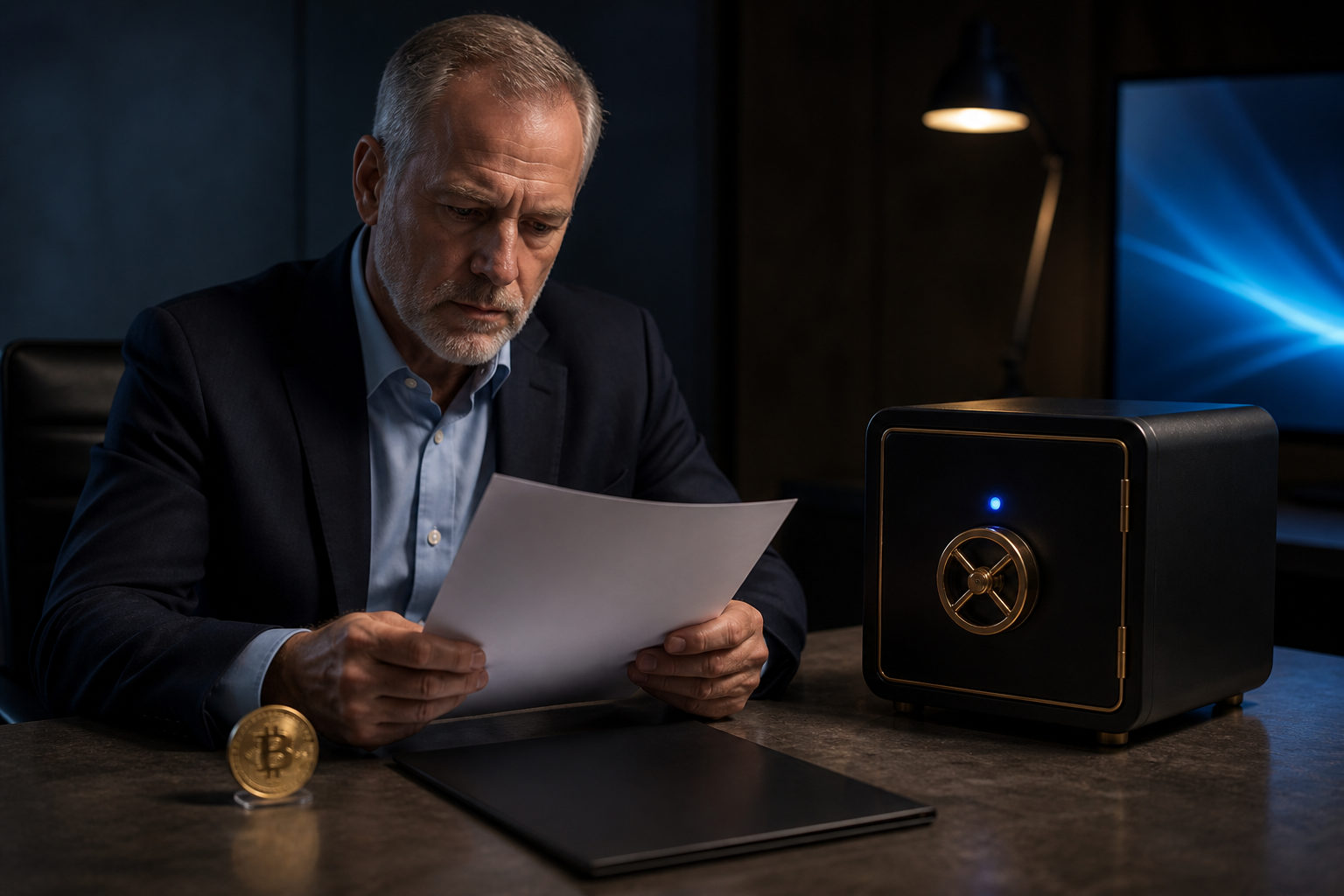
Yes, IRA money can be used to invest in bitcoin in some cases, but usually not by simply logging into a standard retirement account and buying it like a stock. The real question is whether your IRA setup allows it without creating custody, transfer, or compliance problems.
Start with the real issue: what your IRA is allowed to hold
People often ask whether they can use IRA money to invest in bitcoin as if there were one universal answer. There is not. Some IRA arrangements can hold bitcoin directly, and some can hold bitcoin-related investment products, but many ordinary IRA accounts at mainstream brokerages do not give you direct access to spot bitcoin inside the account.
That distinction matters because an IRA is not just a pile of cash waiting to be deployed. It is a tax-advantaged retirement structure with rules around permitted assets, custody, transfers, and account control. Before you think about timing or allocation, you need to know whether your current IRA can legally and operationally get exposure to bitcoin at all.
| Decision point | What to check | Why it matters | What to watch for |
|---|---|---|---|
| Account type | Traditional IRA, Roth IRA, or money coming from another retirement plan | The funding path may differ | Do not confuse a transfer with a cash distribution |
| Asset access | Whether the custodian allows bitcoin or only related products | Many standard IRA platforms limit what you can buy | Marketing pages are not enough |
| Holding format | Direct bitcoin ownership versus a bitcoin-linked product | Custody, fees, and trading rules can be very different | Similar names do not mean similar risk |
| Control | Who holds keys or account authority | Control can raise compliance issues | Extra freedom can create extra risk |
| Exit path | How to sell, transfer out, or close the account | You need a way to reduce risk later | Many investors ask too late |
Step 1: Identify the exact source of the retirement money
Your first move is administrative, not market-based. Find out whether the funds are already inside a Traditional IRA or Roth IRA, or whether they would come from a different retirement account that needs to be moved first. That will shape the rest of the process.
The reason is simple. A retirement account transfer is not the same thing as taking money into your personal bank account and then deciding what to do next. If you move funds the wrong way, the problem may show up before bitcoin even enters the picture. A bad path can change the tax treatment of the money or create avoidable account issues.
The practical caution here is to work from documents, not memory. Check the account statement, account agreement, and any transfer instructions. If a salesperson sounds confident but the paperwork is vague, trust the paperwork.
Step 2: Separate direct bitcoin ownership from bitcoin exposure
This is where many readers lose clarity. Ask a precise question: does the IRA arrangement allow direct ownership of bitcoin, or does it only allow a regulated product that tracks or reflects bitcoin exposure? Those are related ideas, but they are not the same thing.
The reason this step matters is that investors often use one phrase to describe two very different outcomes. Some want actual bitcoin held through a retirement structure. Others mainly want their IRA to participate in bitcoin price moves. The first path puts more weight on custody and account design. The second puts more weight on product structure, fees, and tracking behavior.
The caution is not to treat all crypto-themed offerings as interchangeable. A product tied to bitcoin can behave differently from direct ownership in ways that matter inside a retirement account, especially when you look at cost, liquidity, redemption mechanics, and operational restrictions.
| Approach | Operational profile | Main review point | Typical mistake |
|---|---|---|---|
| Direct bitcoin in an IRA structure | Depends heavily on custody and account setup | Asset storage, authority, withdrawal rules | Assuming personal key control is always required |
| Bitcoin-related investment product | Closer to a securities workflow | Product terms, fees, trading limits | Assuming every bitcoin product works the same way |
Step 3: Review custody and fee disclosures before you move any money
If someone leads with a story about how easy it is to put retirement money into bitcoin, slow the process down. Ask for the full account agreement, custody description, fee schedule, trading rules, and transfer-out procedure. If those items are hard to get, that alone tells you something useful.
This matters because retirement assets attract aggressive sales tactics. The pitch often leans on urgency, tax language, or broad claims about inflation and wealth preservation. Those themes may sound familiar, but they do not answer the questions that protect you. You need to know who holds the asset, how it is recorded, how you can exit, and what you will be charged along the way.
The caution is to look for missing detail, not polished wording. Hidden or unclear fees can damage long-term outcomes. Weak custody language can create confusion about who is responsible when something goes wrong. Vague explanations about account control are especially dangerous in retirement structures.
| Red flag | Why it matters | Better response |
|---|---|---|
| Return promises or “safe growth” language | Bitcoin is volatile and no outcome is guaranteed | Ignore performance claims and read the rules |
| Pressure to transfer quickly | Urgency reduces your review time | Pause until you have all documents in writing |
| Unclear fee wording | Costs may be broader than expected | Request a full written fee schedule |
| No clear exit process | You may face liquidity or transfer friction later | Ask how selling and moving assets works |
| Push toward self-control without clear compliance guidance | Control can create retirement account problems | Confirm the rules before agreeing to that structure |
Step 4: Check for prohibited transaction and control issues
This step is less exciting than market talk, but it is often the most important. Retirement accounts come with restrictions on how account assets can be handled, who can benefit from them directly, and how much control the account owner can exercise in certain structures. If a bitcoin IRA arrangement sounds unusually flexible, that is a reason to investigate further, not relax.
The reason is that some setups may expose you to problems unrelated to market price. If the structure blurs the line between retirement assets and personal control, the issue is no longer just whether bitcoin goes up or down. The account itself may face complications if the arrangement crosses lines that should not be crossed.
The caution is practical. If the explanation depends on layered entities, unclear roles, or phrases like “you do not need to understand the details,” stop there. Complexity is not protection. In retirement accounts, it can be the source of risk.
Step 5: Make the investment decision only after setting an exit plan
Once the account path is clear, then you can decide whether bitcoin belongs in your retirement allocation at all. Write down what portion of retirement assets you are willing to expose to bitcoin-related risk and how you would respond if volatility becomes uncomfortable. That decision should exist before the first trade, not after a sharp move.
The reason is that bitcoin has a transparent supply schedule, but a transparent supply schedule does not remove price swings. The network has a hard cap of 21,000,000 BTC, and the block subsidy is cut in half every 210,000 blocks, roughly every four years. The latest halving took place on 2024-04-19, and the current block reward is 3.125 BTC. At the network level, daily new issuance is about 450 BTC. Those facts are stable, but market pricing still moves with sentiment, liquidity, regulation, and capital flows.
The caution is to separate two questions that people often mash together. One question is whether your IRA can hold bitcoin exposure in a compliant way. The other is whether bitcoin fits your retirement risk profile. You should answer both, but not with the same logic.
FAQ
Can a regular brokerage IRA buy bitcoin directly?
Not always. Many standard IRA accounts do not offer direct bitcoin ownership, and some may only allow certain bitcoin-related products. The right place to verify that is the custodian's formal account documentation.
Is it easier to withdraw the money first and buy bitcoin myself?
It may look easier, but it can create a different problem. Once retirement money leaves the account structure and becomes personal cash, tax treatment and account status can change in ways you did not intend.
Do I need to hold the private keys myself for a bitcoin IRA?
No, and that is not always the key issue. In retirement accounts, the bigger questions are who the custodian is, how the asset is recorded, and whether the control structure creates compliance trouble.
What is the biggest scam risk with bitcoin IRA offers?
The common pattern is pressure, vague rules, and performance talk in the same pitch. If a firm spends more time selling the dream than explaining custody, fees, and exit rules, treat that as a warning sign.
If I only want to know the current price, where should I look?
Use a mainstream market data service, a regulated brokerage display, or the custodian's live pricing screen that day. This article does not quote a live bitcoin price because price changes constantly, while your IRA decision depends more on structure and risk controls.
If you are considering bitcoin inside an IRA, do three things before anything else: identify the exact account type, collect every rule and fee document in writing, and confirm that the transfer and custody setup will not create avoidable compliance problems. If any of those points is still unclear, do not move the retirement money yet.
Disclaimer: This article is for informational and educational purposes only and is not investment, financial, or legal advice. Crypto assets are highly volatile and you could lose your entire investment. Do your own research and decide carefully.