
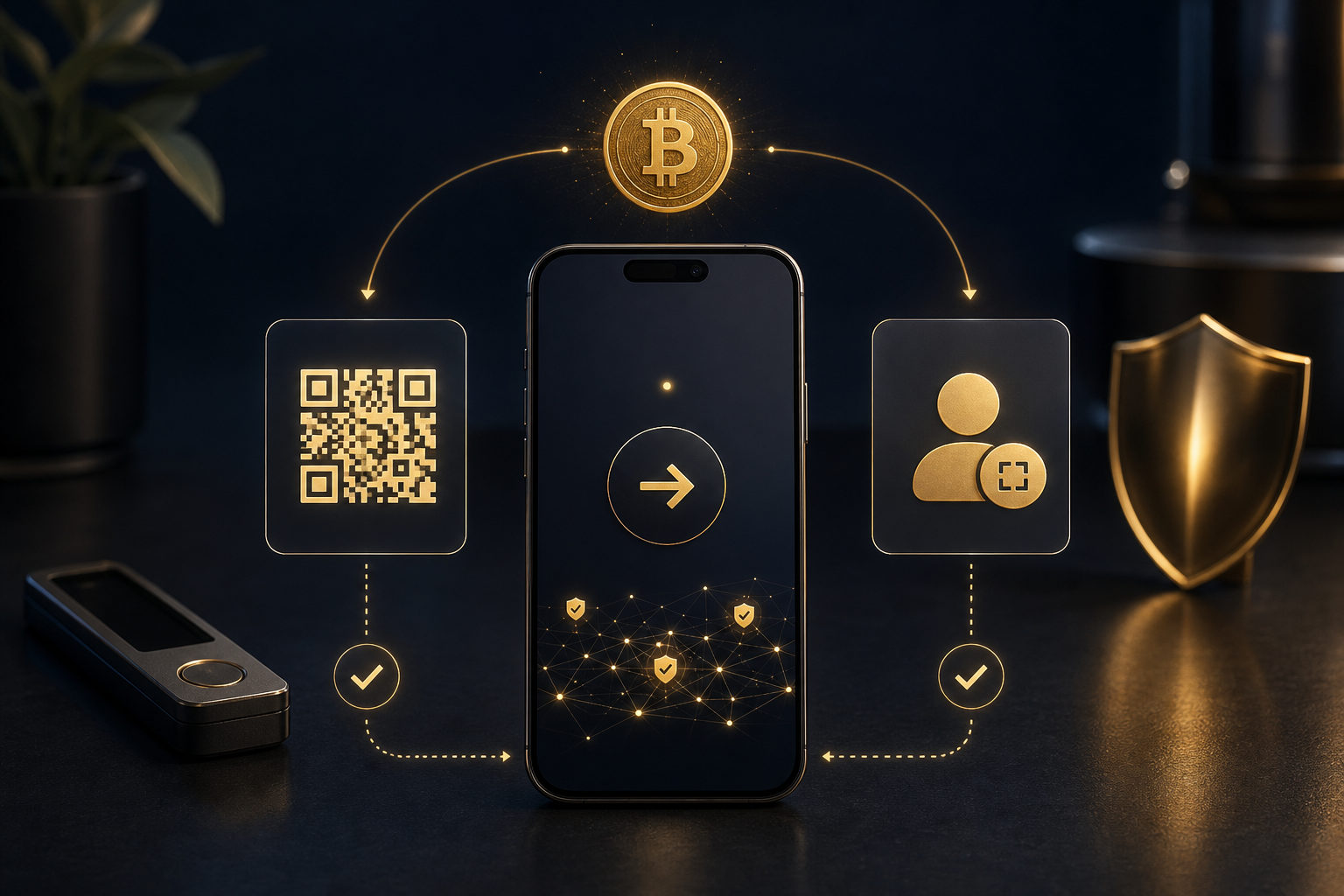
You do not always need a Cashtag to send bitcoin. A Cashtag may be used inside certain payment apps as a user identifier, but a standard bitcoin transfer usually depends on a bitcoin address, the correct network, and clear control over the wallet or account being used.
What a Cashtag is, and what it is not
People who search for “a cashtag is required to send bitcoin” are often mixing up two different systems. A Cashtag is generally an app-level identifier that helps one user find another inside a specific service. The Bitcoin network itself does not recognize that identifier as a universal destination for on-chain payments.
That distinction matters. If you are sending funds inside a closed app, the service may let you pick a recipient by username, contact entry, or some branded tag. If you are making a normal bitcoin transaction to an external wallet, the app will usually ask for a bitcoin address or a QR code that contains address details.
In other words, the question is not whether Bitcoin requires a Cashtag. The real question is what kind of transfer you are trying to make, and whether the product in front of you is doing internal bookkeeping or broadcasting a transaction to the Bitcoin network.
When you might see a Cashtag, and when you will not
The easiest way to judge the situation is to separate platform transfers from on-chain transfers. Once you know which one you are doing, the field requirements make much more sense.
Transfers inside one app
If both sender and recipient use the same service, the app may support internal transfers through a handle, contact name, or another user-facing identifier. In that setup, a Cashtag can work as a shortcut to locate the recipient. The balance may move within the company’s own records first, without becoming a direct Bitcoin blockchain transaction at that moment.
This can feel simple, but it also means you are relying on the platform’s rules. Withdrawal availability, approval steps, and the path to an external wallet are controlled by the service, not by Bitcoin itself.
On-chain bitcoin transactions
If you are sending from a self-custody wallet, or withdrawing BTC from a trading platform to an outside wallet, you usually do not need a Cashtag. You need the recipient’s bitcoin address, or a QR code generated from that address.
At the protocol level, Bitcoin checks valid transaction data and signatures. It does not care about social usernames, account nicknames, or app-specific tags. Whoever controls the private key controls the coins associated with that wallet.
Hybrid products that blur the line
Some services make things less obvious. Their interface looks like a wallet, but they also include social features such as contacts, chat, or user handles. That can lead people to assume every transfer works the same way.
Do not guess. Look for wording that tells you whether you are sending over the Bitcoin network, withdrawing to an external address, or just moving balance inside the service. If the screen is unclear, stop and verify before you tap confirm.
The bigger issue: are you moving platform balance or actual on-chain BTC?
This is more important than the Cashtag question itself. Many mistakes happen because users think they are sending bitcoin when they are really moving a claim recorded inside one company’s system. The reverse also happens: someone assumes a transfer is informal and reversible, then learns too late that it was treated like a real blockchain transaction.
- Self-custody wallet: You hold the recovery phrase or private keys, and your device signs the transaction. If you enter the wrong address or misunderstand the destination, the responsibility is usually yours.
- Custodial platform account: You may see a BTC balance, but you do not directly control the private keys. You depend on the platform to process withdrawals and define transfer options.
- App with built-in usernames or tags: You need to confirm whether the transfer stays inside the app or actually goes out to the Bitcoin network.
A Cashtag is only a product-layer label used by certain services. It is not a native Bitcoin requirement. The items that deserve your attention are the destination address, the network, the fee display, the transfer path, and who has real key control.
A practical checklist before you send anything
If you are unsure whether a Cashtag is needed, do not rush. A short verification routine can prevent mistakes that are hard or impossible to fix later.
- Ask the recipient what they want. Do they want an internal app transfer, or do they want an actual bitcoin transaction to a wallet address? That answer decides what information you need.
- Read the field labels carefully. If the app asks for a bitcoin address or shows a QR scanner for wallet payment, you are probably not dealing with a Cashtag field. If it asks for a username, handle, or contact, it may be an internal transfer flow.
- Confirm the network and asset. If the recipient says they want bitcoin, make sure the destination is meant for BTC on the Bitcoin network. Do not assume that every crypto transfer route is interchangeable.
- Send a small test first. This is one of the safest habits in crypto. A test transfer can reveal whether the address is correct, whether the recipient can access the funds, and whether the service applies extra restrictions.
- Verify the address source. Use copy and paste or a QR code when possible. Then compare the beginning and end of the address with the original source again before sending.
- Know what you control. If you use self-custody, protect your recovery phrase and private keys. If you use a custodial account, accept that the platform sits between you and the on-chain asset.
- Check how fees are presented. Some apps show network fees separately. Others combine charges into one amount. Knowing this helps you tell whether you are making an on-chain payment or just an internal transfer.
Important warning: bitcoin transfers are generally not reversible in the way bank app users may expect. If you send to the wrong address, choose the wrong route, or misunderstand what the app is doing, there may be no practical undo button.
Why private key responsibility matters more than the label on the screen
New users often focus on the input field: address, username, tag, or contact. Experienced users tend to focus on control. That is because bitcoin ownership is enforced through private keys, not by the comfort of a familiar app interface.
With a self-custody wallet, the key material usually stays under your control, and your device authorizes the transaction. The benefit is independence. The tradeoff is that backup, device security, and mistake prevention become your job. If your recovery phrase is exposed or mishandled, there is no customer support desk that can simply restore full control for you.
With a custodial service, the app may feel easier to use. You may be able to search by profile, transfer by handle, or move balances quickly inside the platform. That convenience does not mean you hold the private keys. In many cases, you only control access to an account while the service manages the underlying wallet structure.
This is why the same sentence, “I sent bitcoin,” can describe very different realities. One user may have completed an internal ledger transfer inside a company system. Another may have signed and broadcast a Bitcoin transaction that cannot be called back. If you do not know which one you are doing, the interface can give false confidence.
FAQ
Do I need a Cashtag for every bitcoin transfer?
No. A Cashtag may only be relevant inside certain apps that support social-style transfers. A standard on-chain bitcoin payment usually requires a bitcoin address or a QR code tied to that address.
If the app is asking for an address, do not replace it with a user tag. First identify whether the transfer is internal or on-chain.
Why do some apps let me send by username while others only accept a wallet address?
Because they are built for different transfer models. Some apps combine user accounts, contacts, and internal bookkeeping, so a username can work inside that closed system.
A dedicated wallet is centered on blockchain transactions, which is why it asks for address details instead. The easier the app feels, the more important it is to check who has custody.
Can a Cashtag act as a bitcoin address?
Not as a general rule. A Cashtag is an identifier used by certain services, while a bitcoin address is the standard destination format used for on-chain payments.
If the recipient wants actual BTC to a wallet, ask for the bitcoin address directly or request a scannable payment code. Do not assume one can replace the other.
Do I need a Cashtag when withdrawing BTC from an exchange to my own wallet?
Usually no. In that situation, the important item is your wallet’s bitcoin address and confirmation that you are withdrawing BTC.
Before you proceed, make sure your wallet is ready to receive bitcoin and that your recovery phrase is backed up safely. The address matters more than any app handle.
Can I cancel a bitcoin transfer if I sent it the wrong way?
An internal platform transfer may follow platform-specific rules, but a blockchain transaction is not something you should expect to reverse like a casual app payment.
That is why a test amount, address verification, and clear confirmation of the transfer type are so important. Prevention is much more realistic than recovery.
Before you send, pause and confirm three things: whether the recipient wants a tag or an address, whether the transfer stays inside one service or goes on-chain, and who controls the private keys. Then send a small test first if anything feels unclear.