
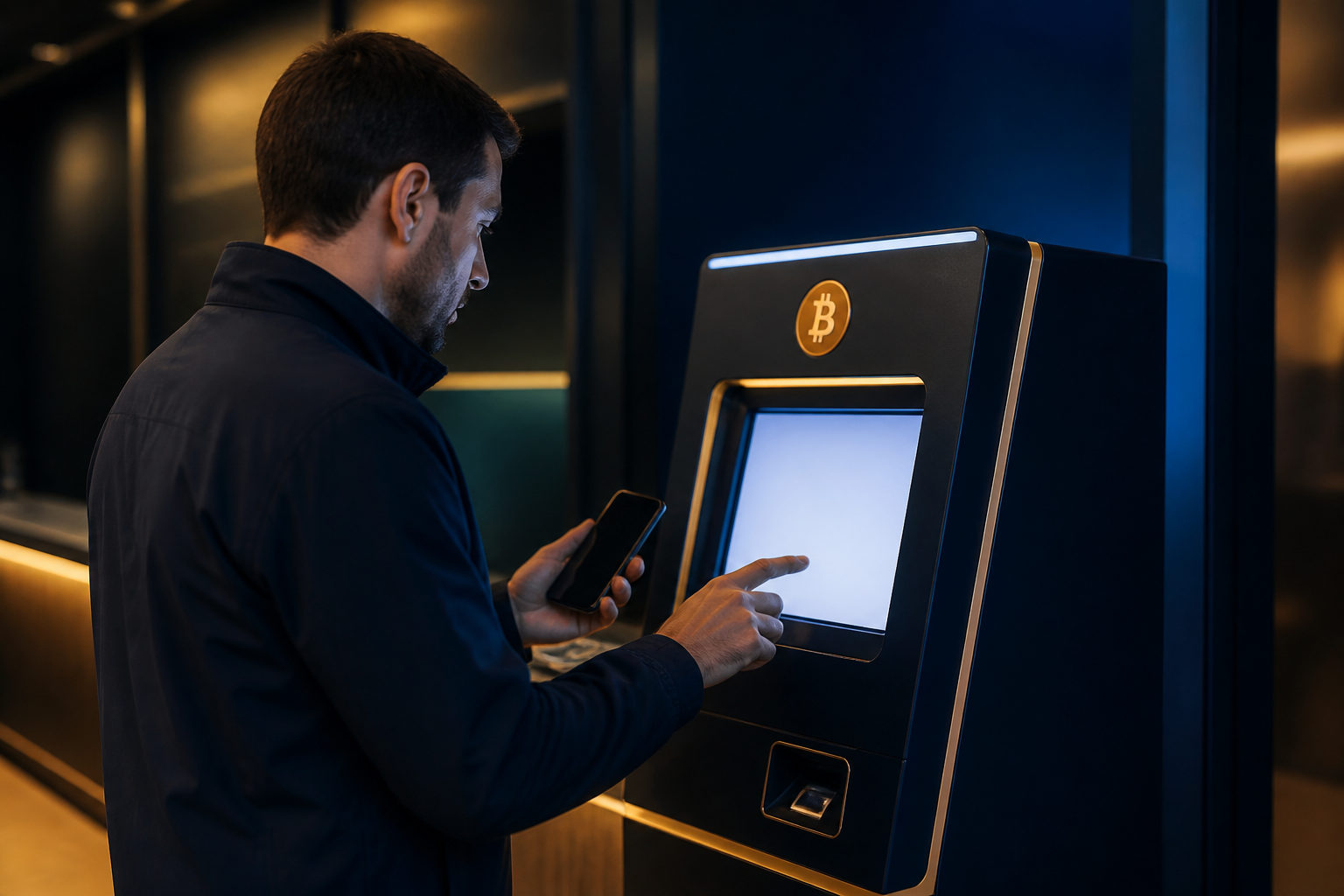
To use a Coin Cloud bitcoin ATM safely, prepare your own wallet first, verify every address shown on screen, review the fees before confirming, and keep a record of the transaction. The actual button sequence matters less than catching mistakes before the machine submits a blockchain transfer.
Check whether a bitcoin ATM fits your purpose
Before you tap anything, look at what the machine is offering. Some bitcoin ATMs are set up for buying only, while others also support selling. The screen may also show identity checks, transaction conditions, or extra prompts that change the flow.
This matters because an ATM is usually chosen for convenience, not for detailed price comparison or repeat trading. If your goal is a quick purchase into your own wallet, the format may work well. If you are sensitive to costs, want more time to compare quotes, or need a more flexible transfer path, pause and think before starting.
Also inspect the machine itself. A damaged bill slot, a dim display, an obstructed scanner, or an extra sticker covering part of the screen can all be warning signs. A stranger who walks up and offers to guide you step by step is another one. At a bitcoin ATM, outside “help” often creates more risk than value.
Prepare your wallet before you approach the machine
Most buy transactions at a bitcoin ATM require a receiving address. The safest approach is to open your own non-custodial wallet in advance, generate a BTC receive QR code, and make sure your phone is charged and readable. That way, you are not searching through apps while standing in front of the machine.
Using your own wallet gives you direct control over where the bitcoin is sent. If someone asks you to send the coins to an address they provide, or tells you they will “hold it for you first,” you are giving up that control at the start of the process. For beginners, one rule is enough: the person who controls the wallet credentials controls the coins.
Make sure you are looking at a BTC receive screen, not a different asset or a different network inside a multi-asset wallet. New users often assume every receive button is interchangeable. It is not. If you are unsure what your wallet is showing, stop and sort that out before using the ATM.
There is another practical point here. A bitcoin ATM transaction may finish on the machine before you feel fully confident about what happened on-chain. If you already know how to open your wallet and review incoming activity, you will have a much easier time checking whether the transfer was actually broadcast to the address you intended.
How to use a Coin Cloud bitcoin ATM step by step
1. Read the main screen and choose the correct transaction type
Start by selecting buy or sell only after you have read the main options on the screen. Those two paths can involve different prompts, different timing, and different verification steps. Do not assume a sell flow will mirror a buy flow just because both involve bitcoin.
Look for the machine’s disclosures before moving forward. The useful items are the transaction direction, any identity checks, and the amount you are expected to receive relative to what you put in. If the screen leaves you unsure about those points, walking away is a better choice than guessing your way through the process.
2. Scan your own BTC receiving address
If you are buying bitcoin, the machine will usually ask for a wallet address. Hold your own BTC receive QR code up to the scanner and wait for the machine to recognize it. Then stop and compare the beginning and end of the address shown on screen with the address in your wallet.
This check is simple, but it prevents a common class of errors. People sometimes scan the wrong QR code from a chat, a saved image, or a different wallet screen. Once the transfer is sent to the wrong destination, there is often no practical way to reverse it.
3. Review any identity request before you continue
Some machines may ask for a phone number, an ID document, or a photo during part of the process. Treat that as a decision point, not as a box you automatically push through. You should understand what information is being requested and whether you are comfortable providing it in that setting.
If the terms are unclear or the request feels broader than you expected, stop there. A convenient machine is still a data-collection point, and your comfort with the tradeoff should come before completing the transaction.
4. Enter the amount and start with a small test
If this is your first time using a bitcoin ATM, or your first time sending coins to that wallet, use a small test transaction first. A small trial gives you a live check on your address, your wallet setup, and your ability to follow the transaction afterward.
The benefit is not psychological. It reduces the damage from a mistake that you did not notice during setup. A wrong address, a misunderstood wallet screen, or a fee structure you decide you dislike is much easier to deal with when the first transaction is modest.
5. Insert cash or complete the action the machine asks for
In a buy flow, the machine will usually ask you to insert cash after the key details are accepted. In a sell flow, it may present a destination address and ask you to send bitcoin from your wallet before any cash-related step happens. Follow the screen carefully and ignore outside instructions that add extra steps.
This is where many scams become concrete. A fraudster may tell you to scan a different address, claim they are “support,” or urge you to send the bitcoin to a temporary wallet for verification. The machine does not need a stranger to interpret it for you. If someone tries to redirect your transfer, stop immediately.
6. Use the final confirmation screen as your last error check
Before you approve the transaction, read the confirmation page slowly. Check the transaction direction, the destination address, the amount you are putting in, the amount of bitcoin you are expected to receive, and any fee information shown on screen. If one item does not make sense, cancel and restart later if needed.
Many users treat the confirmation page like a formality. It is often the last realistic chance to catch a wrong address or an unacceptable cost. A blockchain transfer usually cannot be pulled back in the way people expect from card payments or ordinary bank transfers.
7. Keep the receipt and verify the transaction in your wallet
After the machine finishes, save the printed receipt or note down the reference information shown by the ATM. Then go to your wallet and check whether the transaction appears there. The useful questions are whether the destination looks correct, whether the transaction has shown up at all, and whether the status is changing over time.
Do not rely only on a “success” message on the ATM screen. That message tells you the local process ended. Your wallet is the place where you confirm whether the blockchain transaction connected to the address you intended to use.
Scam patterns and operational mistakes to watch for
The most dangerous situations usually involve another person, not the machine itself. If someone on the phone, in a chat, or through a romance or investment pitch tells you to go to a bitcoin ATM and send funds to an address they provide, that is a major warning sign. Claims about refunds, account fixes, tax payments, emergency transfers, or urgent investments are often used to push people into fast, irreversible payments.
A second risk is address substitution. The QR code may come from a message thread, a fake wallet page, or an image saved to your phone that you never checked closely. A quick visual comparison of the first and last characters of the scanned address is not perfect, but it is one of the most useful low-effort checks available at the machine.
A third risk is misunderstanding the total cost. The fee is not always presented in a way that feels intuitive to a new user. Instead of searching for one line labeled “fee” and trusting that alone, compare what you put in with what the machine says you will receive, then decide whether the trade makes sense for you.
A fourth risk is poor privacy habits in a public place. Your receive QR code, transaction receipt, phone number, wallet balance screen, and any identification screen can reveal more than you intend. Once the transaction is done, close the wallet screen, collect the receipt, and avoid leaving sensitive information visible while you are still near the machine.
FAQ
What should I prepare before using a bitcoin ATM for the first time?
Bring a wallet that you control and make sure it can display a BTC receive QR code clearly. Your phone should be charged, connected, and easy to read so you are not scrambling to find the right screen during the transaction.
Can I use a Coin Cloud bitcoin ATM without my own wallet?
Some flows may still let you proceed, but having your own wallet is the safer setup. You know where the bitcoin is going, and you can verify the transaction yourself instead of depending on an unfamiliar holding arrangement.
How do I read the fees on a bitcoin ATM?
Look at the transaction as a whole. Check how much you put in, how much bitcoin the machine says you will receive, and whether the screen lists any extra charges or conditions. That gives you a clearer view than focusing on one fee label alone.
Why is the ATM done if my wallet does not show bitcoin yet?
The machine finishing its own process does not mean the blockchain transaction has fully progressed. Open your wallet, look for the transfer, and follow its status there. If nothing appears at all, use the receipt details and the formal support channel shown by the machine.
What if someone tells me to use a bitcoin ATM to make a payment?
If another person chooses the destination address, pushes urgency, or tells you to keep the transaction secret, stop. Bitcoin transfers are commonly hard to reverse, which is exactly why scammers like to route victims to an ATM.
If you decide to use a Coin Cloud bitcoin ATM, keep the process strict: use your own wallet, scan your own address, start with a small test, read the confirmation screen carefully, and save the receipt. If any part of the flow is unclear, do not continue until it is clear to you.