
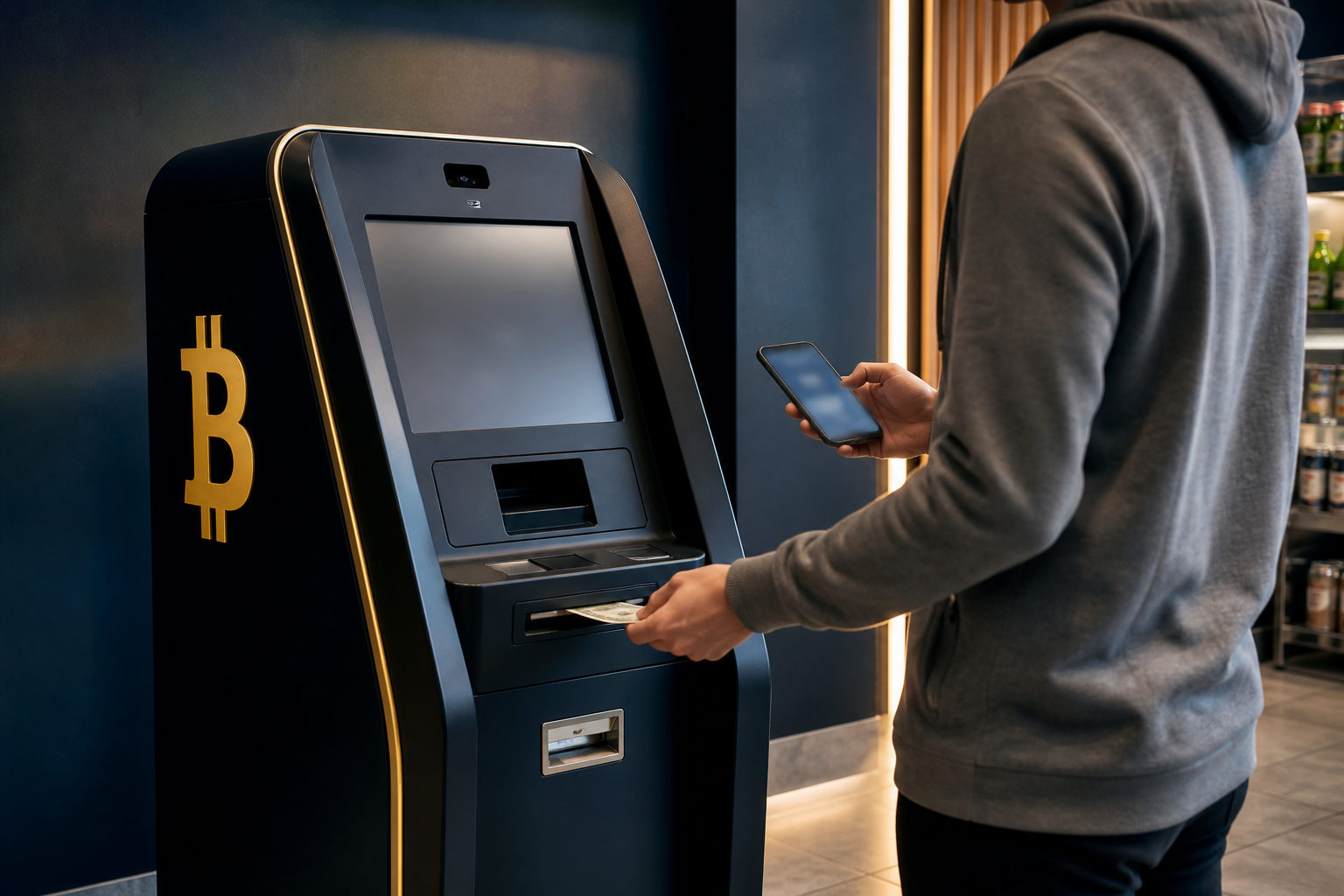
To use a Coinstar Bitcoin ATM safely, first confirm what the machine actually does, prepare a Bitcoin wallet you control, and stop at once if someone is pushing you to buy BTC for them.
Figure out what service the machine is offering
Many people call any kiosk with a Bitcoin option a Bitcoin ATM, but the experience may be very different from a bank ATM. Some machines let you insert cash and buy Bitcoin directly. Others may give you a printed voucher or a redemption step that you finish later on your phone or through a web page.
Before you begin, read the screen carefully and identify three things: whether the machine is selling Bitcoin, how delivery works, and whether identity checks are part of the flow. That changes what you need to have ready, what proof you should keep, and when you should expect to receive access to the BTC.
If you cannot tell whether the machine is handling a purchase, a redemption, or some other crypto-related function, do not continue just because the option says Bitcoin. Scam pressure works best when you skip the basic question of what the machine is doing in the first place.
Prepare your wallet before you stand at the machine
Using a Coinstar Bitcoin ATM starts with having your own Bitcoin wallet ready. You should be able to open the receive screen, display your wallet address or QR code, and understand how you would regain access to that wallet if your phone were lost. Buying Bitcoin without planning where it will go creates a new risk after the transaction is over.
Open the wallet app before you start the kiosk flow. If the machine asks for a destination address, scanning your QR code is usually safer than typing a long string by hand. Even after a scan, compare the beginning and end of the address shown on the machine with the one in your wallet app. A wrong destination can send funds somewhere you do not control, and Bitcoin transfers usually cannot be reversed in the way card disputes sometimes can.
If the process uses a voucher or claim code, think one step ahead. Ask yourself whether you will still be able to access the phone number, email inbox, or device needed for the final redemption step after you leave the location. People often focus on the cash deposit and forget that the claim process is where access is actually completed.
Walk through the transaction one screen at a time
Read the terms before inserting cash
Once the Bitcoin purchase screen appears, pause and read the details. Look for the delivery method, any stated fees, what records you must keep, and whether the process ends at the kiosk or continues later. The practical question is simple: are you buying BTC that will move to your wallet, or are you receiving a code that still needs to be redeemed?
This matters because many user mistakes start with a false assumption that “transaction complete” means “Bitcoin already arrived in my wallet.” If the machine says there is a follow-up step, keep the printed slip, message, or confirmation code until the process is fully finished.
Provide your wallet information carefully
If the machine asks for a Bitcoin address, use your own wallet’s receive QR code when possible. That lowers the chance of input errors. After the scan, do not rush to confirm. Check that the address on the kiosk matches the current wallet screen on your phone, not an old screenshot and not a code someone else sent you.
If the machine also asks for a phone number, email address, or verification details, enter them carefully and keep the screen private. These kiosks are often placed in open retail areas, where bystanders may see enough information to interfere with the later claim process or contact you with fake support messages.
Review the transaction summary before money goes in
Most machines display a final summary before or during payment. This is the moment to confirm the asset is Bitcoin, the destination is your own wallet if direct delivery is used, and the instructions match what you expected from the start. If any part of the screen does not line up with your plan, cancel before adding more cash.
This is also the best scam checkpoint. If someone on the phone, in a text, in a pop-up warning, or in a chat app told you to go to the kiosk and follow instructions, stop here. A common fraud pattern is to frame the payment as an urgent fix for security, taxes, fines, account recovery, or a frozen balance, then direct the victim to convert cash into Bitcoin and send it away.
Keep every record until the process is done
After payment, save whatever the machine gives you: a receipt, a code, an on-screen confirmation, a text message, or an email. Before leaving, make sure the printout is readable, your phone has the needed screenshots, and you understand whether another redemption step remains.
A lot of avoidable trouble comes from losing the only proof tied to the purchase. You do not need to keep every note forever, but you should not throw anything away until you can verify that the process is complete and the Bitcoin or claim right has reached the place you intended.
The mistakes that cause the most problems
The first is treating the destination address as a minor detail. If the wallet address does not belong to you, then you are not simply buying Bitcoin for yourself. You are sending value to someone else, and you should be clear about that before proceeding.
The second is trusting a caller, texter, or online contact who claims to be support staff, law enforcement, a recovery specialist, or an investment guide. A real account issue should be checked through the official channel you already use for that service. You should not move funds because a stranger tells you to.
The third is misunderstanding timing. A completed cash transaction does not always mean your wallet will show spendable BTC right away. Some services have an extra claim step, and some wallets show pending activity before they show a settled balance. If the machine explained that a later step or a waiting period is part of the process, do not assume the transaction failed just because it was not instant.
The fourth is forgetting how public the environment is. Your wallet QR code, your verification code, and your printed receipt can all expose information that should stay private. Once you finish, close sensitive screens and store the receipt where other people cannot photograph it or read it over your shoulder.
How to spot a scam before you complete the purchase
If someone tells you to keep the payment secret from family members, store employees, or your bank, treat that as a serious warning sign. Fraud relies on isolating the target long enough to stop them from asking a calm third party for advice.
If the reason for payment is framed as a security deposit, release fee, account unlock fee, tax fix, or emergency verification, the risk is high. Bitcoin is often used in scams because once it is sent to another party’s wallet, recovery is usually difficult.
Another warning sign is a QR code or wallet address sent by someone else with instructions to scan it at the machine. The key question is whether that destination belongs to your own wallet. If it does not, pause the whole transaction and reconsider why you are doing it.
When in doubt, walk away from the kiosk and review everything in a quieter place. Any transaction that depends on pressure and urgency deserves extra skepticism.
FAQ
Do I need a Bitcoin wallet before using a Coinstar Bitcoin ATM?
It is safer to have your own wallet ready before you begin. That gives you control over the receiving address and makes it easier to confirm where the Bitcoin is supposed to go.
Does a printed receipt mean the Bitcoin has already arrived?
Not always. In some cases, the receipt is only proof for a later redemption or status check, so you need to follow the on-screen instructions and verify the result in your wallet or claim flow.
Why does my wallet not show usable Bitcoin right after the purchase?
The service may still be processing the transaction, or the wallet may be waiting for the transfer to move through its normal steps. Check the receipt and the machine’s instructions before assuming anything went wrong.
Can I buy Bitcoin at the machine and send it to an address someone gave me?
You should be extremely careful. If the address is controlled by someone else, especially a stranger or anyone pressuring you, you are sending funds away rather than buying BTC for your own use.
How long should I keep the receipt or claim code?
Keep it until every step is complete and you can verify the outcome in the wallet or account used for the transaction. If there is a follow-up claim process, do not discard any code, message, or printed record early.
The practical checklist is short: confirm what the machine is offering, use a wallet you control, verify the destination before paying, and keep every record until the process is complete. If another person is directing the transaction, stop before cash goes into the machine.