
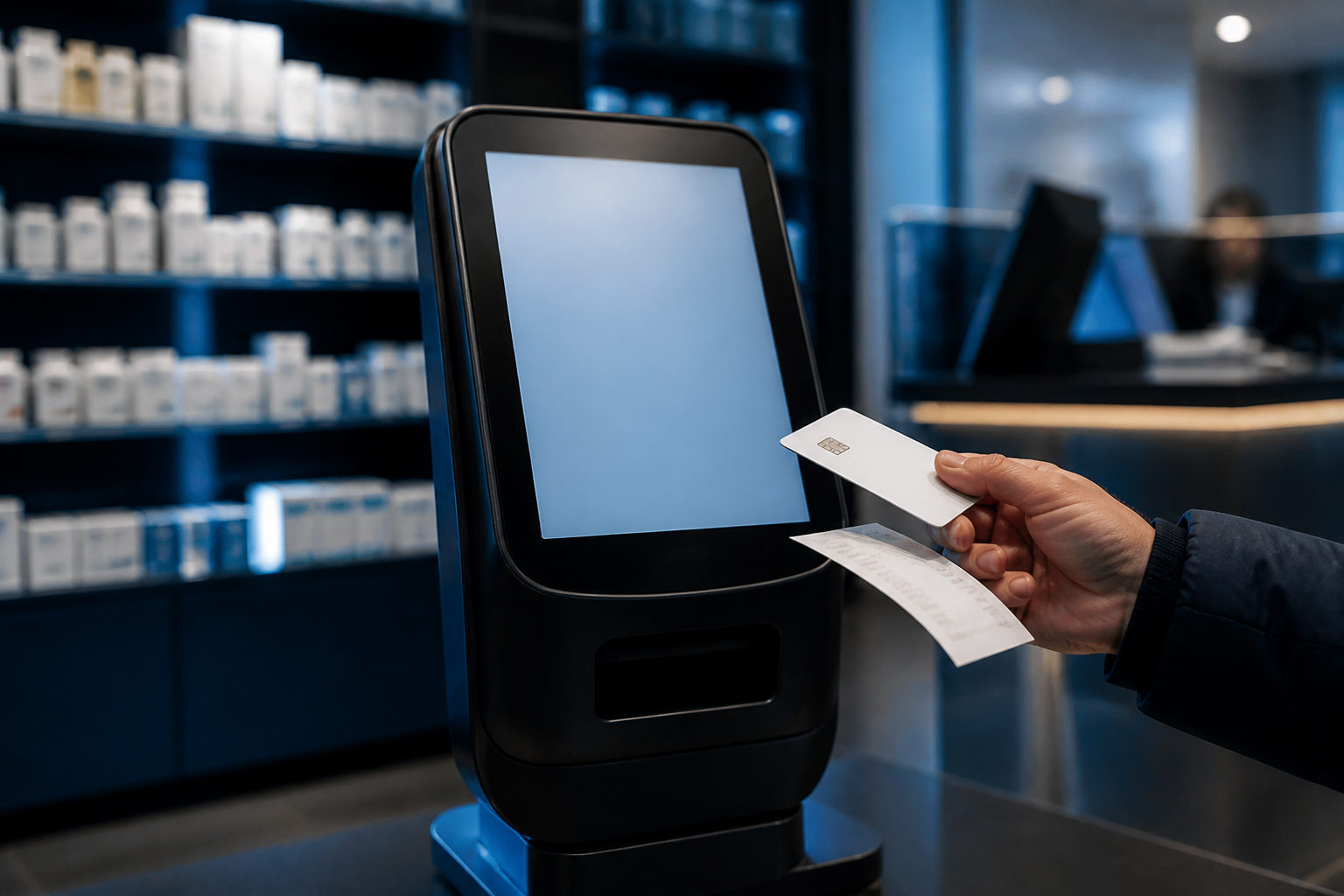
CVS usually does not directly sell bitcoin. What you may find instead is a way to complete a payment, cash deposit, or identity check connected to a third-party crypto service.
What people mean when they ask whether CVS sells bitcoins
Most people are not asking about corporate inventory or store policy in a narrow sense. They want to know whether they can walk into CVS, pay at the counter, and come out having bought bitcoin in a simple retail-style transaction.
That is where confusion starts. A store can be part of the process without being the seller of bitcoin itself. A barcode payment at a CVS register may only settle an order created somewhere else, and the actual crypto service may be run by another company entirely.
This matters because support, refunds, delays, and disputes often depend on who the real merchant is. If you assume CVS is the trading counterparty, you may keep the wrong receipt, contact the wrong support desk, or miss the terms that govern the purchase.
| What you see at CVS | What it may actually be | Why people confuse it with buying bitcoin | What to verify first |
|---|---|---|---|
| Checkout payment | Payment for a third-party order | It feels like a direct in-store purchase | Who the merchant of record is |
| Barcode or QR code | Cash deposit or invoice settlement | The flow looks like a point-of-sale crypto purchase | Where the bitcoin will be delivered |
| Printed receipt | Proof of payment for one step | Receipts feel final | Whether payment equals delivery |
| ID verification prompt | Account review or compliance step | It looks like store approval | What happens if verification fails |
How to check the process step by step before you pay
Step 1: Identify whether you are buying bitcoin or paying into a service
Start with the order page. Look for plain language that tells you whether you are purchasing bitcoin, funding an account, buying a voucher, or making a cash payment tied to a separate platform. Those are very different things, even if the word bitcoin appears prominently on the screen.
The reason to do this first is simple: your rights depend on what the product actually is. A funded balance, a receipt, and delivered bitcoin are not interchangeable. If the page never clearly states what asset you will receive and where it will be sent, pause before you go to CVS.
One common mistake is treating branding as proof of product type. A page can mention bitcoin in large text while the underlying action is only a deposit into a third-party system. If you cannot explain the exact path from your payment to your wallet or account, you do not yet understand the transaction well enough to pay.
Step 2: Confirm whether CVS is only a payment point
Check the merchant name, customer support details, and terms attached to the order. In many cases, CVS only accepts the payment on behalf of someone else. If bitcoin is delayed, not delivered, or blocked for review, the cashier will usually have no visibility into what happened next.
This step protects you from a very common support dead end. People keep a store receipt and assume the store can reverse the whole transaction. Often that receipt only proves you paid at a location; it does not prove the crypto service accepted, processed, or delivered the asset.
Keep the full chain of records, not just a photo of the receipt. Save the order confirmation, transaction identifier, merchant details, and any instructions shown before payment. If a problem comes up, those details help you find the right support path faster.
Step 3: Prepare your receiving wallet or account before visiting the store
If the process requires a wallet address or an account linked to the order, set that up before leaving home. Bitcoin transfers are generally not reversible in the way card disputes are, so a wrong address, a restricted account, or an incomplete setup can turn a small mistake into a larger one.
Copy the address directly from a wallet or account you control. Then check the first and last characters again before using it. Do not rely on a screenshot sent by someone else, and do not type a long address by hand at the register if you can avoid it.
If the instructions are vague about where the bitcoin will appear after payment, stop there. A legitimate process should make the destination clear. You should know whether the asset will land in your own wallet, in a custodial account, or somewhere that still requires another action from you.
Step 4: Read the pricing method, fees, and refund terms before paying
Many buyers focus only on whether the payment can be completed at CVS. That is too narrow. You also need to understand how the amount of bitcoin is determined, whether the quote is fixed for a limited time, what fees apply, and what happens if verification or settlement fails.
Without live market data, no article should promise what bitcoin costs at the moment. What matters here is process: are you paying a set amount in dollars and receiving the bitcoin amount calculated later, or are you accepting a quoted amount before payment? The answer affects what you will actually receive.
Read the cancellation and refund language carefully. A transaction can fail for reasons that have nothing to do with the store location, such as account review or mismatched information. If the terms do not explain where your money goes in that case, treat that as a risk signal.
| Step | What to do | Why it matters | Main risk if skipped |
|---|---|---|---|
| Identify the product | Read the order definition closely | Prevents confusion between bitcoin and payment services | You pay and later learn you did not buy bitcoin directly |
| Check the responsible party | Verify merchant and support details | Helps if something goes wrong | You ask the store to solve a third-party issue |
| Prepare the destination | Use a wallet or account you control | Reduces transfer mistakes | Wrong address or blocked account |
| Review terms | Check fees, quote method, and refunds | Reveals real cost and limits | Unexpected fees or poor recourse |
The biggest danger is not confusion but fraud
Scams tied to the question “does CVS sell bitcoins” often work because a known retail brand makes the process look ordinary. The scammer does not need to fake a whole exchange. They only need to convince you that going to CVS is a normal part of a legitimate bitcoin transaction.
One warning sign is urgency. If someone tells you to go to CVS right away, stay on the phone during the trip, or keep the purpose secret from the cashier, that is a serious red flag. Pressure is used to keep you from checking the merchant, the wallet address, or the refund terms.
Another warning sign is any request to send a receipt image to a stranger after payment. In some schemes, the receipt or payment code is enough for the other party to claim value or complete the next step on their side. Once you hand that over, your options may narrow quickly.
A third pattern is fake custody. Someone claims they will buy bitcoin for you, hold it for safety, and transfer it later. If the bitcoin does not show up in a wallet or account you control, you are trusting a promise, not verifying ownership.
| Red flag | Typical claim | Why it is dangerous | Safer response |
|---|---|---|---|
| Urgent trip to CVS | You must pay now | Blocks careful review | Stop and verify the order independently |
| Keep it secret | Do not tell the cashier what it is for | Prevents outside warning | End the conversation |
| Share the receipt | Send me a photo so I can release the bitcoin | The receipt may function as a claim token | Do not share payment proof with strangers |
| Someone holds the bitcoin for you | I will store it until you are ready | You do not control the asset | Use only a wallet or account you can access yourself |
What to have ready before using CVS for any bitcoin-related step
If you decide to use CVS as part of a bitcoin-related process, do your checking at home first. Make sure you can answer four questions in plain language: who is selling the service, what exactly you are paying for, where the bitcoin will go, and who handles support if the transaction stalls.
It also helps to separate the parts of the process in your mind. The store visit is only the payment scene you can see. The real risk sits in the invisible parts: the order source, the account controls, the delivery method, and the rules that apply after payment.
- Complete account setup and any required verification before you head to the store.
- Save the order number, merchant name, and support contact separately from the printed receipt.
- Review the destination wallet or account one more time before paying.
- Walk away from any process that asks you to send bitcoin to a so-called verification address.
FAQ
Can I walk into CVS and buy bitcoin the same way I buy a gift card?
Usually not in that simple sense. A CVS location may be used to complete payment for a third-party crypto service, but that does not mean the store itself is the bitcoin seller.
If CVS accepts cash for the process, does that make it safer?
No. Cash changes the payment method, not the trustworthiness of the underlying service. You still need to verify the merchant, the delivery path, and the terms before handing over money.
Does a CVS receipt prove that my bitcoin has been delivered?
Not by itself. A receipt often proves only that you completed a payment step. You still need to confirm that the bitcoin was actually sent to your wallet or credited to your account.
Is it safe to pay at CVS on someone else's behalf and send them the receipt?
That is risky. You may be giving a stranger the exact proof they need to claim value on their side, while you have little control over what the payment was really for.
How do I check the bitcoin price if this article does not list one?
Use a live market data source and compare it with the order terms shown before payment. What matters in practice is whether the service gives you a real-time quote, a temporary locked quote, or only an estimate.
If you use CVS for any step connected to bitcoin, do one final check before paying: the merchant name, the destination wallet or account, the fee terms, and the refund rules. If any one of those is unclear, do not proceed yet.
Disclaimer: This article is for informational and educational purposes only and is not investment, financial, or legal advice. Crypto assets are highly volatile and you could lose your entire investment. Do your own research and decide carefully.