
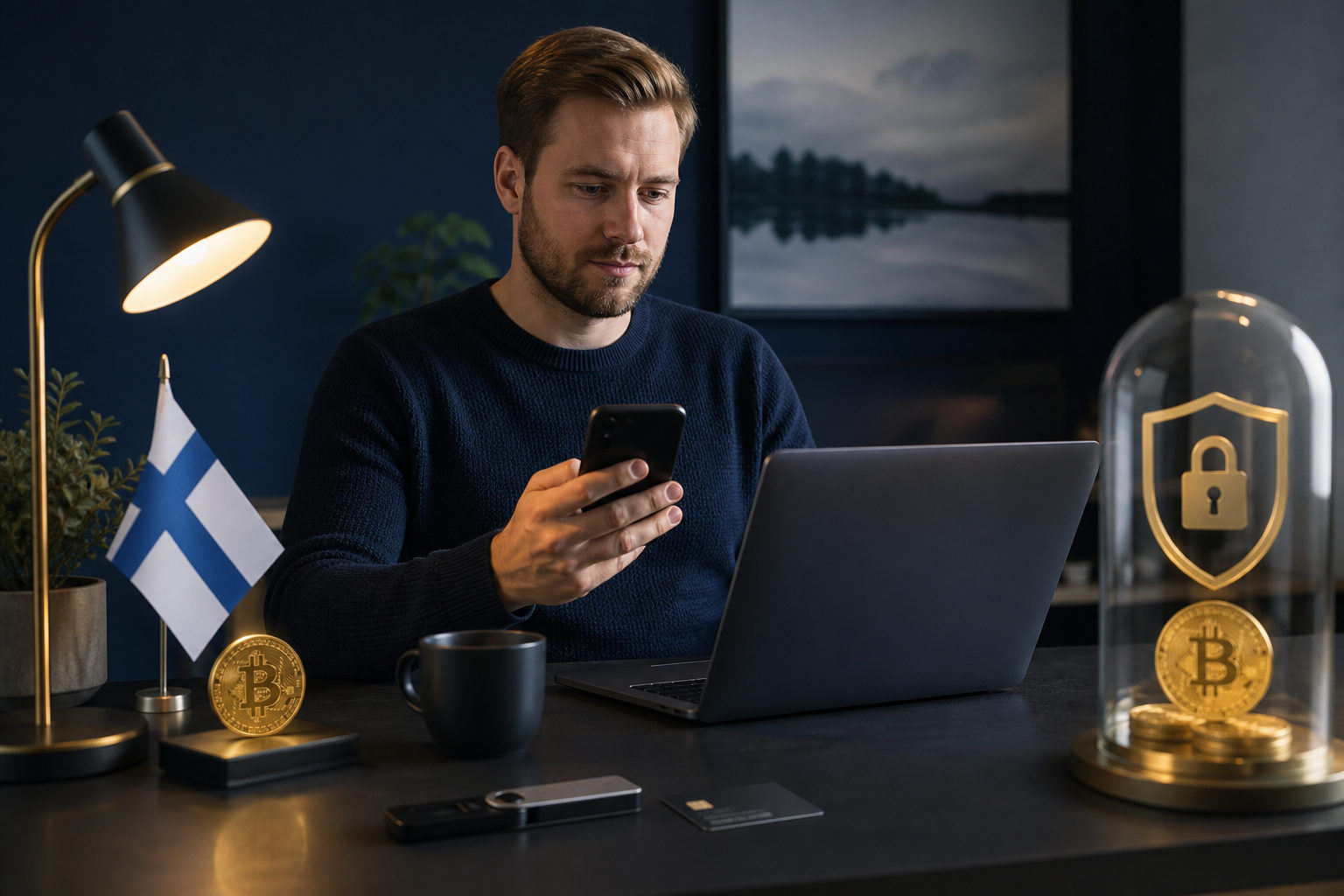
To buy bitcoin in Finland, the safest path is to use a compliant service, verify your identity with your own details, make a small test purchase, and sort out storage before you scale up.
Start with the goal, not the buy button
People often search how to buy bitcoin Finland when what they really need is a decision about purpose. Are you buying to hold for a long time, making a small first purchase to learn, or planning to trade more actively? The answer changes what kind of service makes sense, how much attention you should give to withdrawals, and whether you need a personal wallet from day one.
If your plan is long-term ownership, the key issue is not just where you can place an order. It is whether you can move bitcoin to a wallet you control and whether you understand the responsibility that comes with that control. If you only want exposure through an account balance and have no plan to withdraw, your operational risks look different.
This first decision matters because many mistakes come from copying someone else's setup. A trader's workflow is not the same as a holder's workflow. A beginner who only wants to learn the mechanics should not start with advanced tools or complicated products.
Step 1: Choose a buying channel with clear rules
What most buyers will run into
Most retail buyers in Finland will come across crypto services that require account registration, identity checks, and a linked payment method before buying and selling are enabled. That structure can feel slower than an informal deal, but it exists for account security, compliance, and dispute handling.
You may also see peer-to-peer offers, social media contacts, private chat groups, or people who claim they can buy bitcoin on your behalf. Those routes can look simple because someone else appears to handle the hard parts. In practice, they carry a much higher chance of fraud, payment disputes, or funds getting tied to activity you do not fully understand.
Why the first filter should be withdrawals and security
A polished app is not enough. Before you trust any service, look for clear information on identity verification, account protection, fees, and whether bitcoin can be withdrawn to your own wallet. If a service makes depositing money easy but says very little about withdrawals, that is a warning sign.
New buyers often focus on speed. A safer approach is to focus on exit options. Can you sell later without confusion? Can you withdraw bitcoin if you decide to self-custody? Are security settings easy to find and easy to use? Those are the questions that matter.
What to watch for in this step
- Do not register just because you saw an ad or an influencer mention it. Visibility and trust are not the same thing.
- Do not assume that a fast support reply means the service is legitimate. Fake support can be very responsive.
- Do not treat easy deposit options as proof of quality. Buying is only one part of the process.
Step 2: Open the account with your own details and keep everything consistent
Once you pick a service, the next step is account setup. This is where many preventable issues begin. The safest practice is simple: use your own email, your own phone number, your own identity details, and your own payment method. Keep the account owner, payment source, and withdrawal activity aligned.
Services usually ask for identity verification for anti-money-laundering checks, account safety, and later dispute handling. That can feel tedious, but using mismatched details creates bigger problems. If the registered name and the payment source do not match, reviews can take longer and withdrawal requests may receive extra scrutiny.
This is also the point where account hygiene matters. A crypto account is only as safe as the email and device behind it. Many account takeovers do not begin with the trading service itself. They begin with a weak email password, reused credentials, or a fake login page.
Why using someone else's payment method is a bad idea
Some buyers try to save time by using a family member's card or a friend's account. That creates confusion about who owns the funds and who is authorized to move them. If a transaction is reviewed later, proving the full chain of ownership becomes much harder.
The cleaner your setup, the easier everything becomes later. That includes payment confirmations, support requests, withdrawals, and any record-keeping you may need.
What to do here
- Protect the email account first. If the email is weak, the trading account is weak.
- Enable two-factor authentication. An authenticator app is usually a better choice than relying only on text messages.
- Keep records. Save verification notices, payment confirmations, and withdrawal details.
Step 3: Check total cost before you place the order
When people ask how to buy bitcoin in Finland, they often focus on the listed purchase price. That is only one part of the cost. You also need to understand payment fees, spreads between buy and sell quotes, withdrawal rules, and what it will cost to move bitcoin later if you choose to do that.
You should also confirm what product you are actually buying. Some services offer exposure linked to bitcoin rather than transferable spot bitcoin itself. If your goal is to withdraw to your own wallet, you need to confirm that the asset is real bitcoin with withdrawal support, not just a price-linked product inside a closed account system.
For a beginner, the right priority is not finding the most advanced order screen. It is making sure the full path makes sense: deposit funds, buy bitcoin, confirm the balance, learn the withdrawal rules, and understand how to move the asset later if needed.
Why a small test purchase helps
A small test purchase gives you more than peace of mind. It shows whether your payment method works, whether you understand the order flow, whether the account is fully verified, and whether the service displays balances and transaction history in a clear way.
If you plan to withdraw to a personal wallet, a small test also reduces the chance of making a costly mistake with addresses or wallet setup. In bitcoin, a simple operational error can matter more than short-term market moves.
What to check before buying
- Read the fee section carefully. Do not judge cost from one number on the screen.
- Confirm withdrawal support. If self-custody matters to you, this is not optional.
- Understand timing. A successful payment does not always mean the bitcoin is instantly available to move.
Step 4: Decide where the bitcoin will live after purchase
Buying bitcoin is only the opening move. Storage is where risk management becomes real. After purchase, you usually have two broad paths: leave it with the service you used to buy it, or move it to a wallet you control.
Leaving bitcoin on a platform is convenient. You can log in, check the balance, and trade without extra setup. The tradeoff is concentration of risk. Account compromise, phishing, or service restrictions all affect the same pool of funds.
Moving bitcoin to a wallet you control gives you direct control over the private keys or recovery phrase, depending on the wallet design. That fits the idea of independent ownership, but it also means the burden of backup moves to you. If you lose recovery information or store it carelessly, there may be no recovery path.
What matters when choosing a wallet
For a beginner, the best wallet is not the one with the most impressive marketing. It is the one you can use correctly every time. You should be able to back it up, verify the backup, receive bitcoin, send bitcoin, and recognize the official software source without confusion.
Many losses happen because users download fake apps, store recovery phrases in cloud notes, or share sensitive information with someone pretending to help. The technical side of bitcoin can be learned. The harder part for many people is maintaining discipline with basic security habits.
Storage rules worth treating as non-negotiable
- Never share your recovery phrase or private keys. No real support agent needs them.
- Do not store recovery information as a screenshot or in chat apps.
- Check the receiving address every time. Copy and paste is not enough on its own.
- Consider separating spending funds from long-term holdings. One wallet does not need to do everything.
Step 5: Treat scam prevention as part of the buying process
The biggest threat for many first-time buyers is not failing to find a way to buy. It is getting pushed into a fake workflow by someone who sounds helpful. Bitcoin scams often rely on urgency, authority, and confusion. A fake support agent, fake tax check, fake wallet app, fake investment group, or romance scam can all lead to the same outcome.
A common pattern is simple. The scammer first builds trust. Then they ask for a code, a screen share, a transfer to a so-called secure address, or installation of remote access software. Once they gain enough access, the money is gone or the account is compromised.
Another common pattern is the fake profit dashboard. You deposit funds into what looks like a professional trading site. The account shows gains, but when you try to withdraw, new charges suddenly appear. You are told to pay a release fee, a verification fee, or some other invented requirement. Real ownership is missing from the start.
Practical scam filters
- If someone asks for your recovery phrase, private keys, or login codes, stop immediately.
- If someone pressures you to act fast, slow down and verify everything.
- If someone promises fixed returns or risk-free profits, treat it as a scam until proven otherwise.
- If someone wants screen sharing or remote control access, refuse.
You do not need to be highly technical to avoid many scams. You only need one rule you will not break: nobody gets your recovery phrase, and nobody gets to rush your decisions.
Before you buy, think about selling, records, and taxes
Many buyers focus only on entry. A better approach is to think through the full life cycle before the first purchase. How will you track what you bought? How will you know which wallet address was used for what? How will you match deposits, purchases, and withdrawals later?
Good records make everything easier. Keep payment confirmations, account notices, buy history, withdrawal history, and notes about wallet addresses. That is useful not only for personal organization but also for any later review, support request, or tax reporting need.
For tax treatment in Finland, rely on current local rules and official guidance, or get professional advice if your situation is complex. Different actions can be treated differently. Guessing after the fact is much harder than keeping clean records from the first transaction.
FAQ
What do I need before buying bitcoin in Finland for the first time?
You should have your own email account, phone number, identity documents, and a payment method in your own name. It also helps to choose a service with clear verification and withdrawal rules before you begin.
Do I need a personal wallet before I buy bitcoin?
Not always, but you should learn the basics early if you plan to hold for the long term. If self-custody is your goal, understanding backups and address checks matters as much as the purchase itself.
Should I move bitcoin to my own wallet right after I buy it?
That depends on your experience and your purpose. If you plan to hold and you already understand wallet backups and address verification, moving to a wallet you control can reduce dependence on a single service; if you are new, a small test transfer is the safer first move.
Is it safe to let a friend buy and hold bitcoin for me?
It may look easier, but it creates ownership and control problems. If the account, payment source, or wallet is not under your control, disputes become harder and your risk increases.
How should I check the bitcoin price before buying?
Use mainstream market data pages or the quote from the service you actually plan to use, but compare more than one source. Price alone is not enough because total cost also includes fees, spread, and withdrawal conditions.
Before committing more money, run one full low-stakes test from start to finish: account setup, verification, payment, purchase, balance check, wallet address review, and if relevant, a small withdrawal. A clean process is more valuable than a rushed entry.
Disclaimer: This article is for informational and educational purposes only and is not investment, financial, or legal advice. Crypto assets are highly volatile and you could lose your entire investment. Do your own research and decide carefully.