
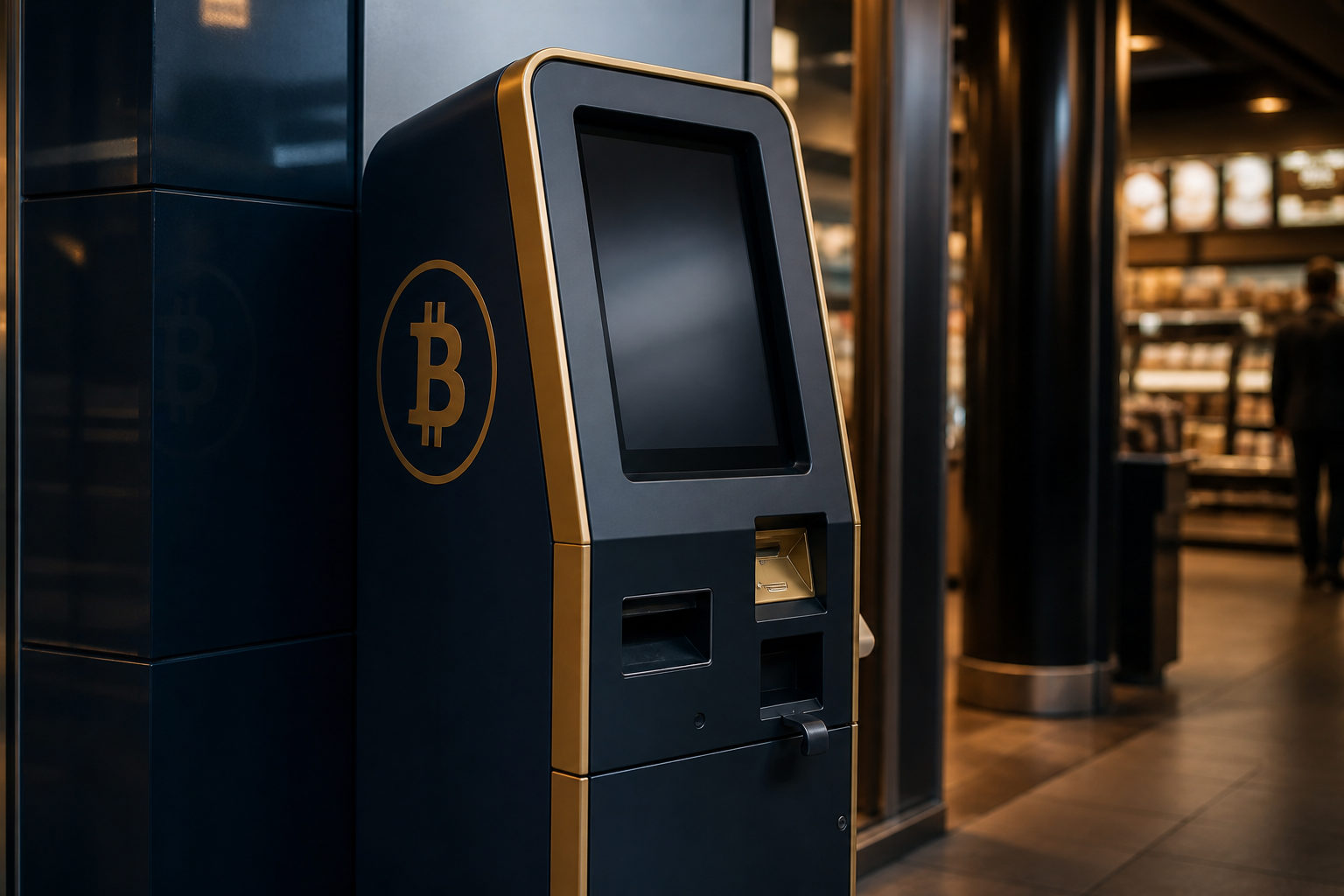
If you are asking “who sells bitcoins near me,” the safest answer is usually not a random person nearby. It is a local buying option with clear identity checks, verifiable settlement, and a process you can review before money changes hands.
What people usually mean by “who sells bitcoins near me”
This search often comes from a practical need: buy bitcoin quickly, use a local payment method, or get help face to face. The problem is that physical proximity solves only one part of the puzzle. It does not tell you whether the seller is legitimate, whether the payment trail is clean, or whether the bitcoin will actually reach your wallet.
Bitcoin is divisible, so you do not need to buy a whole coin from a private seller. The smallest unit is 1 satoshi, which equals 0.00000001 BTC. For most first-time buyers, the real decision is not who is close by. It is where the coins will be delivered, how you will confirm receipt, and what evidence exists if the trade goes wrong.
Common local ways to buy bitcoin
| Channel | Best for | Strengths | Main risks | What to check first |
|---|---|---|---|---|
| Regulated exchange | Beginners and long-term holders | Standardized flow, transparent pricing, account records | Identity verification, withdrawal rules, account reviews | Regional availability, deposit methods, withdrawal policy |
| Physical crypto shop or desk | People who want in-person assistance | Direct communication, guided setup | Uneven service quality, wider spreads or service fees | Business identity, payment entity, how delivery is verified |
| P2P marketplace | Users with basic trading experience | Flexible payment options, more seller choice | Fake payment claims, disputes, account-related issues | Escrow rules, seller history, release conditions |
| Friend or acquaintance | People who know each other well | Fast communication | Weak documentation, assumptions replace process | Wallet address, proof of payment, receipt confirmation |
| Meetup with a stranger from social media or chat groups | Usually a poor choice | Can seem convenient | Fraud, robbery, fake wallet screens, dirty funds | Best avoided |
For a new buyer, an exchange is often easier to control than an informal cash deal. A local shop can make sense if the operator is identifiable and the pricing is explained clearly. A stranger offering to sell BTC nearby may sound simple, but the convenience disappears if settlement is vague.
In-person bitcoin deals: settlement matters more than the meeting
The biggest mistake in face-to-face trades is treating a screenshot as proof. A seller may show a payment sent screen or a wallet display on their own phone, but that does not prove the bitcoin has reached your side.
Before meeting anyone, prepare your receiving setup. That means either your own wallet address or your account on a trading platform. Copy the address yourself and verify it yourself. After the seller sends the bitcoin, you should see a matching incoming record in your wallet or account before you treat the transfer as completed.
You also need to know whether the seller is sending an on-chain transaction or using an internal platform transfer. On-chain settlement goes through the Bitcoin network, where the target block time is about 10 minutes per block. Internal transfers may appear faster, but they rely on the platform’s own ledger. Both can be valid, yet the way you verify delivery is different.
| Settlement method | Better proof of delivery | Common trap |
|---|---|---|
| On-chain transfer to your self-custody wallet | Your wallet shows the incoming transaction and its status | The seller only shows a sent screen on their device |
| Transfer into your exchange account | Your account balance or deposit page shows the incoming record | The seller says the system is delayed and asks for payment first |
| P2P escrow release | You complete payment and confirmation inside the platform flow | You are pushed to settle outside the platform |
How to judge whether a local seller is worth dealing with
Start with process, not personality. A seller who accepts normal verification steps is easier to assess than one who relies on pressure or urgency. If the person avoids basic questions about payment, delivery, and proof, stop there.
Use a short review sequence. First, confirm that the asset being sold is actually bitcoin and not a token, investment contract, or custody claim wrapped in BTC language. Second, ask how the price is quoted and whether any spread, service charge, or transfer fee is included. Third, confirm who receives your payment. If the seller wants money sent to unrelated names or split across multiple accounts, the risk rises fast. Fourth, ask what happens if the transfer stalls and what records both sides will keep.
Public place meetings, account names that match, and a willingness to use escrow or a verifiable wallet transfer are all better signs than “trust me, I’m local.” Proximity should never be the main reason to trade.
Where your bitcoin will go after purchase affects who you should buy from
Many people search for a nearby seller before deciding where the bitcoin will be stored. That order should be reversed. If you plan to keep coins on an exchange, you need to understand the exchange’s withdrawal rules and account controls. If you plan to move the coins to self-custody, you are responsible for your recovery phrase or private keys.
Bitcoin itself runs on fixed issuance rules, but those rules do not make a bad seller safe. The total supply is capped at 21,000,000 BTC, with full issuance expected around 2140. New supply comes from block rewards. That reward is cut in half every 210,000 blocks, roughly every 4 years. The halvings took place on 2012-11-28, 2016-07-09, 2020-05-11, and 2024-04-19. After the 2024 halving, the current block reward is 3.125 BTC, and with about 144 blocks per day, daily new issuance is about 450 BTC across the whole network. Those facts explain how bitcoin is created and distributed, but they do not answer whether the person in front of you is trustworthy. That still comes down to trade structure and custody planning.
FAQ
Is it safe to buy bitcoin from someone nearby for cash?
It can be done, but cash removes part of the payment trail and raises the stakes if the seller disappears or disputes the deal. If you still want to do it, use a public place and agree in advance on exactly how delivery will be verified.
How do I find a legitimate local bitcoin seller?
Begin with identifiable businesses, regulated exchanges that serve your region, or P2P platforms with escrow and seller history. Distance matters less than whether the operator, payment rules, and delivery method can be checked before the trade.
What if the seller says the bitcoin transfer needs more confirmations?
Ask for the actual transaction details and confirm that the transfer has reached your wallet or account view. On-chain transactions use the Bitcoin network, where the target block time is about 10 minutes, but a visible incoming transaction is different from a vague promise that it will show up later.
Is a local P2P seller safer than meeting a stranger from a chat group?
In many cases, yes, because a P2P platform can provide escrow, chat logs, and a dispute process. That protection disappears if you leave the platform and settle privately.
Do I need to buy one full bitcoin from a local seller?
No. Bitcoin is divisible down to 1 satoshi, or 0.00000001 BTC, so you can test the process with a smaller amount that fits your budget and your comfort level.
Before you buy, run through a simple checklist: who the counterparty is, where your money is going, where the bitcoin will arrive, how you will verify receipt, and what evidence remains if something breaks down. If any one of those points is unclear, being nearby is not a good reason to proceed.
Disclaimer: This article is for informational and educational purposes only and is not investment, financial, or legal advice. Crypto assets are highly volatile and you could lose your entire investment. Do your own research and decide carefully.