
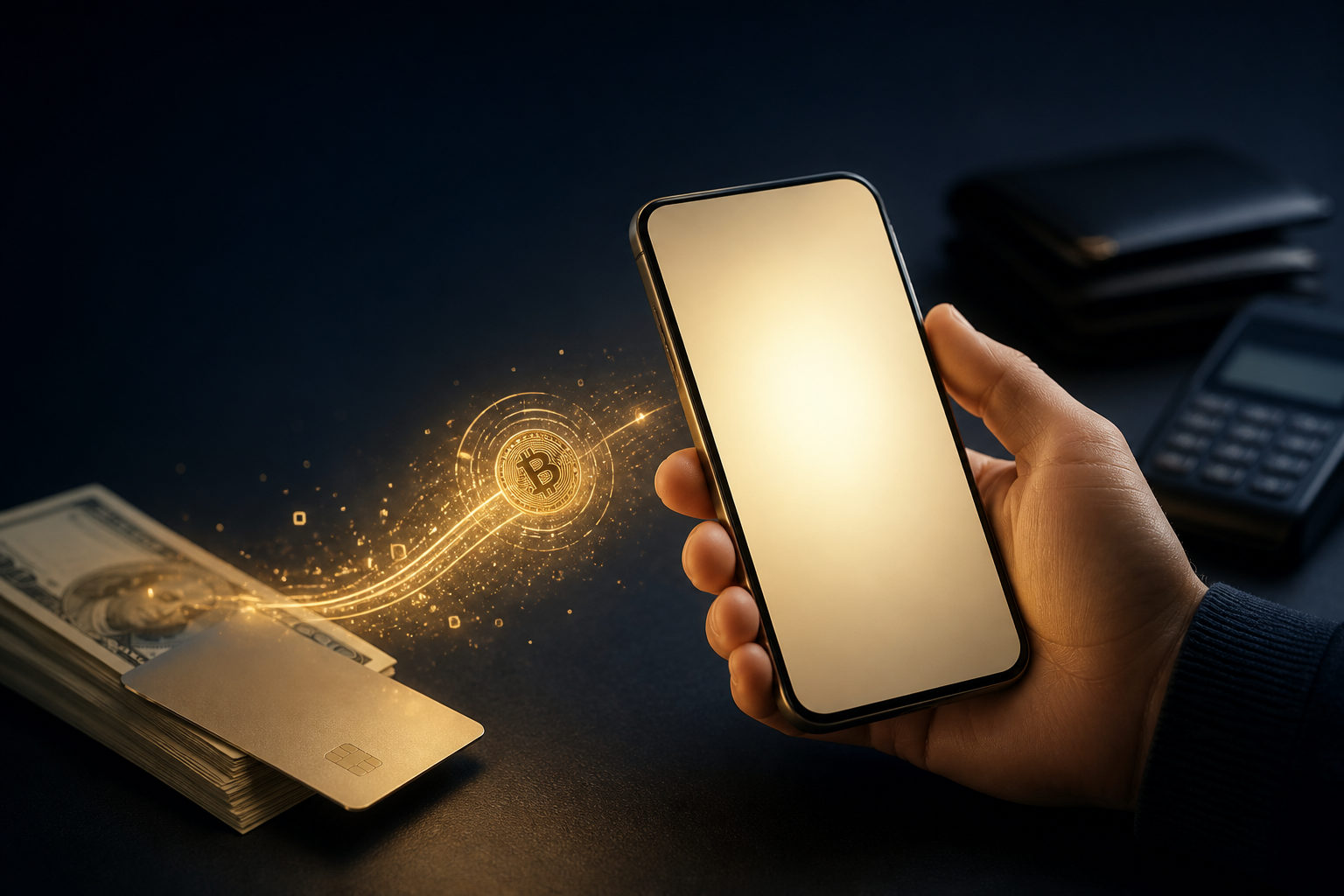
Buying Bitcoin means exchanging cash or another asset for BTC, then deciding where to keep it, how to move it, and what you may actually use it for.
What you are really buying
Many first-time buyers think the purchase ends when an app shows a balance. It does not. The bigger issue is control: are you holding Bitcoin in a way that lets you withdraw it, or are you only looking at a number inside a service account?
Bitcoin runs on a blockchain rather than a single company's database. Its supply is capped at 21 million coins, and the smallest unit is a satoshi, which equals one hundred millionth of a BTC. So no, you do not need to buy a whole coin to get started.
That distinction matters right away. A person can have price exposure to Bitcoin without having direct control over the asset itself, and those are not the same experience when storage, transfers, or risk come into play.
How to buy Bitcoin, step by step
Start with the reason, not the checkout screen
Some people buy Bitcoin to hold it for a long time. Others want to send funds to another person, test a wallet, or pay a merchant that accepts BTC. Your reason shapes nearly every later choice, from how often you plan to buy to whether fast withdrawal access matters at all.
A vague goal leads to messy decisions. Someone who only wants to learn one small payment may not need the same setup as a person building a long-term position.
Pick a service that explains its rules clearly
There are several ways to get Bitcoin: trading apps, broker-style products, and wallets with built-in purchase features. The smart comparison is not the marketing banner. Read the withdrawal policy, account verification steps, fee disclosures, security controls, and whether the service separates custody from simple price exposure.
Simple can be fine. Hidden limits are not. If a service makes buying easy but moving BTC out difficult, you may end up with less flexibility than you expected.
Set up account security before you fund anything
New buyers often rush to deposit money and come back to security later. Reverse that order. Use a strong password, turn on two-factor authentication, review device or session settings if they exist, and make sure account alerts reach you.
This is where scams often strike. A fake support message or login page can do more damage than a bad trade if your basic protection is weak from the start.
Check the full cost before you place the order
Buying Bitcoin is not just about the displayed market price. Depending on the service, you may face a spread, a trading fee, and a later withdrawal charge if you send BTC to your own wallet. Those pieces can change how much Bitcoin you actually receive.
Look at the order confirmation carefully. It should tell you what you pay, what amount of BTC you receive, and whether another charge appears when you move it off the platform.
Choose where the Bitcoin will live after the purchase
You have two broad paths. Keep the Bitcoin with the service that sold it to you, or withdraw it to a wallet you control with a private key or recovery phrase. Convenience usually sits on one side. Responsibility sits on the other.
Self-custody appeals to people who want more direct control. It also creates a new job: backup. Lose the recovery phrase, record it incorrectly, or expose it to someone else, and there may be no easy way back.
Make a small test transfer first
Before sending a larger amount, verify that the receiving wallet supports BTC, check the destination address carefully, and send a small test transaction. Once that arrives as expected, the full transfer feels much less risky.
Most early mistakes are ordinary ones. A rushed copy-paste, a misunderstood network option, a skipped confirmation screen. Slow beats clever here.
What can you buy with Bitcoin?
This is often the real question behind a search about buying Bitcoin. People want to know what happens after the purchase. The short answer: Bitcoin can be used for payments, but acceptance depends on the merchant, the service provider, and the rules of the place where you are spending it.
- Online goods and services: Some digital sellers and niche merchants accept BTC directly.
- Gift cards: In some cases, people use Bitcoin to buy gift cards and then spend those with traditional retailers.
- Person-to-person payments: If the other party accepts BTC, Bitcoin can work as a transfer tool.
- Holding as an asset: Many buyers are not planning to spend right away; they simply want exposure to Bitcoin itself.
If you are asking "what can you buy with bitcoin" or "what can I buy with bitcoins," the practical answer is to verify acceptance before you start the payment flow. Check the currency requested, the network used for settlement, and the merchant's refund terms. Those details matter more than broad lists found online.
Where beginners get trapped
The biggest problems usually happen outside the buy button. Fake wallet apps, impersonated support staff, message groups promising guaranteed returns, and strangers offering to walk you through the process all target the same weakness: a new buyer who has not yet built good habits.
| Risk | Why it is dangerous | Safer move |
|---|---|---|
| Using an unknown service | You may not understand who controls custody or withdrawals | Read the rules first and confirm BTC withdrawals are supported |
| Sharing a recovery phrase | That can hand over full wallet control | Store it offline and never send it to anyone |
| Following remote instructions from a stranger | You may be pushed into transfers or approvals you do not understand | Stop and verify each action on your own screen |
| Buying only because of hype | That skips risk, fees, and exit planning | Understand purpose, storage, and transfer rules first |
One common misunderstanding deserves its own mention: being able to buy Bitcoin does not mean you already know how to use Bitcoin. Real competence shows up later, when you judge custody options, handle transfers calmly, and spot a scam before it gets your attention for too long.
FAQ
Does buying Bitcoin mean I fully own it?
Not always. If the service lets you withdraw BTC to your own wallet, you can take direct custody; if it only offers internal exposure without withdrawals, your control is more limited.
Do I need to buy one whole Bitcoin?
No. Bitcoin is divisible into very small units, and one satoshi equals one hundred millionth of a BTC, so beginners can buy small amounts based on their own budget.
What can I actually pay for with Bitcoin?
That depends on whether the seller accepts BTC. Common examples include some online services, digital goods, gift cards, and person-to-person payments where both sides agree to use Bitcoin.
Should I keep Bitcoin on the platform or move it to my own wallet?
The answer depends on what you value more. Frequent traders may prefer convenience, while people focused on control often spend time learning wallet management and recovery phrase backup.
What do beginners miss most often when they buy Bitcoin?
Withdrawal limits and transfer testing get missed all the time. Before you buy, check whether you can move BTC out later, what that costs, and how you will confirm the first transfer safely.
If you are about to buy Bitcoin for the first time, decide the purpose first, review the rules before funding, secure the account, and test your transfer path with a small amount before doing anything bigger.
Disclaimer: This article is for informational and educational purposes only and is not investment, financial, or legal advice. Crypto assets are highly volatile and you could lose your entire investment. Do your own research and decide carefully.