
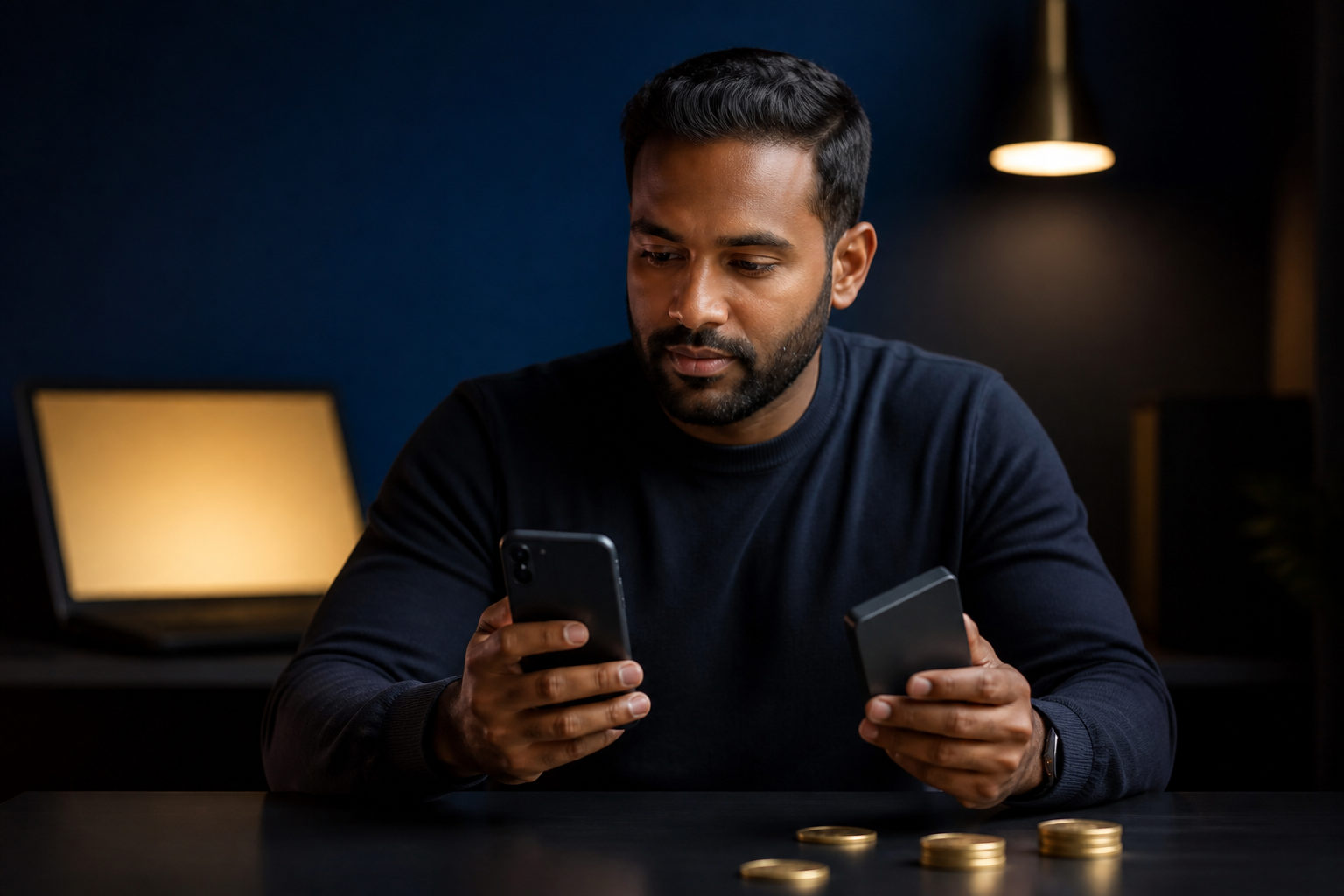
Why buy Bitcoin? In practical terms, people buy it for three main reasons: moving value, holding a scarce digital asset as part of a long-term plan, or learning how self-custody works. Before any purchase, the real job is to match the use case to your risk tolerance and fraud awareness.
Step 1: Define the job you want Bitcoin to do
Many beginners start with the purchase itself, even though the better starting point is purpose. If you want Bitcoin for long-term holding, your process will look different from someone who only wants to test a wallet or understand on-chain transfers.
Clarity matters because Bitcoin can play different roles. Some people treat it as a portable digital asset they can move on a public network. Others see it as a speculative but scarce asset with a fixed supply cap of 21 million coins. Some buy a small amount simply to learn what it means to hold an asset with their own private keys.
It also helps to define what Bitcoin will not do for you. It does not guarantee profit, remove volatility, or reverse careless actions. If you send funds to the wrong address, share recovery words, or trust a fake support message, the problem is not the technology alone; it is the process around your decision.
| Goal | Practical approach | Why it fits | Main caution |
|---|---|---|---|
| Long-term holding | Buy in stages and focus on storage | Reduces the pressure of a single entry point | Be ready for sharp price swings |
| Learning by doing | Use a small test amount | Lets you practice with limited downside | Double-check addresses before transfers |
| Self-custody | Learn wallets and backups before moving funds | Control improves only if you can manage it | Losing recovery data can mean permanent loss |
| Short-term trading | Assess emotional tolerance first | Frequent decisions magnify mistakes | Rapid trading can turn confusion into losses fast |
Action
Write one plain sentence that answers why you want to buy Bitcoin. Keep it specific: long-term saving, wallet practice, asset transfer, or active trading.
Why this matters
That sentence shapes everything after it: how much convenience you want, whether you need self-custody, and how much volatility you can live with without panicking.
Watch out for
Do not borrow someone else’s reason. A person chasing short-term momentum is solving a different problem from a person who wants to learn custody and transfers.
Step 2: Build a fraud filter before choosing any service
For beginners, the biggest early risk is often not market movement. It is getting pulled into a bad setup through private messages, group chats, fake support accounts, profit screenshots, or pressure from someone claiming to have a special method.
Since this article does not recommend any specific platform, the useful move is to create a screening method. You do not need to know every good option at the start. You do need to reject obviously dangerous ones.
| What to check | Healthier sign | Danger sign | What to do |
|---|---|---|---|
| How they contact you | Clear process and visible risk disclosure | Private pressure and constant urgency | Stop the conversation |
| How they talk about returns | They admit loss is possible | Claims of guaranteed profit or capital protection | Rule it out |
| Where money goes | Funding path is transparent | Asked to send funds to a personal account or unknown wallet | Do not send money |
| Software source | You can verify where the app comes from | Unsolicited install files or unknown apps | Do not download |
| Support behavior | Specific answers you can verify | Only pushes deposits or upgrades | Exit and keep records |
Action
Create your own stop list before you buy. If anyone asks for a one-time code, remote screen access, wallet recovery words, or an urgent transfer, the conversation ends there.
Why this matters
Most new users lose money through trust errors before they lose money through market timing. A simple refusal rule protects you from the most expensive kind of beginner mistake.
Watch out for
A polished profile, technical language, and profit screenshots do not prove legitimacy. People can fake competence much more easily than they can prove trustworthiness.
Step 3: Break the actual purchase into small decisions
Once you are ready to buy, keep the process narrow and deliberate. Instead of doing everything in one rush, separate account security, order placement, test size, and storage decisions.
| Purchase stage | What to do | Reason | Easy mistake |
|---|---|---|---|
| Secure access | Set a strong password and enable two-factor authentication | Protects the account before money enters it | Sharing codes with anyone claiming to help |
| Choose a buying rhythm | Decide between one purchase or staged buying | Different pacing creates different emotional pressure | Changing the plan because of a sudden move |
| Run a small test | Complete one small purchase first | Confirms that you understand the flow | Ignoring page inconsistencies and fake prompts |
| Plan storage | Decide whether to keep it in account or withdraw | Control and responsibility depend on this choice | Withdrawing without checking the destination carefully |
This is where the question of “para que sirve comprar bitcoins” becomes more concrete. Buying Bitcoin is not only about hoping for a higher price later. It can also be a way to learn how value moves without a bank-style account model and what it means to hold an asset under your own control.
Bitcoin began with the genesis block in January 2009, and new blocks are added about every 10 minutes. That detail matters because it reminds you that network transfers are processed through a public system with its own timing, not through the instant logic people expect from messaging apps or card payments.
Action
After your first purchase, pause. Check whether you know how to review the record, how to buy again, and how to sell or withdraw if needed.
Why this matters
Many people move quickly when buying and then discover they never learned the exit path. A process is only understood when you know both how to enter and how to leave it safely.
Watch out for
Buying successfully does not end your risk. Device security, sign-in habits, and storage choices still matter after the order is complete.
Step 4: Decide between convenience and self-custody
After the purchase, you face a basic choice: keep the Bitcoin with the service you used, or move it to a wallet you control. Neither option is universally right. The better choice depends on your goal and your ability to manage the trade-offs.
| Storage choice | Main advantage | Main risk | Best fit |
|---|---|---|---|
| Keep it with the service | Simple and easier for beginners | Relies on a third party for custody | People doing a small first test |
| Use self-custody | You control the private keys | You carry the backup burden | People willing to learn wallet basics |
Self-custody is one of Bitcoin’s most distinct features. It means your asset can sit under your control rather than inside a standard account structure managed for you. That benefit only becomes real if your backup habits are sound.
The smallest Bitcoin unit is the satoshi, with 1 satoshi equal to one hundred millionth of a BTC. You do not need a whole coin to learn how wallets, receiving addresses, and transfers work. A small test amount is often enough to teach the operational side.
If you move funds to a wallet, store recovery data offline. Do not leave it in chat apps, cloud notes, email drafts, or screenshots on connected devices. A wallet is only as safe as the habits around it.
Action
If self-custody is your goal, start with one receiving test and one small transfer. Confirm every character of the address and keep your backup process simple enough that you can actually follow it.
Why this matters
Control and responsibility come as a pair. The more you want the first, the more carefully you need to handle the second.
Watch out for
No real recovery process requires you to send your recovery words to another person. Anyone asking for them is introducing risk, not solving it.
Step 5: Decide what happens after you buy
Many people focus on whether to buy and forget to plan what comes next. You should know in advance what would make you hold, pause, add, or exit. Without that structure, every market move starts to feel like an emergency.
Bitcoin’s price is set by market trading. If your real question is where to check the live price, use major market data tools or the trading interface you personally use, then compare the displayed buy and sell quotes at the same moment. A chat room quote or a viral post is not a reliable reference point.
| After-buy situation | Better response | Why it helps |
|---|---|---|
| You bought to learn | Complete one transfer and one backup exercise | That fulfills the learning goal without forcing more exposure |
| You bought for a long-term plan | Review the plan instead of reacting to every move | Short-term noise can wreck a long-term process |
| You feel constant stress | Reassess position size | Emotional strain is a risk signal of its own |
| A stranger starts coaching you after you buy | Verify everything independently | Fraud often appears during the “helpful guidance” stage |
There is also an education angle that people often overlook. Bitcoin is tied to a public set of rules: a white paper published in 2008 under the title Bitcoin: A Peer-to-Peer Electronic Cash System, a supply cap, and a halving cycle that occurs about every 4 years, or every 210,000 blocks. Even if you never become an active holder, buying a small amount can help you understand how those ideas work in practice rather than as abstract headlines.
FAQ
Is buying Bitcoin only about trying to profit from price moves?
No. Some buyers are focused on long-term allocation, while others want to learn wallet use, on-chain transfers, or self-custody. The purchase can be educational or operational, not only speculative.
Does it make sense to buy a very small amount?
Yes. A small amount is often enough to practice account security, buying flow, withdrawal steps, and backup discipline. For a beginner, that hands-on lesson can matter more than size.
Do I need to move Bitcoin to my own wallet right away?
Not always. If your goal is a simple first experience, keeping it where you bought it may be easier at the start. If your goal is control, then learning self-custody becomes part of the purchase decision.
How can I tell whether someone’s buying method is unsafe?
Look for urgency, guaranteed returns, requests for codes, wallet phrases, or direct transfers to a person. If the method depends on pressure or secrecy, it deserves extra suspicion.
Where should I check the current Bitcoin price?
Use established market data pages or the interface where you would actually trade. Check the quotes there directly instead of relying on screenshots, comments, or verbal claims from other people.
If you are still asking what buying Bitcoin is for, the clearest answer comes from a small, controlled test. Define the purpose, reject pressure, complete one careful purchase, and decide from experience whether Bitcoin actually serves your needs.
Disclaimer: This article is for informational and educational purposes only and is not investment, financial, or legal advice. Crypto assets are highly volatile and you could lose your entire investment. Do your own research and decide carefully.