
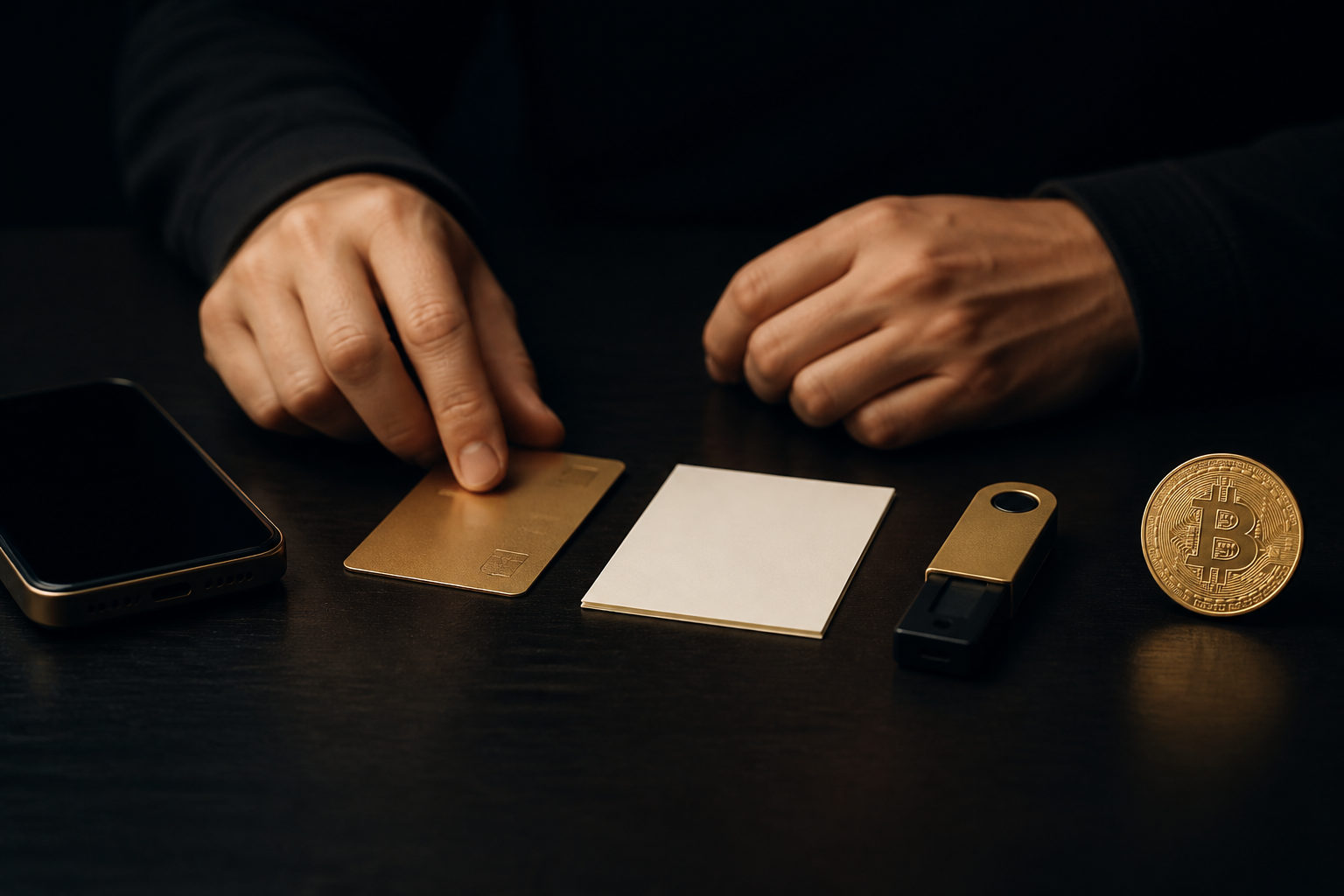
Buying bitcoin feels like a pain when every step carries a different kind of risk: account checks, payment rules, order types, withdrawal limits, and wallet security. The process gets easier once you separate those parts and deal with them in the right order.
Start by deciding what you are actually trying to buy
Many beginners say they want to buy bitcoin when they really mean one of two different things. Some want price exposure inside an account and do not plan to move anything on-chain. Others want actual bitcoin that they can withdraw to a wallet they control.
That distinction changes everything that comes next. If your goal is simply to learn how the market works, your main concerns are order flow, fees, account restrictions, and how selling works later. If your goal is self-custody, you need to understand receiving addresses, backups, and who controls the keys before you place the first order.
A lot of frustration starts here because people skip the decision and try to figure it out in the middle of a live transaction. That is when they discover that buying was the easy part and moving funds safely is the harder one. If you know your end goal first, the rest of the process becomes far less messy.
Before opening an account, map your verification and payment path
Most legitimate routes to buy bitcoin ask for identity verification. That can feel annoying, but it also tells you something important about how the service handles compliance, fraud checks, and account recovery. You should prepare a stable email address, a phone number you control, and a device you use regularly. Constantly switching devices or networks can trigger extra review.
Your payment path matters just as much. Think about how fiat money will enter the system and what steps that method adds. Different payment methods can affect how quickly funds become usable, how fees are shown, whether a payment can be reversed, and whether withdrawals are available right away.
This is one of the most common places where people say buying bitcoin is a pain. The problem often is not the purchase itself. It is the moment they realize they sent money in before understanding what the account can do next, or what restrictions apply to newly funded balances.
A better approach is to read the service rules before you register, especially the parts covering deposits, purchases, sales, withdrawals, freezes, and dispute handling. A slick interface is not enough. You need to know where the rules live and whether they are written clearly enough that you could rely on them if something goes wrong.
If someone in a chat group says they can help you skip steps, treat that as a warning sign. The shortcut usually means moving part of the process outside the official system, which removes the record that would protect you later.
Learn the order types before you click buy
Many buying screens look simple, but the transaction logic behind them is not all the same. A direct purchase, a limit order, and a user-to-user trade may all end with bitcoin in your account, yet the path and the risks are different.
A direct purchase is usually the easiest first step because the process is short. You see a quoted amount, review the cost, and confirm. The tradeoff is that convenience can hide details in plain sight. If you do not check what amount of bitcoin you will actually receive after fees and conversion, the result may not match what you expected.
A limit order gives you more control over the price condition, but that also means the order may sit there unfilled. New users often mistake a submitted order for a completed purchase. Funds may be reserved or waiting, while no bitcoin has actually been bought yet.
User-to-user trading adds another layer. You are dealing with another person while the platform mainly provides the workflow and the dispute process. This is where sloppy behavior causes trouble fast. If you move the conversation to a different app, write random notes in a payment reference, send extra money outside the order, or cancel the official trade because the other side told you to, you weaken your own position if a dispute starts.
For a first purchase, a test transaction can teach more than a large one. The point is not that a small amount is magically safe. The point is that you can watch each status change, see what verification is required, and learn the timing without exposing too much at once.
After the purchase, withdrawals and storage are where mistakes get expensive
Many people think the hard part ends when the buy order fills. In practice, the part that needs more care is what happens after that. If you plan to withdraw bitcoin to your own wallet, you need to understand addresses, wallet setup, backups, and the meaning of control.
Bitcoin can be held in an account controlled by a service or in a wallet controlled by you. Those are very different situations. If you use self-custody, the private keys or recovery words become the center of your security. If someone else gets them, they can control the funds. Screenshots, cloud notes, copied text in chat apps, and photos stored on everyday devices all create avoidable exposure.
If you are not ready for self-custody yet, at least learn what the account status labels mean. Terms such as available, pending, locked, or processing can affect whether you can move funds at all. Some services also add extra checks before a first withdrawal or after a login from a new device. Finding that out only when you are in a hurry is a classic source of stress.
When you do withdraw, verify the receiving address carefully. Make sure the destination is meant for bitcoin and that you are following the wallet instructions exactly. A first withdrawal is a good time to test the path with a small transfer, confirm that your wallet receives it, and only then continue. That simple pause catches address errors and setup mistakes before they scale into a painful loss.
Fraud prevention works better when you spot the setup, not just the slogan
Scams in bitcoin rarely begin with a direct confession. They usually arrive dressed as help: a mentor who can make the process easy, a support agent who needs special access, a trader who offers to buy on your behalf, or a stranger who says they can solve a verification issue faster than the official route.
- Anyone asking you to leave the official workflow: private payments, side deals, switching to another app, or canceling the platform order before the trade is complete all remove the record that protects you.
- Anyone asking for recovery words, private keys, or verification codes: no real support process should require you to hand over direct control of your funds.
- Anyone offering to buy, hold, or manage bitcoin for you with little effort on your side: once the assets or the account controls leave your hands, your ability to verify what is happening drops sharply.
- Anyone claiming a payment failed and asking you to send money again before you check the order page: always confirm the order status first and use the official dispute or support path if needed.
Fake apps and fake interfaces are another major source of trouble. A screen can show balances, gains, and transfer messages without proving that anything real happened on-chain. If the download source is unclear, the interface looks off, or the service relies more on direct messages than on documented support channels, slow down. When withdrawals matter, trust what your wallet actually receives, not what a screen claims.
Turn the process into a checklist you can actually follow
If buying bitcoin still feels like a pain, convert the process into a sequence of decisions instead of treating it like one giant task. Decide whether you want trading exposure or self-custody. Choose a route with clear rules and normal verification. Read deposit, purchase, sale, and withdrawal conditions before funding the account. Learn the order type you plan to use. Run a test transaction. Set up your wallet and backup method before moving a serious amount.
This kind of checklist reduces stress because each item answers a specific question. What am I buying? How does money enter? What can stop me from withdrawing? Who controls the keys? Which records do I need if something goes wrong? Once each question has an answer, the process stops feeling chaotic.
FAQ
Why does buying bitcoin get stuck at identity checks?
Identity checks often fail when account details, phone access, and device behavior do not line up. If you use stable information and a consistent login environment, the process is usually easier to complete.
Should I move bitcoin to my own wallet right after the first purchase?
Only if you already understand wallet setup, receiving addresses, and backups. If those topics are still new, learn them first and test the withdrawal path before moving a larger amount.
Why is it risky when someone offers to guide me through every step?
Guidance is not the issue by itself. The risk starts when that person pushes you outside the official workflow, asks for codes or recovery words, or wants to control the account or the wallet for you.
What detail do beginners miss most often when buying bitcoin?
Many focus on the buy button and ignore the withdrawal rules, account status labels, and wallet side of the process. Problems often show up after the purchase, not during it.
How can I tell whether a bitcoin buying route is trustworthy enough to try?
Look for clear written rules, normal security checks, a defined support path, and transparent withdrawal conditions. Be cautious if the process depends on private chats, vague promises, or pressure to act quickly.
If you are ready to start today, write down your goal, your payment path, whether you plan to use self-custody, and the exact steps for a test transaction. If any part of that outline feels unclear, fix that first before sending money.
Disclaimer: This article is for informational and educational purposes only and is not investment, financial, or legal advice. Crypto assets are highly volatile and you could lose your entire investment. Do your own research and decide carefully.