
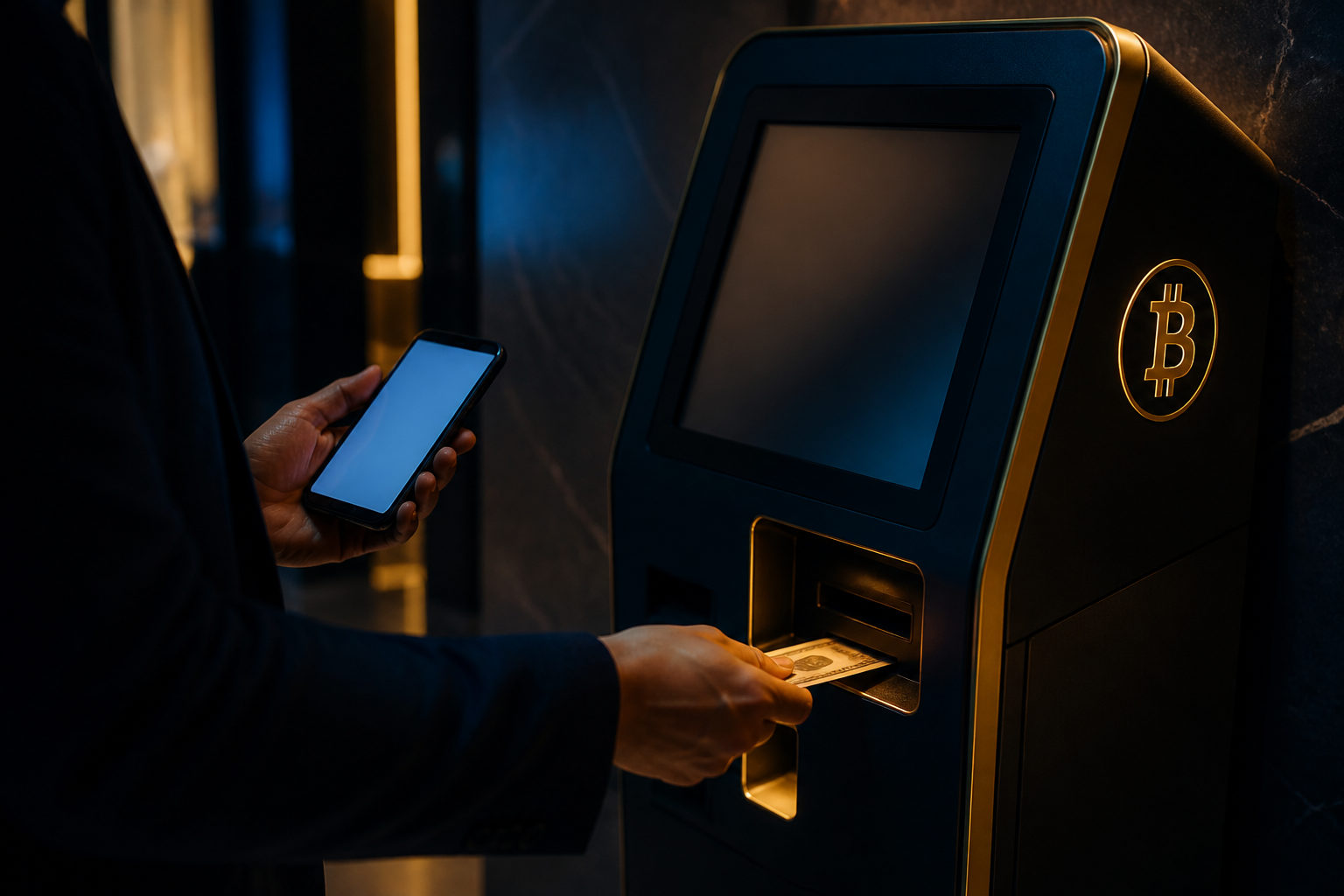
Bitcoin Depot works like a self-service counter for buying bitcoin: you verify your identity, choose an amount, provide a wallet address, pay, and the platform sends bitcoin to that address.
What Bitcoin Depot actually does
People often assume a bitcoin ATM works like a bank ATM that stores value for later use. In practice, the machine is closer to a kiosk that helps you place a purchase order. The screen collects your details and payment instructions, while the service provider handles pricing, compliance checks, fund confirmation, and the blockchain transfer.
That distinction matters. Bitcoin Depot is not the Bitcoin network itself, and it is not a special version of a wallet. It is a service layer that connects your payment to a bitcoin purchase and then delivers the asset on-chain.
| Stage | What the user does | What happens behind the screen |
|---|---|---|
| Identity check | Enter a phone number, scan an ID, or complete a selfie step | The system reviews access rules and risk controls |
| Amount entry | Choose how much to spend | The platform calculates the quote and fee display |
| Wallet address | Scan your bitcoin receive QR code | The service records where the bitcoin should be sent |
| Payment | Pay using the method supported by the terminal | The system confirms funds before release |
| On-chain transfer | Wait for wallet updates | The platform sends bitcoin to your address |
How a typical Bitcoin Depot transaction works
The easiest way to understand the process is to split it into three parts: identify yourself, tell the platform where to send the bitcoin, and complete the payment. Once the payment is accepted, the provider starts the delivery step. Your wallet may show the transfer quickly, or it may first appear as pending, depending on blockchain confirmation status.
Start with your own wallet
Before using Bitcoin Depot, it helps to have a wallet that you control. The machine needs a destination address. Without one, the provider cannot complete the transfer. In most cases, the simplest method is to open your wallet app, tap the bitcoin receive screen, and let the terminal scan the QR code.
New users sometimes expect the machine to hold the asset for them. That assumption can create confusion. The terminal is mainly a buying interface, while the wallet is the tool that receives and stores your bitcoin. If you are unsure whether a service offers a temporary holding method, the safer approach is to arrive with your own wallet already set up.
Complete identity verification
This is one of the biggest surprises for first-time users. A bitcoin ATM does not automatically mean anonymous access. Many services ask for a phone number, an ID scan, or an additional face check. The reason is simple: operators often have compliance and anti-fraud duties.
The exact verification flow may change from one transaction to another. A smaller or simpler use case may require less information, while another case may trigger extra review. The practical takeaway is that you should expect some level of identity screening and decide in advance whether you are comfortable with it.
Review the quote and fees
After you enter the purchase amount, the terminal usually shows an estimate of how much bitcoin you may receive, along with fee information or pricing terms. This is where many beginners focus on a single visible price and miss the bigger picture.
The more useful question is not just what quote appears on the screen. It is how much bitcoin will arrive in your wallet after all listed costs are applied. If the machine does not explain the fee structure clearly enough for you to understand the result, stopping there is often the smarter move.
Scan the address and pay
Next, the machine asks for your receiving address. A QR scan is usually better than typing the address by hand. Bitcoin transfers are generally hard to reverse once sent, so this is the point where careful checking matters most. Make sure the wallet is showing a bitcoin receive address and compare part of the address on your phone with what the terminal displays.
Payment options depend on the terminal and the service setup. People use the phrase bitcoin ATM broadly, but not every machine works the same way. Some are mainly designed for purchases, while others may include a selling flow as well. The key is to follow the exact transaction type shown on the screen rather than rely on the label alone.
What affects fees, delivery time, and the user experience
Using Bitcoin Depot can feel simpler than opening an exchange account, funding it, and placing an order online. The trade-off is that the entire decision happens in front of the machine, often with less room to pause and compare options. That makes fee visibility and address accuracy especially important.
| Issue | What commonly happens at a terminal | What to check |
|---|---|---|
| Fees | Costs may include service charges, pricing spread, and network-related costs | How much bitcoin you will actually receive |
| Arrival time | Payment is confirmed first, then bitcoin is sent, then the network confirms it | Whether the status says sent or fully confirmed |
| Risk review | Some transactions may trigger extra checks | Whether more documents or time are required |
| Reversibility | Once the transfer is sent, reversal is usually difficult | Address and transaction details before final confirmation |
One common misunderstanding is treating payment completion and wallet arrival as the same moment. They are related, but they are not identical. The service still has to send the bitcoin, and the blockchain still has to process that transfer. Your wallet may show an incoming transaction before the network treats it as fully confirmed.
Risk controls can also slow the process. Even after you have completed the visible steps, the system may pause the transfer for additional review if something about the transaction looks unusual. If that happens, keep every receipt, message, or screenshot you have. That record helps far more than trying the same transaction again right away.
Common mistakes to avoid before using Bitcoin Depot
The first mistake is thinking the machine itself is your wallet. It is better to view the terminal as a purchase point and your wallet as the destination. If you are not sure where the bitcoin will land, do not approve the final step yet.
The second mistake is checking only the displayed quote and ignoring the final received amount. A transaction can look straightforward on the surface while the true cost is reflected in the amount of bitcoin delivered after fees. What reaches your wallet is the result that matters.
The third mistake is assuming all bitcoin ATMs are private and instant. Some may feel fast, but identity checks and blockchain confirmation still shape the experience. It helps to approach Bitcoin Depot as a regulated service channel with its own rules, not as a magic shortcut around normal transaction mechanics.
| Common assumption | Better way to understand it |
|---|---|
| The machine is the wallet | The machine is the buying interface, while the wallet receives the bitcoin |
| Bitcoin ATM means anonymous use | Many transactions still involve identity verification |
| Payment means the process is over | There is usually still a send step and a network confirmation step |
| The visible quote tells the whole story | You also need to check fees and the final amount received |
FAQ
Where does the bitcoin go after I buy it through Bitcoin Depot?
In most cases, it goes to the wallet address you provided during the transaction. That is why it is smart to open your wallet first and make sure the receive screen is set to bitcoin before scanning.
Can I use Bitcoin Depot without already having a wallet?
Some services may offer a temporary method, but the rules are not always the same. For a cleaner first experience, it is usually better to set up your own wallet before you visit the terminal.
Why does Bitcoin Depot ask for ID or a selfie?
Operators often apply compliance and fraud checks. The exact steps can vary by transaction, so seeing an extra verification prompt does not automatically mean something went wrong.
I paid, but I do not see bitcoin yet. What should I do?
First, separate two possibilities: the platform has not sent the transfer yet, or your wallet has detected it but it is still waiting for confirmation. Keep your receipt and check the transaction status before taking any other action.
What should I double-check before confirming the purchase?
Focus on three things: the receiving address, the fee explanation, and the record of the transaction. If any one of those is unclear, pause and review before you continue.
If you plan to use Bitcoin Depot for the first time, set up your wallet in advance, pull up the bitcoin receive QR code on your phone, and do a small test purchase first so you can confirm the address and records match.