
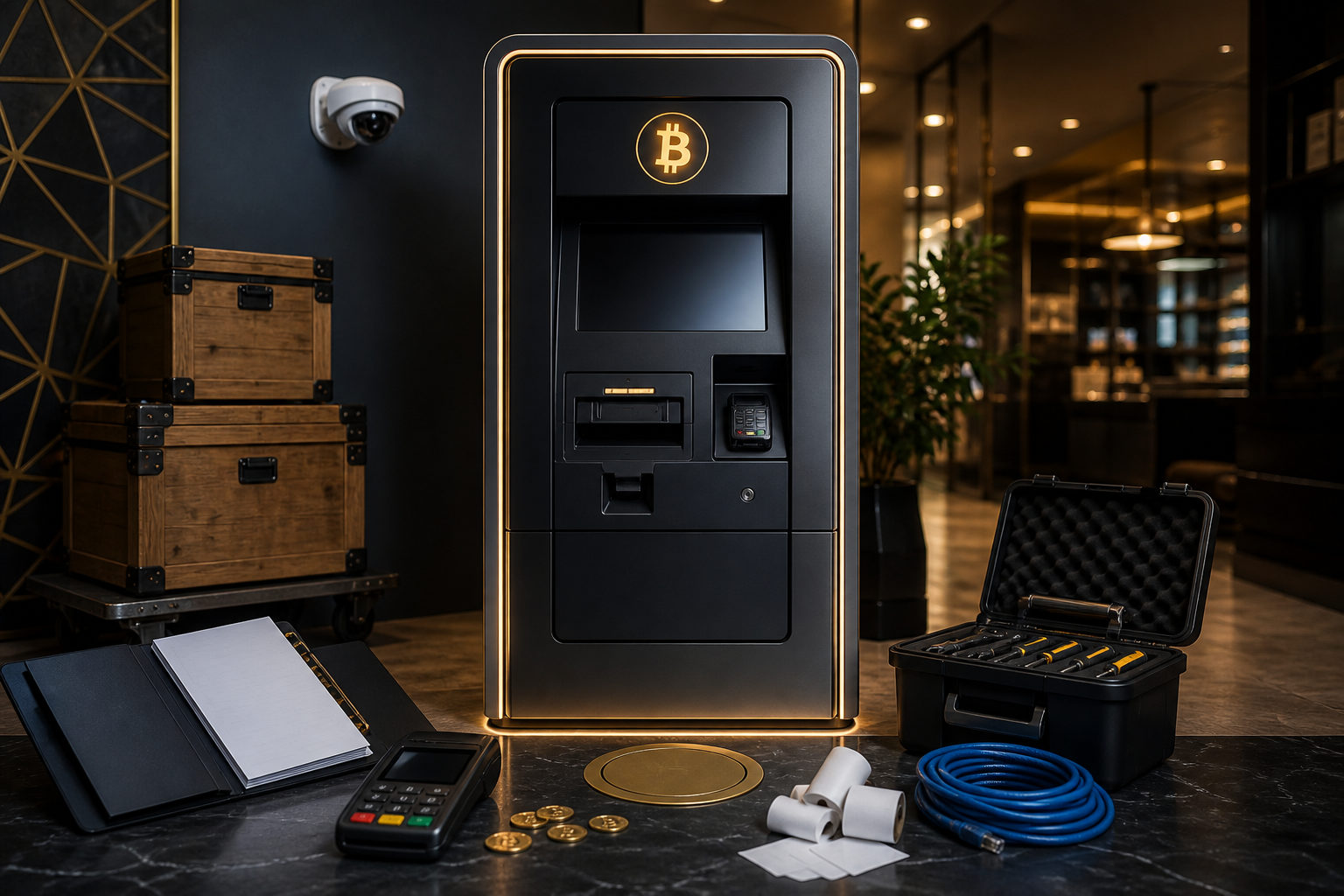
As of August 1, 2026, Bitcoin is $63060. If you want to know how much does a bitcoin ATM cost, the short answer is that the machine price is only one part of the bill; setup, compliance, location, maintenance, and transaction fees matter just as much.
Bitcoin market data for context
| Metric | Value |
|---|---|
| Price | $63060 |
| 24-hour change | 0.86% |
| Market cap | about $1.27 trillion |
| Fear & Greed Index | not provided in this article |
| Data time | August 1, 2026 |
According to CoinGecko and alternative.me data, Bitcoin traded at $63060 that day. That helps frame public interest around crypto kiosks, but it does not tell you what a bitcoin ATM will cost to buy or run.
A bitcoin ATM is not a simple off-the-shelf screen you plug in and forget. It usually sits inside a broader operating stack that can include hardware, software, identity checks, cash handling, support, venue agreements, and local regulatory work.
What “bitcoin ATM cost” really includes
People often ask how much does it cost to buy a bitcoin ATM as if there should be one universal sticker price. In practice, there are two separate questions: what it costs to acquire the machine, and what it costs to keep the service running.
That distinction matters. A lower equipment price can still lead to a more expensive operation if the software plan is restrictive, the venue takes a large cut, or the machine needs more hands-on maintenance.
Upfront costs
- Hardware purchase: machines differ by size, build quality, and whether they support one-way or two-way transactions.
- Installation and deployment: on-site setup, connectivity, testing, permissions, and staff onboarding may all be part of launch.
- Identity verification tools: some operators need a more detailed customer verification flow than others.
- Branding and interface changes: custom prompts, printed receipts, and exterior branding can add work.
- Opening operational setup: if the machine handles cash, operators also need a process for cash management from day one.
Many first-time buyers miss a basic point: being able to purchase a machine is not the same as being ready to operate one. A machine without a suitable venue, support process, and compliance path can sit idle.
Ongoing costs
- Software and back-office services: monitoring, transaction management, reporting, and remote status checks are often recurring services.
- Compliance work: requirements vary by jurisdiction, and maintaining procedures can remain an ongoing burden.
- Venue rent or revenue share: host locations may ask for fixed rent, a share of volume, or a hybrid structure.
- Maintenance and repairs: bill acceptors, receipt printers, cameras, touch components, and enclosures all need upkeep.
- Cash logistics: if the machine accepts or dispenses cash, counting, replenishment, and security are part of the business.
- Customer support: failed verification, stuck transactions, and user confusion create real staffing needs.
So when someone asks how much does bitcoin ATM cost, the better answer starts with total cost structure, not hardware alone.
User fees versus operator costs
The phrase bitcoin ATM cost can also refer to what customers pay when they use the machine. That is different from the operator's purchase budget, though the two are connected because operator expenses shape fee policy.
From a user perspective, fees may look simple on the screen. Under the surface, the total charge can come from several places, and not every operator displays them in the same format.
Common fee components for users
- Spread: the buy or sell quote on the machine may differ from spot market pricing.
- Service fee: some operators show a separate service charge, while others build it into the quote.
- On-chain fee: sending bitcoin to an external wallet can involve blockchain network costs.
- Payment and settlement overhead: more payment options can mean more back-end processing costs.
For operators, high fees are not automatically a good thing. If pricing feels too expensive, customers may use an exchange, broker, or another crypto access point instead. If pricing is too low, the machine may struggle to cover software, support, venue, and cash-handling costs.
That is why two bitcoin ATMs that look similar can produce very different customer experiences. The cabinet may be comparable, but the business model behind it may be completely different.
What changes the cost of a bitcoin machine
If your real question is how much is a bitcoin machine, the honest answer depends on configuration and operating conditions. This article does not have equipment price quotes, so it should not invent a number. What it can do is show the factors that usually move total cost up or down.
Feature set
A machine that only supports buying is not the same as one that supports both buying and selling. More functions usually mean more software logic, more support work, and in some cases more cash procedures.
Verification depth
Some deployments use lighter identity checks, while others need a more complete screening flow. A stricter process can affect setup complexity, support load, and the user experience at the screen.
Location type
A machine in a convenience store, mall, hotel lobby, or dedicated storefront does not face the same economics. High foot traffic can help, but premium locations may also bring tighter commercial terms.
Cash exposure
A kiosk that only initiates digital asset instructions is easier to manage than one that must deal with physical cash. Once cash enters the picture, security, replenishment, discrepancy handling, and routine visits become part of the operating model.
Local rules
This is often the deciding variable. Recordkeeping, customer identification, and business permissions differ by market, so the same machine can be workable in one place and difficult in another.
Put simply, a bitcoin ATM cost is not one number. It is a bundle of equipment, software, compliance, venue, and field operations.
Who should think about buying a bitcoin ATM
Not everyone interested in crypto should start by buying a machine. Physical kiosks look straightforward, but they create offline responsibilities that many online-only businesses never have to manage.
- Operators with access to reliable retail locations are in a stronger position.
- Teams that can handle support issues have a better chance of keeping customer problems under control.
- People who understand local operating rules are less likely to run into deployment friction.
- Anyone who simply wants Bitcoin exposure may find that owning a machine solves the wrong problem.
For ordinary users, learning about bitcoin ATM fees is useful because it helps compare convenience against cost. A machine may be easier to access, but ease of use does not always mean the lowest total charge.
FAQ
What should I check first before buying a bitcoin ATM?
Start with whether you can actually place and operate the machine where you plan to do business. Without a venue, support process, and compliance path, hardware specs do not mean much.
Why is it hard to answer “how much does it cost to buy a bitcoin ATM” with one number?
Because the machine is only one part of the business. Software, installation, maintenance, venue terms, and compliance work can change total cost in a big way.
Is the customer fee the same as the operator's machine cost?
No. Customer fees apply to each transaction and may include spread, service charges, or network costs. Operator costs cover acquisition and ongoing operation of the kiosk business.
Does the Bitcoin price affect ATM demand?
It can affect attention and transaction interest. On August 1, 2026, Bitcoin was $63060 and the 24-hour change was 0.86%, but market interest alone does not decide whether a kiosk will make economic sense.
Can a regular store owner add a bitcoin ATM easily?
Not always. A store owner still needs to assess customer fit, support needs, operating risk, and the practical demands of hosting a crypto transaction point.
If you are comparing bitcoin ATM options next, focus on feature set, back-office support, venue terms, cash procedures, and fee disclosure. Bitcoin was $63060 that day, yet the real cost question still comes down to operating design rather than the coin price itself.