
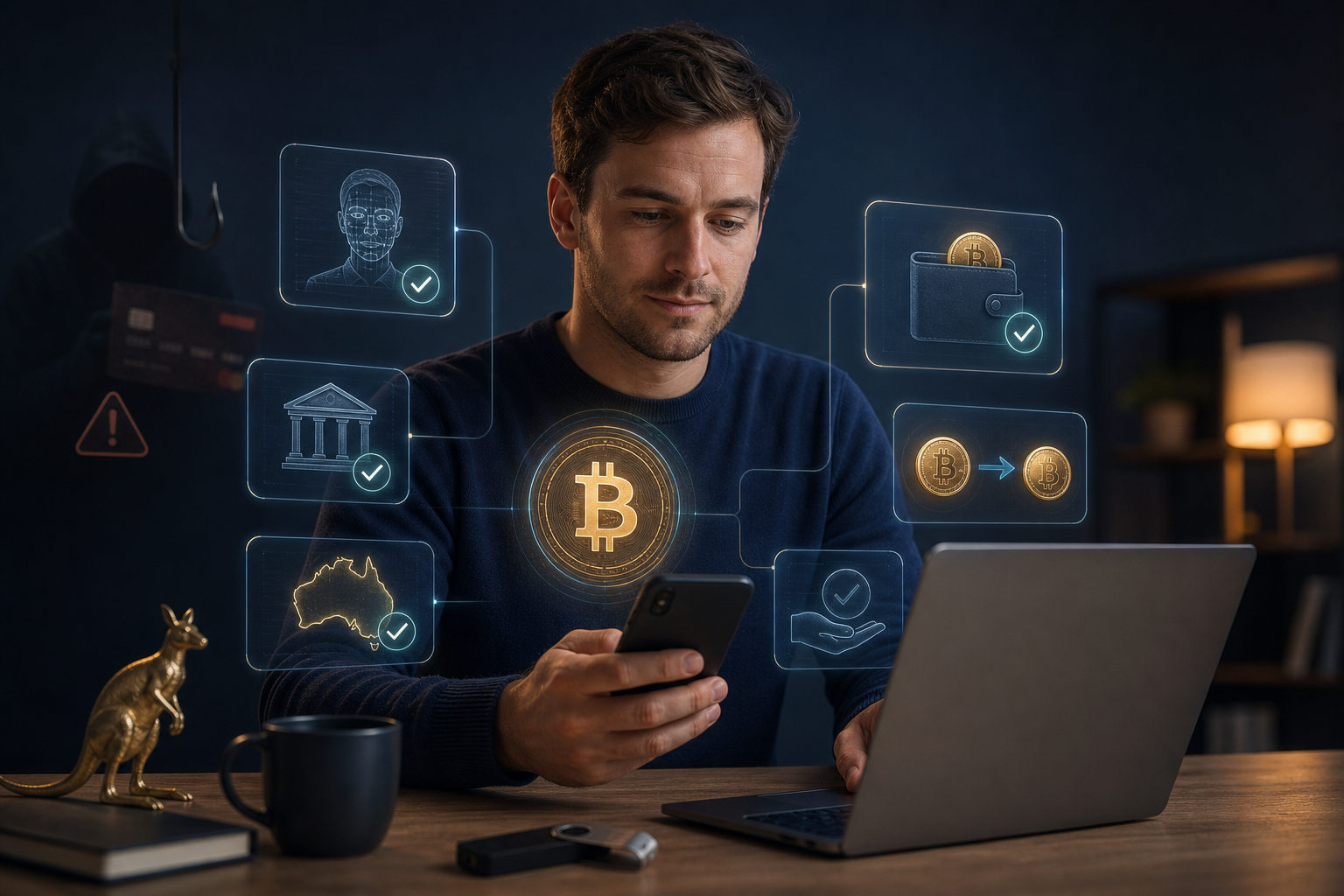
To buy and sell bitcoin in Australia, start with a legitimate fiat on-ramp, complete identity checks, fund your account carefully, and treat storage and selling as separate decisions. Most mistakes happen when people rush, trust the wrong person, or skip basic checks.
Step 1: Choose your route before you send any money
For most beginners, the simplest path is using a service that supports buying and selling bitcoin with standard banking rails. The reason is practical: account records, funding steps, and withdrawal rules are usually easier to review than in person-to-person deals.
The main caution here is not to let social media posts, chat groups, or private messages push you into an off-platform transfer. If someone asks you to send money directly to a personal bank account or promises better rates if you avoid the normal process, that is already a warning sign.
Step 2: Check the account rules before you open one
Before registering, read the fee schedule, deposit methods, withdrawal conditions, and security options. People often focus on the buy button and ignore the parts that matter later, especially when they want to move bitcoin out or cash out after a sale.
You should also look at how clearly the service explains its process. A page that spends more time pushing guaranteed profits, managed trading, or secret signals than explaining how accounts work is not where a beginner should start.
Why the account should be in your own name
Open and operate the account yourself. Using someone else's identity, bank details, or receiving account can create serious trouble if the service asks questions about ownership, source of funds, or unusual activity.
Keep login credentials, verification codes, backup codes, and recovery details private. Many losses do not come from advanced attacks; they happen because a scammer persuades the user to hand over access.
Step 3: Complete identity verification, then fund the account
When you buy or sell bitcoin through a standard service in Australia, identity verification is commonly part of the process. That step helps reduce fraud, account misuse, and payment disputes, and it also means you should be prepared to follow instructions exactly.
Before you deposit, compare the payment details shown inside the official account area with what you are about to send. Do not rely on a screenshot from a chat app, and do not accept a last-minute "updated bank account" from a person claiming to be support.
Why a small test transaction makes sense
If this is your first time using a service, a small test can save you from a bigger problem later. It lets you confirm that funding works, the account reflects the balance correctly, and the buy process is understandable before more money is involved.
A test also shows how the interface handles fees, order confirmation, and later withdrawals. If anything feels confusing at this stage, there is no benefit in increasing the size of the transfer right away.
Step 4: When buying bitcoin, focus on execution and final amount
Before placing an order, make sure you understand what kind of order you are using. Some order types prioritize immediate execution, while others let you define the price you are willing to accept; knowing the difference helps prevent accidental trades.
What matters most to a beginner is the final result: how much bitcoin you will receive and what fees are included. Bitcoin is divisible into very small units, and 1 satoshi equals one hundred millionth of a BTC, so a screen full of decimal places is normal.
Where should you keep bitcoin after buying it
If you are buying a small amount just to learn the process, leaving it in the account may feel convenient. Still, convenience and control are not the same thing. Moving bitcoin to a wallet where you control the private keys gives you direct authority over the asset.
That said, self-custody comes with responsibility. If recovery information is lost, there is often no easy way to restore access; if it is exposed, the bitcoin can be moved by whoever gets it first. Storage should match your experience level and how often you plan to transact.
Step 5: Plan the selling path before you try to cash out
Selling bitcoin is more than pressing a sell button. First decide where the bitcoin is now and where the sale will happen. If your coins sit in a personal wallet, you may need to transfer them back to a service that supports selling before you can withdraw funds to your bank account.
The key reason to plan this in advance is to avoid transfer errors. You need to check the supported asset, the correct network, the destination address, and the cash withdrawal process before moving anything.
Why transfer checks matter so much when selling
Blockchain transfers are usually not easy to reverse once sent. A copied address may look like a small detail, but it is one of the highest-risk points in the entire sell flow.
If the service offers address whitelisting, extra confirmations, or added withdrawal protection, use them. Before sending, verify that the asset and network match exactly rather than assuming similar names mean the same thing.
Common scams to avoid
Fraud around bitcoin often targets beginners who want a shortcut. A scammer may pretend to be support, offer to "help" with account setup, ask for remote access to your device, or claim they can trade on your behalf with guaranteed results.
Another common pattern is fake urgency. You may be told a special window is about to close, that you must act now to lock in a deal, or that a transfer failed and needs to be resent to a different account. Slow down. Real account setup and real transfers do not require blind trust in a stranger.
- Do not share verification codes or recovery details.
- Do not send money to a personal account because someone promises a better rate.
- Do not trust screenshots as proof of payment or proof of release.
- Do not let anyone remote into your computer or phone to "help" you buy bitcoin.
- Do not assume a message is genuine just because it uses a company name or logo.
FAQ
Do I need a wallet before I buy bitcoin in Australia?
No. You can open an account, complete a small purchase, and then decide whether a personal wallet makes sense for you. If you expect to hold for a long time, learning wallet basics early is still a good idea.
What is the riskiest part of selling bitcoin?
For many beginners, it is the transfer back to the selling service rather than the sale itself. Errors with addresses, networks, or unsupported deposits can create bigger problems than the trade screen.
Is buying bitcoin directly from someone else a good idea?
It can carry much higher risk for a beginner. If the deal depends on private messages, personal bank transfers, or trust in screenshots, you have fewer protections and more room for fraud.
What should I learn before making my first trade?
Learn how fees appear, how order types differ, how deposits and withdrawals work, and what security settings are available. Those basics do more to protect you than any market tip.
If I only want to know the bitcoin price, where should I look?
Check a major market data site or the live market page of a trading service, but compare more than one source. If you plan to act on that price, also review the spread, trading fee, and withdrawal conditions.
When you are ready to act, follow a simple order: verify the service, open your own account, complete the checks, test with a small amount, decide how you will store the bitcoin, and only then plan the sale. That sequence removes a large share of beginner errors.
Disclaimer: This article is for informational and educational purposes only and is not investment, financial, or legal advice. Crypto assets are highly volatile and you could lose your entire investment. Do your own research and decide carefully.