
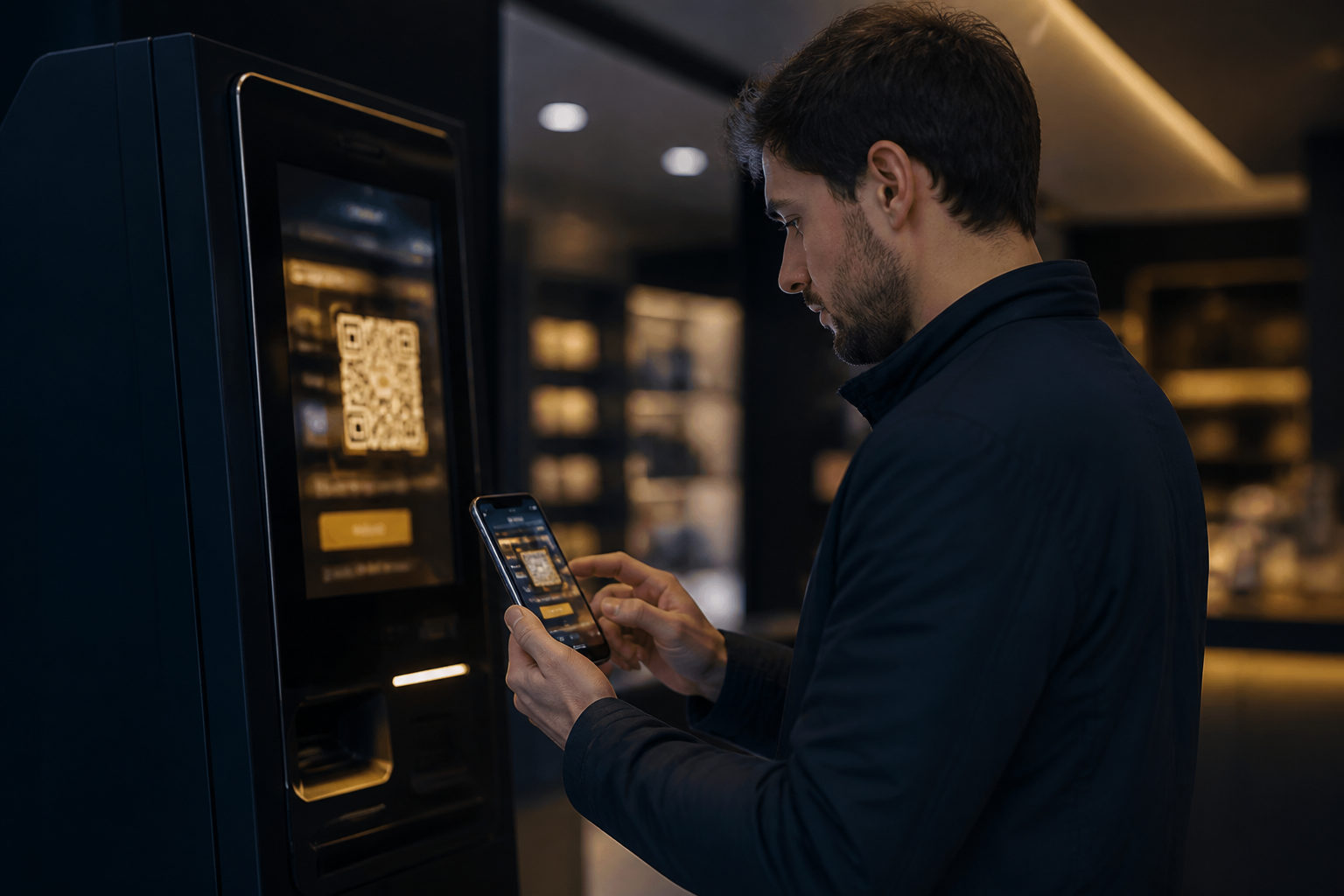
If you want to buy Bitcoin at a store, the first thing to verify is what the store is actually selling: a voucher, a brokered purchase, or direct Bitcoin delivery to your own wallet. That distinction matters more than the storefront itself.
Figure out the product before you pay
Some physical locations sell Bitcoin through a cash-to-crypto service, some sell redemption codes, and some only guide you through a purchase flow that still requires your own wallet. Ask one plain question: what do I leave with, and how does it reach me?
This is where a lot of people get tripped up. If the receipt, the checkout screen, and the delivery method do not match, you have very little clarity if something goes wrong later. The moment someone else starts speaking for your wallet, your control over the transaction gets weaker.
Read the receipt and the on-screen wording carefully. If the clerk keeps rushing you but avoids explaining where the Bitcoin goes, pause the process.
Check three things before any payment
Start with fees. A store purchase may include a service fee, a spread in the exchange rate, and extra processing costs. If you do not ask about the full cost first, the amount you receive can be far lower than you expected.
Next, make sure the wallet is yours alone. You should be the one opening the wallet, viewing the receiving address, and confirming the transfer. No one needs your seed phrase, login code, or recovery details to complete a normal purchase.
Finally, avoid completing the order on an unfamiliar device. Public computers, borrowed phones, and random web pages are risky because they can hide fake screens, phishing forms, or software that records what you type.
When you place the order, follow a clean sequence
- Open your own wallet and generate a fresh receiving address. That keeps the address under your control.
- Verify the address character by character before you submit it. A wrong Bitcoin address is usually not fixable.
- After payment, trust the wallet confirmation or the official status screen, not a verbal “it’s sent.” A spoken claim is not proof that the transaction has settled.
- Do not move the same funds again until the transfer has clearly appeared in your wallet. Acting too quickly can create a second mistake on top of the first one.
These steps are not busywork. They separate responsibility into clear pieces: you control the address, you confirm the payment, and you verify the receipt. Once those roles are clear, it becomes much easier to tell where a problem started.
Common scam patterns to watch for
One common pitch is a “cheaper way” to buy. The scammer offers a better rate, then asks for your seed phrase, verification code, or a transfer to their address. Once that request appears, you are no longer in a normal purchase flow.
Another trick is the fake checkout page. It may look like a real cashier screen, but it simply sends you to a lookalike site designed to collect account details or push you to scan a bogus QR code.
A quieter version goes like this: the clerk says the payment failed, the system glitched, or verification needs to be repeated, so you should pay again. Stop there and return to a page you can independently verify instead of adding more money under pressure.
What to do after the purchase
Once the Bitcoin arrives, check that the amount matches the order and that it is in your own wallet. If you only received a voucher or redemption slip, save the code, the receipt, and any order record right away.
If you plan to hold the asset for a while, keep it in a wallet you control rather than leaving it in a temporary page or a third party’s account. That is not extra complexity; it is a way to reduce dependence on someone else’s system.
FAQ
Is it safe to buy Bitcoin at a store?
It can be, if the process is transparent and you keep control of the wallet and receiving address. The risk rises sharply if anyone asks for your seed phrase, verification code, or remote access to your device.
What if the clerk offers to handle it for me?
If the help includes logging into your account, storing your recovery details, or entering your receiving address for you, do not hand that over. Doing each step yourself makes later verification much easier.
What should I do with a redemption code or voucher?
Check whether it clearly maps to a specific claim process, validity range, and delivery condition. If the wording is vague, stop before sending more money.
Why should I avoid scanning an unknown QR code?
Because a QR code can hide a swapped receiving address that looks harmless on the surface. A safer move is to create the address in your own wallet and compare it before use.
When you buy Bitcoin at a store, focus on identity checks, address checks, and payment checks. If you keep control of those three points, you are far less likely to fall for a fake checkout page, a broker scam, or a bad transfer.
Disclaimer: This article is for informational and educational purposes only and is not investment, financial, or legal advice. Crypto assets are highly volatile and you could lose your entire investment. Do your own research and decide carefully.