
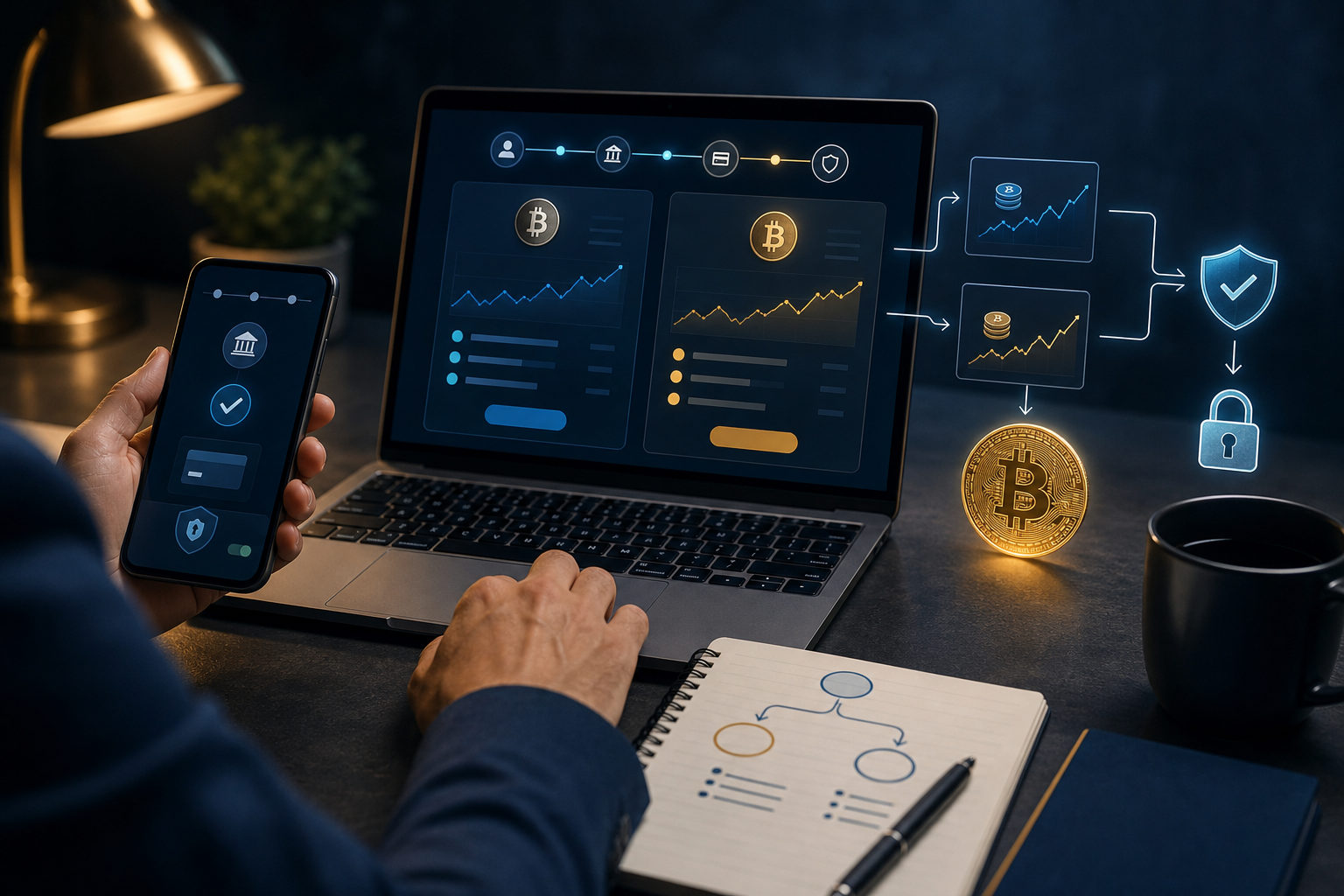
If you want to know how to buy bitcoin E*Trade, start with this: confirm what the broker actually offers before you place any order. If there is no clear in-account path, do not follow outside links, and do not send money to anyone claiming to help you buy.
Start by identifying what you are buying
Many people search for how to buy bitcoin on E*Trade and assume the process begins with the buy button. It does not. The first step is to verify whether you are looking at spot bitcoin, a bitcoin-related fund, or another product tied to bitcoin's price.
That distinction matters because ownership, transfer options, custody, and risk are not the same. A product that tracks bitcoin is not automatically the same as holding bitcoin that you can move to your own wallet.
- Action: Read the product page, disclosures, and trade description inside your account.
- Reason: You need to know whether you are buying actual bitcoin or a related security.
- Watch for: If the page is vague about asset type, stop and verify before doing anything else.
Set up your account before you think about buying
If you plan to get bitcoin exposure through E*Trade, your account setup comes before the trade itself. Identity verification, password strength, two-factor authentication, and funding instructions all need attention first.
This is where many beginners create avoidable problems. Delays, restricted transfers, locked access, and fraud attempts often begin with weak account security or mismatched bank details rather than the order screen.
- Complete identity checks: Matching account details can reduce funding and withdrawal friction.
- Turn on two-factor authentication: A strong password alone is not enough for financial accounts.
- Review funding methods: Check which transfer options are available and how they are described.
- Match account ownership: Funding from accounts under a different name can create extra review issues.
A common mistake is trying to save time by using a so-called account helper, payment middleman, or managed buying service. Avoid that. The moment your money goes through a third party, your control drops and recovery gets harder if something goes wrong.
Before placing an order, check the path, fees, and transfer rules
Once you find a possible bitcoin-related product, pause before buying. Look at three things in order: where the product is listed, what the full cost structure looks like, and whether the asset can be moved after purchase.
New users often focus on speed and ignore the fine print. That can leave you with a position that behaves differently from what you expected, especially if your goal was direct ownership rather than simple market exposure.
Use only official account paths
If you are searching for how to buy bitcoin in E*Trade, do not trust ads, direct messages, or forum replies that send you to login pages. Use the broker's official site, official app, or in-account navigation only.
Fake support pages and cloned login screens are common traps. If anything about the domain, app name, or sign-in prompt feels off, leave the page and restart from the official source.
Break down the full cost
Cost is rarely a single line item. Look for trading fees, spreads, fund expenses if relevant, and any limits tied to transfers or redemptions. If the wording is unclear, do not assume the cheapest-looking option is the simplest one.
Check whether you can transfer out
This point changes the whole experience. If your plan involves holding your own bitcoin, you need to know whether the product can be withdrawn or transferred to a personal wallet. If not, you may only have account-level exposure inside the broker.
Place the trade slowly and keep records
After the product, account, and rules are clear, you can move to the order screen. Go step by step. Fast clicking causes more problems than slow verification.
- Enter your amount or quantity: Start within a level of risk you can handle emotionally and financially.
- Review the order ticket: Recheck the asset name, order details, and cost summary.
- Pause before confirming: Make sure you are still in the official interface and on a secure device.
- Save the confirmation: Keep screenshots or trade records for later review and account matching.
That extra pause matters. In many cases, once you confirm the order yourself, reversing confusion later is difficult. A clean paper trail helps if you need to compare statements or spot unauthorized activity.
If you do end up with withdrawable bitcoin, the next decision is storage. A personal wallet gives you direct control, but it also gives you direct responsibility. If you do not understand backups, seed phrase safety, and phishing risks, self-custody can create a different set of mistakes.
Scam prevention: stop when someone asks for codes or urgent transfers
Most scams built around how to buy bitcoin E*Trade rely on pressure, confusion, or imitation. The script changes, but the warning signs are familiar.
- Fake support: Anyone who contacts you first and asks you to install remote access software is a risk.
- Fake pages: A page that looks real is not enough. Check the domain and app source every time.
- Managed buying offers: If someone offers to place the order for you or hold funds on your behalf, step back.
- Requests for codes: Never share one-time codes, backup codes, or login verification details.
- Profit promises: Anyone presenting bitcoin as guaranteed gain should not be treated as a trusted guide.
Another pattern is the extra payment trap. A scammer may claim your account needs verification, release fees, tax clearance, or a security deposit before funds can move. Do not handle that through chat. Go back to the official account interface and verify it there.
FAQ
Can you always buy bitcoin directly through E*Trade?
No. It depends on what products and features are available in your account at that time. The safest approach is to verify the official in-platform offering yourself.
If I buy a bitcoin-related fund, is that the same as owning bitcoin?
Not necessarily. You may be buying a security linked to bitcoin rather than bitcoin that you can control with your own wallet and private keys.
What should beginners check before the first order?
Start with account security, funding instructions, and the product description. Skipping those basics creates more trouble than entering at the wrong moment.
Should I move bitcoin to a personal wallet after buying?
That depends on whether transfers are supported and whether you are ready to manage private-key security. Direct control can be useful, but only if you can handle the responsibility that comes with it.
Where should I check the live bitcoin price?
Use major market data sites, regulated trading interfaces, or the broker's own quote tools. Compare names, timestamps, and product type instead of relying on a single screenshot.
Use this checklist before you buy
Confirm the official entry point, product type, fees, transfer options, account security, and funding source before you place any order. If one item is still unclear, wait and verify it first; avoiding one bad decision matters more than buying a little sooner.
Disclaimer: This article is for informational and educational purposes only and is not investment, financial, or legal advice. Crypto assets are highly volatile and you could lose your entire investment. Do your own research and decide carefully.