
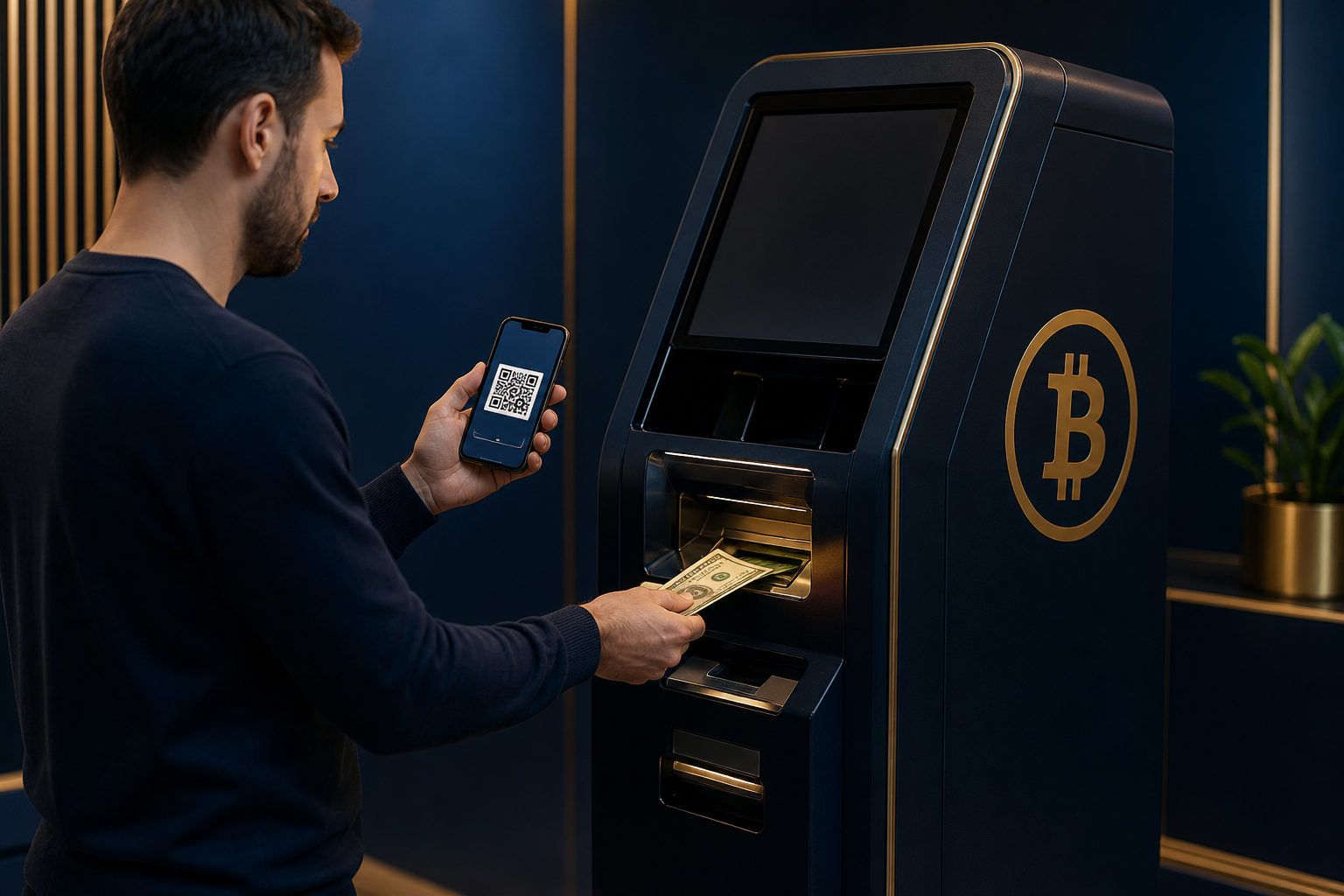
To buy bitcoin at a Bitcoin ATM, bring your own wallet, scan your BTC receiving address, complete any identity checks, review the fees, and only then pay. The real skill is not pressing buttons in order; it is avoiding scams, checking the destination address, and keeping records.
What a Bitcoin ATM does before you use one
A Bitcoin ATM is a self-service machine that lets people exchange fiat money for bitcoin. Some machines also support selling, but not every unit works both ways, so you should confirm that the screen clearly offers a bitcoin purchase option before you begin.
This is different from a bank ATM. A bank ATM interacts with a bank account, while a Bitcoin ATM sends funds on-chain, which means you need a wallet address that you control rather than card details.
What to prepare before you go
Set up a wallet you control
The first requirement is a wallet that can receive BTC and that you can access yourself. It may be a mobile wallet, a hardware wallet, or another wallet app, but the key point is simple: you should know where the receiving address is and how to back up the wallet.
That matters because bitcoin transactions usually cannot be reversed in the way many bank transfers can be corrected. If you rely on an address sent by someone else, or you are not sure who controls it, one mistake can be permanent.
Open your BTC receiving QR code in advance
Most Bitcoin ATMs ask you to present a wallet QR code so the machine knows where to send the bitcoin. Before leaving home, make sure your wallet opens correctly, switch to the receive screen, and confirm that the address shown is for BTC.
It is better not to depend on an old screenshot when you are unsure whether your wallet may generate a fresh address. Opening the wallet app on the spot is the safer habit.
Check identity requirements and payment options
Some Bitcoin ATMs ask for a phone number, a text verification code, or stronger identity checks. You should expect that rules can vary by operator and location, so look into the process before you line up and discover halfway through that you cannot finish the purchase.
Payment methods also vary. Some machines accept cash, while others may support cards or other payment methods, so do not assume your preferred option will work until the screen confirms it.
How to buy bitcoin at a Bitcoin ATM step by step
Step one: inspect the machine and the area around it
Look at the screen, the scanner, and the outer casing before you start. If anything appears damaged, unusual, or attached where it should not be, stop there.
The area matters too. Use a machine in a bright place with normal foot traffic, but avoid crowded conditions where someone can stand too close, watch your screen, or pressure you into rushing.
Step two: choose the bitcoin purchase option
Once you reach the main menu, select the option to buy bitcoin and make sure it refers to BTC rather than another asset. Some machines list several cryptocurrencies, and a first-time buyer should avoid switching between them out of curiosity.
The reason is practical. Different assets have different address formats and transfer rules, so buying the wrong one creates a problem that may be difficult to fix.
Step three: complete the verification process yourself
If the machine asks for a phone number, a code, or identity details, enter them directly on the official interface. Do not scan a random QR code shown by a stranger, and do not read verification codes out loud to anyone offering help.
This is where many scams begin. A normal purchase flow keeps you in control of the machine, while a scam often involves another person directing every move and telling you where to send the bitcoin afterward.
Step four: scan your own wallet address
Hold your wallet's BTC receiving QR code in front of the scanner and wait for the machine to read it. After the scan succeeds, pause for a moment and compare the beginning and ending characters of the address on screen with the address shown in your wallet.
This small check is one of the most important parts of the whole process. If the destination address is wrong, the bitcoin may be gone for good, so there is no reason to rush through this screen.
Step five: review the exchange rate, fees, and delivery details
Before paying, the machine will usually display what you are spending, how much BTC you are expected to receive, and any service charges or related terms. Read the full screen rather than a single line item.
People often focus only on whether the machine works and forget that convenience may come with a higher cost. If the fee structure is unclear or you cannot tell what you are really receiving, walk away and reconsider.
Step six: insert cash or complete the payment method shown
Only after reviewing everything should you insert cash or proceed with the payment method offered by the machine. Move slowly and watch each update on screen so you can confirm the amount is counted correctly.
If the machine accepts money and then freezes, keep any receipt and note any transaction reference shown. Do not leave immediately, and do not start a second purchase just because you feel uneasy.
Step seven: keep the receipt and check your wallet
After the transaction is submitted, the machine may print a receipt or display an order reference. Save that information, then open your wallet and check whether the transaction appears as pending or whether the receiving address matches what you expected.
Bitcoin does not always arrive instantly. On-chain transfers need processing time, so a short delay does not automatically mean something failed.
Common mistakes and scam patterns to avoid
- Someone tells you to buy bitcoin and send it to them: this is a common scam pattern used in fake investments, fake refunds, and account recovery stories.
- You never verify the address: if the destination is not a wallet you control, stop.
- You ignore the fee screen: a Bitcoin ATM may be simple to use, but simplicity does not mean low cost.
- You let strangers stand too close: QR codes, verification steps, and receipts should stay private.
- You throw away the receipt: if you need support later, that record may be the only reference you have.
Another warning sign is urgency. If someone tells you to go to a machine right now, buy bitcoin right away, and transfer it as soon as it arrives, you are probably being guided into a scam rather than a normal purchase.
When a Bitcoin ATM may not be the best choice
If you do not yet understand wallet backups, BTC receiving addresses, or how to confirm a transaction, it may be better to learn those basics first. A Bitcoin ATM can feel simple in person, but the underlying transaction is still your responsibility.
It may also be the wrong fit if you only want to compare costs, research purchase methods, or watch the live bitcoin price. The main benefit of a machine is straightforward in-person access, not automatic savings or suitability for every beginner.
FAQ
Do I need an account before using a Bitcoin ATM?
Not always. Some operators keep the flow simple, while others require phone verification or identity checks, so read the instructions before you begin.
Can I send the bitcoin straight to an exchange account?
Sometimes that is technically possible, but beginners are usually safer sending it to a wallet they control first. That makes it easier to verify the address and avoid mistakes tied to exchange deposit rules.
Why has my bitcoin not shown up right away after I paid?
The machine may still be processing the order, or the on-chain transaction may still be waiting for confirmation. Check your receipt and wallet status before assuming anything is wrong.
How should I judge the fees on a Bitcoin ATM?
Look at the total amount you pay, the BTC you expect to receive, and any listed service charges. If the screen is too vague for you to understand the real cost, do not proceed.
Is it safe if someone asks me to buy bitcoin at an ATM and transfer it to them?
Usually no. If the receiving address is not yours, or someone is pushing you to act fast, the risk is high and the safest response is to stop.
The practical checklist is short: bring your own wallet, scan your own BTC address, verify every detail on screen, save the receipt, and never send the bitcoin onward just because someone tells you to.
Disclaimer: This article is for informational and educational purposes only and is not investment, financial, or legal advice. Crypto assets are highly volatile and you could lose your entire investment. Do your own research and decide carefully.