
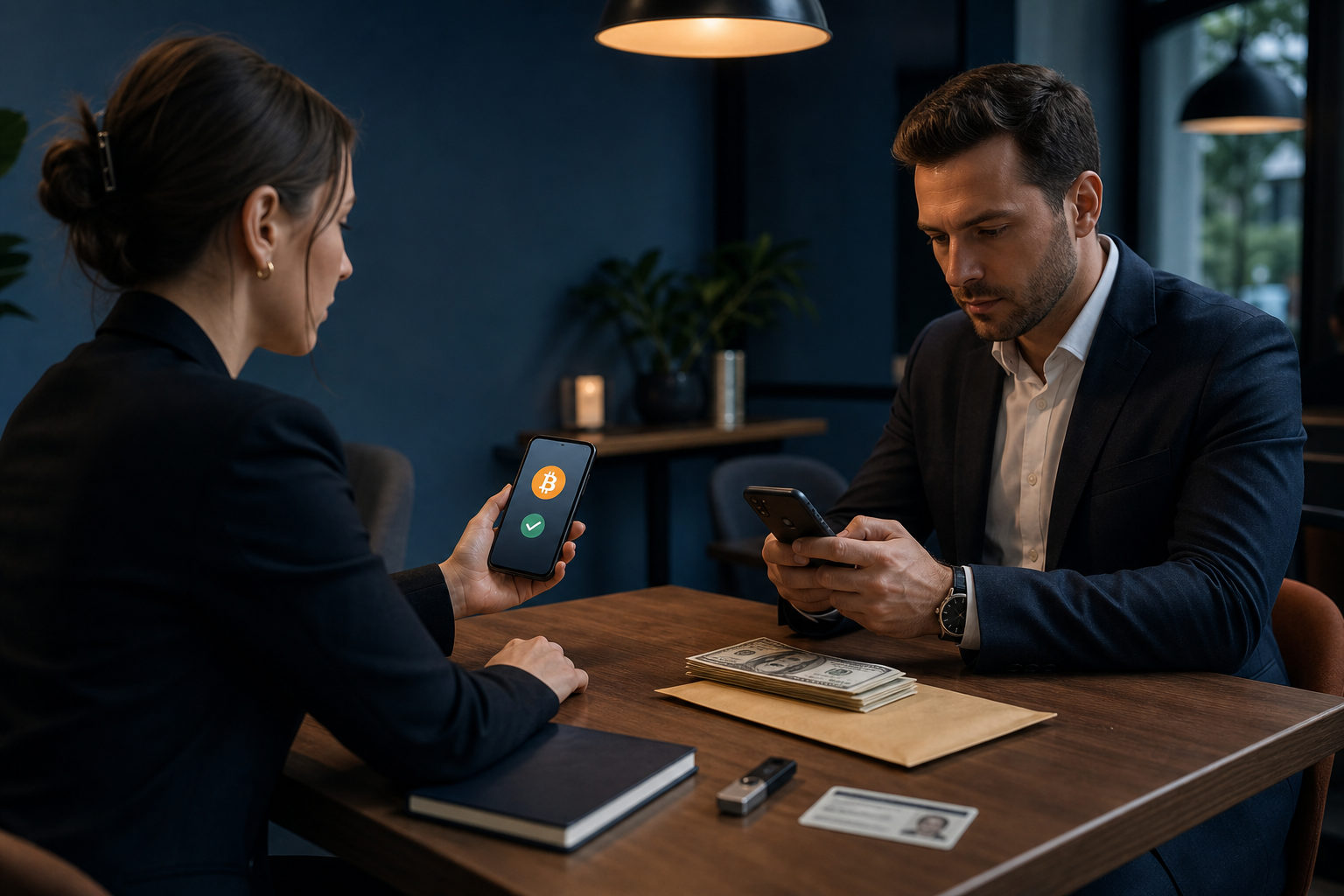
You can buy bitcoin in person, but the safe way is to treat it like a controlled process, not a quick meetup. The goal is simple: verify the wallet, verify the payment order, and be ready to walk away at any point.
Decide whether an in-person bitcoin purchase makes sense for you
People searching how to buy bitcoin in person usually want one of a few things: face-to-face contact, cash settlement, or less dependence on an online service. Those reasons are understandable. Still, an in-person bitcoin purchase replaces platform rules with real-world trust, physical presence, and pressure in the moment.
Before anything else, keep one principle in mind: you do not truly have bitcoin just because someone says they sent it. You have it when it reaches a wallet you control, and you can verify that on your own device. That single rule helps cut through most confusion at a meetup.
This method suits buyers who are willing to move slowly, check details, and cancel the deal if anything feels off. If you are likely to bend your rules because the other person seems friendly or because the situation feels awkward, meeting in person may not be the right way to start.
Step 1: Prepare your own wallet before you look for a seller
Use a wallet you control and understand
If you want to learn how to buy bitcoin in person, the first task is not finding a seller. It is setting up a wallet that you control, know how to open, know how to receive with, and know how to back up. You should already understand where to find your receive address and how to view an incoming transaction before the meeting starts.
The reason is practical. If the seller sends bitcoin to an exchange deposit page, a friend's account, or an app you barely know how to use, any delay or mistake becomes harder to diagnose. You want the receiving side under your control so you can judge what is happening without relying on anyone else's explanation.
Keep your recovery phrase, private keys, and backup details private at all times. The seller only needs your bitcoin receive address. Nothing else is relevant to the trade.
Set the payment method and order of actions in advance
Most failed meetups do not fail because of the asset itself. They fail because nobody locked down the sequence. Before you meet, state the rules clearly: cash or bank transfer, whether a small test transaction comes first, what wallet will be used for verification, and what conditions will cancel the deal.
This matters because scammers often work by changing the script in the moment. A deal that was supposed to be cash becomes a transfer. A transfer that was supposed to happen after verification suddenly has to happen first. Once the order becomes fuzzy, the other side gains room to push you around.
Avoid vague language such as “it will show up in a moment” or “just send part of it first.” A safe meetup has clear checkpoints, not soft promises.
Step 2: Screen the other party before you agree to meet
Look for consistency, not charm
Anyone can sound confident in chat. What matters more is whether the person stays consistent about the basics: the time, place, payment method, the fact that the asset is bitcoin, and the condition that you will receive it in your own wallet. If the story keeps changing, the trade should probably die before the meeting happens.
A useful sign is not how strongly the person says “trust me.” It is whether they can handle simple checks without becoming evasive. Can they accept a public meeting place? Can they accept a small test amount first? Can they stick to one communication channel instead of bouncing from account to account? Those details tell you more than confidence ever will.
Do not confuse a real-world meeting with proof of honesty. A person showing up in front of you means only that they are willing to appear. It does not prove that they will follow through or that their payment claims are real.
Walk away from these warning signs
- Urgency: They keep pushing you to meet immediately and act fast.
- Wallet control pressure: They do not want to send to your own wallet.
- Changing terms: They switch the payment method, meeting place, or sequence without a clear reason.
- Bad location choices: They want to meet in a car, a private room, or an isolated area.
- Group pressure: They arrive with extra people to make it harder for you to stop the trade.
None of these signs guarantee fraud on their own. Even so, any one of them is enough reason to cancel. Buying bitcoin in person is optional. Your ability to leave is one of your strongest protections.
Step 3: Choose the right setting before you discuss money
Pick a public place with stable connectivity
If you are serious about how to buy bitcoin in person, where you meet matters almost as much as who you meet. Choose a place that is public, well lit, and stable enough for you to use your phone without rushing. You should be able to sit down, check details, and leave easily if needed.
The reason is obvious once you think about the flow. You will be looking at your device, checking a receive address, and making sure the right asset is being sent. In a chaotic or hidden setting, your attention is easier to break, and mistakes become easier to force.
Avoid homes, hotel rooms, parking corners, or last-minute location changes. “More convenient” for the other person is not the same as safer for you.
Let someone you trust know your plan
You do not have to bring another person with you, but someone should know where you are going, when the meeting starts, and when you expect it to end. If you stop replying, that person should know that something may be wrong.
If you do bring a companion, their role is to watch the surroundings and help you keep your process intact. They are not there to decide whether the wallet is correct or whether the transaction is acceptable. That part still belongs to you.
Step 4: Follow a strict in-person bitcoin buying process
Start with your receive address
Do not put cash on the table the moment you arrive. Open your wallet on your own device, generate your receive address, and let the seller scan it or enter it while you watch. Your first job is to confirm that the destination is your bitcoin wallet and that you are not being pushed into some different asset or alternate network setup.
This step matters because the rest of the meeting is pointless if the address is wrong. Do not rely on the other person reading the address out loud. Do not settle for checking just the first and last characters. Confirm the address on your own screen before anything else moves forward.
Pay attention to basic device hygiene too. Notifications, copied text, and screen switching can create avoidable errors. If you have not personally checked the receive address, treat it as unverified.
Use a small test transaction first
For a first-time meetup with a stranger, a small test transaction is one of the best safety habits available. Ask the seller to send a limited amount first. Then verify that your wallet sees the transaction and that the address used is the one you intended to receive with.
A test transfer does more than test the connection. It checks whether the seller actually controls the bitcoin, whether your wallet is functioning properly, and whether both sides are talking about the same thing. Problems that show up during a small test are much easier to manage than problems that appear after the full amount is involved.
If the seller resists this step without a solid reason, treat that as a serious warning. People who want you to skip verification are often telling you exactly what kind of trade they want.
Only act on information you can verify yourself
If you are paying with cash, a careful approach is to wait until you can see that the seller has actually sent the bitcoin transaction according to your agreed process. If you are using a bank transfer, do not rely on the other person's screenshot, banking app display, or text alert. Use only information you can independently check from your side.
This is one of the most important points in any guide on how to buy bitcoin in person. Screenshots can be edited. App screens can be misleading. A person standing in front of you can still be lying. Your standard should be simple: if you cannot verify it yourself, it does not count.
Once the other side starts saying things like “just trust this part” or “send it now and it will clear after,” the safest move is to stop the trade.
Make sure the bitcoin is in a wallet you control
Seeing a line item appear is not always enough. You still need to confirm that the bitcoin has reached a wallet under your control and that you can view the transaction from your own app or device. What you should not trust is a balance display on someone else's screen or a custodial page that you do not control.
This matters because fake wallet interfaces and misleading balance displays are common tools in face-to-face fraud. Your confidence should come from your own wallet, not from a polished screen shown to you by the seller.
Keep a basic record of the agreement and the transaction details you can see on your side. That is not about planning for a dispute. It is about being able to reconstruct what happened if something goes wrong later.
Step 5: Know the most common scams before you meet
Fake payment proof
A very common move is fake proof of payment. The other side shows a transfer screen, a banking page, or a message that looks official, then pressures you to complete your part immediately. The defense is plain: trust only what you can verify yourself. Never treat their screenshot as the deciding factor.
If you are the buyer and the seller says they already sent the bitcoin, return to the original rule. You proceed only when your own wallet shows the expected transaction in the way you agreed to check it.
Fake wallet apps and fake incoming transactions
Some scammers use apps or screens that look like legitimate wallets. The display may suggest that a transaction was broadcast or even completed when it was not. Your response should be equally plain. Ignore their screen and use only your own device and wallet as your source of truth.
If your connection is poor or the wallet view is unclear, pause the trade. An in-person bitcoin purchase should never continue while the key facts remain uncertain.
Address swapping or asset substitution
Another risk is address manipulation or a bait-and-switch involving a different asset presented as if it were bitcoin. The way to reduce this risk is to define the asset before the meeting and receive only to the bitcoin address generated by your own wallet. Do not accept last-minute changes dressed up as convenience.
If the seller starts saying “this works the same way” or “this version is faster,” stop right there. You are buying bitcoin, not something that happens to sound similar.
Physical safety pressure
Face-to-face trading creates risks that do not exist in a fully online exchange. If the other person wants to move to a more private place, asks to see more of your phone than necessary, tries to learn where you live, or shows up with extra people, end the meeting.
You do not owe anyone a debate. Put your device away and leave. That is the correct move when the situation stops feeling controlled.
FAQ
Is buying bitcoin in person always safer than buying online?
No. Meeting face to face lets you see the other person, but it also adds physical pressure and real-world safety concerns. Without a clear process, an in-person deal can be riskier than an online one.
Is paying cash the easiest option?
Not necessarily. Cash may feel direct, yet it adds its own problems around counting, authenticity, handoff timing, and personal safety after the exchange. It changes the risk profile rather than removing risk.
What if the seller says the bitcoin was sent, but my wallet does not show it?
Do not send more money and do not let embarrassment push you forward. Stick to your original verification rule and rely only on what your own wallet shows. If the status is unclear, pausing or canceling is safer than guessing.
Where should I keep bitcoin after an in-person purchase?
Start by keeping it in a wallet you control. The main issue is not which app looks convenient. The main issue is whether you control the keys and have a reliable backup.
How can I lower the risk on my first face-to-face trade?
Usually the best move is not chasing a better deal. Keep the size small, use a test transaction, meet in public, and refuse to bend your verification standards. If any of those pieces are missing, the trade is easy to skip.
Final checklist before and after the meetup
Before leaving home, make sure your wallet works, you know how to read your receive address, and your backup is stored safely. Before the meeting, confirm the payment method, verification rule, and cancellation condition. At the meetup, verify the address first, run a small test transaction, and proceed only on facts you can check yourself. Before you leave, confirm the bitcoin is in a wallet you control and keep the basic transaction record you can see on your side.
Disclaimer: This article is for informational and educational purposes only and is not investment, financial, or legal advice. Crypto assets are highly volatile and you could lose your entire investment. Do your own research and decide carefully.