
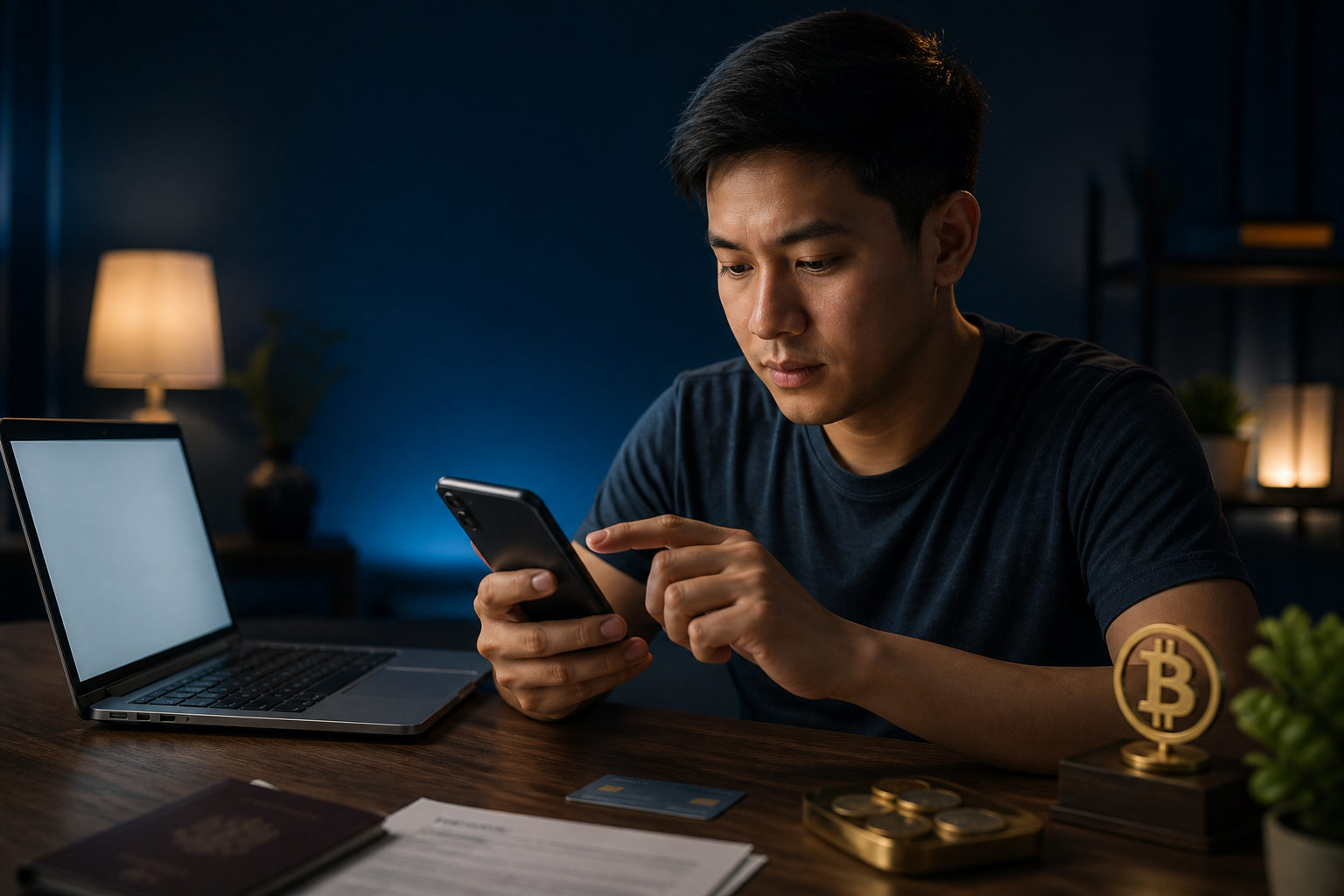
To buy bitcoin in the Philippines, start with a service that supports identity checks and withdrawals, verify your account, fund it, place a small first order, and then move BTC to a wallet you control.
What to prepare before you buy
If you are looking up how to buy bitcoin Philippines, the first task is not picking the flashiest app. What matters more is whether the service can verify your account without trouble, whether its payment options fit your situation, and whether it lets you withdraw bitcoin to an external wallet.
Prepare three things in advance: your identity documents, a payment method you already use comfortably, and a bitcoin wallet address. The first two are tied to fiat funding, while the wallet determines whether you actually control the asset after purchase.
- ID documents: needed for account verification and risk checks.
- Payment method: useful to test deposits without changing your usual routine.
- Bitcoin wallet: needed if you want to withdraw and hold your BTC yourself.
If this is your first time, keep the first transaction small. A trial run gives you a clearer picture of the process and limits the damage from avoidable mistakes.
Step-by-step: how to buy bitcoin in the Philippines
Step 1: Choose the type of service first
When people search for how to buy bitcoin in the Philippines, they often jump straight to payment. That is backward. Start by separating the main routes: centralized crypto services, peer-to-peer marketplaces, and financial apps that include crypto features.
This matters because the differences are not cosmetic. One service may be easy to fund but awkward to withdraw from. Another may show an attractive quote while adding cost through spreads, withdrawal fees, or unclear order rules.
Check three points before anything else: identity verification requirements, support for external BTC withdrawals, and a fee schedule that is easy to understand. If those details are vague, pause there.
Step 2: Create your account and complete verification
Most legitimate services will ask you to open an account and submit identification. That step is there for anti-money-laundering controls and account recovery, not just paperwork for its own sake.
Use matching personal details across every field you submit. Blurry photos, mismatched names, and repeated uploads are common reasons for delays. Many beginners think the process is hard when the real issue is inconsistent information.
After verification, turn on two-factor authentication at once and create a separate strong password. Do not reuse the same password from your email, banking app, or social accounts. That single habit blocks a large share of account takeover attempts.
Step 3: Test the funding process with a small amount
Once your account is approved, resist the urge to send a large balance right away. A safer move is to make a small deposit first with a payment method you already know well, then confirm how long it takes, what fees appear, and whether withdrawals remain available after funding.
There is a practical reason for this. Two services may both claim to support deposits, yet differ sharply in processing speed, fraud checks, hold periods, or refund handling. A small test lets you find friction before it becomes expensive.
Be careful with phrases such as instant credit, zero fees, or private channels. The visible fee may be low while the real cost sits inside the spread or withdrawal terms.
Step 4: Understand the order screen before you buy
After funding, you will usually see two common ways to buy: take the currently available market price or set your own target price and wait. The right choice depends on whether speed or price control matters more to you.
For beginners, the bigger risk is not market timing. It is buying the wrong asset, missing a fee line, or confirming an order too quickly. Before you submit anything, check that the asset is BTC, read the estimated amount you will receive, and review every charge shown on the screen.
Many first-time buyers feel more comfortable splitting purchases into smaller entries instead of making one large order. That approach cannot remove volatility, but it can reduce pressure while you learn the workflow.
Step 5: Withdraw to your own wallet after buying
A lot of users stop after the purchase and leave everything on the service they used. That may feel convenient, yet convenience and control are not the same thing. If the service holds the keys, you are relying on its systems, policies, and security.
A safer routine is to confirm that your wallet supports the Bitcoin main network, copy the receiving address carefully, send a small test withdrawal, and only then move the remaining balance. Always compare the first and last characters of the address before confirming. Clipboard malware can replace it without making the change obvious.
If your plan is to hold for a while, the storage decision matters just as much as the buying decision. Where your bitcoin sits after purchase shapes a large part of your risk.
Why buyers still run into trouble after a successful purchase
People searching “how to buy bitcoin in philippines” often think the challenge ends once the order goes through. In reality, the most expensive mistakes usually happen around funding, withdrawals, and security habits.
- Comparing only the displayed price: the full cost includes spreads, deposit charges, and withdrawal fees.
- Leaving coins on a service for too long: easy access is not the same as safe long-term storage.
- Trusting screenshots from private sellers: balances and payment proof can be faked.
- Skipping the small test transaction: the first large transfer is where address and network errors hurt most.
- Weak account protection: no two-factor authentication and reused passwords create avoidable risk.
Another common problem is the promise of guided buying, guaranteed profit, or managed storage. If someone asks you to send money directly to a personal account, share a one-time code, reveal your recovery phrase, or install remote access software, stop immediately.
Fraud warning signs you should treat seriously
Buying bitcoin is not hard on its own. Scams make it feel confusing by dressing up shortcuts as help. First-time buyers are easy targets because urgency and hand-holding can sound reassuring.
- Guaranteed returns or capital protection: bitcoin is volatile, and no seller can promise fixed results.
- Pressure to pay right away: artificial urgency is a classic red flag.
- Requests for off-platform payments: once you leave a formal order system, disputes become harder to resolve.
- Requests for seed phrases or verification codes: real support teams do not need them.
- Instructions to install unfamiliar software: remote access can expose your wallet, account, and screen.
If something about the seller, app, or payment flow feels off, do not argue your way forward. Pause, verify the process, and restart only when the rules are clear.
FAQ
What is the safest order of steps for a first bitcoin purchase in the Philippines?
Verify your account first, test a small deposit, place a small BTC order, and withdraw to your own wallet after that. This sequence keeps mistakes cheap and easier to fix.
Do I need a wallet before buying bitcoin?
You can study the buying process before setting one up, but it is better to prepare a wallet before you plan to hold any BTC. The ability to withdraw smoothly is a basic part of controlling the asset.
How can I tell if a bitcoin buying service is trustworthy?
Look for clear identity rules, transparent fees, and straightforward withdrawal terms. If a service talks mainly about profit and barely explains security or withdrawal conditions, treat that as a warning.
Can I leave my bitcoin on the service I used to buy it?
Some people do that for short-term convenience, especially if they plan to trade again soon. For longer holding periods, keeping bitcoin in a wallet you control is usually the more cautious choice.
Where should I check the live bitcoin price before buying?
Use major market data sites or the trading screen inside a service you are considering. Do not focus on one price alone; check the spread, the fee display, and whether BTC withdrawals are working normally.
Before you make your first real purchase, write down a short checklist: verify identity, enable two-factor authentication, back up your wallet, run a small funding test, confirm the BTC address, then buy. A checklist prevents a surprising number of avoidable errors.
Disclaimer: This article is for informational and educational purposes only and is not investment, financial, or legal advice. Crypto assets are highly volatile and you could lose your entire investment. Do your own research and decide carefully.