
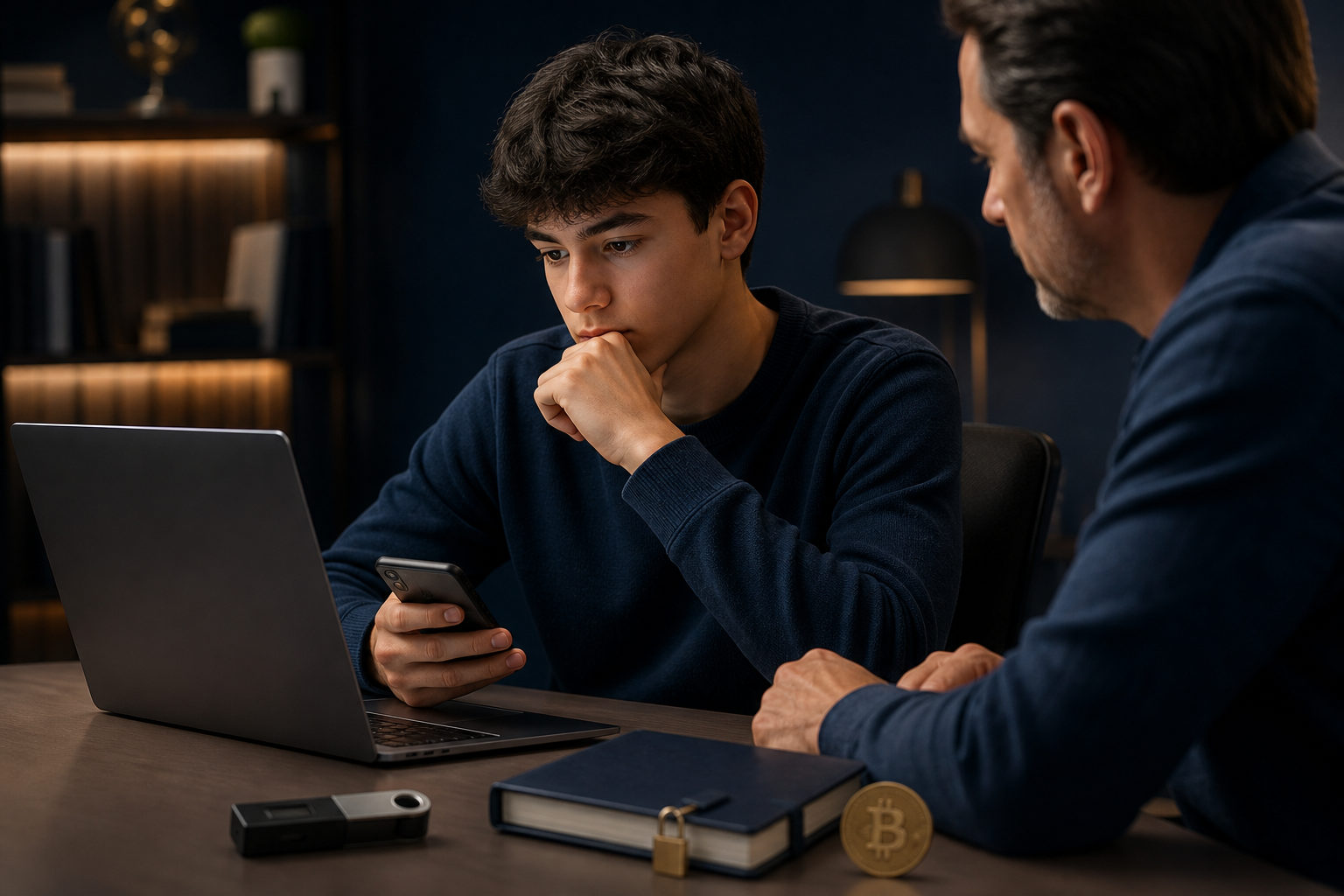
If you are under 18 and want to buy bitcoin, start with the rules, not the payment method. In many cases, the main barrier is age verification, service terms, wallet safety, and scam risk rather than the act of sending money.
Start with the real issue: access is often restricted before payment even matters
People searching for how to buy bitcoin under 18 often focus on where to sign up, how to pay, or which method looks easiest. That is usually the wrong starting point. The harder question is whether the service you want to use allows minors at all.
Bitcoin is an open network, but most people reach it through services that handle account creation, fiat payments, custody, withdrawals, or trade matching. Those services often set their own age requirements and identity checks. If a provider says its service is for adults only, trying to work around that rule can create more risk than the purchase itself.
This matters because workarounds often move control away from you. Using someone else’s account, borrowing identity details, paying a stranger privately, or trusting a “helper” to do everything for you can leave you with no control over the funds and no clear path if anything goes wrong.
A better approach is simple: first decide whether you should be doing this now, then see whether there is any lawful and transparent way to learn or participate with a parent or guardian aware of what you are doing.
Step 1: Check age rules and service terms before you do anything else
Your first action should be reading the terms of the service you plan to use. Look for age requirements, identity verification rules, limits on deposits and withdrawals, and any conditions tied to payment methods. If the rules state that only adults can open or use an account, stop there.
The reason is practical. You may think you are only trying to buy bitcoin, but the process can involve several layers at once: account registration, payment authorization, identity checks, and dispute handling. If you fail one layer, the entire process can break down after you already sent money or handed over personal details.
There are a few points to watch closely. First, read official policy pages rather than relying on social posts, group chats, or screenshots. Second, do not trust claims like “buy first, verify later.” Delayed verification can become a problem exactly when you need access to your funds. Third, do not use another person’s identity to pass verification. Even if it seems convenient, it can leave the legal account holder in control of the account and any assets tied to it.
What to review in the terms
- Account eligibility: Does the service require the account owner to be of legal age?
- Verification timing: Is identity verification required before buying, before withdrawing, or both?
- Payment restrictions: Are some payment methods limited by age or account status?
- Dispute process: If there is a problem, who is allowed to submit proof and request help?
If any of these points are unclear, the safest decision is to hold off. For minors, vague rules often mean higher risk, not extra flexibility.
Step 2: Define your goal before you look for a route to buy
The next step is to answer a basic question: why do you want bitcoin in the first place? Are you trying to learn how wallets work, hold a small amount for the long term, or chase quick gains because you saw online hype? That answer changes everything about the level of risk you should take.
If your only reason is fear of missing out, that is a weak foundation. Bitcoin can move sharply, and it is not a good fit for money you need for daily living, school, or anything time-sensitive. For someone under 18, losses can also carry a bigger emotional impact than expected, especially if the money came from savings that were hard to build.
A better move is to write your goal in plain language. For example: I want to understand wallet backups. I want to learn how a bitcoin transfer works. I want to study the difference between custodial and self-custody before I commit money. A clear goal keeps you grounded and makes you less likely to follow people promising easy profits or secret methods.
Goals that should make you pause
- Borrowing money to buy: debt and volatility can become a bad combination.
- Trying to double money fast: that mindset draws people toward scams and risky trading.
- Letting someone else handle everything: if you do not understand the process, you cannot judge the danger.
- Using money needed for school or living costs: that money should stay out of high-volatility assets.
If you cannot explain your reason clearly, the right next move is education, not a rushed purchase.
Step 3: Talk to a parent or guardian before you try to get bitcoin
If you are under 18, the most practical and safer path is usually to involve a parent or guardian. This is not just about permission. It is about adding a second layer of judgment when money, device security, account control, and possible disputes are involved.
There is a good way to frame the conversation. Explain why you are interested in bitcoin, show that you understand the risks, and make it clear that you do not want to break rules or hide activity. That approach is far stronger than saying you “just want to try a little.”
A parent or guardian can help with questions you may not be ready to answer alone. Is the money truly disposable? Is your phone or computer safe enough for wallet setup? Do you know how to store backups? If a seller disappears after payment, have you kept the right records? These are judgment calls as much as technical ones.
One warning is important here: involving an adult should not turn into using their account as your workaround without clear agreement and understanding. If they are willing to learn with you, a safer place to begin is wallet basics, backups, and transfer practice rather than trying to buy immediately.
Points worth covering in that conversation
- You understand bitcoin is not guaranteed profit.
- You know many services restrict minors.
- You want to learn wallet safety and fraud prevention first.
- You prefer a transparent process over secret shortcuts.
This step may feel slow. It often prevents bigger problems later.
Step 4: Learn wallets first, because buying is only half the job
Many beginners think the hard part is getting bitcoin. In reality, keeping control of it is just as important. If you do not understand wallets, private keys, seed phrases, self-custody, and custodial services, you may end up with bitcoin that is not actually under your control.
A wallet is not a box that “stores coins” in the simple sense. It is a tool used to manage access and control. In broad terms, whoever controls the private key can usually control the assets. If your seed phrase is exposed, the risk is severe. Saving that phrase in cloud notes, chat apps, screenshots, or shared documents is a common mistake.
This is one area where minors are often targeted. A scammer may pretend to be a helpful teacher, friend, or support agent. They may offer to create the wallet for you, check your backup, or walk you through setup by remote access. The goal is often the same: get your sensitive information or direct control of your device.
Keep the core rules simple. Never share a private key or seed phrase. Never give remote access to a stranger who claims they will “help.” Verify you are using the real app or service before installing anything. If you ever test a transfer, confirm the address carefully and start only after you understand what you are doing.
Wallet basics you should know before any purchase
- Custodial vs self-custody: one is easier, the other gives you more direct control but more responsibility.
- Address checking: always verify copied addresses before sending.
- Offline backups: do not rely on one internet-connected device for critical recovery data.
- Fake support warning: real support staff should not need your private key or seed phrase.
If you are not comfortable with these basics yet, it is smarter to pause than to push ahead.
Step 5: If the rules allow any path forward, choose transparency over speed
Only after you understand age restrictions, have an adult aware of your plans, and know the basics of wallet safety should you think about how to obtain bitcoin. At that point, your main filter should be transparency. Fast and easy are not the same as safe.
Look for clear terms, understandable payment steps, visible dispute handling, and a process you can verify yourself. Be very cautious with anything that relies on private chat only, pressure to act quickly, claims of “no checks,” or vague promises that students can do it secretly. Those are not signs of convenience. They are signs that you may lose visibility over what is happening.
This is where many minors get pulled into private deals, middlemen, informal sellers, “guaranteed” group escrow, gift-card swaps, or other off-platform arrangements. These methods can look simple because they skip formal checks. That same lack of structure is exactly what makes them dangerous. If the other party stalls, disappears, sends fake screenshots, or disputes payment, you may have little protection.
Another issue is control after the purchase. If someone says they will “hold the bitcoin for you,” “buy first and transfer later,” or “manage it on your behalf,” you should treat that as a major warning sign. If you cannot verify the process and cannot take control of the asset yourself, you are trusting the wrong part of the chain.
Questions to ask before using any method
- Are the rules written clearly? You should be able to see age, payment, and withdrawal conditions.
- Can you verify the process yourself? Do not rely only on a stranger’s instructions.
- Will you control the bitcoin after obtaining it? If not, ask why.
- Can you stop at any stage? If the answer is no, walk away.
If a method fails these questions, the fact that it seems available does not make it suitable.
Step 6: Put scam prevention ahead of the purchase itself
The biggest threat to many young beginners is not market movement. It is manipulation. Scammers know that younger users may be eager to start, may not want to ask adults for help, and may respond to simple promises like speed, privacy, or easy profit.
One common pattern is fake support or fake coaching. The person first acts helpful. They explain setup, suggest apps, invite you into a chat, and guide small test actions. Then they ask for a code, a screen share, a seed phrase, or access to your device. That is the trap.
Another pattern is fake trade proof. Screenshots of payment, screenshots of released bitcoin, and fake comments from supposed successful buyers can all be staged. A group chat full of people claiming success is not evidence. It may be part of the setup.
The third pattern is profit bait. Instead of directly asking you to buy bitcoin, the scammer may offer a special return, a bonus for moving funds, a limited-time opening, or a private method that “works best for students.” Once your attention shifts to reward, your safety checks get weaker.
Protective habits that help most
- Never share a seed phrase, private key, or one-time code.
- Do not send money while someone is rushing you in voice chat or direct messages.
- Keep records of conversations and payments without exposing sensitive details.
- If a step feels confusing, stop and review it with a trusted adult.
You do not need advanced technical skill to stay safer. In most cases, slowing down is one of the strongest defenses you have.
Step 7: Set boundaries before money enters the picture
If there is any compliant and transparent path for you to get bitcoin, your final step should be writing your boundaries down before you act. Decide what money, if any, is truly risk capital. Decide what would make you stop. Decide who knows what you are doing and how recovery information will be stored.
This matters because once someone begins interacting with a volatile asset, plans can change quickly. A person who meant to learn with a very small amount can become emotional after market moves, online chatter, or pressure from friends. Written rules create friction against impulsive decisions.
Keep those rules practical. Do not use money needed for daily life. Do not keep payment tools, login details, and wallet backup material all on the same device. Do not perform key actions on public networks or unfamiliar devices. Do not keep adding funds simply because you want to “fix” a bad entry. If you are under 18, reviewing those boundaries with a parent or guardian is usually stronger than keeping them private.
FAQ
Can a minor interact with bitcoin at all
Learning about bitcoin, wallets, and security is different from using a service that restricts trading or account access by age. The right first step is to read the terms of the service, not assume access is allowed.
Is it okay to use someone else’s account if I cannot verify my own
That is a bad idea in most cases. It creates confusion about who controls the account, who owns the assets, and who can resolve problems if something goes wrong.
What if someone offers to buy bitcoin for me and transfer it later
The risk is that you do not control the process, the timing, or the asset until the transfer is complete. If the arrangement is not transparent, trust becomes the weak point.
Is trying with a small amount basically safe
Not necessarily. New users often lose funds through fake apps, fake support, bad backups, or sending assets the wrong way, even when the amount is small.
What should I learn first if I am not ready to buy yet
Start with wallets, seed phrases, private keys, address checks, and scam warning signs. Buying without understanding storage and control creates avoidable risk.
If you want a practical starting order, use this one
Read the age rules and service terms first, talk to a parent or guardian next, learn wallet safety after that, and only then assess whether any transparent method is available to you. If any step depends on secrecy, borrowed identity, or giving control to someone else, stop before you send money.
Disclaimer: This article is for informational and educational purposes only and is not investment, financial, or legal advice. Crypto assets are highly volatile and you could lose your entire investment. Do your own research and decide carefully.