
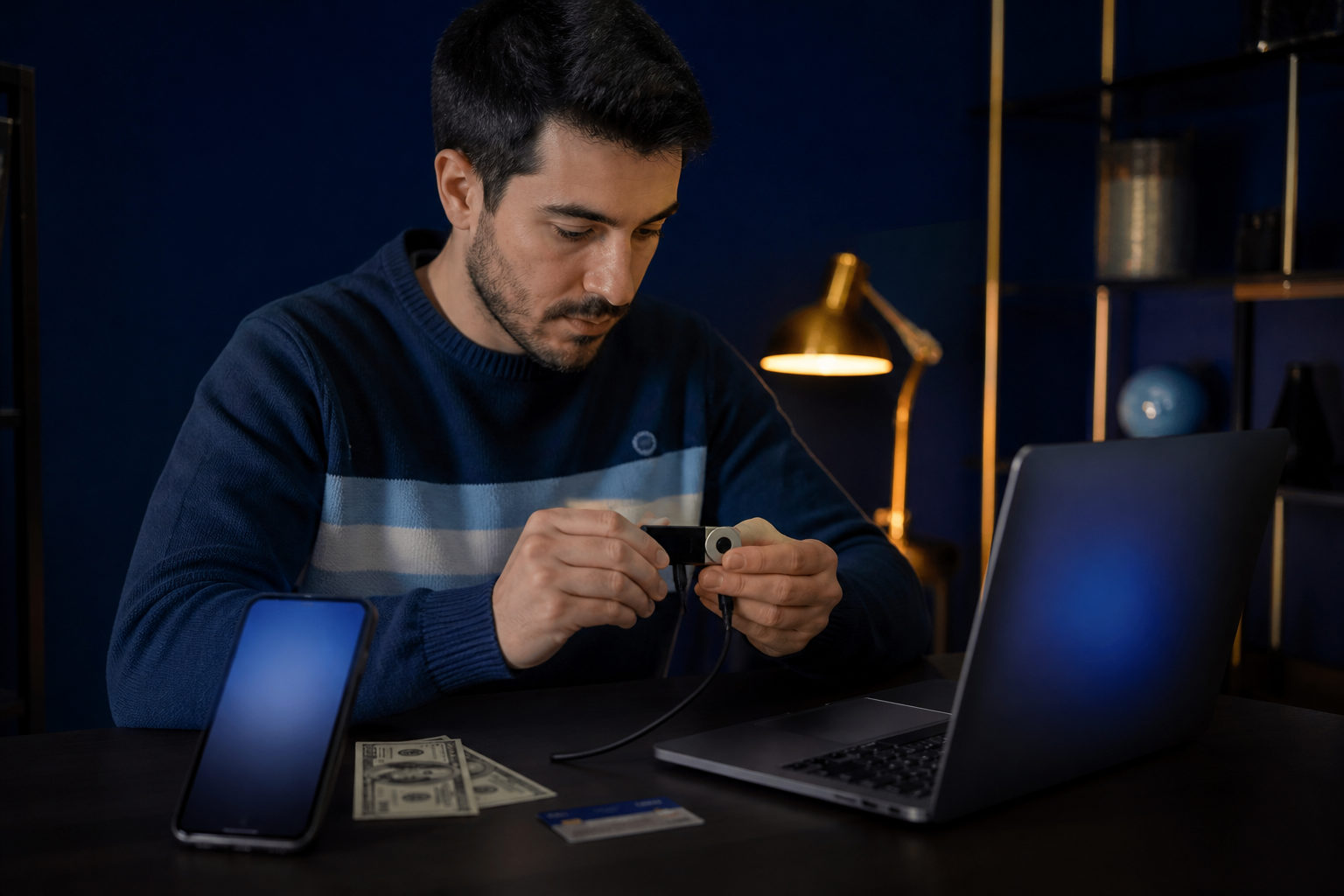
Buying bitcoin in Argentina isn't complicated on a technical level — the harder part is understanding where the country's crypto rules actually stand in 2026, picking a platform that's registered with the right regulator, and keeping your first purchase small enough that a mistake doesn't cost you much. Get those three things right and the rest of the process is fairly routine.
Start with the regulatory picture, not the app store
Argentina passed Law No. 27,739 in March 2024, which put the Comisión Nacional de Valores (CNV) — the national securities regulator — in charge of overseeing crypto asset service providers, known locally as PSAV (the Argentine label roughly equivalent to what other countries call a VASP). The law created a mandatory registry, and platforms whose monthly volume passes a threshold set at 35,000 UVA (an inflation-linked unit — because it's adjusted for inflation and the peso-dollar rate also moves, its dollar equivalent isn't fixed and has been reported anywhere from roughly US$30,000 to nearly US$50,000 depending on when the conversion was made) are required to register. CNV's leadership has said publicly that providers who skip registration won't be allowed to operate legally in the country. Resolution 1058/2025 lays out the detailed compliance rules those registered platforms have to follow.
Practically, this means your first filter shouldn't be which app looks nicest — it should be whether the platform shows up on CNV's registry. Reporting through 2026 lists names like Lemon Cash, Ripio, Belo, Buenbit and SatoshiTango as registered PSAV providers, but registries change, fee schedules change, and a platform's status can shift after any article, including this one, gets published. Check directly on CNV's site before you commit real money.
It's also worth being honest with yourself about why you're buying. In Argentina specifically, a lot of people hold bitcoin or, more commonly, stablecoins like USDT as a hedge against peso depreciation rather than as a short-term trade — inflation was still running around 33% year over year as of mid-2026 in local reporting, so protecting savings is a completely normal and common motive here, not a fringe one. Your goal changes what setup makes sense: a small experimental buy can stay simple, but if you plan to keep buying regularly, think ahead about withdrawal permissions, record-keeping, and where the coins will actually live.
Broadly, Argentine buyers use two paths: registered platforms that handle fiat funding directly, or peer-to-peer marketplaces where you transact with another individual. The first option is more beginner-friendly and comes with the compliance obligations described above — registered platforms have to run identity checks and report suspicious activity to Argentina's financial intelligence unit, the UIF. The second option gives you more pricing flexibility but carries real counterparty risk; fabricated payment screenshots and delayed or missing releases show up regularly in local scam reporting.
Step 1: Sort out how you'll actually fund the purchase
Before you buy anything, nail down your funding method. Most registered Argentine platforms let you fund an account in pesos through a domestic bank transfer, using your account's CBU or CVU (the standard virtual account identifiers used across Argentine banking) — you don't necessarily need to convert to physical dollars first, which is a detail a lot of generic international guides skip over. If instead you're planning to fund a foreign platform using an international card charged in a foreign currency, note that as of January 2026 Argentina removed the 30% Impuesto PAÍS surcharge that used to apply to foreign-currency card spending; what mostly remains is a 30% income-tax withholding, locally called Percepción de Ganancias, that you can claim back later at tax time. That's a meaningfully lower cost than a couple of years ago, but it's still not free, and it applies specifically to foreign-currency card consumption abroad — not to a plain peso transfer to a local exchange, which works differently.
If you're funding from a bank account, check that the name on the account matches the name on your exchange account. A mismatch commonly triggers a compliance review — sometimes with a temporary hold on funds — and that's not the platform being difficult for no reason; it's usually the registered platform meeting its UIF anti-money-laundering obligations. If you use a third-party payment app or a cash network (some platforms accept deposits through outlets like Rapipago or Pago Fácil), confirm first that crypto-related payments are allowed, so you don't end up with a payment that gets bounced back.
One detail beginners routinely skip: keep every payment record. Screenshots of the transfer, the order number, the confirmation notice, and the counterparty's receiving details, meaning their CBU/CVU and name. If a dispute comes up, support teams ask for these records first — not a verbal account of what happened.
On sizing: a lot of first-timers wire their entire planned amount in one shot. That multiplies the cost of any mistake. It's safer to start with a small deposit, confirm that funding, buying, and withdrawing all work cleanly end to end, and only then decide whether to scale up.
Step 2: What to actually check when picking a platform
Whichever service you end up using, start by checking whether it appears on CNV's PSAV registry — that's the single most Argentina-specific filter you have available. According to multiple 2026 local guides, Lemon Cash, Ripio, Belo, Buenbit and SatoshiTango have been reported as registered PSAV providers. Registries and fee terms shift, though, so treat the table below as a starting point for research, not a final answer — verify directly against the platform's own site and CNV's current listing.
| Platform (per 2026 local reporting) | What it's typically known for | Common funding method | What you should verify yourself |
|---|---|---|---|
| Lemon Cash | Beginner-friendly app, cashback debit card | Bank transfer, debit card | Current registration status, live fees |
| Ripio | One of Argentina's longer-running platforms, direct peso bank transfers | Bank transfer (CBU/CVU) | Withdrawal limits to self-custody wallets |
| Belo | Focus on stablecoins and bitcoin, peso savings-style account | Bank transfer | Whether the savings feature is a regulated product |
| Buenbit | Reported spread around 0.5%–0.8%, decent liquidity | Bank transfer | That spread figure is a historical range — confirm live pricing |
| Peer-to-peer marketplaces | More price flexibility, notably higher counterparty risk | Bank transfer, cash | Counterparty's trade history, release terms, off-platform pressure |
Registration aside, look at a few other things. First, is identity verification required, and is the process clearly explained? Registered Argentine platforms are obligated subjects under UIF rules, so ID checks are a compliance requirement, not the platform being paranoid — but a service that keeps asking for more documents with vague explanations is still worth extra caution. Second, can you actually see the fee schedule for deposits, buys, sells, and withdrawals? If the fee page is buried, or only shows up at the very last step before you confirm an order, slow down.
Third, and this trips people up more than it should: can you withdraw the bitcoin to your own wallet, or does the platform only let you view a balance on its site? A service that makes buying frictionless but restricts on-chain withdrawal is effectively giving you an internal IOU, not custody of an asset.
Fourth, check how you'd reach a human if something goes wrong — an account review, a suspicious login, a payment dispute. You don't need to chase the biggest brand name, but you do want published rules, a visible transaction log, a real support channel, and a listing on CNV's registry.
If you're leaning toward P2P instead, raise your bar further. Look at the counterparty's trade history, how clearly their release terms are written, which payment methods they accept, and whether they ask you to send funds to a third party's account. Anyone who pushes you to move the conversation off-platform, asks you to add unrelated notes to a transfer, or wants you to release coins before payment clears — stop right there. Local P2P disputes reported in Argentina follow this pattern often enough that it's worth taking seriously rather than assuming it won't happen to you.
Step 3: Get account setup and security right the first time
Register with an email and phone number you actually control long-term — not a friend's details, not a throwaway inbox. You'll need those basics later for account recovery, compliance reviews, or pulling transaction history, which, as covered below, you may eventually need for tax filing. Don't reuse a password from your social media, main email, or online banking; one leak elsewhere shouldn't be able to unlock your exchange account too.
Once registered, turn on two-factor authentication right away. An authenticator-app code is generally more reliable than SMS, since SMS can be intercepted through SIM-swap fraud or social engineering. Store backup codes offline rather than in a chat app, and keep them on a separate device from the one you use daily.
Two things matter during identity verification specifically. First, submit your ID and selfie from your own network and device — not a public computer. Second, if someone claiming to represent CNV review or UIF compliance asks for your verification code, your wallet's seed phrase, or wants to install remote-access software, stop immediately. A legitimate compliance check will never need those things — they're the keys to your account and your wallet, not something a reviewer needs to see.
If the platform supports a withdrawal address whitelist, turn it on early. Even if someone compromises your account, they can't easily redirect funds to an address you haven't pre-approved. This matters more the longer you plan to hold, since you won't be changing receiving addresses often anyway.
Step 4: Read the order details before you click buy
When you're ready to actually purchase, don't just glance at the headline price. Look at the spread, the fee, the minimum order size, and how long you have to complete payment after placing the order. As mentioned above, some platforms have historically shown spreads in the 0.5%–0.8% range — but that's a reference point, not a guarantee, and pricing can vary by platform and by time of day, so check the live number before confirming.
A market order fills fast, which suits a smaller first purchase where speed matters more than shaving the last basis point off the price. A limit order gives you more control over the fill price but might not execute right away — fine if you're not in a hurry, less fine if you wanted the coins today. For a first-time buyer, execution speed and a clean paper trail usually matter more than squeezing out the absolute best price.
On P2P marketplaces, confirm the seller's receiving name matches what's on the order before you pay. If they suddenly claim their account is limited and ask you to send to a friend's account instead, treat that as an immediate red flag. After paying, mark the order as paid inside the platform and let the system process — don't make side promises in an external chat just because the other party is pushing you to hurry.
Once the purchase clears, check that the bitcoin balance matches your order record. You don't need to memorize every detail, but you should be able to pull up the time, amount, fee, and status from your transaction history later — that record is what you'll lean on for disputes, reconciliation, or a future tax filing.
Step 5: How you store it decides what risk you're actually carrying
If you're only holding a small amount short-term, leaving it on the exchange is more convenient — but that convenience comes with platform risk, freeze risk, and the risk that account permissions change on you. Unless you're planning to sell almost immediately, learning self-custody is usually the better call.
Self-custody splits roughly into software wallets and hardware wallets. A software wallet is quick to set up and good for getting comfortable with receiving addresses, backups, and transfers. A hardware wallet suits longer holding periods better, since it keeps your private key more isolated. Whichever you use, write your seed phrase down offline and store it somewhere separate — never photograph it into a cloud drive, and never send it to anyone claiming to be support.
On your first withdrawal, copy the wallet address and check the first and last several characters carefully rather than assuming a paste worked correctly. Some malware swaps addresses in your clipboard, so what looks like a successful paste can quietly send funds to someone else's wallet. A small test withdrawal before moving the rest is the cheapest insurance against this.
One thing that's easy to overlook: whether your bitcoin sits on an exchange or in a self-custody wallet, it's still your asset for tax purposes if you're an Argentine tax resident. Under 2026 filing guidance, Argentina's Bienes Personales, or personal property tax, has an annually adjusted exemption threshold — recent guides put the 2025 fiscal-year reference figure around 384.7 million pesos — and total year-end assets, crypto included, above that line need to be declared. Gains from selling are taxed as income, with rates reported around 5% for Argentine-source income and 15% for foreign-source income, though you should confirm the current figures directly with ARCA, Argentina's tax authority, formerly known as AFIP, since these numbers move. Starting in May 2026, a new reporting regime, RG 5804/2025, requires registered platforms to report monthly transaction data straight to ARCA, so relying on a platform simply not reporting is a shrinking strategy. Keeping clean records from your very first purchase is a lot less painful than reconstructing them later.
Step 6: Scams Argentine buyers should specifically watch for
The first pattern is off-platform payment fraud. A buyer or seller offers a better rate to move the deal off the platform, then sends a faked transfer screenshot or pressures you to release coins before funds have actually cleared. The moment a transaction leaves platform custody, your evidence trail gets a lot weaker.
The second pattern is fake support. Someone claiming to review your account for CNV or UIF compliance asks for a verification code, your seed phrase, or wants you to install remote software. Legitimate review processes don't need any of that — once you hand it over, recovering the funds is usually not realistic. This isn't hypothetical: police operations in Buenos Aires city and province in 2026 broke up multiple crypto fraud rings operating through informal exchange points known locally as cuevas, seizing cash and digital assets reportedly worth more than US$250,000 combined, and prosecutors have run dedicated operations targeting fake investment apps built around fabricated transaction histories. These are recurring, reported patterns, not rare edge cases.
The third pattern is investment-group grooming. Someone teaches you to buy bitcoin, builds trust over a few conversations, then steers you toward a high-yield wallet, a managed account, or someone trading on your behalf. The buying lesson was never the point — it's the on-ramp to get you to send coins to a wallet they control.
The fourth pattern is address substitution and phishing pages. You might land on a login page that closely mimics a real platform, or download an app disguised as a wallet. The most reliable defense is boring but effective: always enter through a URL you've saved yourself, never through a link someone sent you in chat.
Frequently asked questions
Do I need to get dollars first to buy bitcoin in Argentina?
No. Most registered platforms let you buy directly in pesos, and all you really need is your CBU or CVU for bank transfers. Whether foreign currency or related charges come into play depends on the specific funding path and platform you choose — it isn't a fixed requirement.
What's the safest way to make my first bitcoin purchase in Argentina?
Break it into three small steps: a small deposit, a small buy, and a small test withdrawal, ideally on a platform listed in CNV's PSAV registry. That way, if something goes wrong, the damage is limited, and you've verified the platform's process and your wallet address along the way.
Is it fine to just leave my bitcoin on the exchange after buying?
For short-term holding or a quick resale, sure, it saves a step. Once you're holding longer, you're carrying platform freeze risk, account-compromise risk, and the risk that withdrawal rules change — self-custody is usually the more proactive choice. Either way, it counts as a taxable asset if you're an Argentine tax resident, so keep records regardless of where it sits.
Is buying bitcoin P2P actually cheaper?
Sometimes the quoted price looks better, but you're taking on more counterparty risk in exchange, and P2P trades typically don't come with the same compliance-backed protections as a registered platform. If you're not yet confident verifying payments and handling disputes, the savings often aren't worth it.
Do I need to report bitcoin purchases to ARCA?
If you're an Argentine tax resident, profits from selling crypto generally need to be declared as income, and if your total year-end assets, including crypto, exceed the Bienes Personales exemption threshold, that needs declaring too. Rates and thresholds are adjusted periodically, and since May 2026 registered platforms report monthly transaction data to ARCA directly, so check ARCA's current published figures or talk to a local accountant rather than relying on a fixed number from any single guide, including this one.
Final checklist before you place an order
Before you buy, confirm five things: the funding account is genuinely yours, the platform you're using shows up on CNV's registry, or you've fully weighed the extra risk of going P2P instead, you have a self-custody wallet ready, your first transaction will be a small test, and you understand this asset may need to be declared to ARCA down the line. After the purchase, keep your order records, payment confirmations, and wallet backups stored separately from each other. None of this is exciting work, but it's what actually protects you through most disputes, mistakes, and future tax filings.
Disclaimer: This article is for general information and educational purposes only and does not constitute investment, financial, tax, or legal advice. Regulator names, registry status, tax rates, exemption thresholds, and currency-control rules referenced here are compiled from public reporting as of 2026 and can change at any time — always confirm current details directly with CNV, the UIF, and ARCA. Cryptocurrency prices are highly volatile and you could lose your entire investment; do your own research and consult a locally licensed professional before making financial decisions.