
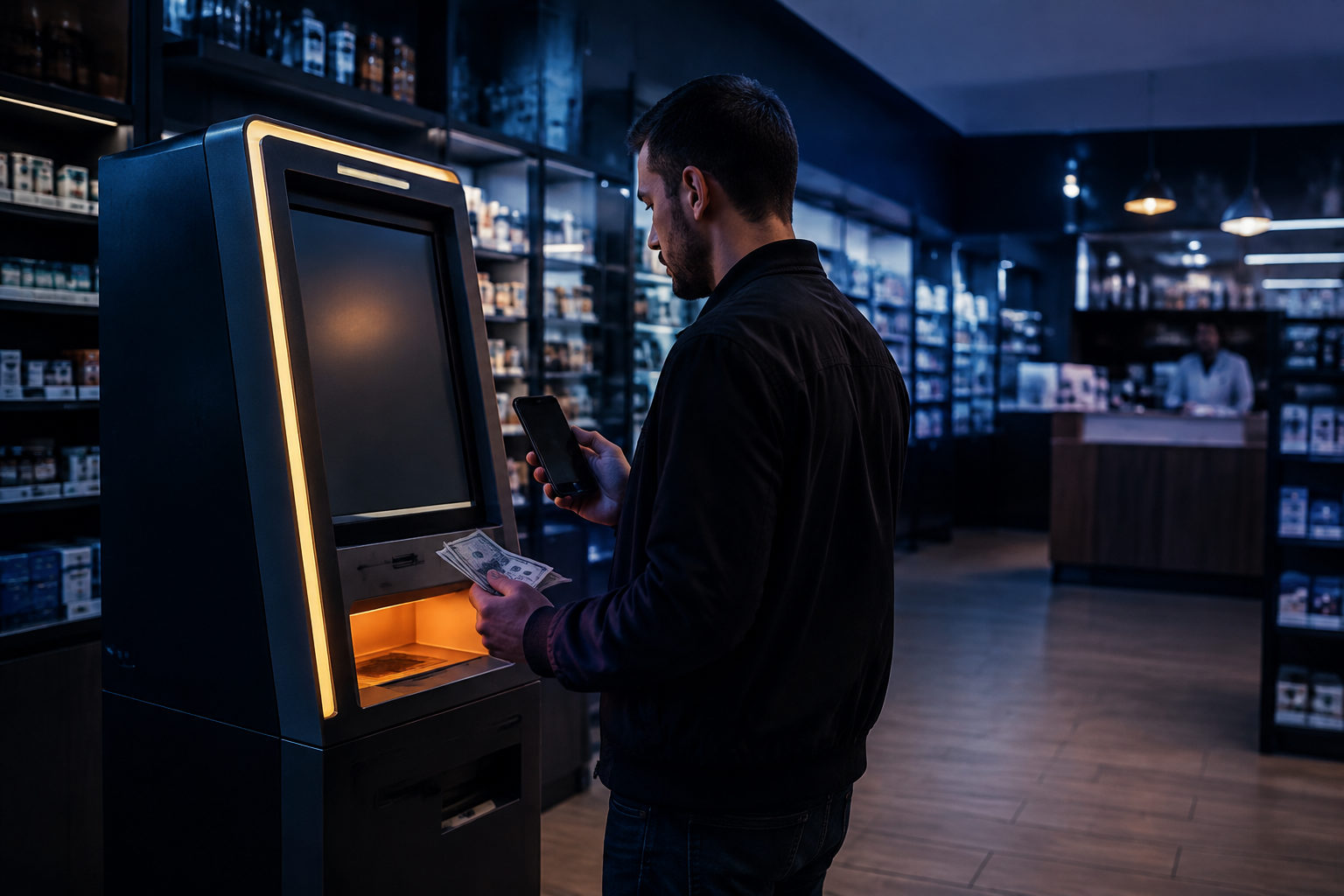
The checkout lane at CVS will not sell you bitcoin, but some CVS stores in the U.S. host a bitcoin ATM near the entrance, and that machine is the real way to buy. These terminals are run by third-party operators, not by CVS, and they convert cash to bitcoin on the spot.
What That Bitcoin Machine Inside CVS Actually Is
CVS has no bitcoin service of its own. The terminals appear through partnerships between retailers and self-service kiosk companies such as Coinstar. The store provides floor space and power; the operator earns money from the exchange spread and service fees.
Not every CVS has one, and the fastest way to check is simply to walk past the front aisles and look for a cabinet with a Bitcoin logo. No need to call ahead or check a store-by-store list.
The machine runs on the operator's own system. Store employees cannot see your transaction, and they cannot fix a failed redemption, so the support number printed on the unit is your only lifeline when something goes wrong.
Buying in Four Moves
Set up a wallet before you leave. A mobile wallet app or a hardware wallet works, as long as it can display a receiving address — a string starting with 1, 3, or bc1. Doing this at the machine invites mistakes.
Select Bitcoin at the terminal and enter the dollar amount you want. The machine accepts bills, not cards or mobile payments. The screen then shows the quoted price, the fee, and the total. You can still cancel at this point.
Take the receipt after you confirm. The receipt carries a redemption code, or the screen shows a QR code. Some machines ask you to scan or type your own receiving address first, so the coins go straight to your wallet. Others hold the bitcoin in the operator's system until you redeem the code in their app.
Redeem on the spot or at home. Scan the QR code with your wallet app, or enter the redemption code in the operator's app, and the bitcoin moves to the address you provided. Details vary by machine, but the cash-only method stays the same.
Fees, Limits, and Details You Notice on Site
The operator sets the price, and it is usually higher than the spot price on major exchanges. The difference is the markup and the fee. What helps: the screen shows the full cost before you confirm, and you can abort at any step before that.
The rate on screen may not match the live market price on your phone. Before confirming, pull up a reference price and judge whether the markup feels acceptable.
Machines cap each transaction and each day, and the ceilings differ by model. Above a certain amount, the machine asks for identity verification, typically a phone number, a code sent by SMS, and a photo ID. These thresholds vary by operator, so the number shown on screen is the only one you can trust.
Some operators put an expiry on printed redemption codes, so redeem soon rather than leaving the receipt in a drawer. In small cash transactions, count the change — some machines dispense paper bills or coins along with a purchase receipt. Keep that separate from the redemption receipt.
Staying Safe at a Public Machine
Deal only with branded machines that display a support phone number. The operator's contact info is usually printed on the side of the unit. Take a photo in case you need it later.
If a stranger offers to "help you operate" the machine or to exchange cash, decline and move on. Legitimate machines need no assistance, and this kind of approach is almost always a scam.
Keep your phone screen angled toward yourself when it shows your receiving address — someone behind you can photograph it. And hold on to the redemption receipt until the funds arrive; it contains a code anyone can claim.
Interference is another tactic. If someone talks to you, points at the wrong buttons, or otherwise tries to break your focus while you are entering amounts, terminate the transaction and leave. The usual goal is to make you confirm a wrong price.
If the app says the redemption failed, do not resubmit the same code repeatedly. Duplicate attempts can create a messy double claim, and support has to sort it out. Screenshot the error, then call the number on the machine.
FAQ
Can I buy bitcoin at the CVS checkout counter?
No. The counter handles regular merchandise only. Bitcoin transactions happen entirely on the ATM inside the store, and the staff are not involved in the payment.
Why can't I pay with a credit card?
These machines have no card reader or mobile payment module. They are cash-only by design. For card purchases, a licensed online exchange is the way to go.
When will the bitcoin arrive in my wallet?
After you redeem the code, the transaction is broadcast to the Bitcoin network and waits for blockchain confirmations. The machine shows "submitted" or similar, and the actual confirmation time depends on how congested the network is at that moment.
Can I buy without a wallet of my own?
Some machines offer a temporary wallet, but it is a bad idea. The private key stays with the operator, which makes the coins hard to move out safely later. Set up a wallet before you walk in — that is the only approach worth recommending.
Set up your wallet first, stick to a branded machine, read the total on the screen, and keep your first purchase small. Once the flow feels normal, you can size up. That is the entire routine.
Disclaimer: This article is for informational and educational purposes only and is not investment, financial, or legal advice. Crypto assets are highly volatile and you could lose your entire investment. Do your own research and decide carefully.