
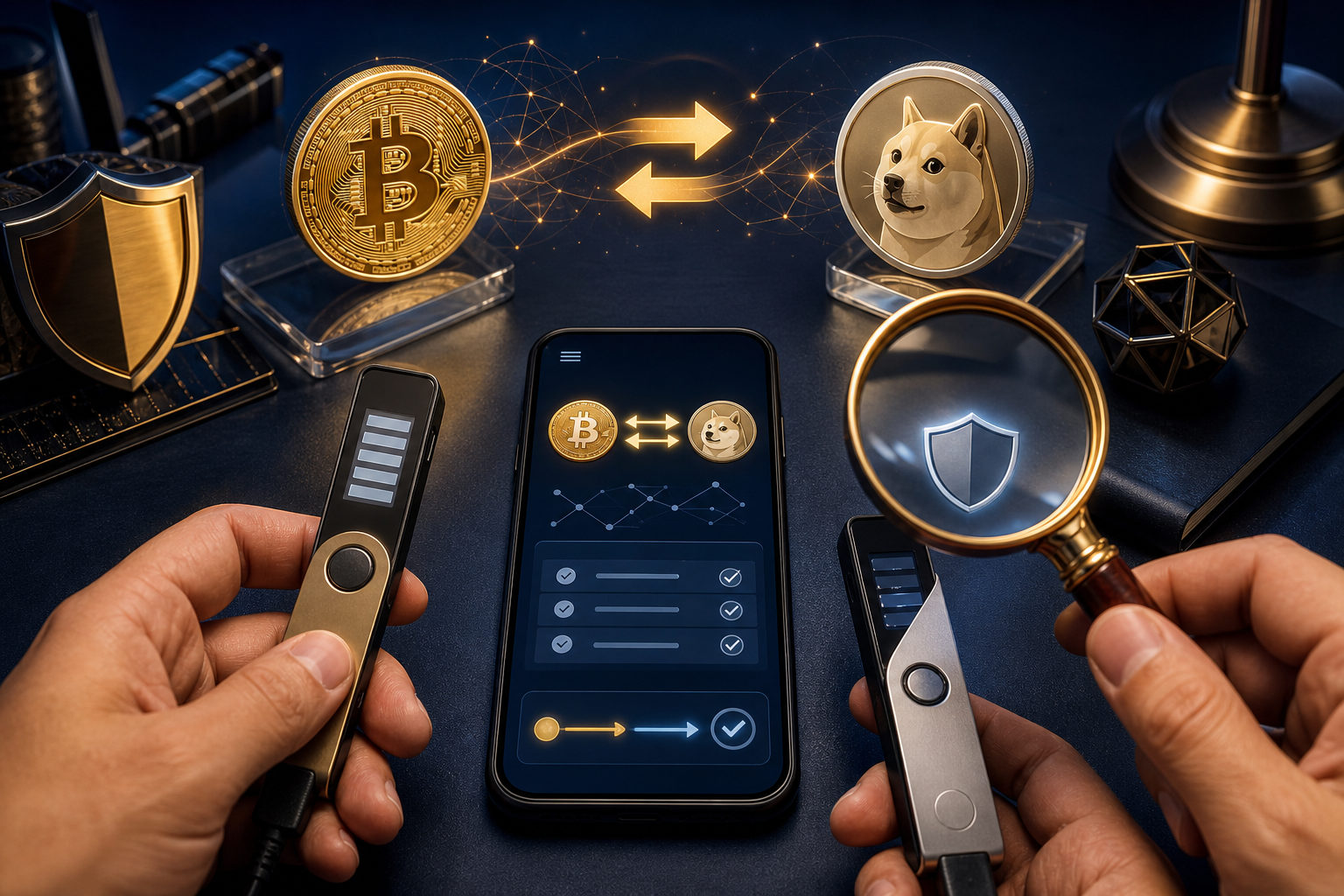
To convert bitcoin to dogecoin safely, you need to use an actual trading or swap process, verify every asset and network detail, and begin with a small test amount. The biggest mistakes usually come from confusion between a transfer and an exchange, not from the button-clicking itself.
What converting bitcoin to dogecoin actually means
When people ask "how to convert bitcoin to dogecoin," they usually mean exchanging BTC for DOGE rather than changing one coin into another by moving it on-chain. Bitcoin and Dogecoin are separate cryptocurrencies with different blockchains, different address formats, and different transaction flows.
In practice, you are making a trade. You give up some BTC and receive DOGE in return. That can happen inside an exchange account, through a wallet feature that supports swaps, or through another service designed for asset conversion. The interface may look simple, but the underlying steps still matter.
This distinction is the first thing to get right. A plain BTC transfer does not magically turn into DOGE just because you intended it that way. If you start from the wrong assumption, every step after that becomes riskier.
Four checks to make before you do anything
1. Confirm that you are using a swap or trade function
If you are on a screen labeled send, withdraw, or receive, you may only be moving BTC from one place to another. That is not the same as exchanging BTC for DOGE. Look for a trade, convert, or swap flow instead.
This matters because one of the most common beginner errors is sending BTC to a destination that cannot process it as a Dogecoin purchase. A transfer moves the original asset. It does not perform a market conversion on your behalf unless the service is built for that purpose.
If the page wording is unclear, stop and verify before you continue. Guessing is where avoidable losses begin.
2. Verify that the receiving destination is for DOGE
If you are trading inside a platform, you may not need to enter a blockchain address yourself. If your process involves an external wallet, a withdrawal, or a manual receiving step, then you need to make sure the destination is actually meant for DOGE.
Do not rely on a quick glance at the first and last few characters. Copy and paste carefully, then compare the full address in a controlled way. If your wallet offers an address book, save known addresses with clear labels instead of reusing scraps from chat messages or screenshots.
Manual typing is risky. So is trusting an address that someone sent you in a direct message without independent verification.
3. Treat network selection as a critical decision
BTC operates on the Bitcoin network. DOGE operates on the Dogecoin network. In many interfaces, the asset pair you are trading and the network you choose for a withdrawal are related but not identical concepts. Users often mix them up.
If a service asks you to choose a network, read the instructions carefully. If you are not sure what a network option means in that context, do not proceed until you understand it. Many problems happen not because the address was wrong, but because the asset was sent through a route the receiving side does not support.
Never assume similar ticker symbols or menu labels mean the same thing across every screen.
4. Prepare a test amount first
Your first conversion should not involve your entire BTC balance. A much safer approach is to run a small test, complete the full flow once, and confirm that you understand where the BTC goes, where the DOGE arrives, and how the service displays fees and status updates.
The point of a test is not only to see whether the transaction works. It is also to prove that your own understanding is solid. If any step still feels vague after a test run, that is a sign to pause rather than scale up.
A small successful test gives you evidence. A full-size first attempt gives you exposure.
Step-by-step: how to convert bitcoin to dogecoin
Step 1: Choose the conversion path that fits your situation
The most common paths are simple in concept. You can trade BTC for DOGE inside an exchange, sell BTC into another asset and then buy DOGE, or use a wallet or service with a built-in swap feature. The interface changes, but the core idea stays the same: you are exchanging one asset for another.
Why this step matters: the path determines how many moving parts you must manage. Some flows require you to handle deposits and withdrawals. Others keep everything inside one account balance. Fewer moving parts often mean fewer ways to make a mistake, especially for a newer user.
What to watch out for: avoid unknown websites that promise fast conversion, better rates, or special access without clear trust signals. A polished interface is not proof of legitimacy. If the process asks you to send coins first and wait for a manual release, your risk is already higher.
Step 2: Secure your account and device before the trade
If you are using a platform account, review your security settings before you convert anything. Check that the device is yours, the password is unique, two-factor authentication is enabled, and withdrawal protection is active if the service offers it.
The reason is straightforward. Many losses tied to crypto activity do not come from price moves or swap mechanics. They come from stolen logins, hijacked email access, phishing pages, or someone tricking the user into approving the wrong action.
Be extra careful with search results, sponsored listings, and direct messages from people claiming to be support. A real conversion never requires you to hand over your seed phrase, private keys, or verification codes. No exception.
Step 3: Review the trading pair, estimated output, and fees
On the conversion page, make sure the asset you are giving is BTC and the asset you are receiving is DOGE. Then review any estimated output, spread, fee disclosure, or quote expiry notice shown on the screen.
This step is about avoiding bad assumptions. Some services display fees separately. Others build the cost into the quoted rate. You do not need to reverse-engineer every detail to use a service safely, but you do need to understand that the amount of DOGE you receive may be lower than your rough mental estimate because costs are part of the process.
Be wary of anything that frames a basic coin conversion as a guaranteed-profit opportunity. Swapping BTC into DOGE is a trade, not a built-in income product.
Step 4: Run a small test conversion
Before making the full move, send through a small test amount. Watch how the service labels the status, how long the process takes in that interface, and where the DOGE appears once the swap is complete.
This helps for two reasons. First, it catches technical mistakes before they become expensive. Second, it teaches you the service's specific workflow. Some systems update balances inside an account. Others send the output asset to an external wallet. Until you have seen the full cycle with your own eyes, you are still partly operating on assumption.
After a successful test, do not rush into a much larger trade without a quick review. Ask yourself whether you understood every screen, whether the destination was correct, and whether you can repeat the process confidently.
Step 5: Complete the full conversion and keep records
Once the test works and the flow makes sense, you can decide whether to proceed with a larger amount. Before confirming, check the asset names, quantities, destination details, and any verification prompts one more time. After completion, save the order reference, timestamps, and status history if the service shows them.
Keeping records matters more than many users expect. If a balance update is delayed or a transaction appears stuck, you will need those details to determine whether the issue is at the deposit stage, the trade stage, the withdrawal stage, or just the display layer inside the app.
Do not share full screenshots carelessly when asking for help. Order details, addresses, and account screens can reveal more than you think.
Where users get caught: scams and preventable mistakes
- Confusing transfer with conversion: sending BTC somewhere does not mean it will become DOGE.
- Using the wrong address: a copied address can be altered by malware, so always verify after pasting.
- Falling for a phishing site: a fake login page can steal credentials and verification codes in one attempt.
- Trusting private "helpers": a legitimate conversion does not require sending funds to a personal wallet or letting someone remote into your device.
- Believing guaranteed-profit language: a basic asset exchange is not a promise of steady gains.
- Panicking too early over delays: a missing balance update does not automatically mean the funds are gone. Check each stage first.
One scam pattern deserves special attention. A fraudster may guide you through a small, successful action to build trust. Once you feel comfortable, they push for a larger transfer and then claim the funds are frozen, under review, or blocked until you pay another fee. A normal conversion flow should not require repeated payments just to release assets that already belong to you.
You should also treat your seed phrase, private keys, and authentication codes as untouchable. Anyone who gets them can take control of your assets. That does not change because the person says they are support, a coach, or a trading mentor.
What to check after the conversion
Once the DOGE arrives, do not stop at the visible balance. Confirm that the receiving wallet or account is under your control, that you know how to access it again, and that any backup information is stored safely. If you plan to hold the DOGE, storage and account hygiene matter. If you plan to trade it later, make sure you understand the path out as well.
You should also organize your own records. Save what you converted, when you did it, and where the assets moved. This makes future tracking easier and helps you avoid confusion when you review your holdings later.
A clean record is not just for convenience. It gives you a factual trail if something needs to be checked later.
FAQ
Does sending bitcoin automatically convert it into dogecoin
No. A standard BTC transfer only moves bitcoin from one location to another. To get DOGE, you need a trade, swap, or convert function designed for that purpose.
Can I reverse the process and change dogecoin into bitcoin
Yes. The logic is the same in the other direction. You would submit DOGE, receive BTC, and verify the destination, network, and fee details just as carefully.
Why is a small test conversion so important
A test helps you confirm that you understand the full process before more value is at risk. It can expose issues with addresses, network settings, destination handling, or fee expectations while the stakes are still limited.
What is the biggest scam risk during a coin conversion
Phishing pages, fake support, and private middlemen are the main dangers. If anyone asks for your seed phrase, private keys, verification code, or an upfront transfer to a personal wallet, stop immediately.
What if the dogecoin does not appear right away
That does not always mean the funds are lost. Check the order status, account history, and destination details first to see whether the process is waiting on deposit handling, trade completion, or a balance display update.
If you are ready to do this for real, keep the order simple: make sure you are using a true conversion flow, verify the asset and network details, run a small test first, and keep your records. If any screen still feels unclear, pause there rather than pushing through on guesswork.
Disclaimer: This article is for informational and educational purposes only and is not investment, financial, or legal advice. Crypto assets are highly volatile and you could lose your entire investment. Do your own research and decide carefully.