
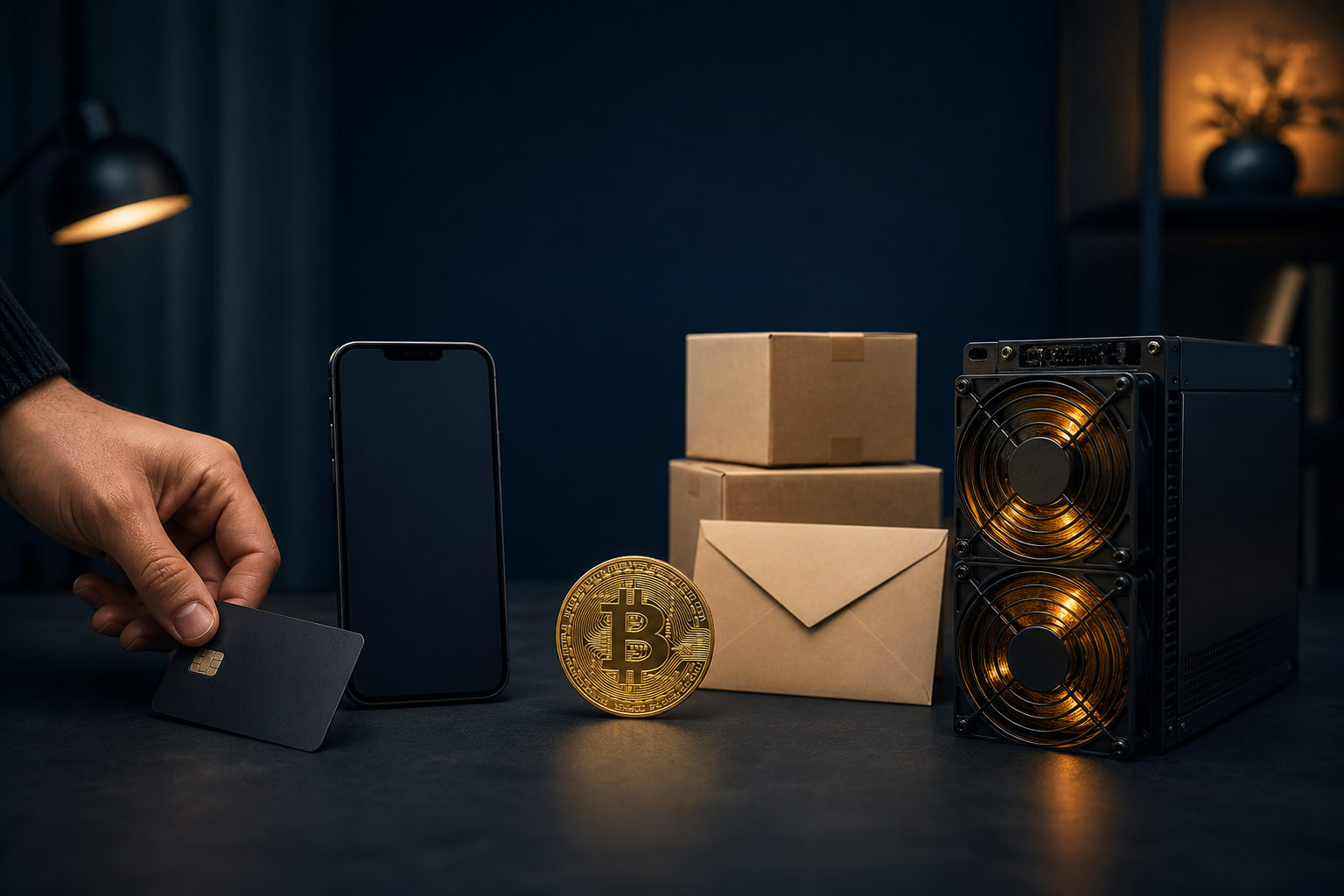
The main ways to get bitcoin are simple: buy it, earn it, or mine it. For most beginners, the right choice depends less on hype and more on budget, effort, and how much responsibility they want to take on.
The three main ways to get bitcoin
If you are searching for how to get bitcoin, it helps to separate access from suitability. Several methods can put BTC in your hands, but they do not ask for the same kind of commitment.
One path asks for cash, another asks for skills or business activity, and the third asks for hardware, power, and ongoing management. That is why the best option is often the one you can actually handle well, not the one that sounds most exciting.
Buying bitcoin
Buying is the fastest route for most people. In practice, that usually means opening an account with a regulated exchange or broker, completing identity checks, funding the account, and then purchasing BTC.
The appeal is obvious: the process is direct, and there is plenty of educational material for first-time users. The trade-off is that you need to think about fees, withdrawal rules, account security, and whether you want to keep coins on the platform or move them to your own wallet.
Earning bitcoin
You do not always need to buy bitcoin with cash. Many people get BTC by accepting it as payment for freelance work, online services, digital products, consulting, or other business activity.
This route is often overlooked because it feels less like investing and more like getting paid. That is exactly why it can be useful. If you already have a service or product to sell, earning bitcoin may fit naturally into your workflow.
The downside is that it still requires setup. You need a payment method, a wallet, a pricing process, and a clear record of what you received and when. It is not harder than buying in every case, but it is less standardized.
Mining bitcoin
Mining is a real way to get bitcoin, but it is not a casual shortcut. The Bitcoin network produces a new block about every 10 minutes, and miners compete to add blocks by contributing computing power.
Block rewards are reduced about every 4 years, or every 210,000 blocks, through the halving process. Previous halving years were 2012, 2016, 2020, and 2024.
For beginners, the key point is practical rather than technical: mining usually involves specialized machines, electricity costs, heat, noise, maintenance, and pool setup. It is closer to an operational business than a simple starter tactic.
How to choose between buying, earning, and mining
The better question is not only how to get bitcoins, but which method matches your situation. A path that looks efficient on paper can become frustrating if it demands tools, time, or skills you do not have.
| Method | Best for | Main advantage | Main challenge |
|---|---|---|---|
| Buying | Beginners who want BTC quickly | Fast and straightforward | Fees, platform choice, and custody |
| Earning | People with services or products | No need to start with a large purchase | Requires clients, demand, and setup |
| Mining | Users comfortable with hardware and operations | Direct participation in network security | High complexity and ongoing management |
Buying is usually the easiest starting point if your goal is to hold bitcoin. Earning may be a better fit if you already work online, sell digital goods, or run a business that can accept crypto payments.
Mining belongs in a different category. It can make sense for some people, but it should be treated as an infrastructure activity, not a beginner hack for free coins.
What matters after you get bitcoin
Many guides focus on acquisition and skip the harder question: what happens after the coins arrive. In reality, security and custody often matter more than the method you used to get them.
If you leave bitcoin on a platform, you depend on that company for account protection and access controls. If you move it to a self-custody wallet, you gain direct control, but you also take full responsibility for backup and recovery.
- Decide whether convenience or control matters more to you.
- Use two-factor authentication on any exchange account.
- Keep backup information organized and away from casual exposure.
- Double-check addresses before sending or withdrawing BTC.
- Be skeptical of offers that promise easy bitcoin with little effort.
Bitcoin is divisible, so you do not need to buy a full coin to get started. Its smallest unit is 1 satoshi, which is one hundred millionth of a BTC. That makes it easier to learn the process in smaller steps instead of forcing a large first move.
A practical order for beginners
If you are still deciding how can I get bitcoin in a sensible way, start with your purpose before your tools. People often do the reverse, and that is where confusion starts.
- Define the goal: holding BTC, accepting payments, or learning how the network works.
- Check what you can commit: cash, time, skills, or hardware management.
- Pick the matching tools: exchange and wallet for buying, payment setup for earning, equipment and pool access for mining.
- Run a small test first: receive, withdraw, and back up before doing more.
- Separate active use from storage: a spending setup is not the same as a long-term holding plan.
This approach is less flashy, but it prevents many common mistakes. Most beginners do not fail because bitcoin is impossible to understand. They struggle because they choose tools first and goals later.
FAQ
What is the easiest way for a beginner to get bitcoin?
For most people, buying is the easiest place to start because the process is standardized and widely supported. That does not remove risk, though, so you still need to understand fees, withdrawals, and account security.
Can I get bitcoin without spending a lot of money?
Yes. You can buy small amounts over time, or you can earn BTC by selling services, products, or digital work. You do not need to own a full coin before learning how bitcoin works in practice.
Is mining still realistic for individuals?
It can be, but it is not the simplest path. The real challenge is not starting the setup once; it is keeping the operation efficient and manageable over time.
Should I keep bitcoin on an exchange or in my own wallet?
That depends on what you value more. Exchanges can be easier for active use, while self-custody gives you direct control if you are prepared to manage backups and recovery carefully.
How do I tell whether a bitcoin offer is legitimate?
Be careful with any offer that asks for control of your wallet, recovery phrase, or account. If the pitch makes getting bitcoin sound effortless and low-risk, that alone is a reason to slow down and verify everything.
A practical next step is to choose one method you understand, test it on a small scale, and make sure you can receive, store, and move BTC safely. Knowing how to buy, earn, and secure bitcoin is more useful than chasing the fastest shortcut.
Disclaimer: This article is for informational and educational purposes only and is not investment, financial, or legal advice. Crypto assets are highly volatile and you could lose your entire investment. Do your own research and decide carefully.