
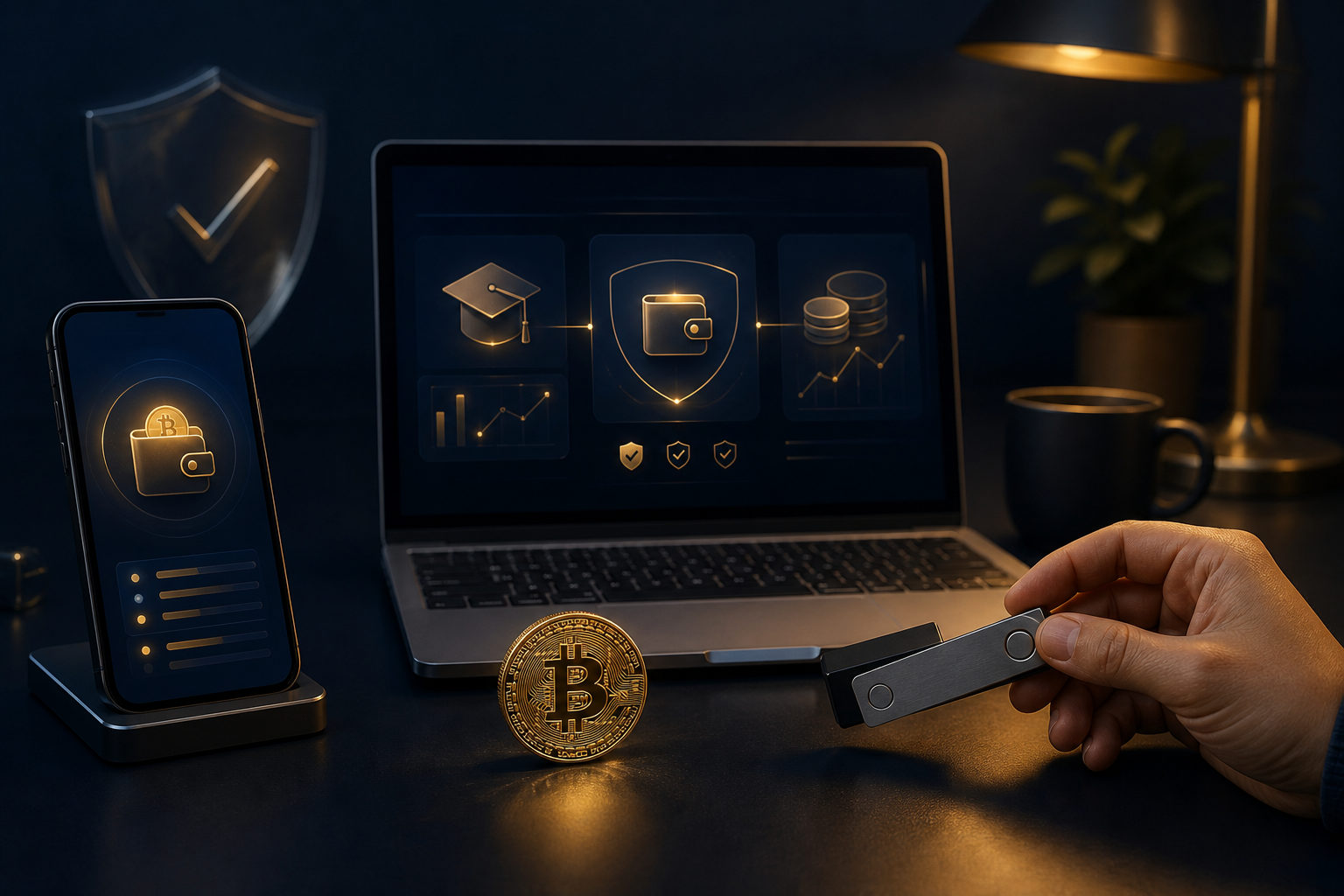
To get started in bitcoin, learn the rules first, set up storage carefully, use a small test amount, and treat security as part of the process. For beginners, the order matters more than speed.
Understand what bitcoin actually is
Bitcoin is a digital asset that runs on a blockchain. Its white paper, Bitcoin: A Peer-to-Peer Electronic Cash System, was released in 2008 by the name Satoshi Nakamoto, and the network began with the genesis block in January 2009.
A few basics help right away. Bitcoin has a maximum supply of 21 million coins, its smallest unit is 1 satoshi, which equals one hundred millionth of a BTC, and the network produces a new block about every 10 minutes. If you know these rules before you buy anything, many common mistakes become easier to avoid.
Step 1: Decide why you want bitcoin before you buy
Many people searching for how to get started in bitcoin want a direct answer: open an account and buy some. A better first move is to define your goal clearly. You may want to learn how transfers work, hold bitcoin over time, or simply understand the system before taking any market risk.
This matters because your goal affects every later choice. Someone learning the basics may only need a simple wallet and a small practice transaction, while a person planning to hold bitcoin longer needs a stronger backup plan, stricter device security, and a calmer approach to price swings.
The main caution here is simple: starting does not mean going all in. New users often make bigger errors from moving too fast than from moving too slowly.
Step 2: Learn wallets, addresses, and private keys
If you want to know how to get started with bitcoin, these three ideas come before anything else. A wallet is best understood as a tool for managing keys, a bitcoin address is where you receive funds, and a private key or seed phrase is what gives control over those funds.
This step matters because many losses have nothing to do with market moves. They come from fake wallet apps, sending coins to the wrong address, storing a seed phrase in an unsafe place, or handing account codes to a scammer pretending to help.
Keep the rule clear in your head: whoever controls the private key controls the bitcoin. Once you understand that, promises of “managed storage,” “account recovery help,” or “special support access” become much easier to judge.
- Action: Write down your seed phrase offline.
- Reason: It is often the only way to recover access if a device is lost or reset.
- Caution: Do not save it in chat apps, cloud files, or screenshots.
- Action: Check the source before installing wallet software.
- Reason: Fake apps often look convincing to first-time users.
- Caution: Verify the name and publisher before downloading.
Step 3: Choose a buying method based on clarity, not hype
When people ask “how to get started in bitcoins,” they are often really asking where to buy it. At the beginner stage, the best route is not the one with the loudest promotion. It is the one that explains account setup, identity checks, deposits, withdrawals, and security settings in plain language.
Look for a service that makes the full process visible. You should be able to understand how to buy, how to move bitcoin out, what protections exist on login, and what warnings appear before a transfer. If a service talks only about upside and barely explains irreversible transactions, that is a bad sign.
The reason is practical. A smooth first experience depends more on clear process than on saving a small fee. If you do not know whether you can withdraw to your own wallet, or what happens during an account lock, you are not really ready to use that service.
Be strict about scams. Avoid private sellers who ask for direct transfers, fake mentors offering guaranteed returns, and anyone pushing urgency, secrecy, or “special access.” Bitcoin itself is not the scam; confusion around it often is.
Step 4: Run through the full process with a small amount
The most useful answer to how to get started with bitcoin is to complete one small real-world cycle. Set up your account or wallet, turn on security features, buy a small amount, generate a receiving address, receive bitcoin, and then try sending some out.
This works because beginners usually struggle with details, not definitions. Copying an address, checking the first and last characters, confirming the correct network, and reading transaction status are all easier to remember after one careful test.
Move slowly during this step. Do not rush because someone is waiting on the phone. Do not approve prompts you do not understand. Once a bitcoin transaction is broadcast, reversing it is often difficult or impossible.
Step 5: Treat security as a required step, not a bonus
If you are learning how to get started in bitcoin safely, security is not something to add later. It belongs inside the setup from the beginning.
- Action: Turn on two-factor authentication for any account you use.
- Reason: A password alone may not protect you if it is exposed.
- Caution: Never share login codes, even with someone claiming to be support.
- Action: Use a unique password for each bitcoin-related account.
- Reason: Reused passwords increase damage if one account is breached.
- Caution: Do not store all recovery details in the same place.
- Action: Test addresses with a small transfer before sending more.
- Reason: It reduces the chance of a costly error.
- Caution: Check more than the first few characters.
There is another reason to slow down here. Many scams work by creating pressure, then interrupting your normal checks. Any request for a seed phrase, remote device access, screen sharing, or one-time codes should end the conversation immediately.
Step 6: Learn what moves the price without turning your start into speculation
Some readers looking up how to get started in bitcoin are really asking whether now is a good time to buy. Without live market data, the useful answer is to understand what drives the price: supply and demand, macro sentiment, liquidity, regulation, and shifts in risk appetite.
Bitcoin also has a known supply schedule. A new block appears about every 10 minutes, and the block subsidy halves every 210,000 blocks, or roughly every 4 years. The halving years so far are 2012, 2016, 2020, and 2024.
That fixed issuance schedule does not mean price moves in a straight line. For a beginner, it is better to learn where to check live prices on mainstream market tools or inside the service you actually use, instead of reacting to screenshots on social media or in chat groups.
FAQ
What should a complete beginner do first with bitcoin?
Start by learning the difference between a wallet, an address, and a private key or seed phrase. Once you know who controls the asset and how recovery works, the rest of the setup becomes much easier to judge.
Do I need to buy a whole bitcoin to get started?
No. Bitcoin is divisible into very small units, and 1 satoshi is one hundred millionth of a BTC. That means a beginner can use a small amount to practice safely.
Should I keep bitcoin on a platform account or in my own wallet?
A platform account may feel simpler at first because the service handles much of the setup. Your own wallet gives you more direct control, but it also means you are responsible for backups, storage, and recovery details.
What are the most common beginner scams in bitcoin?
Common traps include fake support staff, fake wallet apps, guaranteed return promises, and requests for remote access or verification codes. If someone asks for your seed phrase, the conversation should stop there.
How can I check the bitcoin price safely?
Use mainstream market tracking tools or the trading interface you actually use. Avoid making decisions from forwarded screenshots, edited images, or social posts that give no verifiable context.
If you want to begin today, do three things first: learn the core wallet terms, prepare an offline backup method, and complete one small test transaction from start to finish. After that, you can decide whether to expand your use step by step.
Disclaimer: This article is for informational and educational purposes only and is not investment, financial, or legal advice. Crypto assets are highly volatile and you could lose your entire investment. Do your own research and decide carefully.