
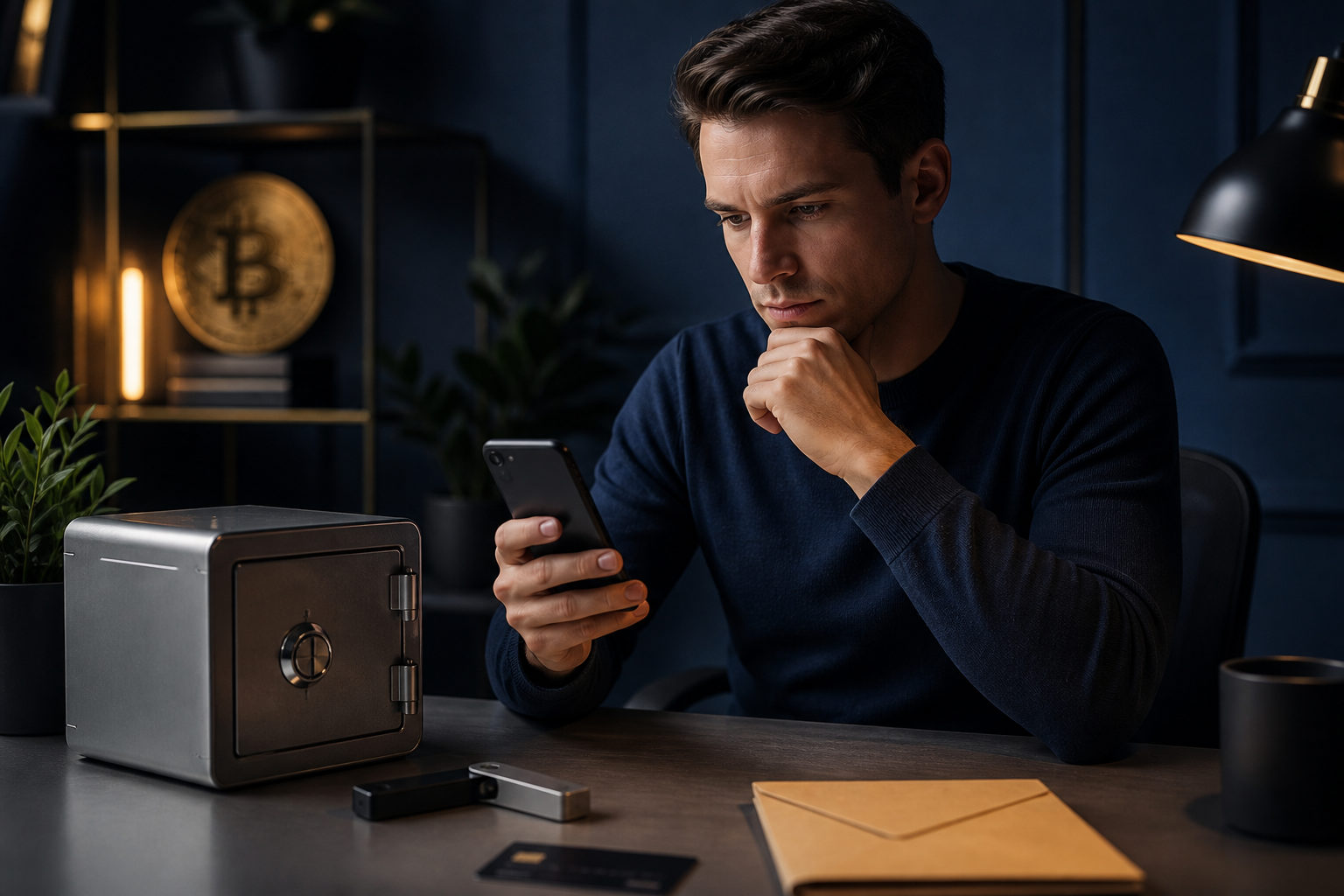
To invest in American bitcoin, start by choosing the right access route, setting clear risk limits, and learning how custody works before placing any order.
Decide what kind of bitcoin exposure you actually want
People searching for “how to invest in american bitcoin” are often talking about different things without realizing it. One path is direct ownership of Bitcoin itself. Another is gaining exposure through regulated financial products tied to Bitcoin. Both count as investing, but they behave differently in practice.
If you buy BTC directly, you need to think about custody, transfers, account security, and whether you want to keep control of the asset yourself. If you use a financial product instead, your focus shifts to product rules, fees, account structure, and how closely that product matches your goal. Those are not small differences. They shape what you own and what risks you carry.
This step matters because many beginners lump together buying Bitcoin, buying a Bitcoin-related stock, and buying a fund product. That leads to bad comparisons and poor decisions. Be careful with anything marketed as a simpler or better version of Bitcoin with higher returns and lower risk. Those claims usually hide trade-offs.
Set your investment boundaries before you look for an entry point
Before opening any account, write down three things: how long you plan to hold, how much downside you can live with, and whether this money can stay untouched without hurting your daily finances. Bitcoin has a fixed maximum supply of 21 million coins, which is part of its appeal, but scarcity does not remove volatility.
Its price can still swing hard because market mood, liquidity conditions, regulation, and capital flows all affect demand. Defining your boundaries first keeps you from making emotional decisions later. A lot of losses come from sizing too aggressively, not from misunderstanding the asset.
There is also a mindset issue here. If you say you are investing for the long term but react to every sharp move, your plan is not really long term. If normal price swings would push you into panic selling, your position may simply be too large for your risk tolerance.
Pick a route by checking rules, custody, and security rather than marketing
If you want to invest in American bitcoin, you will usually encounter two broad routes. One gives you access through crypto services that are closer to direct ownership. The other sits inside traditional brokerage-style systems through products linked to Bitcoin. The screen design is not what matters. What matters is how the service handles identity checks, custody, transfers, support, account recovery, and risk disclosures.
That is important because your experience will depend less on the sign-up page and more on what happens when something goes wrong. Can you move assets out if you choose to? Are the rules easy to understand? Is the service clear about restrictions? These are practical questions, not fine print trivia.
Take extra care before downloading any app or responding to messages that claim to help you get started. Fake apps, fake support agents, and lookalike websites are common attack methods in crypto. Do not click random search results or trust social posts just because they look polished. Verify the service name, the publisher, and the official communication channels before you do anything else.
If a provider leads with guaranteed returns, “managed” profits, or urgent instructions to transfer funds to a private wallet, walk away. A real Bitcoin investment route does not promise fixed income.
Start small and learn the full process from purchase to storage
Your first move should be modest. Use an amount you can afford to treat as a live test. Go through the whole flow: fund the account, buy a small amount, review the holdings page, read the fee breakdown, and understand what would be required to move the asset out. Even if you do not plan to withdraw your BTC right away, you should know how that process works.
The reason is simple. Many costly mistakes happen in operations, not in market analysis. People send funds to the wrong address, misunderstand permissions, skip backups, or assume they can fix everything later. With Bitcoin, a preventable error can be expensive.
If you decide to hold your own coins, learn the difference between a hot wallet and a cold wallet. A hot wallet is easier to use and better suited to active access. A cold wallet is more focused on long-term storage. Neither is automatically right for everyone. The better choice depends on whether you can manage credentials and backups responsibly.
One safety rule deserves absolute clarity: never share your seed phrase, private key, or one-time verification code with anyone. Real support staff do not need them. Screen sharing sessions, remote access tools, and step-by-step “assistance” from strangers are major red flags.
Manage the position with rules instead of reacting to noise
Once you have bought Bitcoin, the next challenge is not constant action. It is consistent behavior. Decide in advance how often you will review the position, what would justify adding or reducing exposure, and which information sources you will ignore. For most investors, discipline matters more than trying to nail the perfect entry.
Bitcoin attracts strong opinions, fast-moving narratives, and constant commentary. That can pull you into a cycle of checking price moves too often and changing your plan every few days. A strategy that shifts with every headline is not a strategy. It is a reaction loop.
It helps to review two kinds of risk on a regular basis. The first is account security: unique passwords, two-factor authentication, and a protected email account. The second is behavioral risk: chasing momentum, copying online personalities, or abandoning your framework after one bad week. Investors who stay in the market over time are usually the ones with clear limits, not the ones consuming the most content.
FAQ
Should I buy BTC directly or use a Bitcoin-related product?
That depends on what you want to control. Direct ownership gives you closer contact with the asset itself, while a product inside a traditional account may feel more familiar. The trade-off is between convenience, custody responsibility, and product-specific rules.
Is it smart to go in with a large first purchase?
For beginners, a small first allocation is usually the better move. It gives you room to learn the mechanics without turning every price move into a stress test.
What scams should I watch for when investing in American bitcoin?
Common ones include fake support, fake apps, impersonation in chat groups, managed account offers, and guaranteed-profit pitches. If someone asks you to transfer funds to a private address or hand over account control, stop immediately.
Do I need to move my Bitcoin into my own wallet after buying?
Not always. Some investors prefer self-custody because they want direct control. Others keep exposure within a regulated account structure for convenience. The key is understanding the limits and responsibilities of each choice.
Where should I check the live Bitcoin price?
Use established market data sites or the official pricing screen of the service you use. Avoid relying on screenshots, chat messages, or social posts as your price reference.
Before you begin, write down your objective, your acceptable loss, your custody choice, and the conditions that would make you exit. Then complete one small test purchase and review the full process before increasing exposure.
Disclaimer: This article is for informational and educational purposes only and is not investment, financial, or legal advice. Crypto assets are highly volatile and you could lose your entire investment. Do your own research and decide carefully.