
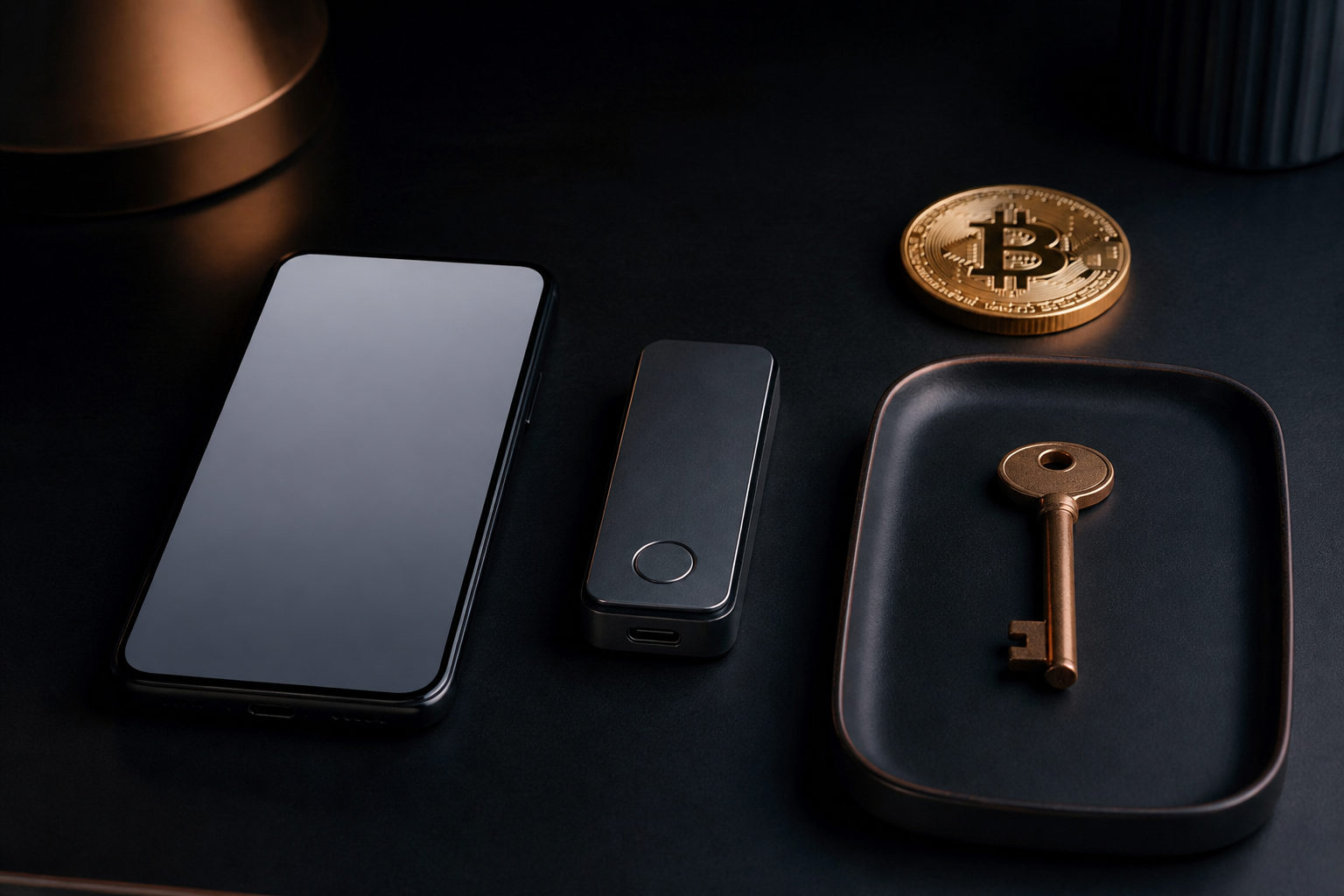
How to play bitcoin comes down to four basics: learn how to buy it, store it, send it, and protect yourself before you try anything advanced.
What people usually mean by “play bitcoin”
When people search for how to play bitcoin, they usually want to know how a normal user can take part, what the first step looks like, and which mistakes cause real damage.
Bitcoin is a digital asset that runs on a blockchain network, and it is also a unit of account inside that network. Its smallest unit is 1 satoshi, equal to 0.00000001 BTC. That matters because many beginners assume they need to buy a whole bitcoin to get started, which is false.
Bitcoin also has a fixed issuance schedule. The genesis block was created on 2009-01-03. The white paper, Bitcoin: A Peer-to-Peer Electronic Cash System, was released on 2008-10-31 under the name Satoshi Nakamoto. Supply is capped at 21,000,000 BTC, blocks target about 10 minutes, and the block reward is cut in half every 210,000 blocks, roughly every 4 years. After the 2024-04-19 halving, the current block reward is 3.125 BTC, which means the network adds about 450 BTC per day.
The main ways beginners can get involved
There is no single correct way to use bitcoin. The right approach depends on whether you want exposure, hands-on experience with transfers, or active trading.
| Approach | Best for | Main benefit | What to check first |
|---|---|---|---|
| Buy and hold spot bitcoin | Most beginners | Simple structure, easy to understand | Withdrawal support, account security, custody plan |
| Buy in small batches over time | People who dislike timing pressure | Reduces stress around one entry point | Whether you can follow the plan consistently |
| Make a small on-chain transfer | Users who want practical understanding | Shows addresses, confirmations, and settlement in action | Address accuracy and network fees |
| Self-custody for long-term holding | People who value direct control | You control the keys rather than a platform | Backup habits and recovery readiness |
| Frequent trading or leverage | Experienced users only | More ways to express short-term views | Risk control, discipline, and fast execution |
For a beginner, a useful first goal is a complete basic cycle: open an account with a reputable service, buy a small amount, withdraw it to your own wallet, and then try a small send.
A practical starting path from account setup to self-custody
Start with your actual goal
Some people want long-term exposure. Others want to understand how bitcoin moves on-chain. Another group is focused on short-term trading. Those goals lead to different tools and habits.
If your goal is long-term holding, storage matters more than speed. If your goal is active trading, you need to understand order types, platform balances, and how moving funds affects execution. If your goal is learning the network, your first priority is understanding addresses, confirmations, and wallet setup.
Choose your entry point with security in mind
Many beginners start on centralized exchanges because the interface is familiar and the buying process is easier than running your own setup from day one. Check whether the platform allows normal bitcoin withdrawals and whether it offers strong account protections such as two-factor authentication, device controls, and login alerts.
A common beginner mistake is treating exchange access as the same thing as bitcoin ownership. Holding bitcoin on a platform may be practical, but it is still subject to that platform’s rules and controls. When you withdraw to a wallet where you hold the private keys or recovery phrase, your level of control changes in a meaningful way.
Learn the difference between an account, an address, and a private key
An exchange account is for logging in, buying, selling, and requesting withdrawals. A bitcoin address is where you receive coins. A private key or seed phrase is what gives control over the wallet itself.
| Item | What it does | What goes wrong if mishandled |
|---|---|---|
| Exchange account | Access to trading and balance management | Unauthorized access or account restrictions |
| Bitcoin address | Receives bitcoin transfers | Funds can be sent to the wrong destination |
| Private key / seed phrase | Controls the wallet and its funds | Loss of control if exposed or badly stored |
People who mix these concepts often think a screenshot, password, or email login is enough to protect their coins. It is not. In bitcoin, key control is central.
Use a small test withdrawal first
Your first withdrawal from an exchange to a wallet should be treated like a systems check. Use a small amount, confirm the destination address carefully, wait for the transfer to arrive, and only then decide what to do next. Bitcoin transactions are generally not something you can reverse with a support ticket after the fact.
Decide whether self-custody fits you
Self-custody gives you direct control, but it also means full responsibility for backups, recovery, and daily operational care. If you lose your seed phrase or expose it carelessly, there may be no fallback.
That does not mean every beginner must move everything into self-custody on day one. It means you should understand the trade-off. Ease of use and direct control rarely sit in the exact same place.
The three skills that matter most if you want to use bitcoin well
Understanding how transfers and confirmations work
Bitcoin targets about one block every 10 minutes. After you send a transaction, it is broadcast to the network, included in a block, and then gains confirmations over time. Transfer speed can vary based on network conditions, fee choices, and the confirmation policy of the receiving service.
If you learn this early, you are less likely to panic when a transfer is not instant. Bitcoin settlement follows network rules, not the workflow of a customer service desk.
Understanding supply rules and why halving keeps coming up
Bitcoin’s supply schedule is one of its defining features. The reward has been halved on 2012-11-28, 2016-07-09, 2020-05-11, and 2024-04-19, with the next halving expected around 2028. The current block reward is 3.125 BTC. These events matter because they change the rate at which new bitcoin enters circulation.
Another useful anchor is the hard cap of 21,000,000 BTC, with issuance expected to continue until around 2140. This gives bitcoin a different monetary structure from systems where supply can be expanded more freely.
Separating investing, using, and speculating
A person holding bitcoin for years needs a different routine from someone using it to learn on-chain transfers. A short-term trader needs another toolkit again, with more emphasis on execution discipline and position management. Problems begin when people switch between these roles without noticing.
A long-term holder should care deeply about storage quality and recovery planning. Someone doing small transfers to learn the network should focus on addresses, fee handling, and confirmation status. A trader may care most about liquidity, timing, and strict rules for exiting a position.
Common mistakes and the risks behind them
| Mistake | Why it is a problem | Better move |
|---|---|---|
| Thinking buying alone means you understand bitcoin | You may not know how to withdraw, verify, or back up anything | Complete one full cycle from purchase to wallet transfer |
| Checking only part of an address before sending | A wrong destination can be final | Verify the full address and do a test send |
| Saving a seed phrase in chat apps or cloud notes | Exposure risk rises sharply | Keep backups offline and stored carefully |
| Starting with leverage or rapid trading | Mistakes compound faster and emotions take over | Begin with spot exposure and small size |
| Keeping everything in one place | Single-point failure risk gets too high | Separate trading funds from long-term holdings |
Bitcoin gives you a high degree of control, but it also removes some of the safety rails people expect from traditional finance and consumer apps. That is why careful habits matter so much.
You should also be skeptical of any service that promises guaranteed results, easy profits, or “hands-off” custody as the obvious answer.
FAQ
Should I buy bitcoin first or set up a wallet first?
Either order can work, depending on your comfort level. If you want to understand the full process early, set up a wallet first so you can test a withdrawal right after buying. If you feel overwhelmed, start with a small purchase on a platform and add the wallet step next, but do not stop there permanently.
Do I need a whole bitcoin to get started?
No. Bitcoin is divisible down to 1 satoshi, which equals 0.00000001 BTC.
Why does a bitcoin transfer sometimes take longer than expected?
Because the network has to process and confirm the transaction. Bitcoin targets about 10 minutes per block, yet the actual wait for a specific transfer can differ based on fees, congestion, and the receiver’s confirmation requirements.
Is self-custody always better than leaving bitcoin on an exchange?
Self-custody gives stronger direct control, but only if you can manage backups and recovery responsibly. If your operational habits are weak, the theoretical advantage can be reduced by your own mistakes.
What is the best first exercise for a complete beginner?
Buy a small amount, withdraw it to a wallet you control, and then make one small transfer after checking the destination carefully. That sequence teaches buying, custody, and settlement in a way that abstract reading never fully can.
If you want to begin today, focus on one clean practice run: a small buy, a test withdrawal, careful address verification, and a proper backup.
Disclaimer: This article is for informational and educational purposes only and is not investment, financial, or legal advice. Crypto assets are highly volatile and you could lose your entire investment. Do your own research and decide carefully.