
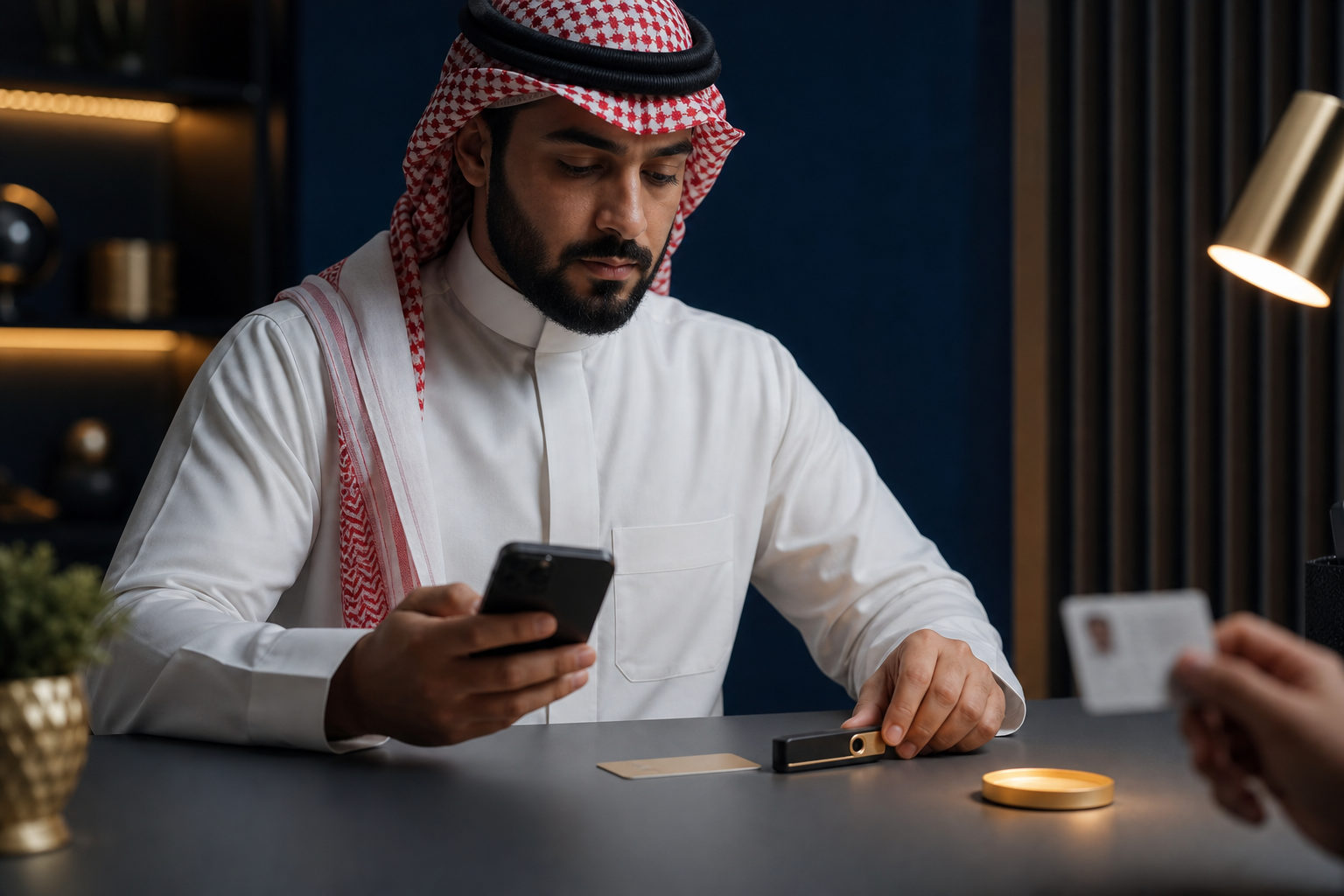
To purchase bitcoins in Saudi Arabia, start by choosing a service that accepts users in your location, complete identity checks, prepare a payment method, make a small test purchase, and move the BTC to a wallet you control.
Know what you are actually buying
Before you compare apps or payment methods, make sure the product is spot Bitcoin and not a contract, leveraged position, or synthetic product that only tracks price. If your goal is to own Bitcoin itself, the service needs to let you withdraw BTC to an external wallet. That single detail affects whether you control the asset or only hold an account balance inside a platform.
Bitcoin is a digital asset that runs on a blockchain. Its supply is capped at 2100 million coins, and the smallest unit is 1 satoshi, which equals one hundred millionth of a BTC. Those basics matter because many beginners confuse “price exposure” with actual ownership and only discover the difference when they try to withdraw.
Step 1: Choose a purchase route that fits your situation
People in Saudi Arabia usually run into two broad paths when looking for ways to buy Bitcoin: a centralized trading service or a peer-to-peer marketplace. The first option often gives you a structured account system, built-in verification, and a clearer order screen. The second may offer more direct matching between buyers and sellers, but it places more responsibility on you to judge payment instructions, counterparty behavior, and dispute risk.
At this stage, focus on four checks. First, does the service accept users in your jurisdiction? Second, what level of identity verification is required before deposit, purchase, or withdrawal? Third, does it support a payment method you can actually use? Fourth, can you withdraw BTC to your own wallet after the purchase? If any one of these points is unclear, you do not yet know enough to proceed safely.
A large share of fraud starts outside the actual order flow. Someone may contact you through social media, private chat groups, or sponsored search results and offer a personal buying service, a special rate, or fast approval. Once you move away from the platform’s recorded process and send money directly to an individual, your ability to prove what happened drops sharply.
Step 2: Set up your account, payment method, and security before you buy
After selecting a service, create your account and complete the required verification steps. These often involve identity documents, a selfie check, and linking a payment method. Your name, payment details, and account information should match. Inconsistent details can trigger reviews, delay access, or create withdrawal trouble later.
Do not wait until the last minute to test how you will fund the purchase. Many new users finish registration first, then discover that their card, transfer method, or payment channel is not supported. It is more efficient to start with the payment route you can use in practice and only then settle on the service.
Account security should be in place before your first order. Turn on two-factor authentication, use a unique password, and enable login and withdrawal alerts if available. If your email password has been reused on other sites, an old breach can become a path into your crypto account even when the trading platform itself was not at fault.
Step 3: Make a small test purchase first
Your first transaction should be small on purpose. The point is to test the full chain: funding, order execution, balance display, transaction history, and withdrawal access. A small trial tells you whether the process works under your own conditions, with your own device, payment method, and account status.
When you place the order, check the asset symbol carefully and make sure you are on the spot market section. Platforms often place spot trading, margin products, lending features, and derivatives close together. A beginner can enter the wrong section with a single tap and end up holding a product with very different risks.
If you use a peer-to-peer market, read the seller’s terms inside the order page before paying anything. Treat these signals as warning signs: instructions to continue the chat elsewhere, requests to send funds to a third party, pressure to split payment into several transfers, or demands to mark the order as paid before you have verified anything. The issue is not whether the other side sounds confident. The issue is whether the full process remains visible and reviewable inside the platform.
Step 4: Move the Bitcoin to a wallet you control
Buying Bitcoin is only part of the process. The next question is who controls the private keys. If the BTC stays on a trading platform, your access depends on account security, withdrawal rules, and the platform’s internal review process. Users who plan to hold for longer often prefer a self-custody wallet because it gives them direct control over the keys or recovery phrase.
When you set up a wallet, write down the recovery phrase in a quiet offline setting and store it in a way that protects against both loss and unwanted access. If someone else gets the recovery phrase, they may be able to move the coins without touching your phone or computer. If you lose it yourself and your device fails, recovery may become impossible.
Before a full withdrawal, copy your receiving address carefully and verify the beginning and end characters. Then send a small test amount. Once that arrives as expected, you can move the rest with more confidence. This simple step reduces the chance of loss caused by an address mistake, clipboard malware, or choosing the wrong transfer path on the platform.
Step 5: Watch for common scam patterns
Fraud in crypto often looks ordinary at first. Someone may offer to complete verification for you, buy on your behalf, or sell Bitcoin privately at a better rate. These offers become dangerous when they involve borrowed identities, third-party payments, off-platform settlement, or pressure to act quickly. If a problem appears later, you may have no clean record showing that the funds and account were under your control.
Another frequent pattern uses trust rather than technical complexity. A scammer may show screenshots of successful deals, positive comments in a group, or a string of supposed transaction records, then ask for a direct transfer to a personal account. Screenshots can be edited. Group messages can be staged. What matters more is whether the order exists inside a formal process and whether the Bitcoin transfer can be verified on-chain.
Fake wallet apps and fake support agents are also common hazards. A bad actor may use a similar app name, a copied interface, a sponsored ad, or an impersonation account to tell you that your wallet must be synced, upgraded, or checked for errors. No legitimate support process requires you to send your recovery phrase to anyone.
Step 6: Keep records and manage risk after the purchase
After you buy Bitcoin, keep a record of account setup, major security changes, deposit activity, purchase history, and withdrawal details. This is useful for personal tracking, for dealing with account issues, and for reconstructing where funds moved if you ever need to review your actions carefully.
You should also decide in advance how much exposure fits your finances. Bitcoin can be volatile, and large swings are part of the asset class. Only allocate an amount that would not disrupt your regular obligations if the market moves against you. If your plan is long-term holding, do not let every chat room opinion or short-term move rewrite that plan.
Device hygiene matters more than many beginners expect. Keep your phone or computer updated, avoid installing unknown software, and trim unnecessary browser extensions. A meaningful share of losses does not happen at the time of purchase. It happens later, when an email account is compromised, a one-time code is intercepted, or malware alters copied wallet addresses.
FAQ
What should I prepare before buying Bitcoin in Saudi Arabia?
Start with three basics: a service that accepts your location, identity documents for verification, and a payment method you can actually use. It also helps to have your own wallet ready before you buy so you are not deciding on storage in a rush.
Can I leave my Bitcoin on the platform after I buy it?
Some people do that for short-term convenience, but long-term holders often prefer self-custody. The key difference is control over the private keys, which affects your direct access to the asset.
What is the biggest risk in peer-to-peer Bitcoin purchases?
One major risk is being pushed outside the platform’s recorded order flow. Requests for off-platform chat, third-party payment recipients, or changing terms mid-trade are all reasons to pause.
Why is a small test purchase so important?
It confirms that funding, buying, balance display, and withdrawal all work under your account conditions. If something is wrong, it is far easier to correct with a small amount than with a large first transfer.
Is it safe to let someone else register or verify an account for me?
No. If the account, identity process, or funding trail is not fully under your control, later reviews or withdrawal restrictions can become much harder to resolve. You may also struggle to prove that the account is truly yours.
Final checks before you place the order
Before you buy, confirm that the service accepts users in your location, your security settings are active, your payment method works, BTC withdrawals are available, your wallet address is under your control, and your first transaction will be a small test. If any one of those points is still uncertain, stop there and verify it before sending money.
Disclaimer: This article is for informational and educational purposes only and is not investment, financial, or legal advice. Crypto assets are highly volatile and you could lose your entire investment. Do your own research and decide carefully.