
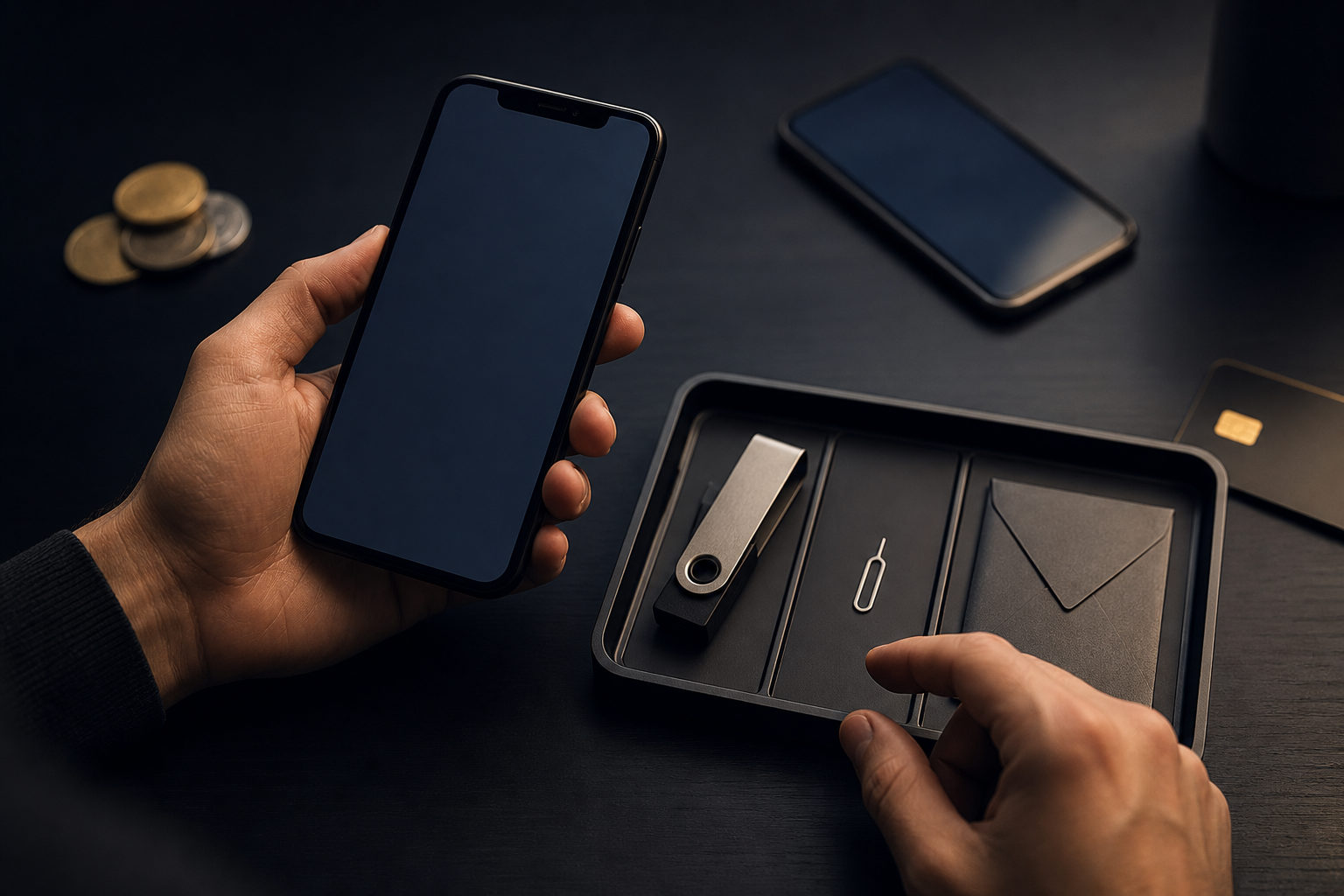
To sell bitcoin from a wallet, first confirm you control the wallet, choose a selling route that can actually pay you out, send a small test transfer, then complete the sale and verify the money in your own account.
Start by identifying what kind of wallet you have
When people ask how to sell bitcoin from wallet, the first mistake is often that they are not sure whether they hold bitcoin in a self-custody wallet, a custodial account, or a hardware wallet app connected to a third-party service. That distinction changes the process.
With a self-custody wallet, your bitcoin sits on-chain at addresses you control. In most cases, you will need to transfer bitcoin to a service that supports selling, conversion, or a compliant peer-to-peer process before you can receive fiat proceeds. With a custodial account, the balance you see may already sit inside a provider's internal system, so the sale can look more like an in-account trade than an on-chain transfer.
| Wallet situation | What you usually do | Why it matters | Main caution |
|---|---|---|---|
| Self-custody wallet | Transfer bitcoin to a service that supports selling | The wallet itself may only store and send bitcoin | Check the destination address carefully and test first |
| Custodial account wallet | Look for sell, convert, or withdraw options inside the account | The provider may handle trades internally | Do not confuse selling with withdrawing |
| Hardware wallet app | Confirm whether the app is a manager or a gateway to another provider | The interface can hide who actually executes the trade | Know the real counterparty before sending funds |
This first check protects you from a common scam pattern: someone claims they can “help” you sell and sends you an address to fund. If you do not understand where your bitcoin currently sits and who is supposed to receive it in a legitimate flow, you are easier to pressure.
Before you sell: prepare the parts that usually go wrong
Selling bitcoin from a wallet often involves wallet access, identity checks, payout details, network fees, and device security.
1. Confirm you can actually send from the wallet
Open the wallet and make sure you can access it normally. Check that your recovery setup is yours, your signing device works, and any two-factor protection tied to the selling service is available to you. If you cannot send reliably, pause there.
No legitimate support path should require your recovery phrase or private keys to help you sell bitcoin.
2. Decide where the proceeds should go
Before you sell, know exactly where you want the payout to land. That could be a linked bank destination, a payment account, or a verified balance inside the service you plan to use. The receiving account should match your verified identity where required.
Selling and payout are often separate stages. Many users focus on getting bitcoin sold, then discover the payout method is restricted, under review, or tied to mismatched account details.
3. Understand where fees can appear
When you sell bitcoin from a wallet, costs can show up in more than one place. You may encounter a network fee when sending bitcoin, a trading fee when the sale executes, a spread in the conversion rate, and another fee when funds are withdrawn.
You do need to know which step charges what, or you may think something is wrong when the amount available to withdraw is lower than expected.
4. Secure the device and the session
Use a trusted device, update the wallet software, and sign in only through the correct page or app you already know. Avoid public computers, suspicious browser extensions, and unknown Wi-Fi when handling wallet transfers and payouts.
A phishing page or remote access tool can turn a routine sale into a permanent loss very quickly.
How to sell bitcoin from wallet: the step-by-step flow
The exact screens differ by provider, but the structure is usually the same. Choose the route, obtain the receiving details, test with a small transfer, move the full amount, execute the sale, then verify payout in your own account.
| Step | Action | Why you should do it | What people often miss |
|---|---|---|---|
| Step 1 | Choose a selling route | You need a clear path before moving funds | Fast replies do not mean a service is trustworthy |
| Step 2 | Get the official bitcoin deposit details | You must know where the bitcoin is supposed to go | Never rely on a chat screenshot for the address |
| Step 3 | Send a small test transfer | It confirms the address and the workflow | Do not send the full amount first |
| Step 4 | Transfer the amount you want to sell | The service needs the bitcoin before it can process the sale | Keep your transaction record and order evidence |
| Step 5 | Execute the sale or complete the order | This converts bitcoin into withdrawable funds | Sold does not always mean paid out |
| Step 6 | Verify the payout and save records | You may need proof for support or bookkeeping | A notification is not the same as confirmed receipt |
Step 1: Choose the selling route carefully
You may use a trading service with a sell function, a broker-style conversion service, or a peer-to-peer process with clear rules and dispute handling. This article does not recommend any specific platform. What matters is that the service explains identity requirements, payout methods, restrictions, and support channels clearly.
Private chat deals, “instant high-price buyers,” and off-platform arrangements are common places for scams, especially for first-time sellers.
Step 2: Obtain the bitcoin receiving details from the official flow
Once you choose the route, the service will usually provide a bitcoin deposit address or a clear order instruction page. Copy that information only from the official app or website process. Do not use an address sent by direct message, and do not ask someone else to paste it for you.
Bitcoin transfers are usually irreversible after broadcast. A wrong address, a fake order page, or a malicious clipboard replacement can send your funds somewhere you cannot recover them from.
Step 3: Send a small test transfer first
A test transfer is one of the best habits when learning how to sell bitcoin from wallet. It confirms that the address is correct, your wallet is functioning normally, and the receiving service displays the incoming funds as expected.
After the test arrives properly, check the address again before sending the main amount.
Step 4: Transfer the amount you plan to sell
After the test works, send the amount you intend to sell to the designated bitcoin address. Before confirming, review the amount, the network fee shown by your wallet, and the address one more time. After sending, keep the wallet record and any order or deposit reference tied to the sale.
If there is later confusion about whether the funds arrived, your transaction record will be one of the first things support asks for.
Step 5: Execute the sale or complete the order according to the rules
Once the bitcoin is credited, follow the service's selling process. In some cases you convert immediately. In others you place a sell order. In peer-to-peer setups, you may need to confirm a release only after the service conditions are met.
Read the screens closely. “Order created,” “bitcoin received,” “trade executed,” and “payout completed” are not interchangeable statuses.
Step 6: Verify payout in your own account before you consider it done
When the sale is complete, check the destination account directly. Confirm that the receiving account is yours, the funds are actually there, and the transaction status matches what the service says. Save screenshots, emails, and account records while everything is still visible.
A screenshot from the buyer or a message claiming payment was sent should never carry more weight than the actual balance and record in your own account.
The biggest risks usually come from scams and bad assumptions
Losses during the process are more likely to come from fraud, fake urgency, and misunderstanding the workflow.
| Risk scenario | How it usually appears | Why it is dangerous | Safer response |
|---|---|---|---|
| Fake support | Someone asks for your seed phrase, code, or remote access | They want wallet or account control | Use only the official support channel and share no sensitive credentials |
| Fake payment proof | A buyer sends a screenshot and pushes you to release bitcoin | Screenshots can be forged and messages can mislead | Rely on the actual status of your own receiving account |
| Clipboard or address replacement | The pasted address is different from what you copied | Malware can redirect funds to another wallet | Verify the address carefully and test with a small amount |
| Off-platform deal | Someone promises a better rate if you move outside the formal flow | You lose structured protection and dispute handling | Stick to transparent procedures with defined rules |
| Feature confusion | You mix up send, sell, convert, and withdraw | You can approve the wrong action at the wrong time | Check what each screen changes and where the funds go next |
Another common mistake is assuming that a wallet app with a buy or sell button is itself the trading provider. Often it is only a front end connected to another service. Before you proceed, know who actually receives your bitcoin, who pays out the proceeds, and where you would go if something gets stuck.
If a step feels unclear, pause. When someone insists that you must act immediately, verify everything again.
FAQ
Can I sell bitcoin directly inside a wallet app?
Sometimes, but the app may simply route you to a third-party service in the background. Check who executes the sale, what verification is required, and how the payout is delivered before you continue.
Why is a small test transfer recommended before selling?
Because it checks the address, the wallet's sending function, and the receiving workflow in one move. That small step can catch address errors, fake instructions, and process misunderstandings before the full amount is at risk.
If the buyer says payment was sent, should I release the bitcoin right away?
No. Only your own account record should decide that. Screenshots, messages, and notifications are not proof that the funds actually arrived.
Is sending bitcoin the same as selling bitcoin?
No. Sending moves bitcoin from one address or account to another. Selling is the separate act of converting bitcoin into another asset or fiat proceeds, even though the two steps can happen back to back.
What should I check first if the sale seems stuck?
Start with the order status, the wallet transaction record, and the payout status in your receiving account. If something does not line up, use the official support path inside the service instead of asking strangers for help.
Before you start, decide the payout destination, plan a small test transfer, and keep records from each stage. Those three habits do more to reduce selling risk than moving faster ever will.
Disclaimer: This article is for informational and educational purposes only and is not investment, financial, or legal advice. Crypto assets are highly volatile and you could lose your entire investment. Do your own research and decide carefully.