
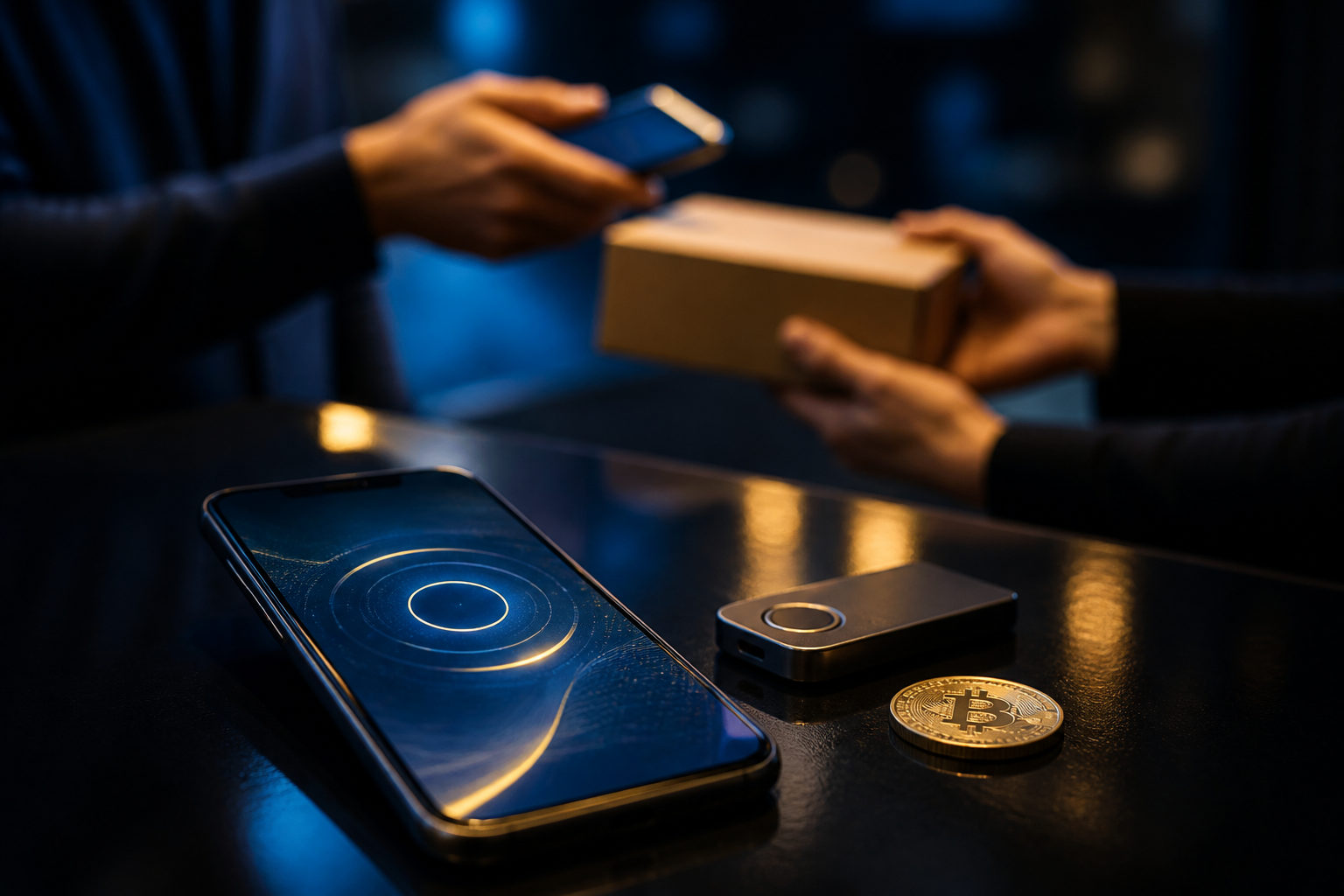
How to transact with bitcoin comes down to four actions: use a working wallet, verify the receiving address, send an on-chain payment with an appropriate fee, and wait for confirmation before treating it as final.
What “transacting with bitcoin” usually means
Some people use the phrase to mean trading BTC on an exchange. In everyday use, though, it often means something simpler: sending bitcoin to another person, receiving bitcoin as payment, or accepting BTC for goods or services. This article focuses on that practical side.
A bitcoin transaction is broadcast to the network and then included in a block by miners. The network targets about 10 minutes per block, so a payment is not final the second you press send. Your wallet may show “sent” right away, but the receiver may still wait for one or more confirmations before handing over anything of value.
| Situation | What you do | Main risk | When it is treated as complete |
|---|---|---|---|
| Paying a friend | Enter an address or scan a QR code | Wrong address, fee set too low | The receiver accepts the payment |
| Merchant payment | Pay the quoted BTC amount to the provided address | Paying late, sending on the wrong network | The merchant sees the required confirmations |
| Receiving BTC | Generate an address and monitor the transaction | Reusing one address, releasing too early | Your wallet shows the payment and enough confirmations |
How a bitcoin payment works in practice
Bitcoin was introduced in the white paper Bitcoin: A Peer-to-Peer Electronic Cash System, published by Satoshi Nakamoto on 2008-10-31. Its genesis block followed on 2009-01-03. Those dates matter historically, but for day-to-day use you mainly need to understand three things: who controls the keys, how fees affect processing, and what confirmations mean.
When you send BTC, your wallet signs the transaction with the private key tied to the funds being spent. That signed transaction is broadcast to the network, where miners choose transactions to include in blocks. The fee does not go to the receiver. It goes to the miners who prioritize and confirm transactions.
The wallet you pick shapes the whole experience. A custodial wallet feels closer to a standard financial app because a provider handles the keys for you. A self-custody wallet gives you direct control, but it also means backup responsibility sits with you. If you lose access to the seed phrase in a self-custody setup, recovery is often not possible through customer support.
| Stage | What is happening | What the user should check |
|---|---|---|
| Create payment details | The wallet generates an address or QR code | Make sure it is for BTC |
| Send transaction | The sender signs and broadcasts it | Address, amount, network fee |
| Wait for inclusion | Miners place it into a block | Whether it appears as pending |
| Gain confirmations | Later blocks build on top of it | Whether the receiver's threshold is met |
Step-by-step: what the sender should do
Start by getting the receiver’s BTC address or QR code. Do not type the full address by hand if you can avoid it. Copy and paste or scan it, then still check the first and last characters before sending. That small habit helps catch clipboard replacement malware and basic copy errors.
Next, enter the amount and review the unit shown by your wallet. Some wallets display BTC, while others may show satoshis. One satoshi is 0.00000001 BTC, the smallest unit of bitcoin. A unit mistake is enough to turn a routine payment into an expensive error.
Then choose the transaction fee. Many wallets offer simple options such as slow, standard, or fast. If timing matters, picking the lowest fee just to save a little can work against you. A payment with a weak fee may remain unconfirmed for longer than you expect.
After sending, save the transaction record or transaction ID if your wallet shows one. If the other side says the payment has not arrived, you will need a reliable way to check whether the transaction was actually broadcast and whether it has been included in a block.
Step-by-step: what the receiver should do
If you are receiving bitcoin, create a fresh address for each order or invoice when possible. This makes accounting cleaner and limits the privacy loss that comes from reusing one public address again and again. Anyone can inspect on-chain activity tied to an address, so reuse creates unnecessary links between payments.
Set your acceptance rules before the payer sends funds. Decide whether you will acknowledge an unconfirmed transaction, whether you need a certain number of confirmations, and whether a quoted amount expires if the payer waits too long. Those details should be clear before money moves.
This matters even more when you are selling digital goods, custom work, or anything that cannot be taken back after delivery. Once a bitcoin transaction is confirmed, reversing it is difficult. That is useful in some cases, but it also means the receiver should not release value too early.
| Role | Key task | Typical mistake | Better approach |
|---|---|---|---|
| Sender | Check address, amount, and fee | Sending to the wrong address | Verify details twice before confirming |
| Receiver | Provide the correct BTC address and monitor status | Delivering before confirmation policy is met | Set clear payment rules in advance |
What usually causes trouble in bitcoin transactions
The first issue is address accuracy. Bitcoin payments are generally not something you can treat like a card charge with a built-in reversal path. If funds go to the wrong address, the technical system will not automatically bring them back.
The second issue is fee selection. Miners have limited block space to work with, and they tend to prioritize transactions with more attractive fees. A wallet may simplify this decision for you, but the trade-off is still there: lower fee often means lower priority.
The third issue is confirmation expectations. One confirmation means the transaction has been included in a block. Each later block adds another confirmation. Because block production targets about 10 minutes, on-chain bitcoin payments should be viewed as a settlement process with waiting time, not as an instant transfer method in every setting.
The fourth issue is price movement during checkout. This article does not provide a live BTC price, but the operational point is simple: if a seller quotes a price in dollars and converts it to BTC for payment, the quote usually needs a short validity window. If the buyer delays, the seller may need to recalculate the BTC amount.
The fifth issue is privacy. Bitcoin addresses do not show your real name by default, yet the ledger is public. If you post one address everywhere and use it for every customer, observers can connect those incoming payments far more easily than many new users expect.
When bitcoin is a good payment tool, and when to think twice
Bitcoin can work well when both sides understand wallets, can tolerate confirmation time, and prefer a payment method that does not rely on a conventional account network in the middle. Cross-border payments and direct peer-to-peer transfers are common examples.
It may be a poor fit when the transaction depends on easy refunds, routine chargebacks, or immediate support intervention after a mistake. Bitcoin gives the user more direct control, but that also means more responsibility for checking details before sending.
| Decision factor | Better fit for BTC | Calls for more caution |
|---|---|---|
| User familiarity | Both sides know how wallets and confirmations work | One side has never used crypto before |
| Time sensitivity | Waiting for confirmation is acceptable | The transfer must settle instantly |
| Dispute handling | Terms are agreed before payment | Refund requests are likely |
| Privacy management | You can manage address use carefully | You do not want to deal with public on-chain traces |
FAQ
How long does a bitcoin payment take to arrive?
The receiver may see the transaction quickly as pending, but final acceptance usually depends on confirmations. Since Bitcoin targets about 10 minutes per block, the actual wait depends on network conditions and the fee attached to the transaction.
Can I cancel a bitcoin transaction after sending it?
In normal use, you should not assume that you can cancel it the way you might cancel a bank transfer request. Once a transaction is confirmed on-chain, reversing it is very difficult, so checking the address and amount before sending matters a lot.
Why do some merchants wait for confirmations before delivering?
An unconfirmed payment has less finality than one that is already included in a block and built on by later blocks. The higher the value of the item or the harder it is to recover after delivery, the more likely a seller is to wait.
Do I need a whole bitcoin to make a payment?
No. Bitcoin is divisible into very small units. One satoshi equals 0.00000001 BTC, so even a small payment can be sent precisely without needing a full coin.
Should I transact from an exchange account or a personal wallet?
An exchange account can feel easier for beginners because custody and interface management are handled for you. A personal wallet gives you direct control over the keys, which is closer to Bitcoin’s original design, but it also means you carry the backup and security burden.
Before you use bitcoin for a real payment
Do one small test transaction first, especially if you are using a new wallet or paying a new counterparty. If you are receiving BTC for business, write down your rules for quote expiry, confirmation threshold, and delivery timing before you publish a payment address; clear process beats guesswork every time.
Disclaimer: This article is for informational and educational purposes only and is not investment, financial, or legal advice. Crypto assets are highly volatile and you could lose your entire investment. Do your own research and decide carefully.