
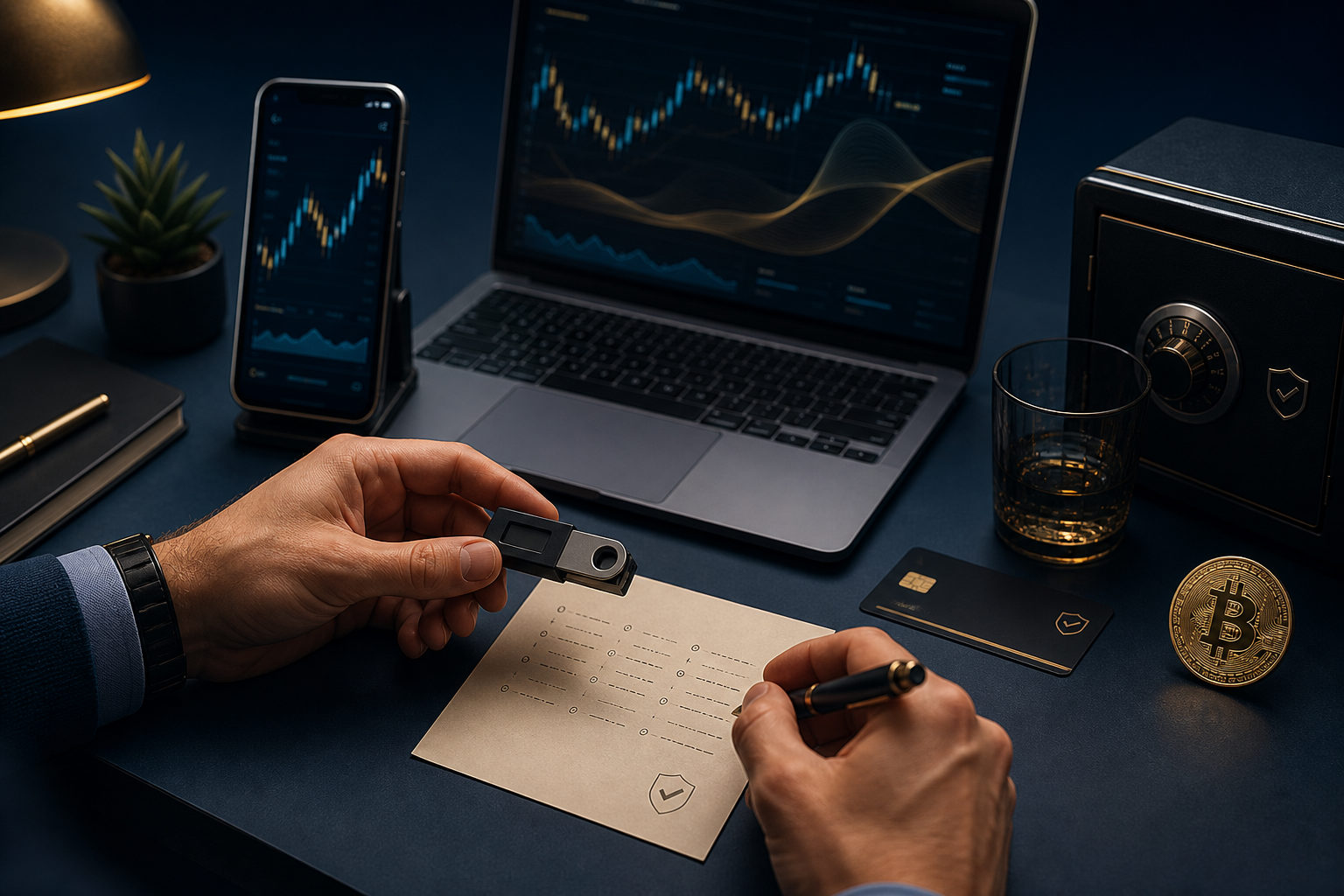
If I had to buy bitcoin in 2026, I would not start with a trade. I would start by checking the venue, locking down account security, testing the full flow with a small amount, and only then buying BTC and deciding where to store it.
Start with the asset, not the app
The first question is simple: what exactly are you buying? Bitcoin is a decentralized digital asset. Its genesis block dates to January 2009, its supply cap is 21 million coins, and its smallest unit is the satoshi, with 1 satoshi equal to one hundred millionth of a BTC.
That sounds basic, but it is where many mistakes begin. A new buyer may think they are purchasing bitcoin and end up in something else entirely: a managed account, a cloud mining plan, a copy-trading package, a yield product, or a token wrapped in marketing language. If the goal is to own bitcoin, the product has to be spot BTC, and the service should make it clear whether you can withdraw that BTC to your own wallet.
The reason for putting this first is practical. If you do not know what you are buying, every later choice becomes weaker. A clean interface does not mean the product is suitable. A friendly support chat does not mean the service is trustworthy. Any pitch built around guaranteed returns, protected principal, insider access, or a mentor who will tell you when to buy should be treated as a warning, not a benefit.
Step 1: Screen the venue before you open an account
If I were figuring out how would you have bought bitcoin in 2026 in a safe way, I would begin with venue screening. Not platform hype. Not social media recommendations. I would look for a service that clearly explains what it offers, how fees work, how withdrawals work, and where its official help pages and announcements live.
In practice, that means checking several public signals. Does the service clearly separate spot trading from derivatives or other products? Does it explain account verification, deposits, withdrawals, and risk disclosures in plain language? Can you confirm the official website, app listing, support path, and announcement pages without relying on a message from a stranger?
This step matters because a large share of losses happen before a trade is even placed. People land on fake websites, install copycat apps, or follow fake support staff into a private chat. Once a scammer gets control of the conversation, the script is familiar: fund this address first, complete a wallet check, send a deposit to unlock withdrawals, or install software so they can help you.
I would avoid any service that depends on pressure. Red flags include direct messages with signup links, “assistant” accounts that offer to walk you through every step, pages that promise unusually high returns, or any request to move funds to a personal bank account or a so-called verification wallet. A real buying process should be understandable without a stranger guiding your mouse.
I would also care about one specific question early: can I withdraw BTC to an external wallet? If the answer is unclear, delayed, or buried, I would stop there. Even if I choose not to self-custody right away, I want to know that the option exists.
Step 2: Set up the account as if a thief is already trying to get in
Once the venue passes a basic credibility check, the next move is account setup. This is where many buyers rush, because they are focused on price. I would do the opposite. I would treat the account like a high-risk target from the beginning.
The operating steps are straightforward: create a unique password, enable two-factor authentication, secure the email account tied to the exchange or broker, complete identity verification through the official interface, and save the official support path so I never have to search for it under pressure later.
The reason is simple. Bitcoin transfers are generally not something you can casually reverse after the fact. If someone takes over the account and withdraws funds, the damage can be final. That makes account security more important than finding the perfect entry point.
I would be strict on a few details. The password for the trading account would not match the password for the email account. I would not rely only on text messages for two-factor authentication if a stronger option is available. I would never share a code, recovery phrase, or screen view with anyone claiming to be support. And if something looked wrong, I would return to the official site I had already verified rather than click a link sent in a chat.
There is also a mindset issue here. A lot of first-time buyers think security can wait because they are “only buying a little.” That is exactly the kind of account a scammer likes: new, uncertain, and more likely to trust step-by-step instructions from a stranger. Security habits should start before the first purchase, not after a painful lesson.
Step 3: Test the full money path with a small amount
After the account is ready, I would not send a large amount of money right away. I would run a small test first. The goal is not to be timid. The goal is to see the whole path work with limited downside if I make a mistake.
That means funding the account through a method I understand, checking that the balance appears correctly, reviewing the spot buy screen carefully, and learning the withdrawal rules before I do anything bigger. If I intend to move BTC to my own wallet later, I want to know where the withdrawal page is, what checks are required, and how the service presents network details and fees.
This step is useful because many early errors are user errors, not exchange failures. People choose the wrong product, misunderstand market and limit orders, skip a required note in a payment flow, or copy the wrong information between browser tabs. A small test exposes confusion while the cost of confusion is still low.
I would watch for three things. First, every deposit or transfer instruction must come from the official interface, not from a screenshot or a chat message. Second, I would avoid doing too many things at once, because multitasking is how details get missed. Third, I would make sure I know whether I am placing a market order or a limit order. A market order is about immediate execution. A limit order is about a price you set, and it may not fill at once.
If the real question behind “how would you have bought bitcoin in 2026” is about timing, the honest answer without live market data is this: price is shaped by supply and demand, liquidity, macro risk appetite, regulation expectations, and market sentiment. That means the useful skill is not memorizing a number from someone online. It is learning where to view a live BTC price, spread, and order book from established market data sources before you act.
Step 4: Buy BTC, then decide whether to leave it there or move it
Buying is not the finish line. The next decision may be more important than the trade itself: do you leave the bitcoin with a third party, or do you move it into a wallet you control?
If I were buying for long-term holding and I was willing to learn the basics, I would lean toward self-custody. The point of self-custody is not ideology for its own sake. It is control. If you control the private keys, you control the ability to move the asset. If you leave the coins with a third party, you gain convenience but keep some dependence on that third party.
The operating process should stay conservative. I would set up a legitimate wallet tool, write down the recovery information offline, and keep it private. Then I would do a small withdrawal test before moving any larger amount. I would verify the destination address carefully, review the withdrawal details on the official page, and wait for the test transfer to complete before deciding what to do next.
The reason for the small withdrawal is the same as the small funding test: mistakes are cheaper when they are small. Bitcoin transfers are generally irreversible. If malware changes a copied address, if I send to the wrong place, or if I trust a fake wallet app, there may be no practical fix later.
Self-custody also comes with a responsibility that should not be softened. If you hold your own recovery phrase, you are responsible for protecting it. If it is exposed, someone else may gain control. If it is lost, recovery may not be possible. That is why I would not save recovery information in cloud notes, screenshots, or chat apps. I would not set up a wallet while someone else is watching my screen. I would not install browser extensions or mobile apps unless I had verified the official source carefully.
For anyone who is not ready for that responsibility, there is nothing wrong with slowing down. It is better to understand addresses, confirmations, wallet backups, and fee behavior before moving more value than you can afford to mishandle.
Step 5: Put post-purchase rules in place so one good decision does not turn into a bad chain of events
If I bought bitcoin in 2026, I would create rules for what happens after the purchase. This is where many people let their guard down. They think the risk was all in the buying step, when in reality the risk often shifts into account exposure, social engineering, and poor storage habits.
I would start by writing down the purpose of the purchase. Is this a long-term holding position or a short-term trade? Those are different behaviors, and confusion between them causes a lot of bad decisions. I would also review account security regularly, check that the email account is still secure, and think carefully about what I share online. Posting wallet balances, trade confirmations, or screenshots with identifying details can invite trouble.
I would also stay away from products I do not fully understand. A buyer who starts with a simple bitcoin purchase can end up taking much more risk later by chasing extra yield, handing coins to a managed scheme, or moving funds into a structure that sounds easy but is hard to evaluate. Complexity is not a feature if you cannot explain the downside in plain English.
There are a few practical warnings worth stating directly. Do not install remote access software because someone claiming to be support says it will speed up a fix. Do not send verification codes to anyone. Do not hand a recovery phrase to a friend or family member without a very clear plan for what that means. Do not assume that a message saying a transfer is “stuck” means you should send more funds to unlock it.
It also helps to remember how the network works at a basic level. Bitcoin produces a new block about every 10 minutes, and transfer confirmation speed can vary with network conditions and fee settings. “Sent” is not the same as “final.” That alone explains why fake support scripts about frozen transfers and urgent unlock deposits work so often on stressed users.
FAQ
Should a first-time buyer open an account first or learn wallets first?
For many beginners, the best order is to screen the venue first and secure the account before deciding on a wallet. You need to know whether you are buying spot BTC and whether withdrawals are supported before planning the storage step.
If your goal is long-term self-custody from day one, wallet basics should not be left until the end. At minimum, understand addresses, backups, and the fact that bitcoin transfers are generally irreversible.
What are the most common mistakes when buying bitcoin for the first time?
The biggest mistakes are often outside the trade ticket itself: fake websites, fake apps, fake support staff, and pressure tactics built around high returns or urgent deadlines. Another common error is skipping the small test and moving too much money on the first attempt.
There is also product confusion. Some buyers think they are getting bitcoin when they are actually entering a more complex product they do not understand.
Do I have to move bitcoin to my own wallet after buying?
No. That choice depends on your goals, your comfort with wallet operations, and how much responsibility you want to take on. Leaving BTC with a third party may feel simpler. Self-custody usually gives you more control, but it also gives you full responsibility for backups and access.
A careful approach is to learn the withdrawal process with a small test first, then decide where you want the coins to stay over time.
How should I think about price if I do not have live market data in front of me?
Without live data, the better focus is process, not prediction. Decide whether you are buying all at once or in stages, what kind of volatility you can tolerate, and what would make you change the plan after you buy.
If those rules are not clear, watching price screens longer will not solve the real problem. A defined process is usually more useful than an emotional reaction.
Can I buy bitcoin through a private transfer with someone from a chat group?
A first-time buyer should be very cautious. Risk rises quickly when the trade depends on a stranger, a messaging app, a personal bank account, or a supposed escrow helper you cannot verify independently.
If you cannot confirm the identity, the process, and the payment path on your own, the safest move is to walk away. Missing one opportunity is usually cheaper than fixing an irreversible transfer.
If I had to reduce the whole process to a checklist, it would be this: use only official entry points you verified yourself, secure the account before funding it, run a small test first, and treat any request for codes, recovery phrases, or remote device access as an immediate stop signal.
Disclaimer: This article is for informational and educational purposes only and is not investment, financial, or legal advice. Crypto assets are highly volatile and you could lose your entire investment. Do your own research and decide carefully.