
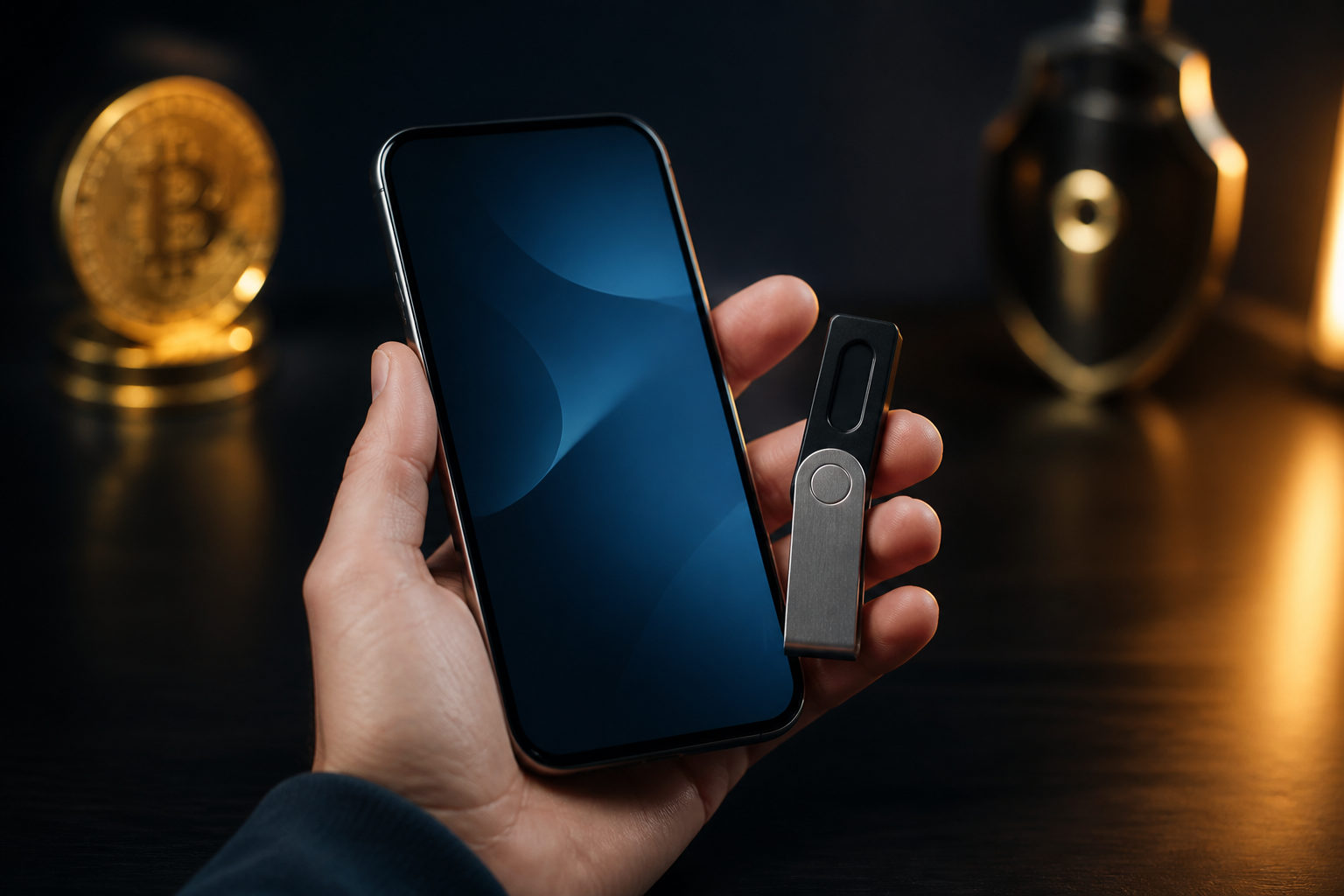
Getting bitcoins is usually not hard. The hard part is choosing a safe path, avoiding scams, and receiving or storing BTC without making an expensive mistake.
What makes getting bitcoins feel difficult
Most beginners can get bitcoins through a few common routes: buying through a trading service, receiving a transfer from someone else, accepting BTC as payment for work or goods, or mining. The first three are accessible to ordinary users. Mining has a much higher practical barrier because it involves hardware, setup, maintenance, and ongoing operating demands.
If you only want to own a small amount and learn the basics, the process is manageable. If you want long-term control and stronger security, the task becomes more about verifying every step, handling wallets correctly, and staying away from bad actors.
Main ways to get bitcoins
| Method | How it works | Best fit | Main risk |
|---|---|---|---|
| Buy through a trading service | Create an account, complete identity checks, place an order, then decide whether to withdraw to your own wallet | First-time users who want a structured process | Fake apps, phishing pages, withdrawal mistakes |
| Receive BTC from another person | Share your receiving address and wait for the transfer to appear in your account or wallet | Friends, repayment, simple transfers | Wrong address, false payment proof, address replacement malware |
| Accept BTC for work or goods | Agree on terms first, then get paid in bitcoin | Freelancers, merchants, cross-border payments | Poorly defined payment terms, price swings, fake transfer claims |
| Mine bitcoin | Use mining hardware and usually connect to a mining pool | Users with technical skill and capital for equipment | Operational complexity, high cost, uncertain economics |
For most beginners, buying or receiving BTC is the easiest place to start. Mining is a different category. Blocks are produced about every 10 minutes, but that does not make home mining an easy entry point for someone who simply wants to get bitcoins for the first time.
A step-by-step way to get bitcoins safely
Step one: decide why you want bitcoin
Start with purpose. Are you trying to learn how wallets work, hold BTC for the long term, receive payment, or make a one-time purchase? Your answer shapes the rest of the process, including whether you need your own wallet right away and how much effort you should put into recordkeeping and backup.
Owning BTC inside a service account and controlling BTC in a self-custody wallet are not the same experience.
Anyone who tries to move you from curiosity straight into urgent action without giving you time to verify the setup is adding risk.
Step two: verify the service before you compare convenience
If you plan to buy bitcoin, check that the service is real before you send money or upload personal details. Look closely at the app name, website spelling, download source, login screen, and support channel. Scammers often copy the look of a familiar product and rely on people moving too fast to notice small differences.
Many losses happen before any bitcoin transaction takes place. A fake app, a cloned website, a social media impostor, or a chat account pretending to be support can redirect your money long before BTC reaches any wallet.
Do not trust a page just because it looks polished. If someone asks you to send funds to a private account, share a one-time code, or install remote-access software, stop there.
Step three: prepare a receiving destination
Before you buy or ask someone to send bitcoin, decide where it will arrive. That destination can be an account within a trading service or a wallet you control yourself. Either way, learn the basics of a receiving address and how transaction status appears after a transfer is sent.
Bitcoin transactions usually cannot be undone in the way people expect from ordinary consumer apps. If you copy the wrong address or fail to notice that malware changed it in your clipboard, the transfer may end up somewhere else entirely.
Verify the beginning and end of the address. Use a device you trust. For a first transfer, stay focused instead of juggling several chats, tabs, or instructions from strangers at the same time.
Step four: use a small test first
When you are ready to act, start with a small test amount. If you are buying, make a small initial purchase. If another person is paying you in BTC, ask them to send a small amount first. Confirm that you can see the transfer status and understand what your interface is showing before any larger move happens.
This tests whether you know how to confirm receipt, whether you are using the correct wallet or account, and whether you understand that a payment screenshot is not the same thing as funds visible on your side.
In peer-to-peer situations, your own wallet or account view is what counts.
Step five: decide whether to keep BTC on the service or withdraw it
Once you have bitcoin, the next decision is storage. Some users leave BTC with the service they used to acquire it. Others withdraw to a self-custody wallet where they control the recovery information. Each choice changes the balance between convenience and responsibility.
| Storage choice | Benefits | Trade-off | Best fit |
|---|---|---|---|
| Keep BTC with the service | Easy access, familiar interface, simple for buying and selling | You depend more on account security and the service's rules | Users still learning the workflow |
| Use a self-custody wallet | You control access to the bitcoin yourself | You must protect backup and recovery information on your own | Users planning to hold for longer |
If you choose self-custody, understand the backup process before moving a meaningful amount. Bitcoin can be divided into small units, with 1 satoshi equal to one hundred millionth of a BTC, so you do not need to think in whole coins to learn the system.
Why scams are the hardest part for beginners
| Scam type | Typical pitch | Warning sign | Safer response |
|---|---|---|---|
| Fake support | Your account has a problem, send a code, share your screen, or let us help you log in | Unsolicited messages, urgent tone, requests for sensitive actions | Use official public support channels only |
| Managed buying or “we do it for you” offers | Send money and we will buy, store, or grow your bitcoin for you | No clear explanation of custody risk | Keep control of your own account and wallet decisions |
| Fake payment proof | I already paid, here is the screenshot | You are pushed to release goods or send BTC before you verify receipt | Trust your own wallet or account status, not an image |
| Fake wallet or clone app | Looks like a known product, offered through a random link | Suspicious download source, odd branding, poor support path | Install only from trusted sources you verified yourself |
| Private off-platform exchange offers | Better deal, faster process, special access | Confusing payment flow, weak accountability | Walk away if you do not fully understand the process |
People often say getting bitcoins is hard because the subject feels technical. In practice, social engineering causes many beginner losses. A scammer does not need deep technical skill if they can push you into acting quickly, trusting the wrong page, or sending money before verification.
Letting someone “help” may feel easier in the moment, but once another person sees your codes, your screen, your recovery phrase, or your wallet setup, the risk jumps fast.
Bitcoin was introduced in the white paper Bitcoin: A Peer-to-Peer Electronic Cash System, published in 2008, and the first block dates to 2009. For beginners, the practical lesson is that ownership and control depend on careful handling.
FAQ
Is it hard to get bitcoins if I only want to try a small amount?
Usually no. For a first attempt, the process is manageable if you use a real service, set up a receiving destination first, and test with a small amount before doing anything larger.
Slowing down for verification tends to protect beginners better than trying to master every technical detail on day one.
Is receiving bitcoin from a friend easier than buying it myself?
It can be easier because you skip part of the purchase flow. You still need to know how to share the correct receiving address and how to verify that the transfer actually appeared on your side.
A screenshot from the sender is not enough. Your own wallet or account view is the proof that matters.
Is mining a simple way to get bitcoins?
For most people, no. Mining is a specialized activity with equipment and operating demands, so it is usually much harder than buying BTC or receiving it as payment.
Bitcoin's supply is capped at 21 million coins, and the block subsidy has historically been reduced in halving years such as 2012, 2016, 2020, and 2024. Those facts explain the system, but they do not make mining an easy beginner route.
Should I leave my bitcoin on the service I used to get it?
That depends on your goal. If you are still learning and handling a small amount, keeping it there for a short time may be simpler.
If you plan to hold BTC for longer, learning self-custody becomes more important. Make sure you understand backup and recovery before moving funds.
What causes beginners to lose bitcoin even when the steps seem simple?
The usual causes are rushed decisions, fake support, bad links, copied addresses that were never checked, and trusting another person's instructions more than your own verification.
Most of these mistakes are preventable. A slow first transaction is often a smart one.
What to do before you start
If you want bitcoins today, keep the process plain: define your goal, verify the service or sender, prepare a receiving destination, run a small test, and only then think about larger amounts or self-custody. Problems usually start when someone skips one because they feel rushed.
Set a few personal rules in advance: do not share one-time codes, do not share your screen with strangers, do not install software from random links, do not release goods based on a screenshot, and do not move a meaningful amount into a wallet you cannot restore.
Disclaimer: This article is for informational and educational purposes only and is not investment, financial, or legal advice. Crypto assets are highly volatile and you could lose your entire investment. Do your own research and decide carefully.