
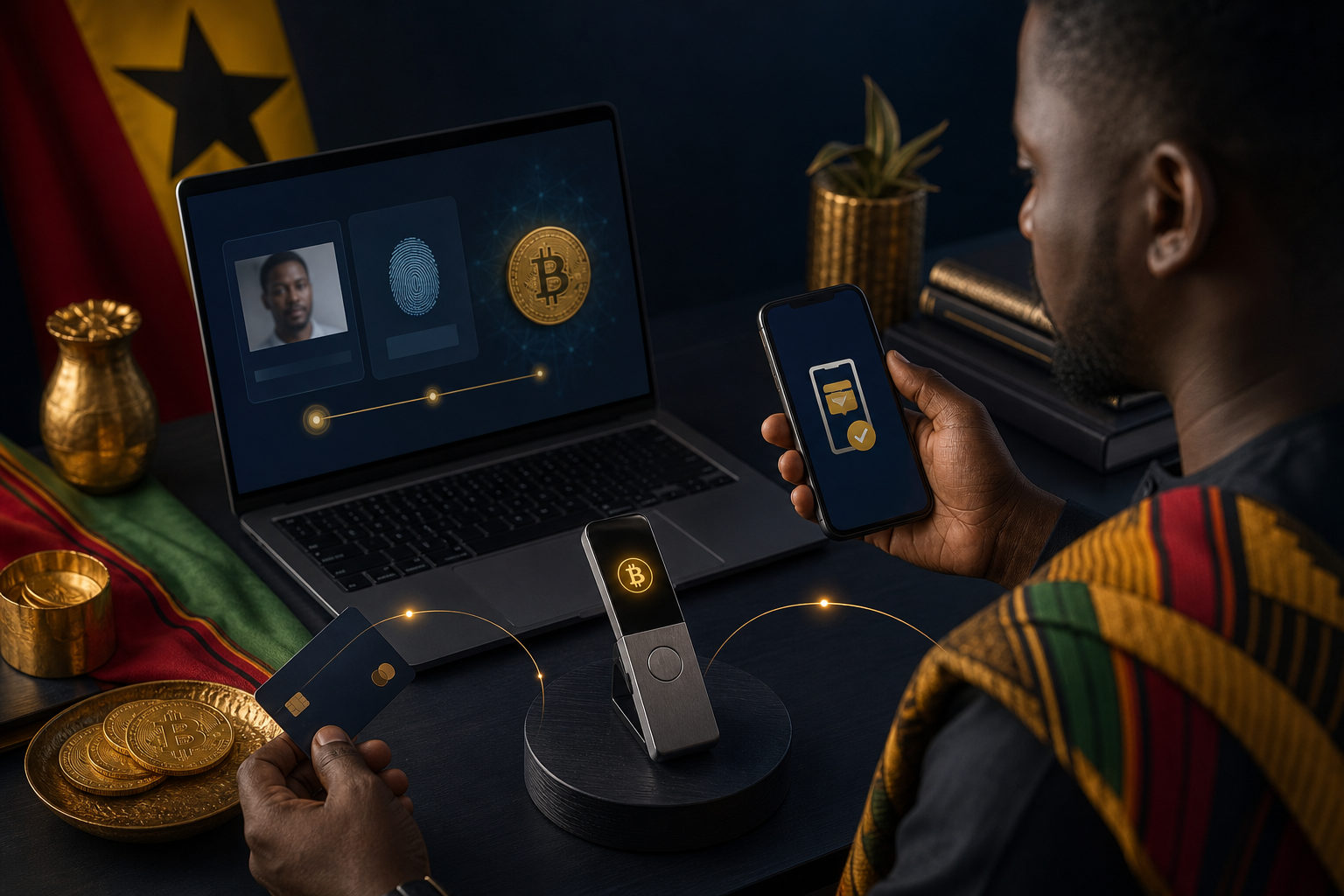
The short answer: buying Bitcoin in Ghana is legal for individuals as of 2026, thanks to the Virtual Asset Service Providers Act, 2025 (Act 1154), but the licensing system for exchanges is still being rolled out by the Bank of Ghana. In practice, the safest route is to pick a platform that actually supports the Ghanaian cedi (GHS) — options people in Ghana currently use include Yellow Card, Quidax, and Binance P2P through MTN Mobile Money — get your ID ready, run a small test transaction first, and move whatever you buy to a wallet you control if you plan to hold it for a while.
What's actually changed with Ghana's crypto rules — read this before you shop for a platform
On December 19, 2025, Ghana's Parliament passed the Virtual Asset Service Providers Act, 2025 (Act 1154), the country's first comprehensive law dealing with crypto assets. For an ordinary buyer, the important part is this: trading, holding, or buying Bitcoin as an individual is no longer something you can be prosecuted for simply because it's crypto. That's a real shift from where things stood a few years ago.
What the law also does is require any business that offers crypto services to the public — exchanges, custodians, wallet providers, the whole category referred to as Virtual Asset Service Providers, or VASPs — to get licensed. The Bank of Ghana was named the primary licensing and supervisory authority and has set up a dedicated Virtual Assets Department to handle it. In the first half of 2026, the central bank admitted six companies into a one-year regulatory sandbox to test their products under real conditions, and according to the Bank of Ghana's own virtual-assets webpage, the licensing application process and fee schedule are expected to be published by the end of Q3 2026. In plain terms, there is no finished, official list of "licensed exchanges" in Ghana yet at the time of writing. When a platform tells you it's "fully compliant" or "approved," treat that as a claim to verify rather than a fact to accept.
This caution isn't new for Ghana's central bank. Back in 2018 and again in 2022, the Bank of Ghana warned the public and financial institutions that virtual currencies weren't legal tender and weren't regulated under the Payment Systems and Services Act, 2019 (Act 987) — the 2022 notice specifically called out an unauthorized scheme called "Freedom Coin." Knowing that history helps explain why the current move toward regulation is happening in careful stages rather than all at once.
A recent policy tightening on banks and mobile wallets that's worth knowing before you fund an account
On June 14, 2026, the Bank of Ghana issued Notice No. BG/GOV/SEC/2026/14, ordering every regulated financial institution — banks, Specialized Deposit-Taking Institutions, Electronic Money Issuers (which covers the telecom-run mobile money wallets), and Payment Service Providers — to immediately stop supporting crypto platforms that offer unauthorized US-dollar-denominated wallet services, with no grace period. The notice cites the Payment Systems and Services Act, 2019 (Act 987) and the Foreign Exchange Act, 2006 (Act 723), and it's aimed at crypto platforms that had been letting users fund or hold USD-denominated balances through bank transfers, cards, or other local payment rails without the proper authorization.
What this means for you as a buyer is fairly concrete: if a platform's main appeal is a "dollar wallet" feature tied to your Ghanaian bank account or card, you may run into a transfer that gets blocked or delayed lately, and that's not necessarily something you did wrong — it's the regulatory environment shifting under the platform. A steadier approach right now is to lean on channels that work in cedi (GHS) directly, through mobile money or a standard bank transfer, rather than relying on a foreign-currency wallet feature bolted onto a crypto platform.
Figure out which buying route actually fits you first
If you're searching "how to buy Bitcoin in Ghana," the first move isn't to place an order — it's to figure out which route makes sense for you. Right now, Ghanaian buyers realistically have three options. First, centralized platforms that support cedi deposits and withdrawals directly — Yellow Card and Quidax both fall into this bucket, since they've built out bank transfer, mobile money, and in some cases cash on-ramps specifically for African currencies including GHS. Second, peer-to-peer (P2P) trading, most commonly through Binance P2P, where counterparties settle in cedi using MTN Mobile Money. Third, informal off-platform deals with a local agent or someone you know, settled in cash or a direct transfer.
For a beginner, the goal isn't speed — it's picking a process you understand, that leaves a paper trail, and that you can double-check. The reason this matters is simple: once a Bitcoin transaction confirms on-chain, it generally can't be reversed. Sorting out your payment method, ID requirements, withdrawal rules, and how support handles disputes before you start cuts your odds of a costly mistake way down. And because Ghana's licensing framework is still being phased in, a platform quietly changing or dropping a feature — like the dollar-wallet situation above — is a real possibility you should keep in mind.
What to have ready before you start
- Valid ID: A Ghana Card or passport is what most platforms will ask for to verify your identity and meet compliance requirements.
- A payment account in your own name: If you're funding through mobile money — MTN MoMo being the dominant option — make sure the name on that account matches what you put on the exchange. Mismatched names are a common reason deposits or withdrawals get held up.
- A separate email and a strong, unique password: Don't reuse a password from social media, so one leak doesn't cascade into your crypto account.
- Two-factor authentication: More reliable than SMS codes, and worth the extra step given how common SIM-swap style fraud has become across West Africa.
- A self-custody wallet: There's no reason to leave coins sitting on an exchange indefinitely, especially if you're planning to hold long-term.
Buying Bitcoin step by step: what to do, why it matters, and what to watch for
The steadiest way to buy Bitcoin in Ghana is to break the process into small, deliberate steps. Don't skip any of them — most losses don't happen at the moment of purchase, they happen somewhere in the account setup, payment, or withdrawal steps around it.
Step one: screen your platform
Check whether the platform or service clearly explains its identity verification, funding process, withdrawal rules, fee structure, and risk controls — and whether it actually supports GHS deposits (bank transfer, mobile money, or cash) rather than pushing you toward a dollar-wallet workaround. Yellow Card and Quidax, which specifically build for African local-currency conversion, and Binance P2P counterparties accepting MTN MoMo, are the channels Ghanaian buyers actually use today — but availability and fees shift, so check current terms in the app or on the official site rather than trusting an older article's numbers, including this one.
Don't judge a platform by its marketing copy, and don't assume something is safe just because a group chat is active or replies come fast. Solid platforms tend to spell out their rules clearly enough that you know when you can buy, when you can withdraw, and how disputes get handled. If a service promises "no verification, instant settlement, zero risk, high returns," that's exactly when you should slow down.
Step two: register and lock down security
After signing up, link your email, set a unique strong password, and turn on two-factor authentication. If the platform offers an anti-phishing code, login alerts, or device management, switch those on too.
Most people who lose money don't get scammed at the moment of buying — their account gets compromised first. Never share a verification code with anyone; legitimate support staff will never ask for your one-time code. If someone offers to "help you log in remotely," stop the interaction immediately.
Step three: complete identity verification
If the platform requires ID verification, you'll typically upload a Ghana Card or passport and wait for review. Take the photo somewhere well-lit and uncluttered — blurry uploads are the most common reason people end up resubmitting.
Verification usually gates your ability to deposit, withdraw, and file a dispute if something goes wrong. Only submit documents through the platform's official interface — never send ID photos to someone on a chat app claiming to be "support."
Step four: link a payment method and test with a small amount
Confirm your payment method actually works with the platform, then run a small deposit or trade first. If you're going through mobile money, it's worth knowing that Ghana's mobile money fee landscape has shifted recently — the 1% Electronic Transfer Levy (E-Levy) was scrapped on April 2, 2025, so mobile money transfers generally no longer carry that government charge on top. That said, the network or platform's own fees — cash-out charges in particular, which are typically tiered by amount — still apply, so check the current rate schedule from your provider rather than assuming it's free.
Testing small first lets you confirm the payment goes through cleanly, the name matches, and the settlement instructions make sense. Keep your transfer records and order screenshots, but don't post full account details publicly in a group chat.
Step five: place the order
Before confirming, make sure you're actually buying Bitcoin itself, not a yield product, token, or custodial IOU marketed under the BTC name — and not just a number inside a platform's unauthorized dollar wallet. The order screen should show the amount, expected settlement, and fees or spread; check each line rather than skimming.
This matters because plenty of newcomers think they've bought Bitcoin when what they actually hold is an account entry they can't withdraw, on a product with opaque rules. Don't rush a confirmation just because a price looks like it's about to move — double-check the amount, the recipient, and the asset ticker.
Step six: withdraw to a wallet you control
Once you've bought, and assuming you're not day-trading, moving your coins to a wallet where you hold the private keys is usually the safer long-term move. Copy the wallet address, verify the first and last several characters carefully, and send a small test withdrawal before moving the rest.
The old line "not your keys, not your coins" exists for a reason — it shows up in nearly every major loss-of-funds story. Sending on the wrong network, mistyping an address, or pasting a swapped address from clipboard malware can all cause losses that are essentially impossible to recover.
Three buying routes compared
Ghanaian buyers realistically choose between three routes, and each comes with different trade-offs. Exact fees and settlement times vary by platform, time of day, and payment method, so treat the table below as a general guide and check live terms before you commit.
| Route | Typical example | ID required | Funding method | Dispute recourse | Overall risk |
| GHS-supporting centralized exchange | Yellow Card, Quidax | Usually yes | Bank transfer, mobile money, or cash, depending on the platform | Platform support and published rules apply | Moderate-to-low, but confirm current licensing/compliance status yourself |
| Peer-to-peer (P2P) trading | Binance P2P with MTN MoMo | Usually yes for the platform account; counterparty varies | Mobile money, bank transfer | Available if you stay inside the platform's order system | Moderate — risk rises sharply if you move the conversation off-platform |
| Informal / offline agent deals | Local agents, friend-of-a-friend arrangements | Essentially none | Cash or private transfer | Almost none — very hard to recover funds if something goes wrong | High — not recommended as a primary method for beginners |
P2P trading: put anti-scam habits first
Some people searching "how to buy Bitcoin in Ghana" are really looking for a P2P route because it's more flexible — and doing this through MTN MoMo directly with a counterparty is genuinely common in Ghana. Flexible doesn't mean informal, though. The biggest risk in P2P trading is stepping outside the platform's rules to negotiate privately.
If you're using P2P, stick to communicating, confirming payment, uploading proof, and filing disputes inside the order system. The moment a buyer or seller asks you to move to an external chat app, change the receiving account, or release coins before payment clears, the risk jumps noticeably.
Core P2P safety rules
- Only trade with verified counterparties who have a track record — this cuts your odds of running into someone who stalls or backs out mid-trade.
- Never release funds outside the system — don't click "release" just because someone is pressuring or threatening you before payment is confirmed on-platform.
- Match the payer's name against the order — if you're paid via mobile money, the account name should match the registered counterparty; if it doesn't, pause and contact official support.
- Watch for faked payment screenshots — trust your own account balance, not an image someone sends you.
- Keep full chat and payment records — this is your main evidence if a dispute comes up.
Taxes are worth thinking about — but be skeptical of exact numbers you see online
Ghana doesn't have a crypto-specific tax law right now. Profits from buying and selling crypto assets generally fall under the existing income tax and capital gains framework. Some tax explainer sites classify crypto as an "intangible asset" and cite a 15% capital gains rate as the reference figure — but that's a third-party interpretation, not a line-by-line rule published by the Ghana Revenue Authority (GRA), and what actually applies to you can depend on whether you're trading as an individual or a business, how long you held the asset, and the nature of the transaction.
It's also worth knowing that the GRA has publicly said it plans to roll out digital tracking tools aimed at improving tax compliance among crypto traders — framed officially as enforcing existing rules more effectively rather than introducing a new tax. In other words, relatively light enforcement up to now isn't a guarantee that stays true going forward. If your trading volume is significant or frequent, talk to a Ghana-based tax advisor or check GRA's own announcements directly rather than relying on a number from a random article — including this one.
After you buy, don't skip storage and double-checking
Buying is only the beginning — what actually determines whether you hold your Bitcoin safely is what happens after. Bitcoin runs on a blockchain; its genesis block was mined in January 2009, and the total supply is capped at 21 million coins. Being able to self-custody your coins also means taking on more of the operational responsibility yourself.
If you're using a self-custody wallet, back up your seed phrase or private key carefully and keep it offline — don't screenshot it, don't store it in cloud storage, and don't send it to anyone. The smallest unit is a satoshi, one hundred-millionth of a BTC, and wallets sometimes display balances in different units — before your next transfer, confirm whether you're looking at BTC or a smaller denomination so you don't misjudge the amount.
A post-purchase checklist
- Confirm your account's security settings are still active and there's no unfamiliar device logged in.
- Cross-check that your trade history, withdrawal records, and wallet balance all line up.
- Write your seed phrase down somewhere safe, protected from water, fire, and accidental loss.
- Label your frequently used addresses to lower the odds of sending to the wrong one later.
- Before your next purchase, re-verify the receiving address is still under your own control, and check whether the platform has posted any new compliance or feature changes — like the dollar-wallet restriction mentioned earlier.
Frequently asked questions
Is buying and selling Bitcoin legal in Ghana in 2026?
For individuals, yes. Ghana's Parliament passed the Virtual Asset Service Providers Act, 2025 (Act 1154) at the end of 2025, which makes clear individuals won't face legal action simply for trading virtual assets like Bitcoin. Businesses offering crypto services to the public still need a license from the Bank of Ghana, and that licensing system is being rolled out in phases.
Do I have to pay tax on Bitcoin profits in Ghana?
Most likely, though the specifics aren't fully spelled out yet. Ghana doesn't have a dedicated crypto tax law, so gains typically get folded into the existing income/capital gains tax system — a commonly cited reference figure is around 15% capital gains tax, but that's not an official line-item published transaction by transaction. If you're trading meaningful amounts, check with a local tax advisor or the Ghana Revenue Authority directly.
What's the safest first step when buying Bitcoin in Ghana?
Get your ID, payment method, and a self-custody wallet ready before you go shopping for a platform. That way you're not scrambling mid-purchase, and it's easier to spot whether a platform's rules actually make sense.
Should a beginner buy a large amount right away?
Generally not recommended. Testing the full process with a small amount first makes it much easier to catch problems with payment, verification, withdrawals, or address copying before real money is on the line.
Do I have to move my Bitcoin to my own wallet after buying?
If you're just watching the market short-term, plenty of people leave coins on the exchange for a while. But if you're planning to hold longer, moving to a wallet where you control the private keys generally puts you in a stronger position.
Someone messaged me offering cheaper Bitcoin outside the platform — can I trust that?
Be very cautious. Deals struck outside a proper order system usually lack any kind of guarantee, dispute process, or paper trail, and are extremely hard to recover from if something goes wrong.
Why did my bank transfer to a crypto platform suddenly get blocked or delayed?
In June 2026, the Bank of Ghana ordered banks and payment providers to immediately stop supporting unauthorized dollar-wallet arrangements offered by some crypto platforms. If the platform you're using involves that kind of feature, a blocked or delayed transfer recently may reflect that regulatory shift rather than anything you did wrong. Sticking to channels that clearly work in cedi lowers your odds of running into this.
How do I know if what I bought is real Bitcoin?
The key test is whether you can actually withdraw it to your own Bitcoin wallet, and whether the platform clearly shows it as a BTC asset with defined withdrawal rules. If all you can see is a balance you can't move off-platform, keep digging into what the product actually is.
Where should I check the live price?
Mainstream market data sites or an exchange's live quote page both work, but remember different venues carry different spreads and fees. Don't fixate on one number on one page before ordering — look at what you actually settle and receive.
When you actually go through with it, break the process down into "check the regulatory picture — screen a platform — lock down security — verify your ID — test small — buy — withdraw — back up" and work through each step in order. That's a better use of your time than chasing speed.
Disclaimer: This article is for general information and educational purposes only and does not constitute investment, financial, or legal advice. Crypto asset prices are highly volatile and you could lose your entire principal. Regulatory and tax rules referenced here can change; always confirm the latest requirements directly with the Bank of Ghana, the Ghana Revenue Authority, or a licensed local advisor, and do your own research before making any decision.