
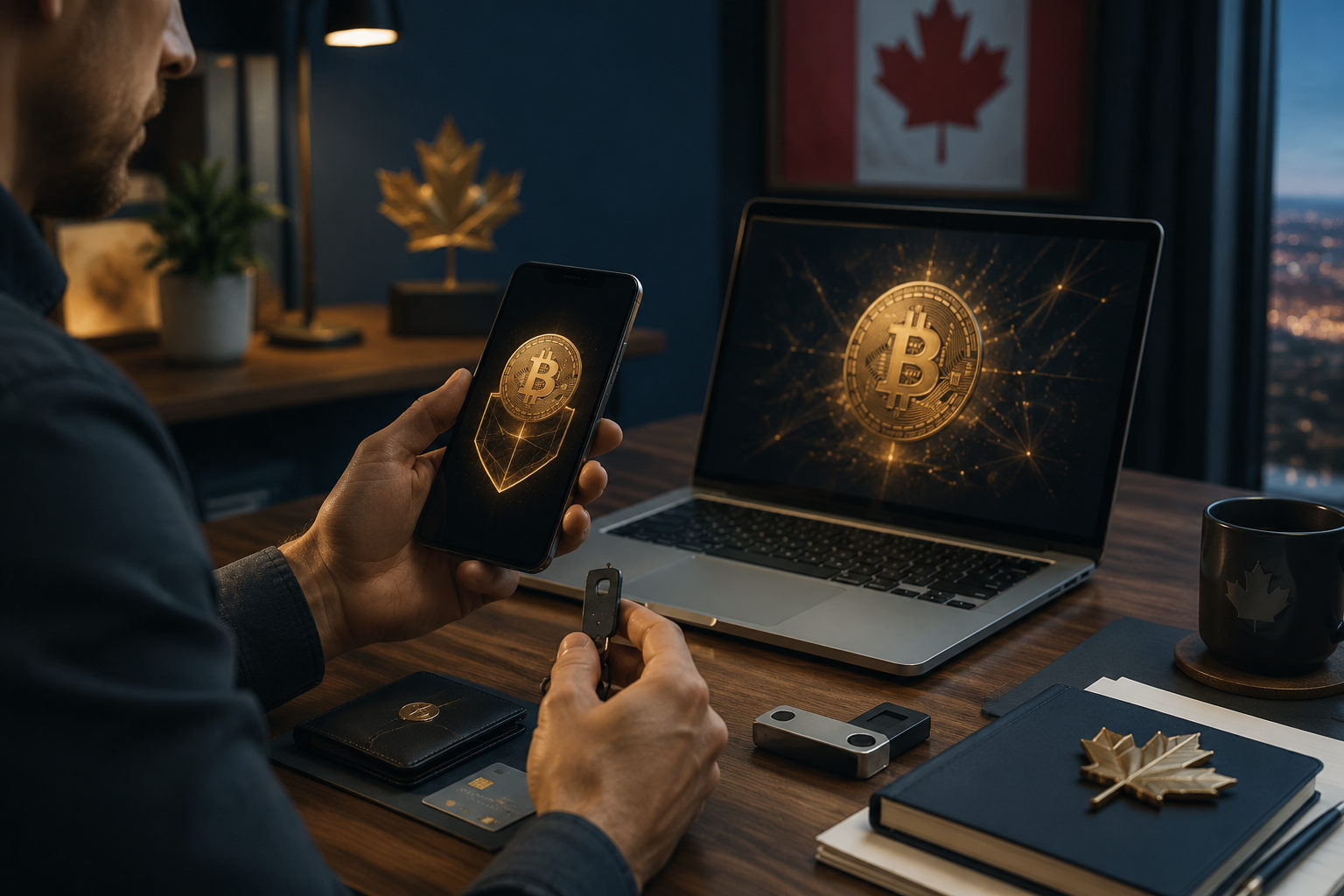
To get bitcoin in Canada, the safest approach is to choose a compliant buying route, secure your account first, prepare a wallet address, and test the full process with a small amount before doing anything larger.
Start with the right route, not the cheapest-looking offer
If you are asking how to get bitcoin in Canada, the practical answer depends on how you want to use it after you buy it. Most people get bitcoin through a regulated service that accepts local users, by receiving it from someone else, by taking payment in bitcoin for work or goods, or in some cases through a physical machine that supports purchases.
The key issue is not access. It is control and safety. A route that looks fast or cheap can still be a bad choice if withdrawal rules are unclear, account protection is weak, or customer support only appears when something goes wrong.
For a first-time buyer, it helps to know a few basics. Bitcoin is a decentralized digital asset with a maximum supply of 21 million coins. Its smallest unit is the satoshi, and 1 satoshi equals one hundred millionth of a BTC. You do not need to buy a whole coin, but you do need to understand that on-chain transfers are usually irreversible. If bitcoin is sent to the wrong address, recovery is often not possible.
That is why the process matters more than the first purchase itself. Pick the route, secure the account, prepare the wallet, run a test, and only then decide whether to continue.
Step 1: Choose an entry point that fits your needs
Your first step should be deciding what kind of service fits your situation. Some people want a simple first purchase and may be fine learning inside a basic app before moving funds later. Others already know they want full control and plan to withdraw to a personal wallet as soon as possible.
This matters because different services come with very different rules. One may make buying easy but make withdrawals slow or restrictive. Another may offer a clean interface but weak security prompts. A third may advertise low fees while hiding the real cost in wide spreads or confusing payment terms.
What to check before signing up
- Canada availability: Make sure the service clearly supports users in Canada for registration, identity checks, funding, and withdrawals.
- Personal wallet withdrawals: If you cannot move your bitcoin to your own wallet without friction, your control is limited.
- Clear identity verification: A proper verification process can feel inconvenient, but it is usually part of basic account protection.
- Security tools: Look for two-factor authentication, login alerts, withdrawal confirmation, and device management.
- Transparent fee structure: Check funding costs, buy and sell spreads, and withdrawal rules before you deposit anything.
Just as important is what not to trust. Do not treat social posts, chat screenshots, or private messages as proof that a service is safe. Do not assume that “no verification,” “special access,” or “I can buy for you” is a benefit. In this area, convenience claims often hide risk.
Step 2: Secure your account before you fund it
Once you choose a route, do not rush to deposit money. Account security comes first. A large share of avoidable losses does not come from price moves. It comes from weak passwords, compromised email accounts, fake support messages, or someone gaining access to withdrawal settings.
A good sequence is simple. Use a dedicated email account, protect that email with two-factor authentication, create a strong unique password for the bitcoin service, and turn on every meaningful security feature the service offers. That usually includes login verification, device approval, and withdrawal confirmation. If there is an anti-phishing code feature, use it.
Why focus on email first? Because many account recovery flows rely on it. If someone gets your email, your exchange or brokerage account becomes much easier to attack. New users often spend time thinking about market timing while ignoring the account recovery chain that protects the account in the first place.
Keep these points in mind:
- Never share codes: No legitimate support agent should ask for your login code or two-factor code.
- Do not log in from links sent in private messages: Open the official app or your own saved access point instead.
- Avoid sensitive actions on untrusted networks: Security changes and withdrawals should be done in a controlled environment.
- Do not use someone else’s account: It creates ownership, recordkeeping, and security problems later.
This step can feel slow. It is still one of the most valuable parts of the entire process.
Step 3: Prepare a wallet and understand what receiving bitcoin really means
Many beginners think the process ends when a platform shows a bitcoin balance. That is only part of the picture. If you want stronger control, you should understand how a wallet works and how to receive BTC properly.
Broadly speaking, wallets fall into two categories. A custodial wallet means a service provider manages key access on your behalf. A self-custody wallet puts you in charge of your private keys or recovery phrase. The first option may feel easier. The second gives you more direct control, but it also puts more responsibility on you.
Neither option is automatically right for everyone. What matters is knowing the trade-off. If you plan to withdraw bitcoin to your own wallet, generate a BTC receiving address, check it carefully, and send a small test transfer first. That extra step reduces the chance of address mistakes, clipboard tampering, or user error.
There are several common mistakes to avoid here:
- Downloading a fake wallet app: A bad app can steal your recovery phrase from the start.
- Saving the recovery phrase in screenshots or cloud storage: That may feel convenient, but it increases exposure.
- Skipping address checks: Always compare the first and last characters before sending.
- Treating a platform account as your only storage plan: If you never learn withdrawals and backups, you may have fewer options later.
If you only want a small trial purchase at first, you may decide to leave a limited amount on a service while learning. Even then, learn wallet basics early. Wallets, addresses, and backups are not advanced topics. They are core safety habits.
Step 4: Buy in stages and test every part of the flow
When you are ready to buy, slow down and read each screen. Check how the service displays the bitcoin price, what fees apply, how long processing may take, and whether BTC withdrawals are available after the purchase. If any field is unclear, stop and verify it before confirming the order.
A small first transaction is the safest move for a beginner. It lets you test funding, placing the order, seeing the balance update, and then trying a withdrawal to your wallet. That is far better than sending a large amount of money into a process you have never completed before.
A practical sequence looks like this:
- Start with a small deposit: Confirm your payment method works and your account is fully usable.
- Make a small purchase: Learn how the order flow and balance display work.
- Send a small withdrawal test: Move a small amount of BTC to your wallet and confirm receipt.
- Only continue after the test succeeds: Increase size later, not during the first run.
One point that gets overlooked is speed. Fast is nice, but it should not be your main filter. Bitcoin produces a new block about every 10 minutes, and the full user experience can also depend on the service’s internal review process and confirmation policy. Clear records and careful checks matter more than rushing.
You should also ignore promotional pressure. “Deposit bonus in BTC,” “managed buying,” or “I will walk you through it on a call” can all be hooks used to lower your guard. The safer path is the one where you control every confirmation step yourself.
Step 5: Treat scam prevention as part of the process, not an afterthought
The biggest difference between a smooth first bitcoin purchase and a costly mistake is often scam awareness. Fraud in this area usually does not rely on deep technical tricks. It usually relies on urgency, trust abuse, and a beginner’s lack of familiarity with the process.
Common scams include fake support messages that claim your account needs “verification,” private sellers offering bitcoin at a better rate and then disappearing, fake investment coaches asking you to transfer BTC to a managed account, and remote-access setups presented as technical help while someone takes over your device.
Use these simple filters:
- If someone pushes you to send bitcoin right now, stop: Real support processes do not depend on panic.
- If someone promises guaranteed profits, walk away: Bitcoin can be bought and sold, but returns are never guaranteed.
- If someone asks for your recovery phrase, verification code, or screen-sharing access, end the conversation: Those requests are major red flags.
- If someone tells you to transfer BTC to “unlock,” “upgrade,” or “review” your account, assume fraud first: On-chain transfers are not account verification tools.
Another useful rule is not to trust a message just because it appears to come from a friend or a known contact. Accounts can be hijacked, writing style can be copied, and screenshots can be edited. For anything involving bitcoin purchases, wallet setup, or transfers, go back to the service or wallet interface you already verified on your own device.
FAQ
What is the easiest way for a beginner to get bitcoin in Canada?
For most beginners, the easiest path is a compliant service that clearly supports Canadian users and has a straightforward setup process. Ease should still come after security, withdrawal access, and transparent rules.
Do I need to buy a whole bitcoin?
No. Bitcoin is divisible, and its smallest unit is the satoshi. Since 1 satoshi is one hundred millionth of a BTC, a small first purchase is enough to learn the process without overcommitting.
Should I move my bitcoin to a personal wallet right away?
That depends on your goals and comfort level. If you want direct control, learning self-custody is important. If you are still learning, you may begin with a small amount on a service, but you should still study wallets and backups early.
Is buying bitcoin from a private seller a good idea?
It may look flexible, but it usually carries more risk. You may not be able to verify identity, payment finality, or what happens if there is a dispute. For beginners, that can turn a simple purchase into a difficult problem.
Where should I check the bitcoin price?
You can check a major market data service or the live trading screen inside the service you plan to use. Before you buy, make sure you understand whether the displayed figure is the market price, the quoted purchase price, or a number that already includes service costs.
If this is your first time getting bitcoin in Canada, the most useful next move is to secure your email and account, set up a wallet, run one small test transaction, and store your recovery details separately from your login codes.
Disclaimer: This article is for informational and educational purposes only and is not investment, financial, or legal advice. Crypto assets are highly volatile and you could lose your entire investment. Do your own research and decide carefully.