
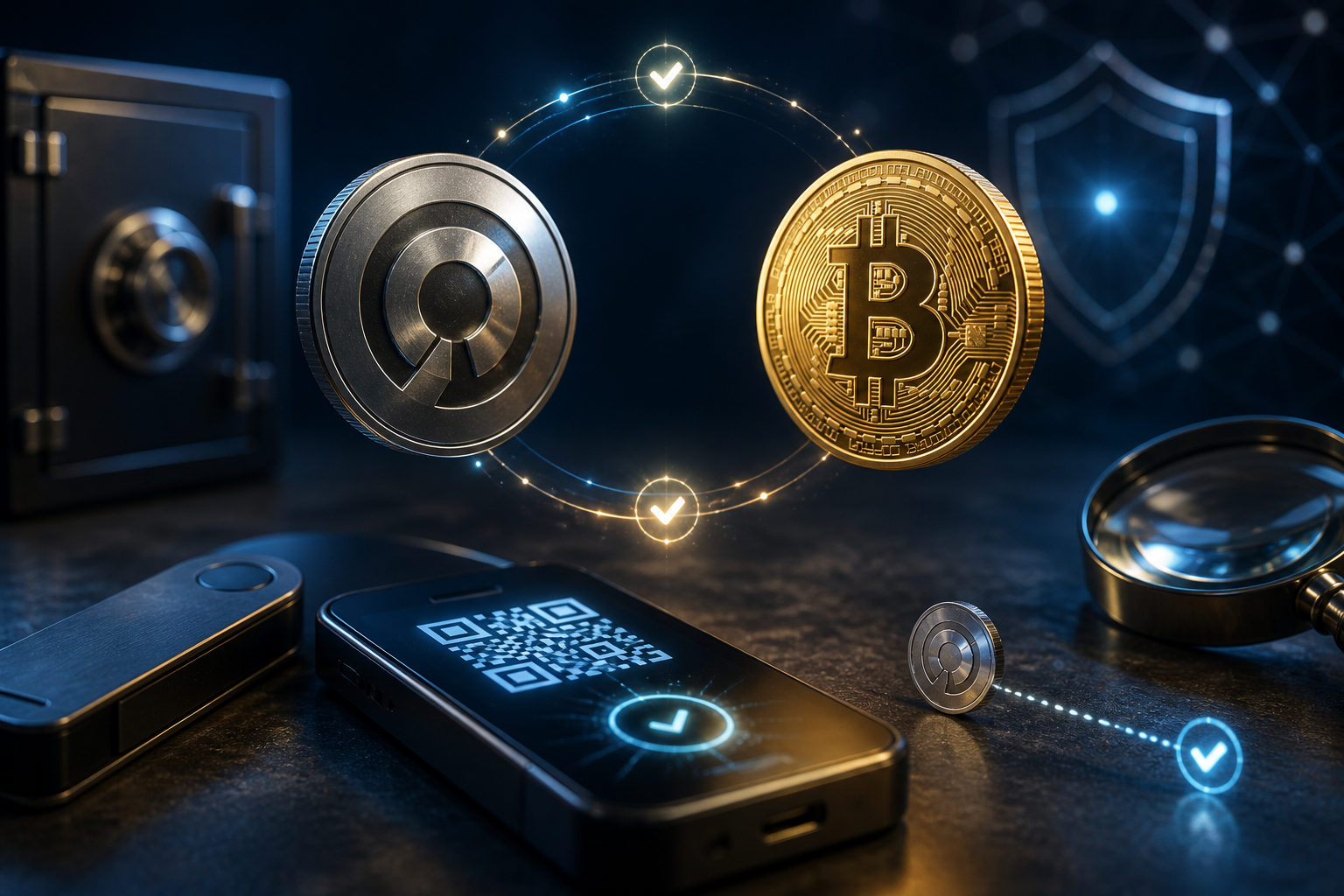
To exchange Monero to Bitcoin safely, prepare your BTC wallet first, verify the swap rules, and send a small test before moving any larger amount.
What this exchange really means
When people ask how to exchange Monero to Bitcoin, they are talking about swapping XMR for BTC rather than making a normal transfer. That difference matters. A transfer sends one asset to another address on the same network, while a swap changes one asset into another through a service or trading flow.
People usually make this move because Bitcoin is more widely supported across wallets and payment tools, while Monero is often chosen for privacy. The reverse question, “how to exchange bitcoin for monero,” follows much of the same logic. You still need to confirm the outgoing asset, the receiving wallet, and the exact terms before you send anything.
Step 1: Set up the receiving wallet before you start
Your first job is to make sure your Bitcoin wallet is ready to receive funds. Do not treat this as a small detail. If the swap goes through but the receiving address is wrong, incomplete, or not under your control, the transaction can become very hard to fix.
There is a simple reason for doing this first: swaps finish on the destination address, not on the order page. Check that you can access the wallet, that you have backed up recovery details, and that the address was copied correctly. Do not assume looking at the first and last characters is enough. Clipboard malware can replace an address without any obvious warning.
- Confirm the BTC wallet can receive funds
- Confirm you control the backup or recovery phrase
- Confirm the address belongs to you, not a third party
Step 2: Review the service rules before you use any exchange method
If you want to exchange Monero to Bitcoin, the riskiest mistake is often rushing into the first service you see. Before sending XMR anywhere, read the terms shown by the service. You want to know whether it clearly supports XMR and BTC, how fees are charged, what happens if an order fails, and whether extra verification may be requested.
This step matters because the process can look simple while the actual conditions are not. Some services explain timing, limits, and refund handling in plain language. Others focus almost entirely on speed and leave the hard questions unanswered. If the rules are vague, that is already useful information. It tells you to slow down.
You should also watch for fake support accounts, copycat pages, and private messages offering help. A service that asks you to send coins to a personal wallet for manual processing should be treated as a major warning sign. Good services explain the flow up front instead of pushing you into a blind transfer.
Step 3: Run a small test transaction first
A small test transfer is one of the best habits in crypto. The reason is simple: if you misunderstood the process, copied the wrong address, or missed a time limit, it is far better to learn that with a small amount than with your full balance.
In practice, enter your Bitcoin receiving address, review the XMR deposit details provided for the swap, and then send a small amount of Monero from your own wallet. Wait for the order to move through its normal status flow. Once you have seen that the path works as expected, you can decide whether to continue with a larger amount.
Do not send additional funds before the test finishes unless the service clearly says partial deposits are handled in a specific way and you fully understand that rule. Another danger sign is pressure. If anyone tells you to hurry, skip checks, or send more to “release” the swap, stop there.
Step 4: Understand fees, timing, and execution risk
Many users focus only on the final BTC amount and ignore everything in the middle. In reality, the total cost can include the Monero network fee for sending out, the service fee for the swap, and a difference between the quoted amount and what arrives if market conditions move during processing. Without live market data, the smart move is not chasing the most attractive promise on screen. It is checking whether the service explains the fee structure clearly before you commit.
Timing deserves the same care. A page that says fast processing is not enough on its own. Keep the order reference, save screenshots, and note what you did at each stage. If there is a delay, clear records will help you explain the case without guessing.
The same approach applies to the reverse variation, “how to exchange bitcoin to monero.” The direction changes, but the checklist does not. You still need to verify the destination wallet, the fee logic, the status flow, and the support path if something goes wrong.
Step 5: Use a fraud checklist before pressing send
Crypto transactions usually cannot be reversed in the way card payments sometimes can. That is why anti-scam checks need to happen before the transfer, not after. A short checklist is more useful than trying to memorize every scam story.
- Check that the site, app name, and support identity match
- Check that you selected XMR to BTC, not the opposite direction
- Check that the receiving BTC address is from your own wallet
- Check that the service shows its fee and failure policy clearly
- Check that no one is pushing you to send immediately
Be very careful with claims such as guaranteed profit, private route, manual acceleration, or requests to send funds to a personal wallet first. A legitimate process tells you what will happen, why each step exists, and what to do if the order fails. It does not depend on urgency and trust alone.
FAQ
What goes wrong most often when swapping Monero for Bitcoin?
The most common mistakes are not market calls. They are wrong addresses, wrong asset direction, and skipped rule checks. Make sure you are sending XMR and receiving BTC before you approve anything.
Is the process different for “how to exchange bitcoin for monero”?
The overall logic is very similar. You still review the service terms, verify the destination wallet, and test with a small amount first. The main difference is which asset you send out and which wallet should receive the result.
Why should I do a small test transfer first?
Because crypto transactions are usually hard to reverse once sent. A test amount can reveal address errors, timing problems, or a misunderstanding of the process before the stakes become larger.
How can I judge a service if I am not using a specific platform recommendation?
Read the terms, fee explanation, support options, and failure handling. If a service talks only about speed and says very little about edge cases or responsibility, that is a reason to pause.
What should I do after the swap is complete?
Confirm that the Bitcoin arrived in your wallet and keep the order record. If you plan to hold the BTC, the next priority is wallet backup, device security, and account protection.
For most users, the safest sequence is enough: prepare the wallet, read the rules, run a test, then consider the full swap only after the test clears.
Disclaimer: This article is for informational and educational purposes only and is not investment, financial, or legal advice. Crypto assets are highly volatile and you could lose your entire investment. Do your own research and decide carefully.