
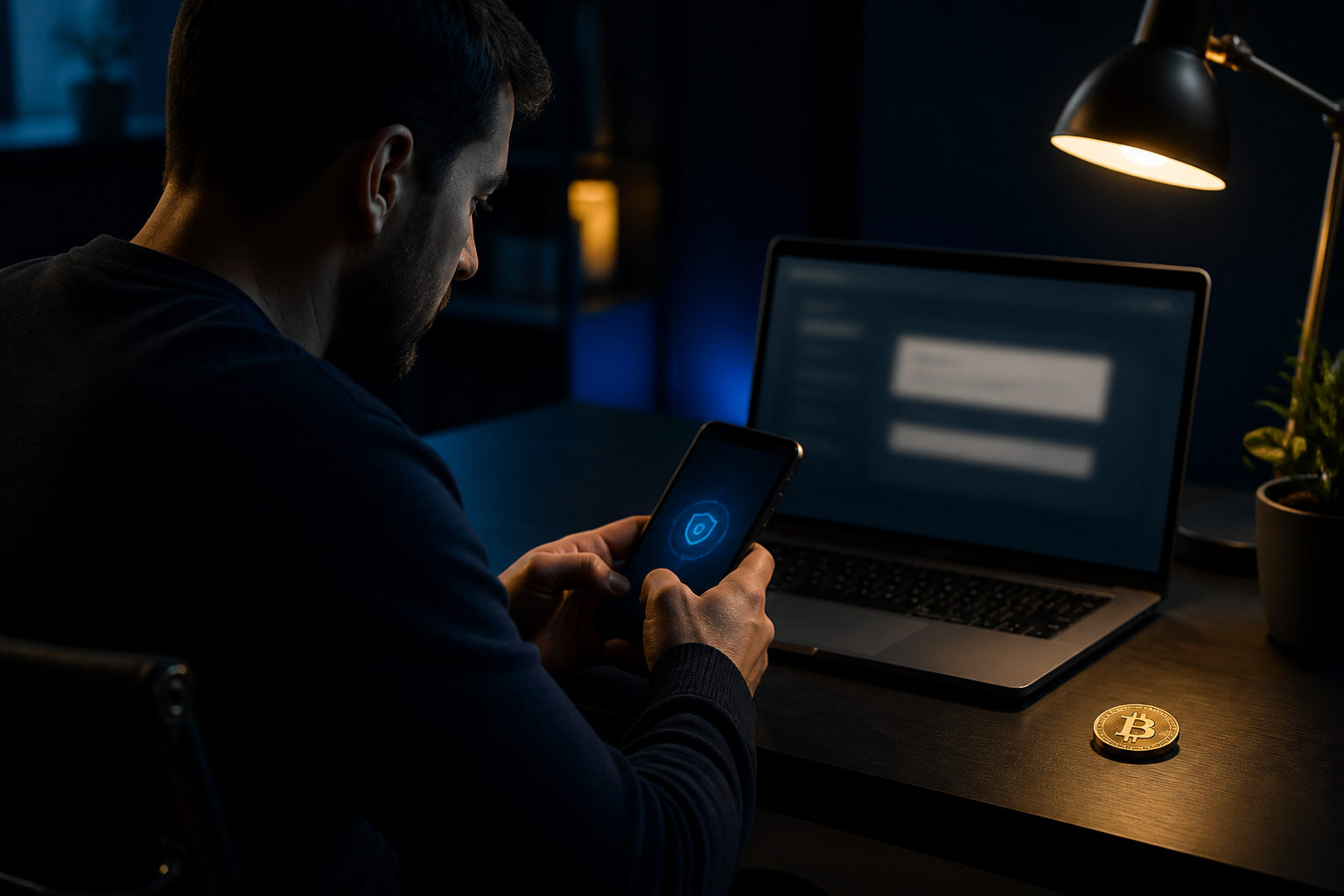
Does MyBookie use Bitcoin? The only answer that matters is what your account shows in its deposit and withdrawal pages when you plan to use it.
The real answer depends on the live payment options in your account
When people search for “does mybookie use bitcoin,” they usually want a practical answer: can I deposit with BTC right now, can I withdraw the same way later, and what could go wrong. Old forum posts, cached screenshots, and third-party guides cannot settle that. Payment methods can change, access can vary by account status or region, and support articles may lag behind the actual cashier page.
The safest way to check is simple. Sign in to your account, open the deposit section, then the withdrawal section separately. Look for Bitcoin or BTC in both places, and read any notes tied to that option. If the page does not clearly explain the network, address format, account verification rules, or processing conditions, verify before sending anything.
| What to check | What to do | Why it matters | What to watch for |
|---|---|---|---|
| Deposit page | See whether BTC is listed as a funding method | This is the quickest sign of current support | Do not rely on public promo pages alone |
| Withdrawal page | Check whether Bitcoin is also available for cashout | A platform may accept BTC deposits without offering BTC withdrawals the same way | There may be verification or review conditions |
| Payment instructions | Read the notes tied to the BTC option | You need the right network and address details before sending | Do not mix instructions for different coins |
| Security messages | Review email alerts and in-account notices | This helps filter out fake support contacts | Never trust a wallet address sent by direct message |
A step-by-step way to verify whether MyBookie uses Bitcoin
Step 1: Check only from inside your own account
Action: Sign in and inspect the cashier, deposit page, and withdrawal page for a Bitcoin or BTC option. If one appears, see whether the page generates a wallet address or QR code for your account.
Reason: Your signed-in account reflects the live options tied to you, not a general marketing page.
Caution: Do not start from search ads, shortened links, or social posts. A fake site can closely copy a real one.
Step 2: Separate deposit support from withdrawal support
Action: Review deposit rules and withdrawal rules as two different checks. Confirm whether BTC appears in both places and whether either page adds conditions.
Reason: A service can accept one payment method for funding while using different paths for withdrawals.
Caution: Look for identity checks, account review, or location-based restrictions. If the wording is vague, treat that as unresolved.
Step 3: Confirm the network and address format before sending
Action: If the page gives you a Bitcoin deposit address, copy it carefully, then compare the first and last characters against what your wallet shows before you approve the transfer.
Reason: Bitcoin transactions on-chain are usually irreversible once confirmed. If you send to the wrong address, or send the wrong asset to a Bitcoin address, support may not be able to recover it.
Caution: Clipboard malware is a real risk. Some malicious software swaps the address after you copy it.
Step 4: Use a small test transaction first
Action: On the first attempt, send a small amount you can afford to risk, then wait until the transfer is visible and the account records make sense to you.
Reason: A test transaction checks the address, the network, your wallet flow, and the way the platform credits incoming BTC.
Caution: A test transaction is not a substitute for reading the rules. You still need to know whether the site expects a specific network and whether additional checks apply before funds are credited or withdrawals are allowed.
Step 5: Keep your own records from the start
Action: Save the transaction hash, sending time, destination address, and any screenshots of the page instructions shown before you sent the BTC.
Reason: If there is a delay, a review, or a dispute over whether you followed the instructions, those records help you explain what happened.
Caution: Keep the record yourself. Do not assume chat logs or email threads will be enough.
The biggest risks are usually off-chain, not in Bitcoin itself
Bitcoin launched with the genesis block on 2009-01-03, its supply is capped at 21,000,000 BTC, and new issuance follows a fixed schedule. The block subsidy is cut every 210,000 blocks, roughly every 4 years. The most recent halving took place on 2024-04-19, bringing the block reward to 3.125 BTC, and the network aims for about 10 minutes per block.
Those facts explain how the system works, but they are not what usually trips users up in a payment workflow like this. Most real-world mistakes happen outside the protocol: phishing domains, fake support agents, wrong network selection, copied addresses altered by malware, or confusion between a broadcast transaction and a credited balance.
One satoshi is 0.00000001 BTC, which is one hundred millionth of a bitcoin. That matters when a wallet displays small amounts with many decimal places and a user misreads what was actually sent.
| Common risk | How it shows up | Why it happens | Safer response |
|---|---|---|---|
| Fake website | The domain looks close to the real brand | People click ads or shared links without checking the URL | Type the trusted domain manually or use a saved bookmark |
| Fake support contact | Someone sends a wallet address in chat or email | Scammers use urgency when users are waiting for funds | Use only official in-account support channels |
| Wrong network or wrong asset | The coin name seems familiar, but the routing is wrong | Users focus on the label and miss the network details | Confirm you are sending BTC to a Bitcoin address |
| Clipboard replacement | The pasted address does not match what the site displayed | Device malware or unsafe browser tools can alter copied text | Compare the beginning and end of the address before sending |
| False “it arrived” assumption | Your wallet shows sent, but the platform balance is unchanged | The site may still be waiting for confirmations or internal review | Check the transaction status first, then contact official support if needed |
What to think through before using Bitcoin for this kind of payment
Keep this use separate from long-term holdings
If you hold BTC as a long-term asset, it is often cleaner to separate that wallet activity from any higher-risk payment flow. This makes records easier to track and lowers the chance that you mix up addresses, balances, or purpose.
Understand why reversals are hard
Bitcoin was introduced in the white paper released on 2008-10-31 by Satoshi Nakamoto, whose identity remains unknown. Its design gives users direct control over funds, but the trade-off is that a confirmed on-chain transfer usually cannot be reversed like a card charge.
Your wallet is only one part of the security chain
People often focus on whether a site accepts BTC and forget that email, device security, and account login controls can be the weak points. If someone gets into your email or intercepts account recovery steps, the problem can start long before the Bitcoin transaction itself.
FAQ
How can I tell if MyBookie accepts Bitcoin right now?
Log in and inspect your deposit page and withdrawal page directly. If BTC is clearly listed there, that is better evidence than any old guide or forum thread.
Why would a site show Bitcoin for deposits but not for withdrawals?
Deposit methods and withdrawal methods are not always mirrored. Account review, identity checks, internal risk controls, or regional rules can affect whether BTC is available on the payout side.
How long does a Bitcoin transfer take to appear?
Bitcoin targets about 10 minutes per block, but what you see in the receiving account depends on the number of confirmations required and any internal review the site applies. “Sent” in your wallet does not mean “credited” on the other side right away.
If I send BTC to the wrong address, can I get it back?
Usually not. A confirmed Bitcoin transfer is generally irreversible, so the practical protection is careful verification before you send.
Should I send from an exchange account or from my own wallet first?
Many users prefer sending to a wallet they control first, then making the payment from there, because it gives them one more chance to verify the destination and keep a clear record. The main issue is whether you understand each step and who controls the keys.
If you want a safe workflow, confirm BTC support inside your account, check the exact network and address, send a small test first, and save the transaction hash and page instructions. Ignore any wallet address sent through private messages.