
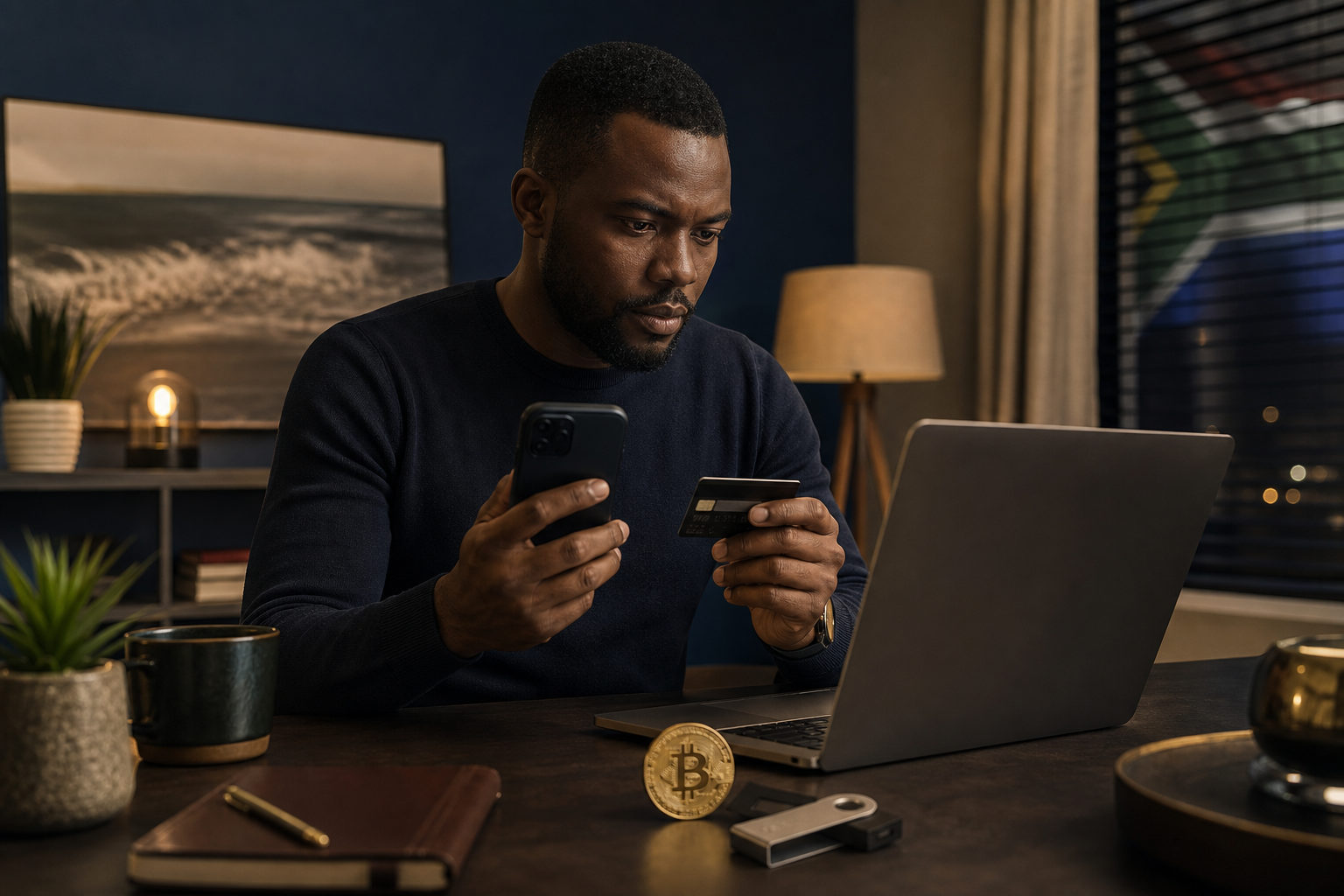
To get bitcoins in South Africa, the safest starting path is usually to use a service with clear verification rules, fund your account carefully, buy a small amount first, and then move the bitcoin to a wallet you control.
Start with the goal: holding bitcoin is different from just trading it
People searching for how to get bitcoins in South Africa often want the fastest way to buy. Speed should not be the first filter. Your first decision is whether you want to hold bitcoin over time or simply exchange in and out of it. That choice affects almost everything that follows, from the type of service you use to how seriously you need to think about wallet custody.
If your goal is long-term ownership, bitcoin should be treated as an asset that needs proper storage and withdrawal control. If your goal is short-term trading, the order interface and execution process may matter more. Even then, basic security checks still come first. Scams target new users because they know confusion creates urgency, and urgency makes people skip verification.
There is another misconception worth clearing up early. Getting bitcoin does not only mean buying a whole coin on an exchange-style service. Bitcoin is divisible, and people can also receive it as payment, repayment, or transfer from someone else. For most beginners, though, the most practical route is still to buy a small amount through a formal service and learn how to store it safely afterward.
Step 1: choose a route by checking rules, withdrawals, and control
If you want to know how to get bitcoins in South Africa without walking into avoidable risk, begin by comparing routes rather than chasing promotions. In practice, most people will encounter a few common options: a service that lets users buy and sell crypto, a peer-to-peer market, an informal over-the-counter deal, or a direct transfer from another person. For a beginner, the route with the clearest identity checks and withdrawal rules is usually the better place to start.
Your review process should be simple. Check whether the service clearly explains account verification, deposits, purchases, and bitcoin withdrawals. Check whether fees are visible before you confirm anything. Check whether you can actually withdraw bitcoin to an external wallet. That last point matters a lot. If you can buy but cannot move the asset out, your control is limited from the start.
Why put withdrawal ability so high on the list? Because a weak service often looks fine at the buying stage and starts causing problems only when you try to leave. Delayed reviews, vague compliance language, unexplained restrictions, and pressure to keep funds on the platform are all warning signs. A beginner often thinks the risk sits in the purchase itself. In reality, the bigger risk may appear when you try to move your bitcoin elsewhere.
There are a few red flags that should stop you immediately. Do not trust a service just because someone in a chat group posted profit screenshots. Do not send money to a stranger because they claim they can offer a better rate. Do not assume a social media account represents a real business. And do not accept any setup where you are pushed off the formal process into direct payment to a personal bank account.
Step 2: complete verification properly and secure the account before funding
Once you pick a service, the next step is account creation and identity verification. This part can feel routine, but it has long-term consequences. The name on your account, your submitted identity details, and your funding method should match as closely as possible. That reduces the chance of later reviews when you try to deposit or withdraw. Before uploading any personal documents, make sure you are on the correct website or app and not a copycat page.
Doing this carefully saves trouble later. Crypto services often treat mismatched information, unusual device behavior, or inconsistent payment details as signs of risk. If your account setup is sloppy, the service may not stop you right away. It may wait until a deposit or withdrawal request appears, then trigger extra checks at the worst possible time. For someone new to bitcoin in South Africa, getting the basics right early is often the easiest way to avoid account friction.
Security setup should happen before you add money. Use a strong and unique password. Turn on two-factor authentication. Protect your email account with the same seriousness, because email access can be used to reset other credentials. Store backup codes carefully. Avoid treating text messages as your only recovery option. If someone gets into your email or intercepts your login flow, your bitcoin can become the real target very quickly.
Some warning signs are easy to miss. No legitimate support agent needs your authentication code, backup code, or wallet recovery phrase. No real buying service should ask you to share your screen so they can “help” you finish registration. No genuine app should require you to disable basic security checks just to sign in. If a person claims they can speed things up by taking control of the process for you, stop there.
Step 3: fund the account only after checking the payment path, then make a small test buy
After verification, many users rush into funding the account. A better move is to slow down and read the payment rules first. Check whether the service requires the payment account to be in your own name. Check whether third-party payments are restricted. Check how deposits are identified and how long processing may take. If any of that is unclear, do not send money yet.
The reason for starting with a small amount is not just caution for its own sake. A test deposit helps you confirm several things at once: whether the payment reaches the account correctly, whether the purchase flow is easy to understand, and whether the bitcoin withdrawal section is available and functional. People often assume the process works because a service accepted registration. That is not enough. You want proof that the whole path works from funding to purchase to withdrawal.
Keep your payment source aligned with the service rules. If third-party funding is not allowed, do not ask a friend or relative to send money on your behalf. That may look harmless, but it can trigger a review later. Keep records of your deposit confirmation, transaction references, support messages, and account notifications. That is not paranoia. It is basic documentation in case you need to explain what happened.
This stage is also a common point for fraud. A scammer may claim they can sell bitcoin directly at a better rate if you transfer money to them first. Another may send a fake payment confirmation and pressure you to release funds or complete a separate transfer. In every case, rely on the actual status inside the service you are using and your own banking records, not on screenshots in a chat.
Step 4: understand what you are buying before you press confirm
Before making the purchase, get one basic concept clear: you do not need to buy a whole bitcoin. Bitcoin has a maximum supply of 2100 million coins, and its smallest unit is 1 satoshi, which is one hundred millionth of a BTC. That matters because beginners sometimes assume they are priced out and then drift toward lookalike tokens or risky offers that misuse the bitcoin name.
For a first purchase, keep the order process as simple as possible. Focus on understanding the amount of fiat you are using, the amount of bitcoin you expect to receive, where the fee appears, and where the purchased bitcoin will sit afterward. Read each field before you confirm the next one. Confusion during a first purchase usually comes from rushing through labels and terms that are still unfamiliar.
This slower approach has a practical purpose. Scam attempts often exploit the fear of missing out. Someone may tell you to buy a token with a similar name. Another person may send you to a fake login page dressed up as a special access link. Someone else may blur the difference between a deposit address and a receiving address. Your job is not to move fast. Your job is to make sure you are buying actual bitcoin and doing it through the path you intended to use.
Once the purchase is complete, seeing a balance on a service does not mean the storage question has been solved. It only means the service is showing you an internal balance. If your plan is to hold bitcoin, the next issue is custody, not market watching.
Step 5: move bitcoin to a self-custody wallet if you want long-term control
Many guides on how to get bitcoins in South Africa stop at the buying step. That leaves out the part that matters most for long-term safety. If you plan to hold bitcoin, learn what self-custody means. In plain terms, self-custody means you control the wallet recovery information and the private keys rather than leaving control entirely with a service provider.
The practical workflow is straightforward. Set up a wallet that you control. Generate a receiving address. Copy it carefully and check it before sending anything. For your first withdrawal, start with a small test amount. Wait until you can confirm that the bitcoin arrived in the wallet as expected. Then repeat with larger amounts only if you are comfortable with the process. Bitcoin transfers are not like card payments where you can easily ask support to reverse a mistake.
The most sensitive part of this step is wallet recovery information. If your wallet uses a recovery phrase, treat it as the key to the asset itself. Do not store it casually in cloud notes, email drafts, chat apps, or screenshots on an internet-connected device. Do not give it to a support agent, a trading mentor, a recovery service, or anyone else. If another person gets that information, they may be able to take the bitcoin without your consent.
Leaving bitcoin on a service may feel easier because there is less to manage. That convenience comes with trade-offs. You depend on the service’s security, account policies, and withdrawal procedures. For some short-term users, that may be acceptable. For someone building a longer-term position, understanding the difference between platform custody and self-custody is one of the most important parts of getting bitcoin responsibly.
Step 6: if you receive bitcoin instead of buying it, verify the transfer on your side
Not everyone gets bitcoin by purchasing it. You may receive bitcoin for freelance work, business payments, repayments, or transfers from people you know. In those cases, your task changes. Instead of checking the buy flow, you need to verify that the payment really reached a wallet or account you control and that the receiving address belongs to you.
A common mistake is accepting screenshots as proof of payment. A screenshot does not complete a transfer. A message with a transaction reference does not complete a transfer either. What matters is the status you can verify in your own wallet or account. If you cannot confirm the incoming transaction on your side, you should not treat the payment as finished.
You should also assess the broader context of the transaction. If a stranger offers unusually generous payment terms but asks you to advance funds, pay a bond, or forward money elsewhere first, that is usually a sign of trouble. Bitcoin itself is just the transfer medium. The real risk often sits in the deal structure and the person on the other side.
How to spot the most common scams
Scams around bitcoin follow familiar patterns. One pattern is the guaranteed return pitch: send bitcoin here and receive a fixed profit, passive income, or a managed trading result. Another is the fake support message: your account is frozen, your withdrawal needs activation, or you must send more funds to unlock access. A third is the copycat site or fake app that exists mainly to steal passwords, authentication codes, or wallet recovery phrases.
Peer-to-peer fraud has its own set of traps. A seller may ask you to move outside the protected process. A buyer may send a fake proof of payment. Someone may try to pressure you into acting before you can check your own records. Once you leave a formal dispute path and begin trusting chat messages over verifiable account status, your risk rises sharply.
A simple rule helps here: if a person wants you to break procedure, hand over control, hide the transaction, or stop asking questions, assume the risk is high. The safer process is usually less exciting. It looks ordinary: verify identity, read the rules, use a small test amount, keep records, confirm each stage, and only then scale up.
FAQ
What is the safest first step for getting bitcoin in South Africa?
For most beginners, the safer first step is to use a service with clear verification and withdrawal rules, buy a small amount, and then move it to a wallet you control. That gives you a clearer process and reduces the chance of getting trapped in an informal deal.
Do I need enough money to buy one full bitcoin?
No. Bitcoin is divisible, and the smallest unit is 1 satoshi, which is one hundred millionth of a BTC. The key question is not whether you can buy a full coin, but whether you understand the fees, the storage method, and the risk.
If someone sends me a screenshot, does that mean I received bitcoin?
No. A screenshot is not confirmation. You should treat the payment as complete only when you can verify it in your own wallet or account.
Should I leave bitcoin on the buying service or move it to my own wallet?
That depends on your purpose. Some short-term users leave funds on a service for convenience, while long-term holders often prefer self-custody for greater control. The important part is understanding the difference rather than drifting into one option by default.
What should I avoid most when looking up "how to get bitcoins in South Africa"?
Avoid guaranteed-profit claims, fake support agents, copycat apps, direct deals that push you outside the stated process, and anyone asking for your recovery phrase or authentication code. If the offer depends on urgency and secrecy, treat it as a warning.
The practical next moves are simple: pick a service with clear rules and bitcoin withdrawal support, secure both your account and email with strong authentication, test deposits and withdrawals with small amounts first, and if you plan to hold bitcoin, learn self-custody before increasing the amount you keep.
Disclaimer: This article is for informational and educational purposes only and is not investment, financial, or legal advice. Crypto assets are highly volatile and you could lose your entire investment. Do your own research and decide carefully.