
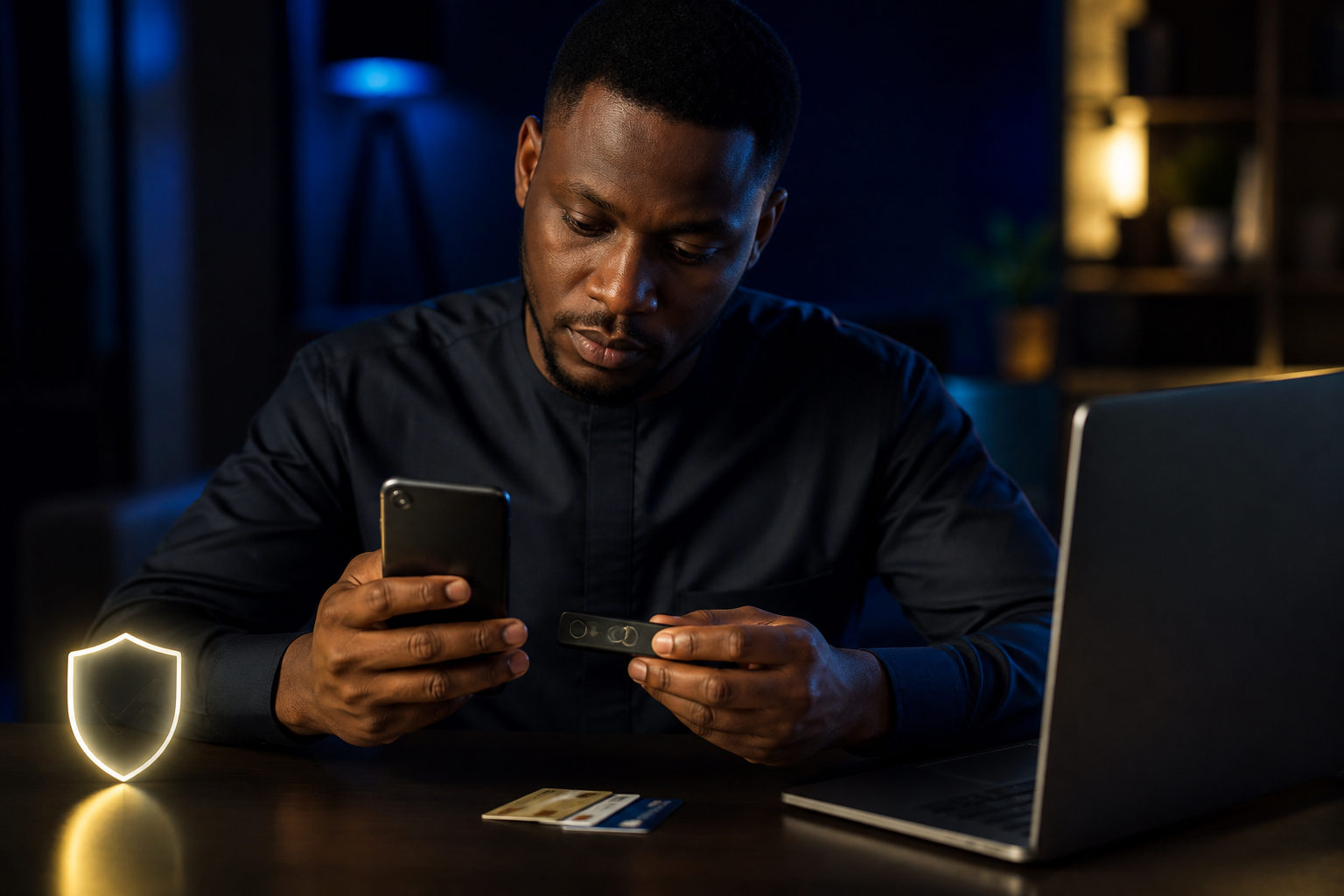
Buying bitcoin in Nigeria now starts with a fact a lot of generic guides skip over: under the Investments and Securities Act (ISA) 2025, virtual assets are treated as securities, and Nigeria's Securities and Exchange Commission (SEC) has direct authority to license and supervise any platform serving Nigerian users — whether that platform is headquartered in Lagos, London, or Los Angeles. The practical move is to favor exchanges that have gone through the SEC's Accelerated Regulatory Incubation Programme (ARIP), have your Bank Verification Number (BVN) and National Identification Number (NIN) ready along with a wallet you actually control, run a small test purchase first, and put your scam checks before each step rather than after the money has already moved.
Understand Nigeria's current regulatory setup before you choose a channel
The 2025 ISA folded virtual assets and related investment contracts into the legal definition of securities, which is what gives the SEC its licensing and supervisory power over exchanges, custodians, and other digital asset businesses. The SEC opened ARIP in June 2024 as a kind of regulatory sandbox, letting local platforms operate while they finish meeting full compliance standards. Busha and Quidax were the first two Nigerian exchanges to receive Approval-in-Principle and then provisional licenses through that program. In practice, this means that before you commit meaningful money to a platform, it's worth checking whether it turns up in reporting on SEC-licensed or ARIP-approved exchanges, rather than judging it purely on download numbers or ad spend.
The Central Bank of Nigeria (CBN) plays a separate but connected role. On December 22, 2023, the CBN issued Guidelines on Operations of Bank Accounts for Virtual Assets Service Providers, reversing its earlier stance and allowing commercial banks to open naira accounts for VASPs — but only for VASPs that already hold an SEC license. Banks themselves are still barred from holding or trading virtual assets on their own account. What that means for you: if you send a bank transfer to a platform with no SEC backing, your bank may flag, delay, or reject that transfer during routine compliance checks. That's not you doing something wrong — it's the policy working as designed, since banks are only meant to service licensed counterparties.
There's also a Nigeria-specific wrinkle at the telecom level. In February 2024, the Nigerian Communications Commission (NCC), backed by the CBN and the presidency, ordered telecom and internet providers to block access to several major international exchange websites, including Binance, Coinbase, OKX, Kraken, Bybit, and Luno, citing a need to curb naira speculation during a period of sharp currency devaluation. Reporting from as late as October 2025 indicates that even after Nigeria's broader regulatory stance softened, this telecom-level block on many of those platforms had not been lifted. Some users route around it with a VPN, but that comes with its own downsides — it can trip a platform's fraud controls, and it adds phishing and account-security risk on top of whatever you're already carrying. Platforms already engaged with the SEC framework, like Busha and Quidax, and pan-African players such as Yellow Card that have operated across the continent for years, generally aren't affected by this block and tend to offer a steadier deposit-and-withdrawal experience as a result.
Binance is a useful, concrete example of why this matters. Its naira trading pairs are currently suspended, so you can't fund or withdraw in naira directly through the platform. As of court proceedings in early-to-mid 2026, the CBN has continued to maintain that Binance ran unauthorized “hidden operations” in Nigeria, and a separate tax dispute with the Federal Inland Revenue Service (FIRS) has reportedly been heading toward an out-of-court settlement. None of that means you can't research the platform, but if your plan is to fund a bitcoin purchase directly with naira, it isn't currently a smooth option — check the platform's own status page and recent Nigerian coverage before assuming otherwise.
The other judgment call that matters here, regardless of which platform you use: know whether you're buying spot bitcoin or something dressed up as bitcoin — leveraged products, futures, or “guaranteed return” investment pools. Any page pushing quick doubling, capital guarantees, copy-trading, or someone trading on your behalf for a cut of the profits is a page to leave immediately. Licensed spot products regulated under the SEC framework don't market themselves that way.
How the main funding channels in Nigeria compare
Before picking a channel, it helps to see the main options side by side, since the right choice depends more on your risk tolerance than on which app has the flashiest ad.
| Channel type | Regulatory status | Typical funding method | ID requirements | What to watch for |
|---|---|---|---|---|
| SEC-licensed / ARIP local exchanges (e.g. Busha, Quidax) | Holds SEC Approval-in-Principle or a provisional license, sits inside the SEC/CBN oversight framework | Direct bank transfer, naira order books | BVN, NIN, valid government ID | Currently the more defensible legal footing, but the licensing regime is still young and rules keep evolving |
| Pan-African regional platforms (e.g. Yellow Card, Luno) | Long-running operations across Nigeria and other African markets, engaged with the SEC sandbox process | Bank transfer, select local payment rails | Government ID plus local KYC data | Pricing is usually spread-based rather than a flat percentage fee, so check the quoted rate before confirming |
| P2P order books inside a licensed platform | Protected by the host platform's order and escrow system, not an independent license of its own | Bank transfer, or fintech wallets like OPay, Kuda, Moniepoint, PalmPay | Verified accounts required on both sides of the trade | Keep all communication and payment inside the order page — moving off-platform forfeits escrow protection |
| Direct access to unlicensed international exchanges | Some platform domains have faced telecom-level access restrictions in Nigeria since February 2024; local regulatory status is unclear | Usually no direct naira funding — you'd need foreign currency or stablecoins first | Whatever KYC standard the platform applies globally | Access typically depends on a VPN, which adds fraud-flagging and account-lockout risk |
Step 1: Line up your BVN, NIN, bank account, and wallet before you start
Before you do anything else, gather what you'll need in one sitting: a phone number you actually use, an email account you check, a bank account or a fintech wallet such as OPay, Kuda, Moniepoint, or PalmPay in your own name, and your Bank Verification Number (BVN) and National Identification Number (NIN). Licensed Nigerian platforms build their KYC process around these two identifiers, and they're also central to the identity-verification push tied to the 2026 tax reforms — exchanges rely on them to confirm who you are and to meet anti-money-laundering and reporting obligations. They're not an optional extra step.
If you just want to try a small first purchase, get a bitcoin-compatible wallet address ready ahead of time. Wallets fall into two broad types: custodial, where the platform manages part of the security work for you and the barrier to entry is lower, and self-custody, where you hold your own seed phrase and private keys and take on more control along with more responsibility. There's no universally right answer — what matters is understanding who holds the keys, because whoever holds the keys holds the coins.
Don't move your entire balance into a self-custody wallet before you understand how backups work. Lose a seed phrase and there's usually no support line that can recover it for you; hand that phrase to someone else, or store a screenshot on a device that could get compromised, and the risk runs just as high the other way. If you plan to leave your coins on an exchange for a while instead, learn the withdrawal rules and security settings before you buy, not after you discover you can't move funds out the way you expected.
Step 2: When comparing platforms, check regulatory footing before you check the interface
Don't let the lowest price or instant settlement be the first thing that pulls you toward a platform. Check two things first: whether the exchange turns up in reporting on SEC-licensed or ARIP-approved platforms, and whether it states a clear banking relationship with Nigerian banks. Both of those determine whether your naira can move in and out smoothly, and whether you have anywhere to turn if something goes wrong.
Identity verification can feel like friction, but it's a useful signal in itself. Under the CBN's late-2023 guidelines, banks only open accounts for VASPs that already carry an SEC license — so a platform that doesn't ask for a BVN or NIN probably hasn't built a formal banking relationship either, which means your naira transfer could end up stuck somewhere in between. If a platform claims you can skip verification entirely and still offers unusually generous terms, treat that as a warning sign rather than a perk.
This is also the stage to watch for fake sites and apps, including ones that copy the name, colors, and login screens of well-known Nigerian platforms like Busha, Quidax, or Yellow Card to trick you into typing in a password, a one-time code, or a seed phrase. Download apps only through an official app store or a link you've confirmed from the platform's own site. Once you're in, check that the security settings, withdrawal settings, and identity-verification pages are all fully built out before you decide to continue.
Step 3: Lock down account security before you place an order
Once your account is open, don't rush straight to payment. Set a strong, unique password first, and turn on two-factor authentication. The point of a strong password isn't complexity for its own sake — it's making sure you're not reusing the same login across your email, social apps, and payment tools. Two-factor authentication gives you a second line of defense if that password ever leaks.
If the platform offers login alerts, device management, a withdrawal address whitelist, or an anti-phishing code, go through each one. You don't have to switch everything on at once, but you should know where these settings live and what each one protects against. Trying to figure them out for the first time in the middle of a withdrawal, a device change, or a dispute is when people tend to make mistakes.
One thing people overlook at this stage: make sure your profile details match your bank or fintech wallet account exactly. Plenty of order disputes have nothing to do with hackers — they happen because a buyer used a mismatched name, paid from a third party's account, or wrote something they shouldn't have in a transfer note, and the seller or the platform's risk system refuses to release the coins. If a platform requires your BVN or NIN to match your banking details, don't try to work around that just to see if it lets you.
Step 4: Make your first purchase small, and follow the order flow exactly
When you actually place an order, start with an amount you can afford to lose — a test order in the low thousands of naira is plenty. The goal of a first purchase isn't to buy your full target amount; it's to confirm the whole flow works: the quote, the order creation, payment through your bank transfer or a wallet like OPay or Kuda, the counterparty or platform releasing the coins, and the balance showing up correctly afterward. Once you've run that once, you'll know exactly where to slow down and double-check next time.
On the order page, read the payment window, accepted payment methods, counterparty requirements, and dispute conditions before you accept. If a seller asks you to move the conversation off-platform, or to cancel the order and pay a different account privately, stop right there. Order protection almost always only applies inside the platform's own flow — step outside it, and a lot of your evidence disappears with it.
Pay only to the account details shown on the order page itself — never to an alternate account or a supposed special channel someone sends you in chat. After you pay, upload proof or mark the order as paid as instructed, then wait. Don't confirm before you've actually paid, and don't cancel an order after paying just because someone is pressuring you to; both mistakes hand over control you don't need to give up.
If an order stalls, check the platform's status page and dispute or appeal process first. Arguing in a chat window rarely helps as much as keeping your transfer records, order screenshots, and timestamps and filing them through the proper channel. What settles a dispute is a verifiable paper trail, not a back-and-forth argument.
Step 5: Check your balance, then decide whether to move to self-custody
Once the bitcoin lands, confirm you've actually received a spot BTC balance — not platform points, a savings product, or something with a similar-sounding name. Some interfaces place different products close together, and it's an easy thing for a new user to misread. After confirming what you hold, check whether withdrawal is supported, whether the withdrawal page accepts a bitcoin address, and whether any extra verification kicks in.
If you're planning to hold long-term, moving to a wallet you control is usually the safer path. Before you send anything, copy the receiving address and check the start and end characters carefully — clipboard-hijacking malware is a real and fairly common way addresses get silently swapped. The safer habit is to send a small test amount first, confirm the address, network, and wallet all line up, then move the rest.
Don't treat seeing a balance as proof the risk is over. Once coins land, the risk shifts toward account security, device security, and backup management. A lost phone, a compromised email, a leaked cloud backup, or an accidentally deleted wallet app all become real problems from this point forward, so it's worth organizing your backups immediately and checking that you could actually recover access on your own if you had to.
Step 6: Recognize the scam patterns that have been hitting Nigerian crypto users
Scams rarely win through technical sophistication — they win by exploiting urgency, greed, and fear of missing out. On May 8, 2026, Nigeria's SEC published a public notice specifically naming unregistered investment schemes spreading across WhatsApp, Instagram, TikTok, Telegram, and Facebook, warning the public about promises of outsized returns. The same pattern shows up constantly in private trading groups, signal channels, and pitches to let a self-proclaimed expert trade on your behalf. Once you're basing a trading decision on a personal relationship or a social media influencer rather than a platform's own order flow, most of your usual safety checks stop mattering.
In 2025, a platform called Crypto Bridge Exchange (CBEX) collapsed and was exposed as a Ponzi scheme — one of the largest crypto-linked fraud cases Nigeria has seen in recent years. Nigerian authorities and much of the local press cited losses as high as ₦1.3 trillion (roughly $800 million or more), but independent blockchain-forensics analysis has disputed that figure as unsubstantiated, tracing actual on-chain deposits closer to the single-digit millions of dollars — so the real scale of losses remains genuinely contested. Nigeria's Economic and Financial Crimes Commission (EFCC) has separately published a public alert naming 58 companies suspected of running illegal Ponzi schemes, urging people to verify credentials before investing. Reporting puts cumulative losses to more than 440 Ponzi schemes at over ₦174 billion in recent years. In October 2025, the SEC announced a joint effort with the CBN and EFCC to trace and freeze digital wallets tied to money laundering and fraud, which tells you something important on its own: once money moves into a scam wallet, recovery is genuinely hard, so catching the warning signs before you send anything matters far more than trying to claw money back afterward.
The specific tactics to watch for: a support agent messaging you first, offering to speed up a release, run a manual review, or unlock your account, then asking for your one-time code, your password, remote access to your device, or the original screenshot of a payment. Or a seller blaming network issues or system delays to pressure you into confirming payment early, cancelling a dispute, or switching to a different payment method. Genuine support teams on licensed platforms don't cold-message you asking for passwords or verification codes — if that happens, end the conversation and verify through the platform's official channel instead.
Step 7: Understand the 2026 tax changes, then build a basic discipline around holding
Nigeria's tax reform took effect on January 1, 2026, and it changes how profits from bitcoin, Ethereum, stablecoins, and NFTs are taxed. Previously, disposals were taxed under a flat 10% capital gains rate. Under the new rules, those profits are reclassified as “chargeable gains” under the personal income tax framework and taxed on a progressive scale that can reach 25% for individuals, with an exemption for anyone whose total annual income — including crypto profit — falls below ₦800,000. Virtual asset service providers themselves face a 30% corporate income tax on their operating profit, and licensed exchanges are now expected to report user transaction data to the Federal Inland Revenue Service (FIRS) or risk penalties, including license revocation. This framework is brand new, and the exact filing process, bracket thresholds, and enforcement details will likely keep getting refined — treat this as a starting point rather than a substitute for FIRS's own published guidance or advice from a tax professional, and don't file based on a single article.
Buying bitcoin doesn't mean you need to start trading constantly. If your goal is simply to hold, focus on keeping proof of purchase, backing up your wallet, tightening your account security settings, and understanding the withdrawal process. That way, the next time you need to add to a position, move funds, or sell, you're following a routine you already know instead of relearning everything under pressure.
It's also worth accepting a basic reality: bitcoin's price moves, and so does the naira's exchange rate, and the two combined can make your paper gains and losses swing harder than either alone would. Without trying to predict short-term price moves, the most useful preparation is deciding in advance how much you're willing to put in, how long you plan to hold, and under what conditions you'd stop — and keeping the records you'll likely need for tax purposes as you go. Writing those rules down tends to hold up better than a decision made in the heat of the moment.
Frequently asked questions
What's the safest first step for a Nigerian buying bitcoin for the first time?
Confirm the platform shows up in reporting on SEC-licensed or ARIP-approved exchanges, then gather your BVN, NIN, a bank account or a wallet like OPay or Kuda, and a bitcoin wallet address you control. Run a small test order through the full process before committing any significant amount.
Does Binance still work normally in Nigeria?
Not for direct naira funding. Its naira trading pairs are currently suspended, its website has faced telecom-level access restrictions since early 2024, and there are unresolved regulatory and tax matters between Binance and Nigerian authorities as of 2026. If your plan depends on funding with naira, a locally licensed platform or an established pan-African exchange is typically the smoother route — check the platform's current status before assuming otherwise.
Should I withdraw my bitcoin right away after buying it?
That depends on whether you already understand wallet backup and recovery. If self-custody is new to you, learn how to store a seed phrase and verify an address before moving anything. If you're planning to hold long-term, having control of your own wallet generally gives you more control over the outcome.
Someone offered me a better price outside the platform — is that safe?
Be cautious the moment someone asks you to leave the order flow, pay privately, or send funds to an unfamiliar account. Nigeria has seen large-scale cases like the CBEX collapse, where a modest price advantage turned into a total loss once buyers moved outside platform protections.
Do I owe tax on bitcoin profits in Nigeria?
Generally, yes. Starting in 2026, profits from digital assets fall under Nigeria's personal income tax framework on a progressive scale, with details on rates, exemptions, and filing still being clarified. Check FIRS's current guidance or a tax professional rather than assuming the old flat 10% rate still applies.
Before your next purchase, take a few minutes to note whether the platform you used is licensed, keep your order records, double-check your address-verification habits, confirm your BVN/NIN status is current, and review your security settings. That record will speed up your judgment on future orders, and it's also the kind of documentation you'll likely need when it's time to account for taxes.
Disclaimer: This article is for general information and educational purposes only and does not constitute investment, financial, legal, or tax advice. Cryptocurrency prices are highly volatile, and you could lose your entire principal. Nigeria's regulatory and tax rules in this area are still evolving — confirm current requirements with the SEC, CBN, FIRS, or another qualified professional before acting, and make your own decisions carefully.