
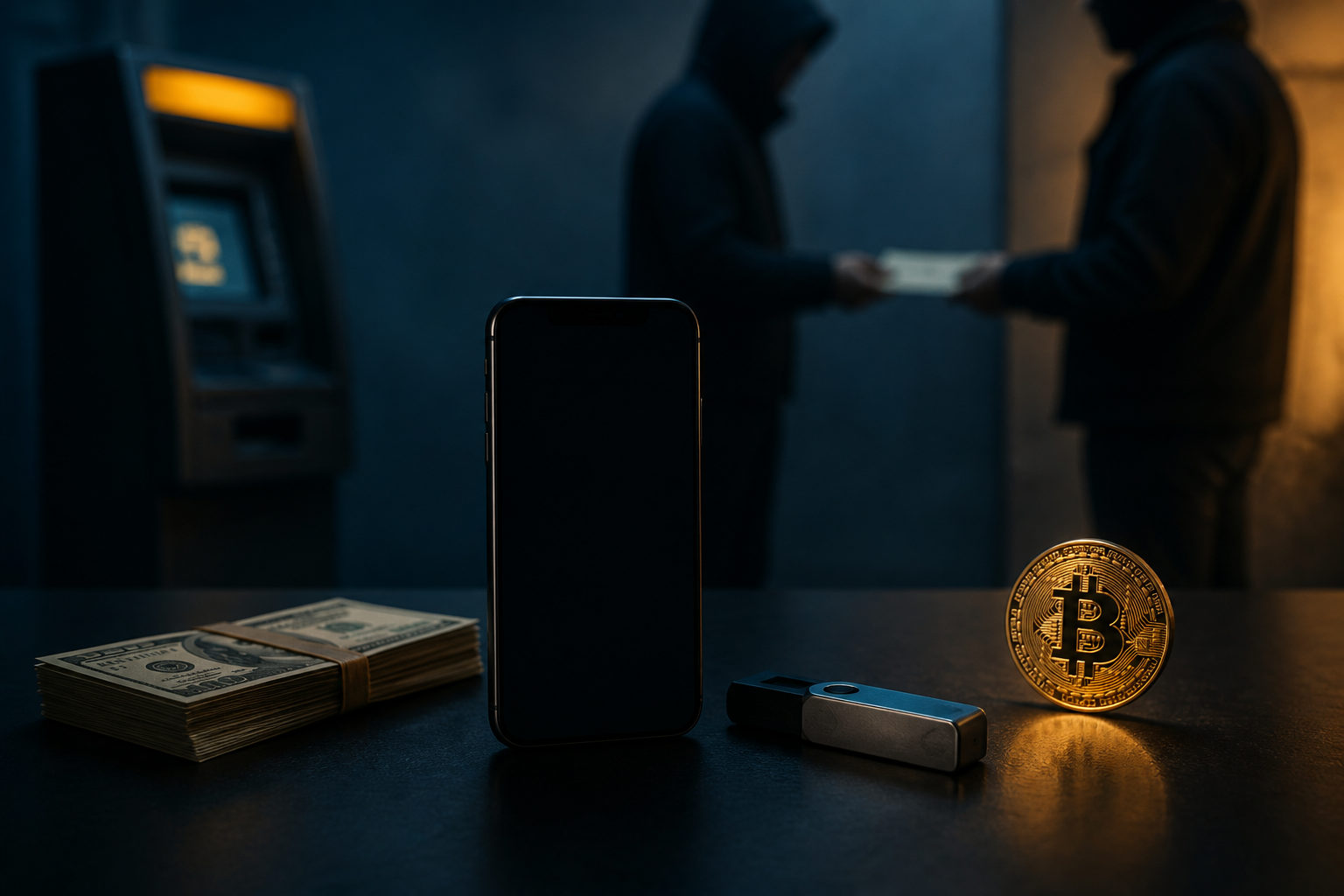
Where to buy bitcoin anonymously depends on what you mean by anonymous. In practice, the available routes usually reduce direct ID exposure rather than erase your trail, and the more privacy you seek, the more trade-offs you face.
First, define what “anonymous” means to you
People who search for where to buy bitcoin anonymously often want different things. Some want to avoid handing over identity documents to a centralized exchange. Others care more about not linking a bank transfer directly to a bitcoin purchase. A third group mainly wants to move coins into a self-custody wallet without leaving an obvious account history in one place.
Those goals are related, but they are not the same. Buying with less identity verification is one layer. Limiting payment records is another. Reducing what can be tied together on-chain comes later. If you focus on only one step, you may think you are buying bitcoin anonymously when you are only changing where the record appears.
That is why the better question is not just where to buy bitcoin anonymously, but how the full path works: payment method, seller interaction, wallet control, and what happens after the purchase. Privacy is usually a chain of decisions, not a single platform feature.
Main ways people try to buy bitcoin with more privacy
Without naming specific services, the common routes fall into a few broad groups: in-person cash deals, bitcoin ATMs or cash kiosks, peer-to-peer markets, and indirect conversion through another cryptoasset. None is perfect. Each one shifts risk in a different way.
In-person cash trades
This is the most obvious option. You meet a seller, hand over cash, and receive bitcoin in your wallet. It can reduce the direct paper trail that comes with bank-based payment methods, and for some buyers that is the main goal.
The downside is serious. You are dealing with a stranger, often with limited recourse if something goes wrong. There is counterparty risk, physical safety risk, fake confirmation screens, delayed transfers, and the possibility that the coins you receive may later raise questions when sent to another service. Cash can reduce one form of traceability while increasing several other risks at once.
Bitcoin ATMs and cash kiosks
Some regions have machines that let users buy bitcoin with cash or card. People often assume these are anonymous by default, but the reality varies. Some require only basic checks for smaller transactions, while others ask for a phone number, a photo, or more identity information.
These machines also tend to come with higher fees and stricter operating rules than many buyers expect. You need to know in advance whether the machine sends bitcoin directly to your own wallet and whether you fully control that wallet. If you create a wallet in a rushed way and fail to back up the recovery phrase, your privacy plan will not matter much if you lose access to the coins.
Peer-to-peer markets
P2P trading is often the first place people look when they ask where to buy bitcoins anonymously. The appeal is easy to understand: more payment flexibility, direct contact with sellers, and in some cases less paperwork than a conventional exchange account.
Still, P2P does not automatically mean private. If you pay from a bank account in your legal name, use a payment app tied to your identity, or leave detailed notes in the transfer, the transaction can still be connected back to you. Even when the marketplace itself asks for less information, your payment rail may reveal more than you think.
Indirect conversion through another cryptoasset
Some buyers first obtain another cryptoasset and later convert it into bitcoin. The idea is to split the path into separate steps so that no single service sees everything from fiat entry to bitcoin custody.
That can change the information flow, but it does not create privacy on its own. If your first step was already linked to your identity, later conversions may still be pieced together. This route also adds complexity, which raises the chance of transfer mistakes, address errors, and operational confusion.
Why private buying options often cost more and feel riskier
There is a reason privacy-focused buying routes tend to come with a premium. The seller or service is taking on more uncertainty. If they know less about the buyer, they may worry more about fraud, chargebacks, disputes, and compliance exposure. Those concerns often show up as worse prices, tighter limits, and slower release conditions.
- Higher fees or wider spreads: the other side prices in uncertainty.
- Smaller transaction size: sellers are often less comfortable with larger trades when less information is shared.
- Longer settlement: they may wait for stronger payment confirmation before releasing bitcoin.
- More scam attempts: buyers looking for privacy are common targets for fake offers and social engineering.
- Potential downstream friction: coins from unclear sources may trigger extra review later.
Another misunderstanding is the idea that private buying equals untraceable bitcoin. Bitcoin transactions are recorded on a public blockchain. Wallet addresses do not display your legal name, but transaction flows are visible. Privacy depends heavily on whether you reuse addresses, combine funds from different sources, and later send coins into a service that already knows who you are.
What matters more than chasing a claim of “full anonymity”
If your goal is better privacy rather than fantasy-level invisibility, the practical focus should be on wallet control, information separation, and disciplined transaction habits. Those basics do more for most users than hunting for a supposedly perfect anonymous marketplace.
Use a self-custody wallet first
Before buying, set up a wallet where you control the private keys and back up the recovery phrase safely. If the bitcoin stays inside someone else’s account, your control is conditional. That is a custody issue, but it is also a privacy issue, because a third party can link your balance, activity, and withdrawal behavior.
It also helps to avoid using one address for everything. Separate receiving addresses for separate purposes can make your activity harder to map as one simple profile.
Your payment method may expose more than the seller does
Many buyers focus on whether a platform asks for ID and ignore the payment layer. That is a mistake. A bank transfer, a named payment app, or even a detailed transfer note can reveal the nature of the transaction. The marketplace may know less about you than your payment provider does.
So when evaluating where to buy bitcoin anonymously, check what records the payment method creates, who can see them, and how easily they can be linked back to you. That question is often more important than the marketplace branding itself.
Device and network habits can reduce privacy too
Repeatedly using the same email account, device, or network pattern across services can create a recognizable footprint. You do not need an advanced threat model to see the issue: repeated behavior gives observers more chances to connect separate actions.
The realistic answer is not to become obsessed with complexity. It is to avoid unnecessary exposure. Do not post screenshots of your transactions. Do not share your wallet address in public profiles tied to your real identity. Do not treat privacy as something solved at purchase time and forgotten after that.
Be careful with any trade that asks you to pay first without real protection
Privacy-focused buyers are often pushed toward informal deals. That makes scam prevention even more important. If a seller wants you to move the conversation off-platform, pay first, and trust them to release bitcoin later, you should assume the risk is elevated.
If you use a service with escrow, read the rules before sending money. Understand what proof of payment is required, what counts as valid delivery, and how disputes are handled. If those terms are vague, that is useful information by itself.
Common mistakes that turn privacy into avoidable danger
The first mistake is confusing less verification with more safety. In many cases, the reverse is true. Fewer checks can mean weaker support, weaker dispute handling, and a greater chance that bad actors are present. You may hand over less personal data while taking on more counterparty risk.
The second mistake is thinking the job is done once the bitcoin arrives. It is not. What you do next matters. If you combine those coins with other holdings, reuse addresses, or send them to a service that knows your identity, your earlier privacy gains may shrink fast.
The third mistake is trusting broad claims about “fully anonymous” buying. A useful guide should explain limits, not hide them. It should talk about custody, payment records, public blockchain visibility, and scams. If it only promises privacy and skips the failure points, it is not helping you make a safer decision.
| Channel type | Privacy level | Main risk | Best suited for |
|---|---|---|---|
| Cash in person | Depends on the setup | Physical safety, fake payment proof, source risk | Buyers able to manage face-to-face risk |
| ATM or kiosk | Varies by machine rules | High fees, operating mistakes, changing verification rules | Users who want a simple on-site process |
| P2P market | Medium to higher | Scams, payment traceability, dispute complexity | Buyers willing to study the process |
| Indirect conversion | Depends on the full path | More steps, linkable activity, transfer errors | Users with prior on-chain experience |
FAQ
Does buying without ID mean the purchase is anonymous?
No. It only means one part of the process collects less direct identity information. Payment records, chat logs, device patterns, and blockchain activity may still connect the transaction back to you.
Privacy should be judged across the full route, not at the sign-up screen alone.
Is a cash deal the most private way to buy bitcoin?
It can reduce banking records, but it is not automatically the best choice. Face-to-face trades add physical safety concerns, counterparty risk, and questions about coin origin.
A route that looks more private on paper can be much less safe in practice.
Why can a P2P trade still expose my identity?
Because the payment method and communication trail may identify you. A transfer from your named account or a detailed note in the payment can tie the trade back to your real-world identity.
That is why P2P should be evaluated as a full workflow, not just as a label.
Should I leave the bitcoin in an account controlled by the seller or service?
That is generally a poor idea. If you do not control the private keys, you do not have full control over the asset. Withdrawals may be delayed, restricted, or made conditional later.
Set up a self-custody wallet before the purchase and move the coins there once the trade is complete.
How can I check the bitcoin price before signing up anywhere?
You can look at mainstream market data pages to compare live quotes and then factor in spread, fees, payment premium, and withdrawal conditions. The visible price is not always your real cost.
For privacy-minded buyers, the payment method should be treated as part of that cost analysis too.
How to judge whether a buying route is worth using
Start by deciding what you are really trying to reduce: ID submission, payment traceability, or third-party custody. Then choose only routes whose rules you understand, prepare a self-custody wallet before sending money, verify the receiving address carefully, and test the process with an amount you can afford to lose. Any option that sells “total anonymity” but cannot explain escrow, payment conditions, and dispute handling should be avoided.
Disclaimer: This article is for informational and educational purposes only and is not investment, financial, or legal advice. Crypto assets are highly volatile and you could lose your entire investment. Do your own research and decide carefully.