
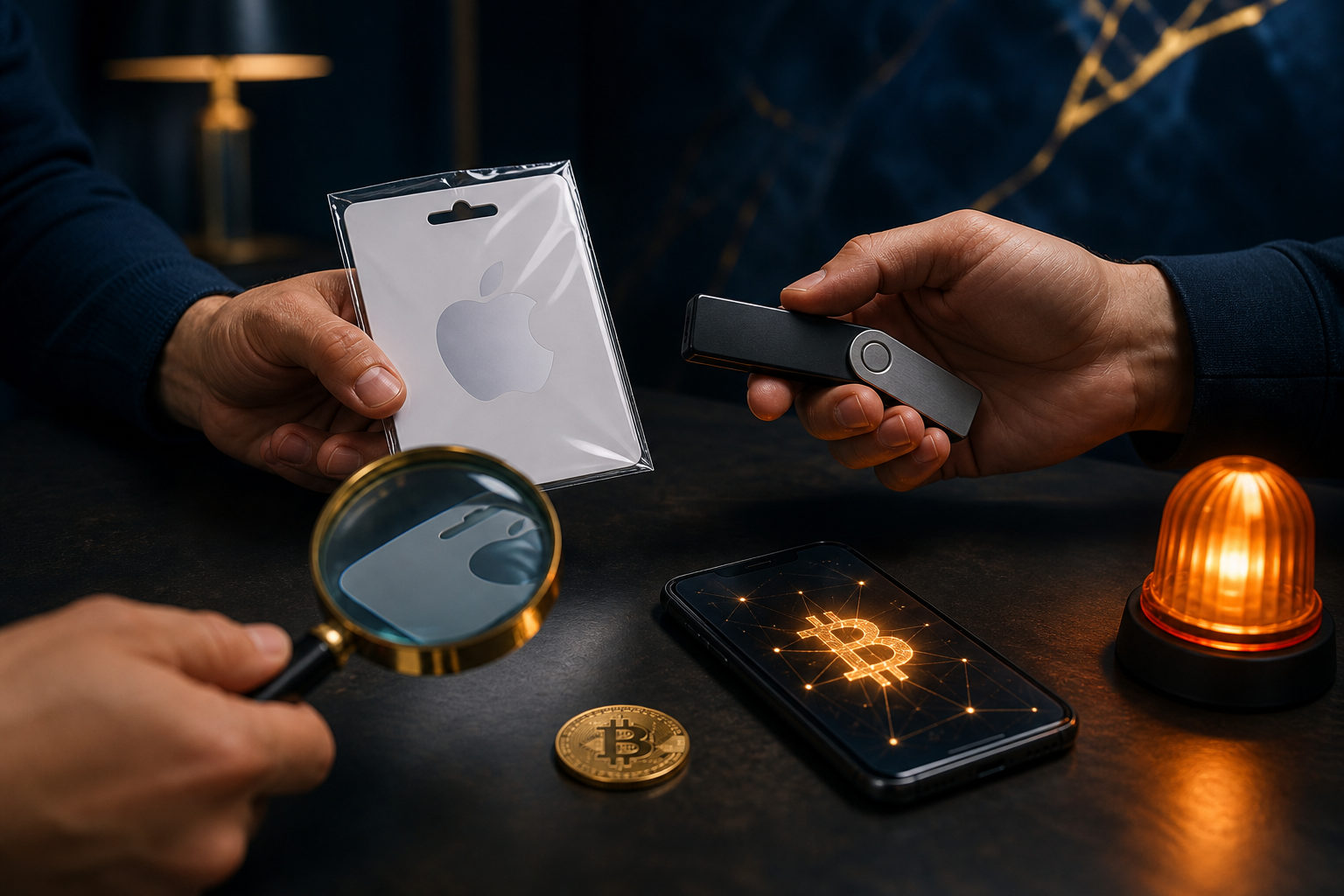
Can you buy bitcoin with an Apple gift card? Yes, in some person-to-person situations, but it is usually a high-risk way to get bitcoin. The real issue is not whether it can be done. It is whether you can verify the card, verify the bitcoin, and avoid being scammed before control of the value leaves your hands.
Why this question comes up so often
An Apple gift card holds prepaid value. Bitcoin is a transferable digital asset that you can move to your own wallet. That difference is why some people try to exchange one for the other, especially if they already have a gift card and would rather hold bitcoin.
The problem is that gift cards are not a standard funding method for bitcoin purchases. They come with disputes over card balance, redemption status, region restrictions, proof of purchase, and ownership. Bitcoin has a different risk profile: once it is sent, reversing the transfer is difficult in many cases. Put those two things together and you get a trade structure that scammers love.
The short answer: possible, but not a beginner-friendly route
If you are asking whether you can buy bitcoin with an Apple gift card, the better answer is this: it may be possible in direct trades, but the fraud risk is often much higher than with ordinary payment methods. You are not just buying bitcoin. You are trying to exchange one hard-to-verify asset for another asset that may be difficult to reverse once delivered.
That is why people run into trouble even when they are careful in other parts of crypto. A gift card can look valid and still turn into a dispute. A seller can claim the card was empty, already redeemed, or unusable in that region. On the other side, a buyer can be shown a fake bitcoin transfer screen and assume the deal is done. Both sides have ways to cheat, so your process matters more than speed.
Step-by-step: what to do, why it matters, and what to watch
Step 1: figure out why an Apple gift card is involved at all
Start by identifying the situation. Do you already have an Apple gift card and want to exchange its value for bitcoin, or is someone telling you to go buy an Apple gift card first and use that to pay for bitcoin? Those are not the same thing.
This matters because many scams begin with pressure to purchase a gift card on demand. A stranger, supposed broker, fake support agent, or social media contact says the gift card is needed for account activation, verification, fees, or a quick bitcoin purchase. That is a major warning sign. A normal bitcoin transaction should not require you to prove yourself by buying an Apple gift card first.
Be careful with anyone who says gift cards are the only accepted method, especially if they create urgency. The more they push you toward a payment method that is hard to verify and easy to abuse, the more likely the setup is tilted against you.
Step 2: verify that the card is real, usable, and yours to exchange
Before talking about bitcoin, confirm the card itself. Keep any purchase record, receipt, top-up record, or transfer details that show where it came from. If the card came from someone else, be sure you actually have the right to use or transfer it.
The reason is simple: an Apple gift card is only valuable if it is valid, unused, redeemable, and free from later disputes. The other side may say the code has already been redeemed or that the card cannot be used in the expected region. If you have no record of the source, you will have very little to rely on if things go wrong.
Do not send the full code to a stranger too early. Do not assume that a photo of the card proves enough. Also, do not ignore regional restrictions. A misunderstanding over card format or redemption rules can derail the trade before the bitcoin side even starts.
Step 3: prepare your own bitcoin wallet before you negotiate
You should have your own bitcoin wallet ready before discussing the exchange. That means a wallet you control, where you can see your receiving address, monitor the transfer, and confirm that you can later move the bitcoin yourself.
This step matters because many people focus only on proving the gift card works. They forget to protect the receiving side. A scammer may show you a balance on a website they control, a screenshot of a supposed transfer, or an internal account credit that is not real bitcoin in your custody. If the bitcoin is not in a wallet you control, you do not actually have it.
Keep your seed phrase or private keys private. Do not hand them to a seller, a support person, or anyone claiming to help with setup. If someone else controls the wallet, they control the bitcoin, no matter what the screen says.
Step 4: keep every condition in writing
Before any exchange begins, spell out the terms in a place where a record will remain. You want the value being exchanged, how the card will be checked, when the bitcoin will be released, who moves first, and what happens if the card fails verification. Vague promises are not enough.
This matters because gift card disputes often turn into word-against-word arguments. You may think you are selling a valid card for bitcoin. The other side may later claim they only agreed to inspect it, that the card was not in the right format, or that the terms changed. If the rules were never clearly written down, you have almost nothing to point to later.
Do not let anyone move the conversation into a place where records disappear. Do not rely on voice calls alone. Fast communication is less important than a clean evidence trail.
Step 5: test with a small amount first
If you still want to continue, use a small amount that you can afford to lose in a test transaction. Watch how the other side behaves. Do they explain the process clearly? Do they stick to the agreed terms? Do they become evasive when it is time to verify the card or release the bitcoin?
A small test is useful because gift card scams often depend on getting the full code all at once. Once the other party has everything they need to redeem the card, they may have no reason to keep cooperating. A test transaction can expose warning signs early, such as sudden price changes, pressure tactics, or refusal to keep the deal within the original process.
Still, do not treat a successful small test as proof that the person is trustworthy. Some scams are designed to build confidence with a small trade and then take the real loss on a larger one. The purpose of a test is to inspect the process, not to hand out trust.
Step 6: understand the handoff order before you reveal full card details
Gift card data can be used quickly once shared. Bitcoin should only be treated as delivered when you can verify it on your side. Because of that mismatch, the order of operations matters a lot. You need to know exactly when the other party gains access to the card and exactly when you gain control of the bitcoin.
This matters because many bad deals are structured around one-sided exposure. You reveal the complete card details first, the card gets redeemed, and then you are told to wait for bitcoin that never arrives. Any setup that gives the other side immediate control while you rely on their promise is dangerous.
Be wary of phrases like “send the code first and I will release instantly” or “the system will handle it automatically.” If there is no clear, verifiable process behind those claims, you are being asked to trust a person who holds the stronger position.
Step 7: verify the bitcoin yourself, not through their screenshots
Once the other side says the card has been accepted, check your own wallet. Confirm that the receiving address is yours and that the transaction appears in the place you control. Do not rely on screenshots, edited videos, or claimed internal records.
This matters because fake proof is common in this kind of trade. A scammer can show an old transfer, a fabricated interface, or a page that displays numbers but gives you no actual control. Until you can independently verify the transfer in your own wallet environment, the exchange is not finished.
Do not let pressure rush you into saying the payment arrived. If you are unsure what you are seeing, pause the process rather than guessing.
Common scam patterns in Apple gift card bitcoin deals
- Fake support or fake brokers: Someone claims to be helping you buy bitcoin and says an Apple gift card is required for activation, verification, or account setup. That is a classic trap.
- Card-first disappearance: The other party persuades you to send the full gift card details and then stops responding or claims the card had no value.
- Fake transfer proof: You are shown screenshots, wallet pages, or messages that suggest bitcoin was sent, but you never receive coins in a wallet you control.
- Extra fee escalation: After the card is sent, the other side suddenly demands handling fees, taxes, release fees, or another payment before they will send bitcoin.
- Urgency pressure: You are told the rate will change, the deal will expire, or your account will be frozen if you do not move immediately. Pressure is often used to make you skip verification.
A practical checklist before you do anything
- Source check: Do you know where the Apple gift card came from, and can you document that?
- Terms check: Are the exchange terms written clearly, including the order of actions and what happens if verification fails?
- Wallet check: Do you already have a bitcoin wallet that you control yourself?
- Record check: Is the conversation happening in a place where you can preserve messages and timing?
- Test check: Have you done a small trial rather than exposing the full card value at once?
- Behavior check: Is the other side changing terms, pushing urgency, or asking to move off-record?
This checklist does not make the trade safe. It simply helps you reject some of the most obvious bad setups. Gift cards are still a high-dispute payment method, and bitcoin transfers still require careful self-verification.
FAQ
Is it actually possible to buy bitcoin with an Apple gift card?
Yes, in some direct trades it is possible. That does not make it a low-risk method, since gift cards are easy to dispute and hard to verify once the code has been shared.
Why do scammers keep asking for Apple gift cards?
Because the full code can be redeemed quickly, which makes recovery difficult for the victim. Many people also do not understand gift card rules well, so scammers use that confusion to their advantage.
Does a transfer screenshot mean I received bitcoin?
No. You need to verify the transfer in a bitcoin wallet that you control and confirm that the receiving address is yours. A screenshot is only a claim, not proof of custody.
What if the seller says I must send the full card code first?
That means you lose control of the gift card before you can verify the bitcoin side. If there is no clear protection process and no reliable record of the terms, walking away is usually the safer move.
What is the biggest mistake people make in these trades?
The biggest mistake is rushing. Once urgency takes over, people skip wallet setup, skip written terms, and send the card details before they have any reliable way to verify the bitcoin.
If you still plan to try, protect control first
If your main goal is simply to own bitcoin, a standard payment path with clearer rules is usually the safer choice. If you already hold an Apple gift card and still want to exchange it, prepare your own wallet first, keep every term in writing, test with a small amount, and never treat screenshots or verbal promises as proof that the bitcoin is really yours.
Disclaimer: This article is for informational and educational purposes only and is not investment, financial, or legal advice. Crypto assets are highly volatile and you could lose your entire investment. Do your own research and decide carefully.