
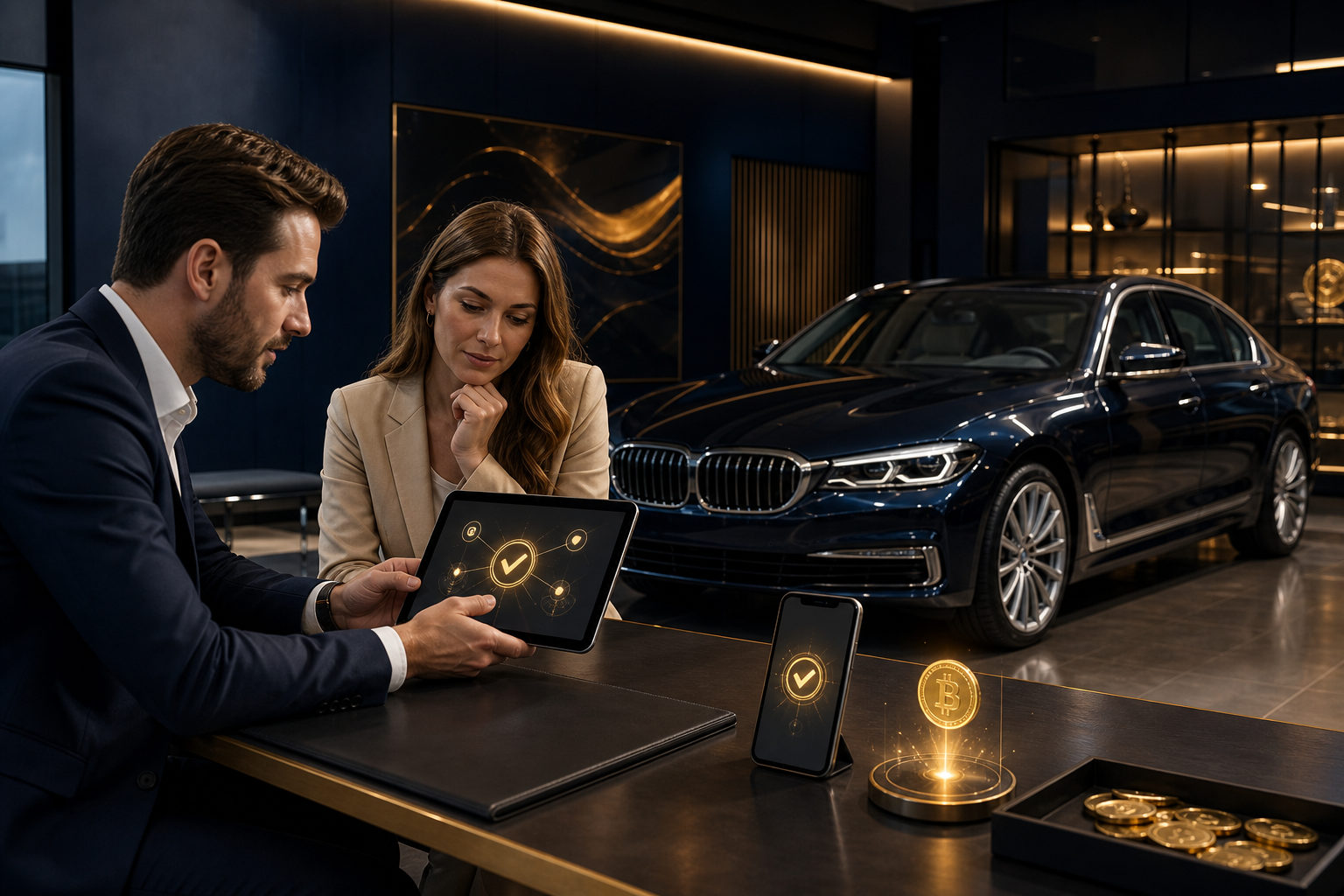
Do car dealerships accept bitcoin? Some do, but it is not a standard payment option, and the real answer depends on the dealer’s internal process, payment partner, and compliance checks.
Step one: find out whether the dealer truly accepts bitcoin
Your first move is not negotiating the car price. It is confirming what the dealer means when it says it accepts bitcoin. In practice, that can mean very different things: a dealer may allow only a deposit, may accept full payment through a third party that converts bitcoin into dollars, or may simply be open to discussing it without having a real process in place.
The operational step is simple. Ask four direct questions: Can I pay with bitcoin, can I use it for the full amount or only part of the purchase, when is the exchange rate locked, and how are refunds handled? The reason to ask in that order is straightforward. A car purchase is a high-value transaction, so the biggest problems usually come from vague terms around conversion timing, cancellation, and delivery. The key caution is not to confuse marketing language with a real payment workflow.
If the dealer mentions bitcoin only in social posts, ads, or casual chat but cannot explain the paperwork, payment flow, or what happens when a deal falls through, stop there. A dealer that genuinely handles this kind of payment should be able to explain the steps in plain language.
A practical five-step process before you send any bitcoin
Step two: confirm whether the sale is priced in dollars or converted at payment time
The action here is to get the pricing basis in writing. Ask whether the vehicle price, taxes, registration-related charges, add-ons, and dealer fees are listed in dollars, and whether bitcoin is only the payment rail or part of the contractual pricing language.
This matters because bitcoin can move quickly. Without a clear rule, the dealer might calculate the amount when the invoice is created, when you initiate the transfer, or only after the transaction receives confirmation. Those are not small distinctions in a large purchase.
Your caution point is to avoid relying on chat screenshots alone. Ask for the conversion rule to appear in a formal quote, payment request, or signed order. You also want clarity on what happens if the payment window expires or the network is congested. If those details are left open, the disagreement usually appears after you send funds, not before.
Step three: verify the receiving address through official channels only
The action is to use only payment details delivered through the dealer’s official process, such as a formal invoice, a dealer-controlled payment page, or a documented accounting instruction. Once you receive the address, compare it carefully, and for a large amount, consider a small test transaction before sending the balance.
The reason is one of the oldest risks in crypto payments: address substitution. A mailbox can be compromised. A sales contact can be impersonated. A fake “payments team” can step into the conversation and push a different wallet address. If the address is wrong, the transfer usually cannot be reversed.
The caution point is clear. Do not accept a last-minute address change without independent confirmation. Do not rely on a screenshot. Do not let urgency replace verification. If the dealer says the address changed, require confirmation through the same formal channel used for the rest of the transaction.
Step four: ask in advance about identity checks and source-of-funds requests
The operational step is to ask whether the dealer, or its payment processor, will require proof of identity, address details, wallet ownership confirmation, or supporting documents related to the origin of funds. That is a normal possibility in a high-value purchase.
The reason is simple. Buying a car with bitcoin is not treated the same way as buying a low-cost item online. Even if you see bitcoin as just another way to pay, the business on the other side may treat it as a transaction that needs enhanced review. If you discover that only on signing day, the deal can stall.
The caution is to submit sensitive documents only through verified dealer channels. Do not send personal records to an unverified contact on a messaging app. It is also wise to ask why each document is needed, so you do not overshare in a rush to finish the purchase.
Step five: pin down the refund policy before payment
The action here is to ask exact questions before any transfer happens. If the order is canceled, will the dealer refund bitcoin or the dollar value recorded at the time of sale? Will the refund go back to the original address, or only to a reviewed destination? What happens if financing fails, delivery is delayed, or the car is not accepted?
This step matters because refunds are where many crypto payment disputes begin. A dealer may accept bitcoin through a service that immediately converts it into dollars. If that happens, the refund may be handled in dollars rather than returning the same amount of bitcoin you originally sent.
Your caution point is not to accept a verbal answer. Refund terms should appear in a document you can retain. If the dealer avoids the issue, says it will be sorted out later, or gives different answers depending on who you ask, treat that as a warning sign.
Step six: line up contract, delivery, and title-related documents before funds move
The action is to confirm the order of events: purchase agreement, invoice, vehicle availability, delivery timing, title paperwork, registration steps, and any inspection conditions. If you are buying from outside your area, ask how shipping, inspection, and responsibility for damage are handled.
The reason is that a bitcoin transfer can be final while the vehicle transaction still depends on several moving parts. A car deal is not just a payment event. It includes documents, condition checks, handover timing, and responsibility for errors or delays.
The caution is to be skeptical of any arrangement that says, in effect, “send the bitcoin first and we will sort out the paperwork later.” A dealer with a real process should be able to tell you what gets signed and when.
Why some dealerships accept bitcoin and others do not
Dealers that accept bitcoin are often trying to add a payment option for a specific customer group or using a service provider to reduce the operational burden of handling crypto directly. In many cases, the dealer is not making a statement about bitcoin as an investment. It is making a decision about customer demand and internal process control.
Dealers that refuse bitcoin usually have practical reasons. Price swings can complicate quotes and refunds. High-value purchases can trigger stricter identity checks. Staff may not be trained to handle unusual payment flows. Sales teams may say yes while accounting or legal teams say no.
For a buyer, the takeaway is direct: do not assume bitcoin car payments are a normal retail experience. Treat them as a special arrangement that needs advance planning.
The biggest fraud risk is usually the process, not the blockchain
Many buyers focus on network safety and wallet security, which matters, but the more common danger is being pulled away from the dealer’s formal process. A scammer may pose as a salesperson, finance contact, or “crypto payment coordinator” and redirect the conversation to a private messaging account.
Another common tactic is pressure. The buyer is told the price can only be held for a short window or the vehicle will go to someone else unless payment is made immediately. In a high-value transaction, urgency is often the tool used to stop you from verifying details.
- Use official channels only: call published numbers, reply to verified business email addresses, and stick to formal dealer paperwork.
- Verify the receiving address more than once: do not trust a single message or a single device.
- Consider a small test transaction: not as a substitute for due diligence, but as one extra control.
- Avoid third-party payers: if the payer, signer, and buyer are different people, the risk and complexity increase.
- Keep complete records: save the quote, payment request, transaction hash, invoice, contract, and any refund terms.
If the dealer refuses to identify the business entity clearly, cannot provide written payment terms, or pushes you toward a personal wallet instead of a documented business process, walking away is usually the safer choice.
How to prepare on your side before using bitcoin to buy a car
First, make sure you are using a wallet and device you control. A rushed transfer from an unfamiliar app or an unsecured network is a bad setup for a large payment. Second, leave enough time for identity checks, payment confirmation, and document review. Trying to compress quoting, signing, payment, and delivery into one short window creates avoidable mistakes.
Third, be clear about who is paying and who is signing the purchase agreement. If the bitcoin comes from one person or entity and the vehicle paperwork is in another name, the dealer may ask extra questions before proceeding. That does not always mean the deal is impossible, but it does mean you should raise the issue early.
You should also keep complete tax and cost records for yourself. The way a crypto payment is treated can differ by jurisdiction, and the buyer is usually responsible for maintaining proof of acquisition, transfer history, and purchase documentation. The practical point is not to create unnecessary paperwork. It is to avoid finding out later that you cannot reconstruct the transaction properly.
If your goal is simply to use bitcoin value toward a car purchase, compare two paths before you decide. One is buying directly from a dealer that accepts bitcoin. The other is handling your crypto position separately and paying for the car through a standard method. The better route depends on transparency, refund handling, timing, and how much process complexity you are willing to take on.
FAQ
Can I really buy a car directly with bitcoin?
Sometimes, yes, but only if the dealer has a defined process. You should confirm whether the dealer receives bitcoin directly or uses a service that converts it into dollars during checkout.
What should I ask first if a dealer says it accepts crypto?
Ask whether bitcoin is accepted specifically, whether it can be used for the full purchase, how the conversion rate is set, and how refunds work. If any of those answers are vague, do not send funds yet.
What happens if I pay in bitcoin and the order is canceled?
That depends on the written refund policy. Some dealers may refund based on the recorded dollar amount rather than returning the same amount of bitcoin, so this needs to be settled before payment.
What is the most common mistake buyers make?
A common mistake is treating promotional language as proof of a working payment process. Another is sending funds before the receiving address and refund rules have been checked through formal channels.
Where should I check the live bitcoin price?
You can look at major market data sites or widely used trading services for a live quote, but that is only a reference point. The amount that matters in the purchase is the dealer’s pricing and conversion rule at the relevant payment moment.
Before sending any bitcoin, put the sale terms, receiving address, refund rule, identity-check requirements, and delivery documents into one checklist. If one item is still unclear, wait.
Disclaimer: This article is for informational and educational purposes only and is not investment, financial, or legal advice. Crypto assets are highly volatile and you could lose your entire investment. Do your own research and decide carefully.