
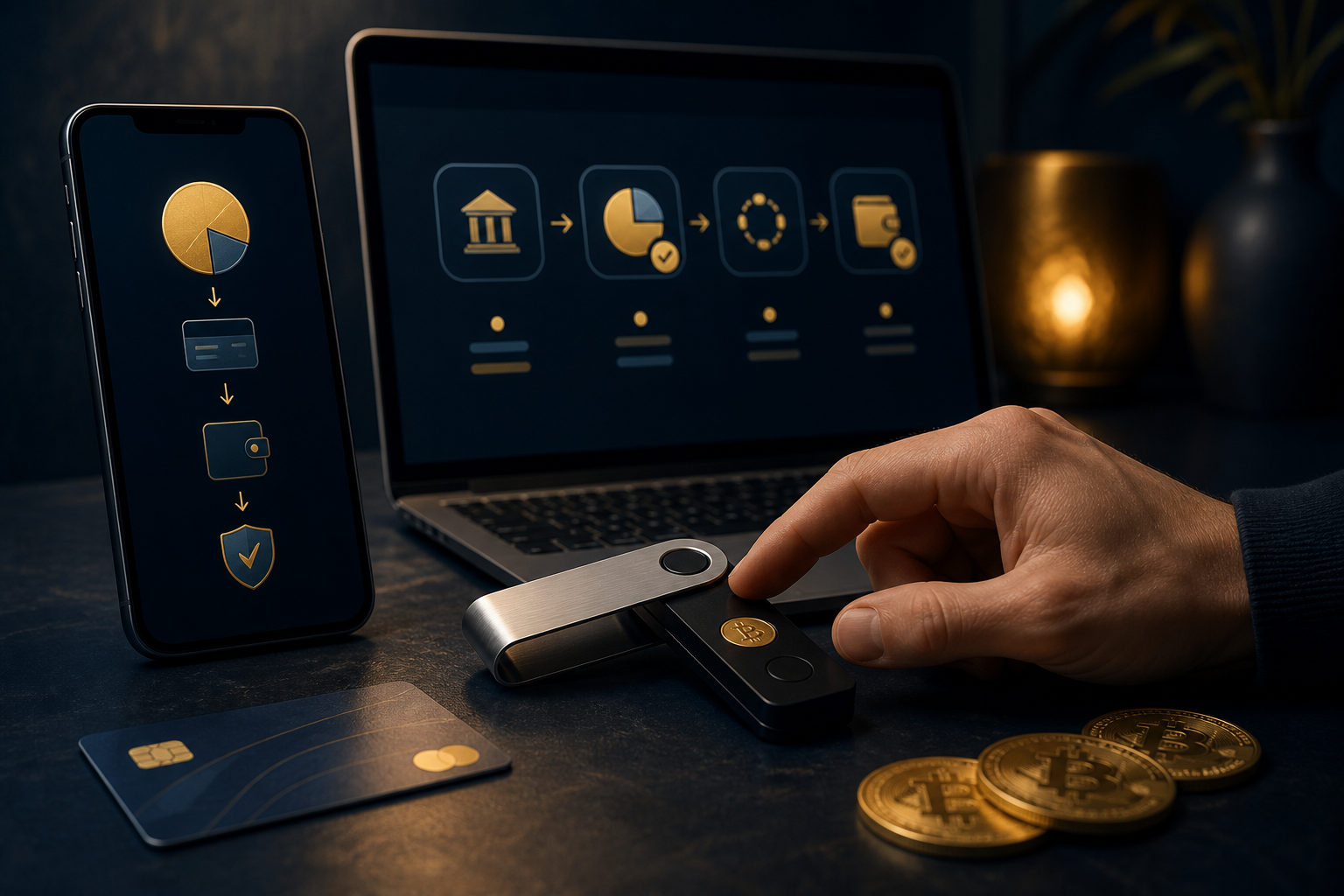
You can buy partial bitcoin without purchasing a full coin. Bitcoin is divisible into smaller units, so most retail buyers start with an amount they are comfortable testing, then learn how storage, fees, and withdrawals work before doing more.
The real question is not whether partial bitcoin is available. It is whether you can buy spot BTC, understand the full cost, avoid scams, and move your holdings safely if you decide to use your own wallet. That is where beginners usually make mistakes.
Why partial bitcoin is a normal way to buy BTC
Bitcoin does not need to be bought in whole units. Its smallest unit is the satoshi, and 1 satoshi equals one hundred millionth of a BTC. In practical terms, that means a buyer can enter with a small amount and still own real bitcoin rather than waiting until a full coin feels affordable.
This matters because many first-time buyers assume they need to save for one whole BTC. They do not. Buying a fraction is simply buying the same asset in a smaller amount, which makes learning easier and reduces the cost of mistakes.
Step 1: Make sure you are buying spot bitcoin, not a substitute
Your first action should be to confirm that the service actually sells spot BTC and allows withdrawals to a personal wallet. The reason is simple: some products only track bitcoin’s price, some keep balances inside a closed system, and some push users toward derivatives that carry very different risks.
Before funding an account, check these points carefully:
- Does the product description clearly say BTC or bitcoin?
- Can you withdraw to an on-chain bitcoin address?
- Are trading fees, spreads, and withdrawal fees shown clearly?
A beginner should be cautious when a service highlights yield, copy trading, managed strategies, or fast profits before it explains the asset itself. If you want to buy partial bitcoin, the first priority is to buy the correct instrument. Everything else comes after that.
Another common mistake is confusing a balance shown in an app with self-controlled ownership. A platform balance may still be useful for buying and selling, but if you cannot withdraw your BTC, you are dealing with more limitations than many new users expect.
Step 2: Set up account security before you deposit money
After opening an account, finish the required identity steps, create a unique password, enable two-factor authentication, and turn on account alerts. Do this before you deposit funds. Security settings are not an optional extra for later. They are part of the buying process.
The reason is straightforward. Digital assets can be difficult to recover after unauthorized access. Many losses come from weak passwords, reused credentials, fake support messages, or users sharing codes with the wrong person rather than from advanced technical attacks.
Pay attention to a few basic rules:
- Do not reuse a password from another site or app.
- Use an authenticator app if available instead of relying only on text messages.
- Download apps from official sources and avoid login links sent by strangers.
- Never share one-time codes, backup phrases, or screen access with anyone.
Scammers often present themselves as support agents, trading mentors, or community admins. They may offer to guide you through your first purchase, then ask to view your screen or “help” with wallet setup. The moment someone asks for a verification code, backup phrase, private key, or remote access, the conversation should end.
Step 3: Compare the full cost, not just the advertised fee
Before you choose a payment method, review all the costs tied to the purchase. This is important because a small bitcoin purchase can look cheap on the surface while becoming expensive once the spread, funding cost, and withdrawal fee are added together.
A practical way to think about costs is to break them into separate parts:
- Funding fee: any charge for adding money to the account.
- Trading or service fee: what you pay when buying BTC.
- Spread: the gap between the buy price and sell price.
- Withdrawal fee: the cost of moving BTC to your own wallet.
Partial bitcoin purchases deserve extra attention here because fixed charges can eat into a small order quickly. If you buy very small amounts often, even modest flat fees can raise your average cost. That does not mean small purchases are wrong. It means you should understand the tradeoff before repeating them.
A smart beginner habit is to run one small test from start to finish. Deposit a small amount, buy BTC, review the order details, and check the withdrawal rules. Once you see the full path clearly, you can decide whether future purchases should be occasional or more regular.
You should also check whether the service has a minimum withdrawal amount or temporary withdrawal restrictions for new accounts. Many people only discover these rules after buying, which creates frustration that could have been avoided.
Step 4: Understand the order method before you click buy
Most beginners start by entering an amount of money and buying a fraction of BTC right away. That is fine. Still, if the interface offers different order methods, it helps to know what they mean before placing the order. The order type can affect speed, execution, and the amount of bitcoin you receive.
The two broad ideas you should understand are these:
- Buy at the current available price: simple and fast, but execution reflects market conditions at that moment.
- Set a price you are willing to pay and wait: gives more control, but the order may not fill quickly or at all.
For a first purchase, simplicity is usually better than chasing perfect execution. Your main goal is to understand what the order preview shows, how fees are displayed, and how the final filled amount compares with the estimate shown a moment earlier.
Read the preview screen carefully before confirming. Check the amount you are paying, the estimated BTC you will receive, and every fee shown. If the market moves while you are placing the order, the final amount may differ slightly from the preview. That can be normal. What matters is that you understand why the difference happened.
New buyers also get into trouble when they jump straight from “I want to buy a little bitcoin” to leverage, perpetuals, or complex automated strategies. That is a sequencing problem. Learn spot buying, wallet basics, and withdrawal safety first.
Step 5: After buying, verify the balance and withdrawal status
Once your purchase is complete, do not close the app and move on immediately. Review your order history, check the fee record, and confirm whether the BTC is fully available for transfer. Some funding methods come with holds, settlement periods, or transfer limits that affect when your balance becomes withdrawable.
This matters because beginners often assume that a completed purchase and a withdrawable balance are the same thing. They are not always identical. A platform may show the BTC in your account while still applying temporary limits to outbound transfers.
Another issue is account layout. Some services separate balances into different sections such as funding, trading, or earn accounts. A new user may think the bitcoin disappeared when it has simply been credited to a different section of the interface.
Even if you are not ready to withdraw yet, keep a record of the purchase details and fees. That makes it easier to review your average cost later and keep clean records for personal tracking or local tax reporting requirements.
Step 6: Learn self-custody if you plan to hold long term
If your goal is to hold bitcoin over time rather than trade it actively, learning how to use a self-custody wallet is an important next step. The reason is straightforward: an exchange account is mainly a service account, while a self-custody wallet gives you direct control over your bitcoin.
That control comes with responsibility. Before withdrawing BTC, make sure you understand wallet setup, address handling, and backup storage. Create the wallet carefully and store the recovery phrase offline. Do not put it in chat apps, cloud notes, screenshots, or email drafts.
Your first withdrawal should be a small test. Send a small amount, verify that it arrives correctly, and only then think about larger transfers. This approach helps catch address mistakes, network confusion, or misunderstanding of the interface before the stakes become higher.
The backup phrase deserves special attention. It is not a support code, not a login tool, and not something any legitimate helper needs to see. Anyone who gets that phrase may be able to control the wallet. That makes it one of the most sensitive pieces of information you will ever handle in bitcoin.
If you are not ready for self-custody, that is better acknowledged early than rushed later. Direct control is useful only when you can handle the responsibility that comes with it.
Step 7: Watch for the scams that target first-time buyers
People searching for how to buy partial bitcoin are often targeted by simple but effective scams. The sales pitch usually sounds friendly: low minimums, guaranteed returns, “beginner guidance,” or someone offering to walk you through the process in private. That is exactly why caution matters.
Watch for these patterns:
- Fake apps that imitate real brands but come from unofficial sources.
- Fake support messages claiming your account has a problem.
- Private sellers asking for payment first and delaying delivery.
- Wallet “upgrades” that ask for a recovery phrase or private key.
- Group chats showing profit screenshots and urging you to follow signals.
You do not need to memorize every scam format. Focus on the common signals instead: urgency, guaranteed profit, private transfers, requests for codes or phrases, and pressure to send funds to a stranger’s address. Once any of those appear, stop and verify independently.
A good rule for beginners is to avoid private deals for a first purchase. If you are still learning how the normal buying process works, an off-platform transaction gives you fewer protections and more room for manipulation.
Step 8: Decide whether you are making a test purchase or building a habit
Before your second or third purchase, pause and decide why you are buying bitcoin in the first place. The answer changes how you should act. Someone making a one-time test will focus on learning the mechanics. Someone building a long-term position will care more about repeatability, cost control, storage, and record keeping.
If your goal is learning, one small purchase may be enough. Use it to understand account funding, the order screen, fee breakdowns, and wallet transfers. If your goal is gradual accumulation, you may choose to buy partial bitcoin over time, but you should still check whether fixed charges make that pattern inefficient for your chosen amounts.
The key point is this: owning less than one BTC does not make the purchase less real. Bitcoin is designed to be divisible. What matters is not whether you own a full coin, but whether you understand what you bought, what it cost, and how to keep it safe.
FAQ
Can I really buy less than one bitcoin?
Yes. Bitcoin is divisible into very small units, so buying a fraction is a standard way to enter the market. Many beginners start this way because it lowers the cost of learning.
Is buying small amounts of BTC a bad deal?
Not always, but it depends on fees. Small orders can become less efficient when flat charges, spreads, or withdrawal fees take up too much of the purchase.
Do all services let me withdraw my bitcoin after I buy it?
No. Some have minimum withdrawal amounts, waiting periods, or restrictions on new accounts. Check those rules before buying if self-custody is part of your plan.
Why is the amount of BTC I receive slightly different from the preview?
That can happen because of fees, spread, or price movement during execution. Review the final trade details so you can tell the difference between normal market behavior and a rule you missed.
Should I leave my bitcoin on the platform or move it to my own wallet?
For a short learning phase, some people leave a small amount on the platform while they get familiar with the basics. If you plan to hold longer term, learning self-custody and backup phrase safety becomes much more important.
If you are ready to start, the safest sequence is simple: confirm that you are buying spot BTC, secure the account first, make one small test purchase, review every fee and withdrawal rule, and never share your password, codes, or recovery phrase with anyone.
Disclaimer: This article is for informational and educational purposes only and is not investment, financial, or legal advice. Crypto assets are highly volatile and you could lose your entire investment. Do your own research and decide carefully.