
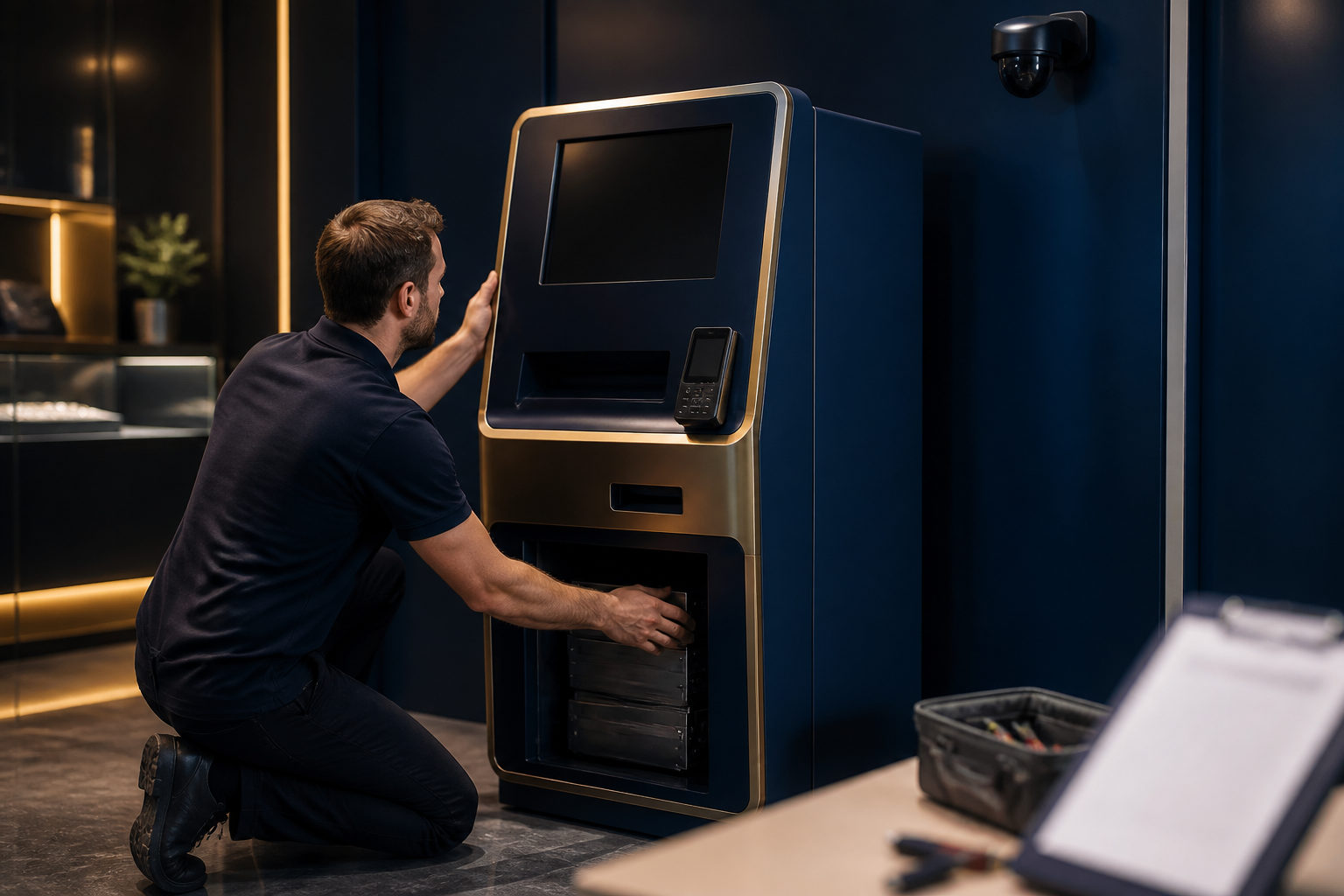
To get a bitcoin ATM, start with legality and operations, not the machine itself. A workable setup depends on local rules, cash handling, identity checks, fraud controls, and who will manage problems after users start showing up.
Define what “get a bitcoin ATM” means for you
People use this phrase for very different goals. One person wants to buy and operate a machine, another wants to host one in a retail location, and another only wants to find a legitimate machine to use. Those paths overlap at the surface and split sharply once money, compliance, and customer support enter the picture.
If you plan to operate your own bitcoin ATM, you need to think about business structure, identity verification, cash loading, blockchain transfers, dispute handling, and maintenance. If you run a store and want a third party to place a unit on-site, your focus shifts toward contract terms, customer complaints, space requirements, and what your staff is expected to do. If you only want access as a user, your priority is spotting a real machine and avoiding scam-driven instructions.
Write your goal as a single sentence before doing anything else. “I want to operate a bitcoin ATM myself” leads to one checklist. “I want to host a partner-operated machine in my shop” leads to another. That small step keeps later decisions consistent.
Step 1: Check local rules before you spend money
A bitcoin ATM sits at the intersection of crypto activity, cash movement, customer verification, and consumer disclosures. In many places, each of those topics can trigger a separate obligation. You need to know whether this kind of business is allowed where you are, whether a specific license or registration is needed, what records must be kept, and what customer warnings are expected at the point of sale.
Do not rely on sales copy from a hardware vendor. A machine seller can explain features, but that does not answer whether your planned activity fits local requirements. Read the relevant public guidance, review the rules that apply to money handling and digital asset services, and get professional advice if the scope is unclear. The point is to identify your actual duties before you commit to equipment or a location.
A common mistake is assuming that because people can buy or sell crypto in a jurisdiction, a physical cash-based terminal must also be acceptable. That assumption can fail fast. A region may permit access to digital assets while imposing tighter requirements on in-person cash conversion, user verification, or transaction monitoring.
If your answer is still fuzzy after initial research, pause the project. Uncertainty at this stage is expensive later.
Step 2: Choose between self-operation and a partner model
Once you know the activity may be allowed, decide how involved you want to be. Self-operation gives you control over user flow, branding, fee presentation, and on-site experience. It also means you own the hard parts: identity checks, suspicious activity review, service interruptions, customer support, and cash management.
A partner model can reduce startup complexity. A specialized operator may already have software, support workflows, and compliance procedures in place. Even so, you need a clear written division of responsibility. Who handles complaints? Who stores user records? Who responds if a transaction is delayed? Who covers losses if a machine is offline or a user claims they were misled?
Do not let revenue-sharing language distract you from operational responsibility. A bitcoin ATM deals with first-time users, cash, and irreversible transfers. When something goes wrong, the person physically present at the site often becomes the first target for questions, even if another company controls the backend.
Before choosing self-operation, ask who will refill cash, clear jams, monitor alerts, answer support calls, review unusual activity, and make judgment calls outside business hours. If each task does not already have an owner, the project is not ready.
Step 3: Screen hardware and software for control, visibility, and recovery
Machines can look similar and behave very differently once deployed. The real value is in the software controls behind the screen. You need to know whether the system supports layered identity checks, remote pause functions, role-based permissions, audit trails, transaction review, and clear status tracking when something goes wrong.
The user interface matters for risk control as much as convenience. Many customers using a bitcoin ATM may be new to wallet transfers. If the flow does not make fees, address confirmation, and transaction status easy to understand, users can make mistakes before they realize they are sending value to the wrong place or paying under pressure from a scammer.
Ask vendors practical questions. How are failed transactions handled? What happens if the network drops in the middle of a session? How are logs exported? Can different staff members have different access levels? What is the repair process? How are replacement parts handled? If a supplier can describe installation speed but not dispute recovery or review tools, you may be buying future headaches.
Check whether data captured at the machine matches what is visible in the backend. If the front end collects an ID image or transaction step and the backend cannot show a coherent record later, complaint handling becomes slow and uncertain. On the other hand, collecting more personal information than you need can create its own compliance and privacy burden.
Step 4: Build the cash and liquidity side before launch
A bitcoin ATM does not run on hardware alone. One side of the operation touches physical cash. The other side touches digital assets and blockchain transfers. Between those two ends sit pricing updates, transaction approval logic, inventory limits, and exception handling.
You need to decide where sell-side cash will come from and how it will be replenished. You also need to decide how buy-side crypto will be delivered, what wallet setup supports that flow, and what happens when one side runs low. A machine with weak cash routines can frustrate users even if the software looks polished.
Cash handling is often treated as a routine detail until it fails. Short cash levels, mismatched denominations, delayed replenishment, and poor reconciliation can all block otherwise valid transactions. If store staff are expected to fix those issues casually, the process will break under stress.
On the blockchain side, define how transfers are initiated, what happens if a customer enters the wrong address, and how the system responds when a transaction cannot be broadcast cleanly. You also need a rule for when a transaction is considered complete from the user’s point of view. Those decisions shape both support volume and risk exposure.
Fast payout may sound attractive, but speed reduces the time available to intercept suspicious behavior. You need a workable balance between user convenience and review capacity.
Step 5: Put anti-scam controls inside the transaction flow
Bitcoin ATMs are attractive to scammers because they convert a victim’s cash into a hard-to-reverse transfer path. Once someone deposits money and sends bitcoin to an address supplied by a fraudster, recovery can be difficult. That makes prevention the center of the operating model, not a side note.
Warnings should appear at several points in the flow, not only on a poster beside the machine. The start screen can warn against acting on instructions from strangers. The pre-payment screen can ask whether the customer is on a phone call or following guidance from a person claiming to be support, law enforcement, a government office, an investment coach, or a romantic contact. The final confirmation screen can require the user to acknowledge that they are not sending funds on behalf of someone else.
Those prompts need plain language. If a first-time user cannot understand the warning instantly, it will not help. Legal phrasing has its place, but scam prevention works better when the message is direct and concrete.
Consider adding hard stops for high-risk answers. If a user says someone is instructing them in real time, or that they were told to keep the transaction secret, the machine should pause and direct them to step away and verify the request independently. A completed transaction is much harder to address than an interrupted one.
Staff training matters here even if staff never touch the software. They should know the visible signs of trouble: a customer reading steps from another phone, scanning a QR code sent by a stranger, ignoring on-screen warnings, repeating failed attempts, or acting under obvious stress. Those signals do not prove fraud, but they justify intervention.
Step 6: Pick a location that can handle confusion and disputes
High foot traffic is only one part of location choice. A bitcoin ATM also needs enough space for a customer to read instructions, complete identity checks, and ask for help without being rushed. Too much noise or crowd pressure can increase errors. Too much isolation can create safety concerns, especially around cash.
Look at visibility, camera coverage, staff presence, stable power, stable internet, and whether the site can preserve records if an incident occurs. If a customer later claims the machine behaved incorrectly or that they were pressured into using it, your ability to reconstruct what happened matters.
Location agreements should cover more than rent or revenue split. Include terms for outages, relocation, access to footage, support during complaints, and responsibility for physical damage. Users usually complain to the visible site first, not to the unseen operator behind the machine.
Do not assume a busy convenience setting is automatically ideal. Some users need time. Some need intervention. Some should be stopped before they proceed.
Step 7: Test failure paths before the first public transaction
A machine that powers on is not ready. Before launch, run the full process end to end and then test the situations that create support tickets: weak connectivity, unclear ID capture, abandoned sessions, partial cash acceptance, delayed review, and transfer failures.
For each failure path, define what the customer sees, what the backend records, who receives the alert, and what the support response should be. If a user does not know whether their transaction is pending, failed, or incomplete, they may repeat the action and turn one issue into two.
Good status messaging reduces damage. A customer who sees “under review,” “transaction incomplete,” or “do not deposit again” is less likely to make a second mistake out of panic. Clear wording is an operational tool, not just a design preference.
Run drills with the people who will actually respond. If a store employee, support agent, and operator each have a different understanding of the same failure event, real users will feel that confusion immediately.
FAQ
Can I just buy a bitcoin ATM and start making money?
You can buy one, but operation is the difficult part. The real work starts with local rules, identity checks, cash routines, customer support, and scam prevention.
What do first-time operators miss most often?
They focus on hardware and ignore exception handling. Disputes, false expectations, delayed transactions, and unclear responsibility create more trouble than the physical machine.
If I only host a machine in my store, am I still exposed to complaints?
Yes. Customers usually speak to the person or business they can see. Even in a partner setup, your staff should know the basics of escalation and when to stop a suspicious transaction.
How can I tell whether a bitcoin ATM setup looks risky?
Watch for weak fee disclosure, vague customer support details, poor warnings, and pressure from a third party telling the user what to do. Real-time coaching from a stranger is a major red flag.
Should anti-scam warnings be separate from the transaction flow?
They work better inside the flow. A user is more likely to stop and think when the warning appears right before cash deposit or final confirmation.
What to prepare before you place an order
Before you acquire a bitcoin ATM, assemble a written launch file: your local rules assessment, operating model, contract terms, customer disclosures, identity-check procedure, cash handling plan, incident workflow, support coverage, outage response, and anti-scam scripts. If any part of that file is missing, the machine is not the next step yet.