
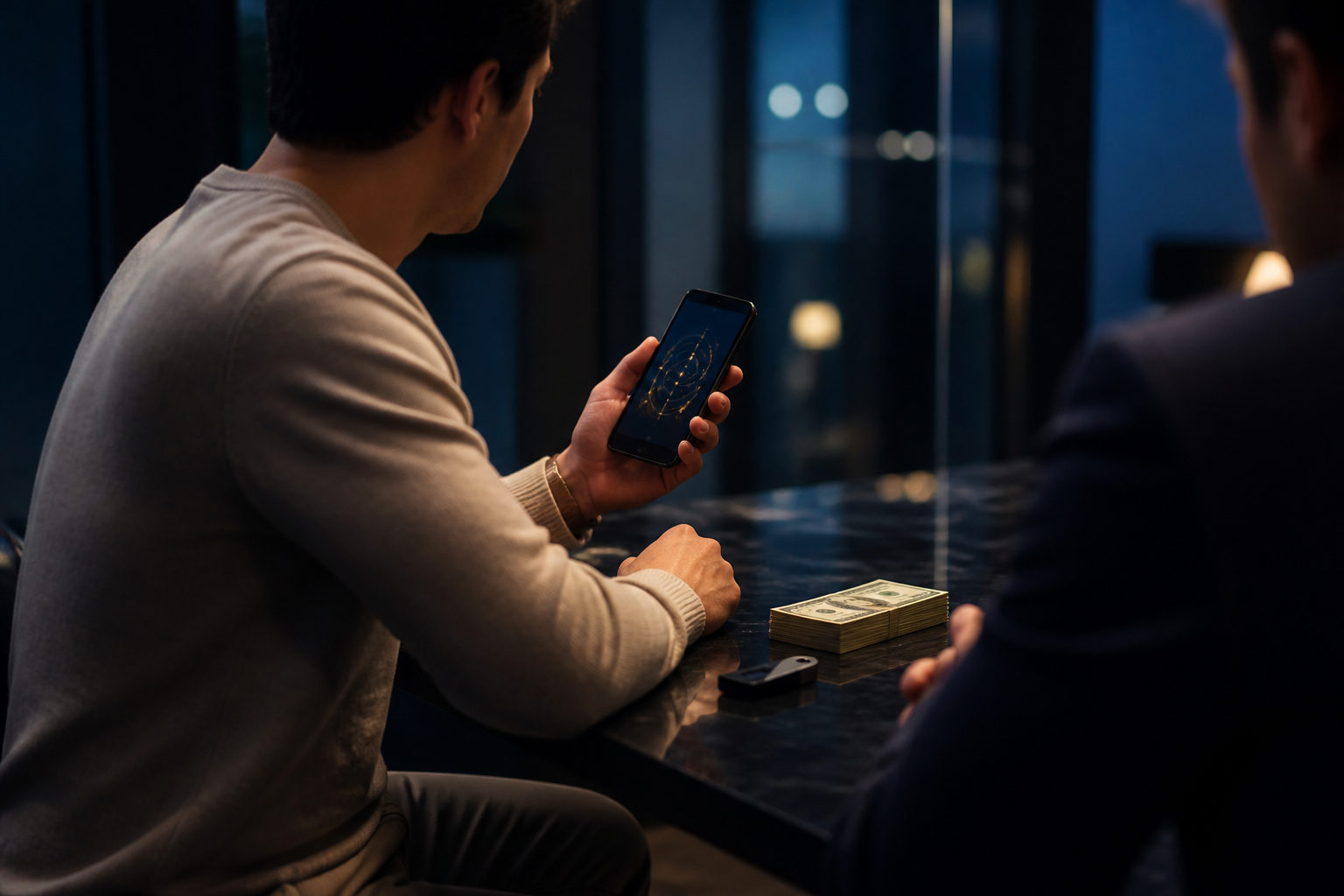
To sell bitcoin anonymously, start by reducing identity links between your wallet, your chat account, and your payment method, then use small test trades before any larger transfer.
Decide what “anonymous” means in your case
People searching for how to sell bitcoin anonymously are often mixing two different goals. One is keeping the buyer from learning who you are. The other is avoiding a payment trail that points back to your regular financial accounts or daily online identity.
Bitcoin transactions are public on-chain, so the practical goal is usually not complete invisibility. It is limiting how easily someone can connect a wallet address, a messaging profile, and a payment record to the same person. If you do not separate those layers first, later safety steps lose much of their value.
This also helps set realistic expectations. Anonymous selling does not mean there is no record at all. It means you are trying to reduce unnecessary exposure while keeping control over fraud risk.
Start with the wallet you plan to use
Before you look for a buyer, inspect the source of the bitcoin you want to sell. If the coins sit in an address tied to your regular activity, an old public post, a repeated payment pattern, or a withdrawal path that clearly connects to your everyday accounts, sending directly from that address gives away more than many sellers realize.
A safer setup is to move only the amount you plan to sell into a separate wallet used for this transaction. The point is not to erase history. The point is to stop adding fresh links between this sale and the rest of your holdings. Keeping sale activity separate from long-term storage lowers the chance that a buyer can map out your broader funds flow.
Pay attention to wallet behavior as well. Some wallets create change outputs in ways new users do not notice. If you do not understand how your wallet handles outgoing transactions, do a small internal transfer first and review what appears on-chain. That is better than learning mid-sale while someone is pressuring you.
Also verify addresses carefully. Clipboard replacement malware is a real risk, especially on devices with too many apps, old software, or weak security habits. A wrong send cannot be reversed.
Choose the payment path before you choose the buyer
Many sellers focus on finding someone willing to buy quickly. That is backward. Your payment method determines what kind of exposure and what kind of dispute risk you face, so it should be decided first.
Cash in person can reduce online records, but it creates a different set of problems: counterfeit bills, theft, location control, and physical pressure. Gift cards or similar instruments may sound private, yet they often carry nasty surprises such as invalid balances, suspicious origin, or later disputes over whether the value was real in the first place. Standard transfer tools can feel convenient, though they may involve identity checks, account freezes, payment reversals, or complaint procedures outside your control.
Write down your boundaries before you contact anyone. Are you willing to meet in person? Do you want final funds visible under your control before releasing bitcoin? Are you comfortable with a payment method that can later be disputed? Once you define those limits, it becomes much easier to reject bad offers without hesitation.
Screen the counterparty by behavior, not by promises
When selling bitcoin anonymously, the biggest weakness is usually the other side of the trade. You often know little about them, and scammers use that gap well. They may sound experienced, offer a generous deal, or act friendly and calm. None of that matters if their behavior becomes unstable once the process starts.
Look for patterns instead. Do they accept a small test trade first? Are they willing to split the transaction into parts? Do they keep trying to move the conversation to a different chat channel with less visible history? Do they push you to release coins based on screenshots, clips, or claims that payment is “already on the way”?
A normal buyer who wants the trade completed can usually work within a clear process. Someone who keeps changing the rules is telling you something important. Treat rule changes as a risk signal by themselves, even when the story sounds plausible.
One frequent mistake is trusting proof of payment supplied by the other person. A screenshot is only a picture. A recording is only a recording. A message claiming that funds have been sent is still a claim. Your decision should depend on what you can verify in your own wallet, your own payment interface, or your own cash count.
Set up a low-exposure communication environment
Use a communication identity created for this sale and nothing else. Do not reuse a public username tied to your work, your social circle, or older posts. Do not carry over a profile photo that appears on other services. Small links are often enough for someone to identify you.
Keep your messages narrow. The buyer does not need to know where you live, why you are selling, how much bitcoin you hold in total, when you leave work, or whether you are usually alone. Every extra detail can be used to shape a scam or make an in-person setup more dangerous.
It helps to prepare your rules in advance and send them in one clean message. State accepted payment methods, whether you will split the sale, what counts as confirmed payment, who covers transfer costs, and what happens if a deadline is missed. Clear rules remove room for confusion theater, which scammers often use to push a seller into a rushed mistake.
Use a small test trade before any real size
A test trade is one of the strongest filters you have. It checks more than willingness to pay. It shows whether the buyer follows instructions, whether your chosen payment method works as expected, whether the address handling is correct, and whether the conversation stays stable once real money is involved.
People running scams often dislike small tests because tests slow them down and reduce surprise. Some will call the step unnecessary. Others will agree at first, then pressure you to skip it because they are “in a hurry” or because the amount is “too small to bother with.” That reaction is useful information.
Even after a successful test, do not assume the rest will be fine. Keep the larger sale split into portions if the amount matters to you. The extra time is often worth it because it gives you exit points. A seller who can stop after one suspicious turn is in a much stronger position than a seller who sends everything in one move.
Know the release point and verify it yourself
Many losses happen at the exact moment a seller thinks payment has been completed. That judgment has to be yours, based on your own checks. If the buyer says they have paid, that statement changes nothing on its own. If they say a bitcoin transaction has been broadcast, that is still not the same as confirmed value under your control.
Watch the transaction status through tools you trust and understand. If your process involves an escrow-like arrangement, separate each stage in your mind: order created, buyer says payment was sent, bitcoin is locked, payment is actually confirmed, release is authorized. Those are distinct events, and confusion between them is where scammers operate best.
Your own outgoing transaction settings matter too. If you choose a fee level you do not understand, confirmation can be slower than expected, which gives a dishonest buyer more room to create pressure and confusion. Practice in a familiar wallet first.
For cash sales, control the physical setting
Some people who ask about how to sell bitcoin anonymously prefer cash because it can leave fewer digital traces. That privacy benefit is real, but physical risk rises immediately. Counterfeit cash, robbery, accomplices, last-minute venue changes, and demands to “just show your phone for a second” all deserve serious attention.
Meet only in a public, bright place with easy exits and predictable foot traffic. Do not move to a car, a parking area, or a private room because the buyer claims it will be faster. Charge your phone in advance, make sure your connection works, and prepare your wallet before you leave home. The less you improvise on-site, the fewer openings there are for pressure.
Count and inspect cash yourself. If you are not confident handling physical cash verification, then the privacy tradeoff may not be worth it for you. Anonymous selling is not useful if the chosen method exposes you to a simpler kind of loss.
Close the loop after the trade
Privacy mistakes often happen after the sale, when the seller relaxes. Once the transaction is complete, remove sale posts you no longer need, stop using the temporary contact identity for anything else, and avoid folding the address used in this trade back into your normal holding pattern. That reduces future tracing by the same counterparty.
Keep only the minimum records necessary to defend yourself if a dispute appears later. There is a difference between preserving relevant evidence and handing over more personal data. If someone comes back asking for extra screenshots, identity details, or unrelated account information, slow down and review what is truly necessary before replying.
Common scams when trying to sell bitcoin anonymously
- Fake payment proof: screenshots, videos, or messages designed to make you release bitcoin before funds are really under your control.
- Mid-trade rule changes: agreeing to one payment method first, then switching right before release.
- Channel shifting: pushing you into a different chat environment where records are weaker and denial is easier later.
- Fake third parties: someone posing as support, escrow, or a mutual contact to create false confidence.
- Pressure in person: changing the location, bringing extra people, or rushing your on-phone actions while you are distracted.
FAQ
What is the safest way to reduce identity exposure when selling bitcoin?
Separate your wallet activity, your contact identity, and your payment destination. If those three pieces point back to your normal life, anonymity breaks down quickly.
Can I sell bitcoin directly to another person without using a major platform?
Yes, but you must handle verification and fraud control yourself. That means checking payment on your side, using test trades, and refusing process changes that put you under pressure.
Is cash always the best choice for anonymous bitcoin sales?
No. Cash can cut down on digital records, but it raises physical security issues. If you are not prepared for venue control and cash verification, the tradeoff may be poor.
When should I release bitcoin after the buyer says payment is sent?
Release only after you confirm the payment through channels you control. The buyer's screenshot, recording, or statement should never be the deciding factor.
How can a first-time seller lower the chance of getting scammed?
Run a small test trade first, keep the rest split into parts, and stick to your rules. If the buyer pushes you to skip checks or move faster than you planned, stop the trade.
If you need to sell bitcoin anonymously now, write your payment limits, release conditions, and split-trade rules before speaking to any buyer, then walk away the moment someone tries to rewrite them.
Disclaimer: This article is for informational and educational purposes only and is not investment, financial, or legal advice. Crypto assets are highly volatile and you could lose your entire investment. Do your own research and decide carefully.