
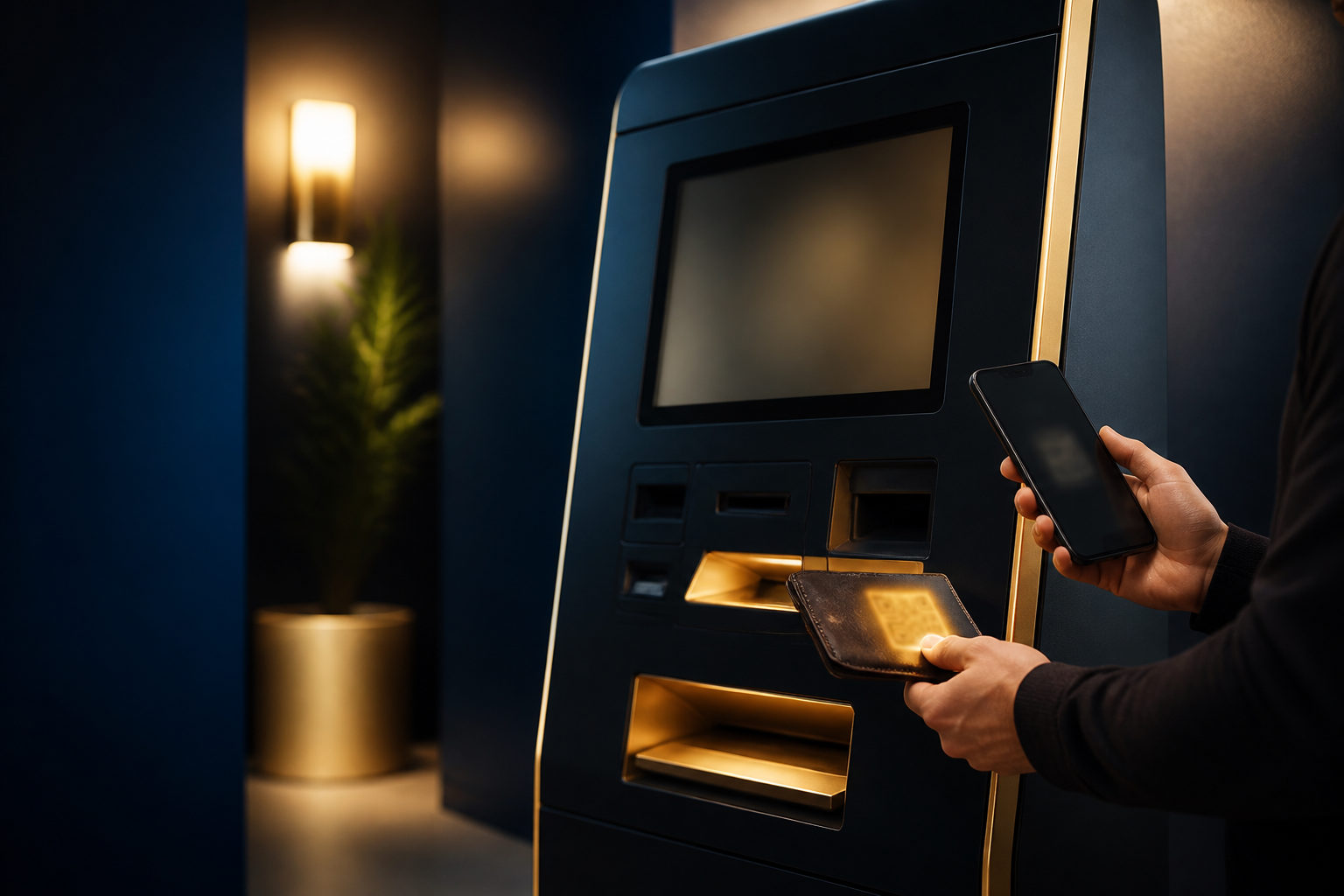
To use a bitcoin ATM, first prepare your wallet, confirm the machine’s fees and identity checks, then follow the on-screen steps without letting anyone direct the transfer.
What a bitcoin ATM actually does
A bitcoin ATM usually lets you buy bitcoin with cash or, in some cases, sell bitcoin for cash. It looks familiar if you have used a regular ATM before, but the function is different: it helps convert between fiat money and on-chain bitcoin rather than accessing a bank balance.
That difference matters. A bank ATM deals with reversible account services in some cases, while bitcoin transactions often cannot be undone once they are sent, so every screen deserves more attention.
What to prepare before you start
Have your own wallet ready
If you plan to buy bitcoin, you normally need a wallet that can receive it. Preparing that wallet in advance reduces pressure at the machine and lowers the chance of scanning the wrong QR code or using an address you do not control.
Make sure you can open the wallet on your own device and identify the receiving address clearly. Your recovery phrase is not needed for a bitcoin ATM transaction, and nobody from support, law enforcement, or an investment group should ever ask for it.
Know whether you are buying or selling
People often search for how to use bitcoin ATM machines without realizing there are two very different flows. Buying usually means scanning your receiving address and paying cash; selling usually means sending bitcoin from your wallet to an address shown by the machine and then collecting cash under the stated conditions.
The risk changes with the direction. A buyer can lose funds by using the wrong address, while a seller can make mistakes by misunderstanding when cash becomes available.
Read the fee display carefully
Bitcoin ATMs are built for convenience, and that convenience often comes with higher costs. Before you continue, check the displayed exchange rate, any service fee, and whether the network fee is already included or treated separately.
This step is easy to skip when the line is moving or someone is waiting behind you. Do not rush. The most common regret is not that the machine failed, but that the user did not understand how much bitcoin would actually arrive.
Be ready for identity verification
Some machines ask for a phone number, ID scan, or selfie. Others ask for much less. The operator’s compliance rules, the transaction direction, and the amount involved can all affect what the machine requests.
If a machine asks for information in a way that seems unclear or excessive, stop and review the prompts. You should understand what you are submitting before you proceed.
Step-by-step: how to use a bitcoin ATM to buy bitcoin
Step 1: Check the machine and your surroundings
Look at the screen, the machine body, and the area around you before you begin. The reason is simple: in-person crypto transactions attract scammers who may watch your screen, pretend to help, or pressure you into sending bitcoin to a wallet they control.
Do not hand your phone to a stranger. Do not let anyone tap through the menu for you. If the machine appears altered, damaged, or covered with suspicious instructions, leave and find another one.
Step 2: Choose the buy option and read each prompt
Select the option to buy bitcoin, then read the rules shown on the screen. Pay attention to limits, fees, expected delivery method, and whether the transaction can be canceled before submission.
This is also where many users learn how bitcoin ATMs work in practice: the machine is guiding a payment flow and pairing it with a blockchain transfer. Once that transfer is submitted, there is usually no easy reversal.
Step 3: Complete the required verification
If the machine asks for phone verification or ID information, follow the official interface only. The reason for this step is usually regulatory compliance, and skipping it may block the transaction entirely.
Protect your privacy while you do it. Shield your screen from bystanders, keep verification codes to yourself, and make sure you are still inside the machine’s real workflow rather than following a phone caller’s instructions.
Step 4: Scan your wallet’s receiving QR code
Open your wallet and display your bitcoin receiving QR code. Scanning is safer than typing a long address by hand, which reduces the chance of a costly mistake.
After the scan, pause and compare the first and last part of the address shown on the machine with the address in your wallet. This matters because many fraud cases start with a victim being told to use a different QR code provided by a fake seller, fake support agent, or supposed investment coach.
Step 5: Insert cash or use the supported payment method
Follow the machine’s instructions to add funds. Many machines show an estimated bitcoin amount as you proceed, which gives you a chance to confirm that the numbers on screen match the stated fee structure.
Never continue just because someone says you must act fast. If you are buying bitcoin to pay a stranger for account recovery, a frozen balance, a tax release, a deposit, or a guaranteed return, stop immediately.
Step 6: Confirm the transaction and keep the receipt
Review the receiving address, the fees, and the amount one more time before you submit. After the transaction, keep any printed receipt or reference number shown on the screen.
The receipt matters if the transfer is delayed or if you need to contact the operator. Before you walk away, check whether your wallet shows the incoming transaction as pending.
What changes when you sell bitcoin at a bitcoin ATM
Selling follows the opposite direction, but it requires the same care. In many cases, you enter the amount to sell, receive a QR code or address from the machine, then send bitcoin from your own wallet to that destination.
The key point is not speed. The key point is understanding when cash is released. Some machines pay right away, while others wait for blockchain confirmation before dispensing cash or issuing a redemption code.
- Send bitcoin only from a wallet you control.
- Double-check the destination address shown by the machine.
- Read the cash withdrawal instructions before sending anything.
- Stop if the process suddenly introduces a second, unrelated address.
Common scams and how to avoid them
The machine itself is only a tool. The scam usually happens before you reach it. A fraudster may call, text, message you on social media, or pose as customer support, then instruct you to visit a bitcoin ATM and follow step-by-step directions while staying on the line.
That is the red flag. Real government offices, real banks, and real support teams do not ask people to settle fees, unlock accounts, or protect funds by sending bitcoin through an ATM.
- Do not stay on a call while using the machine. End the conversation before making a decision.
- Do not send bitcoin on a promise that it will be returned. On-chain transfers are usually final.
- Do not reveal your recovery phrase or private keys. A bitcoin ATM never needs them.
- Do not trust urgency. Pressure is one of the oldest scam tools.
FAQ
How do bitcoin ATMs work in simple terms?
A bitcoin ATM connects a payment step with a blockchain transfer. You either pay the machine and receive bitcoin in your wallet, or you send bitcoin to the machine’s specified address and receive cash under its payout rules.
Do I need a wallet before using a bitcoin ATM?
In most cases, yes, especially if you want to control your own bitcoin after the purchase. Having your own wallet also makes it easier to verify the receiving address before you confirm the transaction.
How is a bitcoin ATM different from a regular ATM?
A regular ATM is tied to bank account services, while a bitcoin ATM is used to buy or sell bitcoin. The screen may feel familiar, but the transaction logic, fee structure, and risk profile are different.
Why does a bitcoin ATM ask for ID or phone verification?
Operators may require verification as part of local compliance procedures. The exact checks vary by machine and transaction type, which is why reading the prompts carefully matters.
What should I do if my bitcoin does not arrive?
First, check whether your wallet shows the transaction as pending. Then compare the address and reference details with your receipt, and contact the operator with only the necessary information, never with your recovery phrase or private keys.
If this is your first time, the safest move is to start with a small test transaction that you can afford, confirm the wallet address and receipt process, and only then decide whether to continue.
Disclaimer: This article is for informational and educational purposes only and is not investment, financial, or legal advice. Crypto assets are highly volatile and you could lose your entire investment. Do your own research and decide carefully.