
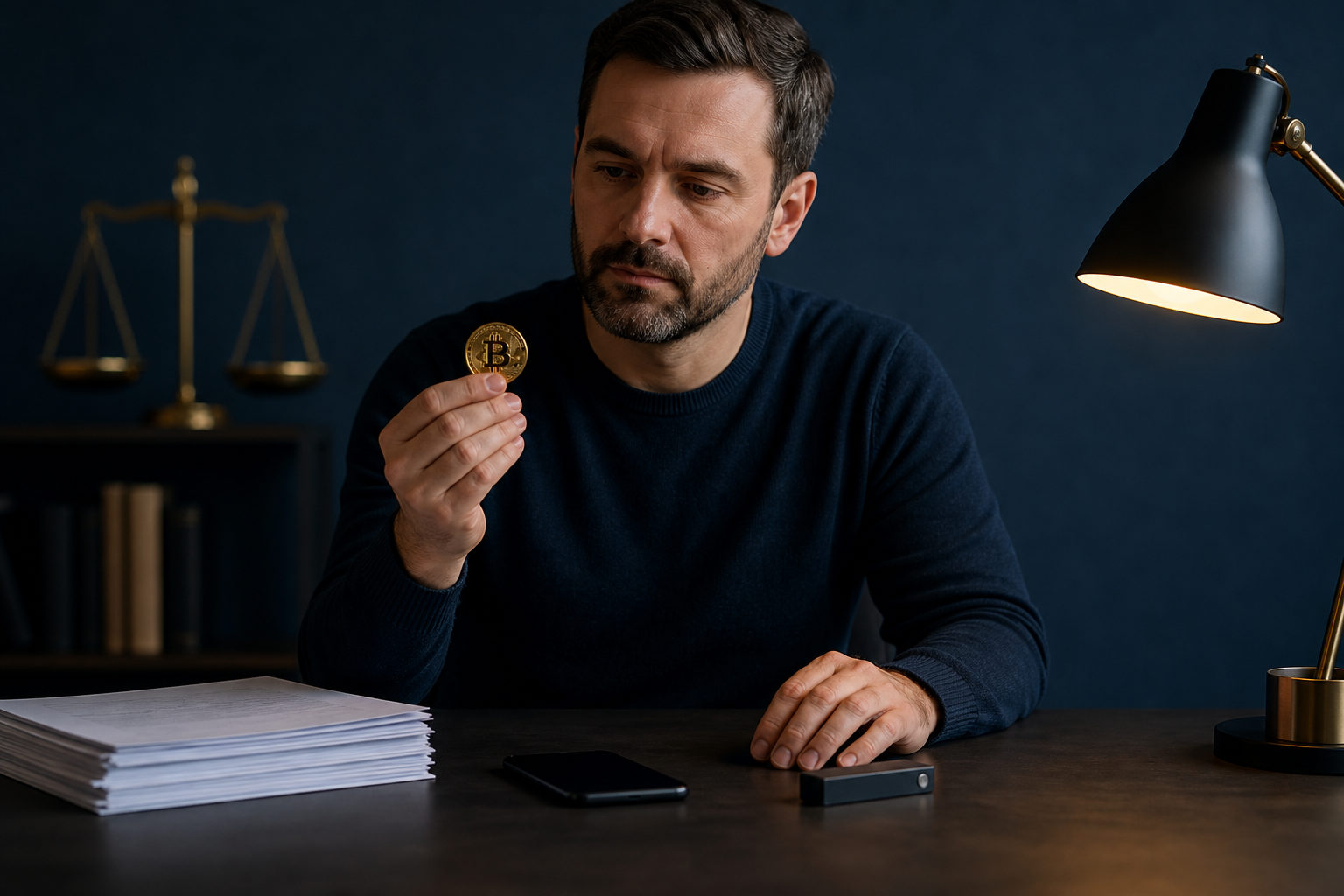
How to invest in bitcoin starts with a simple rule: set your risk framework before you place a buy order. That means knowing why you want exposure, how much you can afford to allocate, where you will buy, and how you will store the asset after purchase.
Understand what you are investing in
Bitcoin is a digital asset that runs on a blockchain network with a capped supply of 21 million coins. Its white paper, Bitcoin: A Peer-to-Peer Electronic Cash System, was published in 2008 by the pseudonymous Satoshi Nakamoto, and the genesis block appeared in January 2009.
That background matters because bitcoin does not behave like a bank deposit, and it is not a claim on company earnings. When you invest in bitcoin, you are holding an asset defined by scarcity, transferability, and network-based verification, while accepting sharp price swings and a different model of custody.
How to invest in bitcoin step by step
For most beginners, the process is less about finding the perfect entry and more about putting the right sequence in place. A clean setup reduces avoidable mistakes.
Start with your purpose
Some buyers want a small long-term allocation. Others just want hands-on exposure so they can learn how bitcoin works. Those are different goals, and they lead to different choices on position size, holding period, and what kind of volatility feels acceptable.
Choose a platform carefully
A common route is to buy BTC through a cryptocurrency trading platform. When comparing options, look at account security tools, fee disclosure, deposit and withdrawal rules, and whether the platform lets you move bitcoin to an external wallet without unnecessary friction. Ease of use helps, but clear operating rules matter more.
Secure the account before funding it
Strong passwords, two-factor authentication, a dedicated email account, and clean devices are basic protections, not extras. A lot of risk comes from phishing pages, reused credentials, and unsafe downloads rather than from bitcoin itself.
Decide where the bitcoin will live
After buying, you can leave the asset with the platform or transfer it to a wallet you control. Keeping it on-platform is simpler and may suit active traders or people still learning. Moving it to self-custody gives you direct control, but it also means you are responsible for backup, recovery, and transaction accuracy.
Why people invest in bitcoin, and what that does not mean
People asking why invest in bitcoin usually point to a few recurring ideas: fixed supply, independence from any single issuer, and the ability to transfer value on an open network. Those features help explain the interest, but they do not remove risk.
Bitcoin can be volatile for long stretches. That is why position sizing matters so much. A sensible allocation is one that does not force you to change your daily life, raid emergency funds, or react to every market move as if it were a crisis.
Time horizon also changes the experience. Someone treating bitcoin as a short-term trade will focus on entries and exits. Someone building a long-term position may care more about custody, discipline, and whether the allocation still fits the rest of the portfolio.
Self-custody is powerful, but it comes with real responsibility
The Bitcoin network produces a block about every 10 minutes, and control of coins comes down to private keys. Self-custody means you hold those keys, or the recovery phrase that gives access to them, instead of relying on a platform to do it for you.
The upside is straightforward: your access to the asset does not depend entirely on a third party. The downside is just as direct. If your recovery phrase is exposed, lost, or recorded incorrectly, there may be no practical way to reverse the damage.
For beginners, the smart move is usually to learn the mechanics first. Understand wallet types, backup methods, and recovery steps. Then test small transfers so you know how receiving and sending actually work. Reading about custody is useful; doing it once with care is better.
Common investing mistakes to avoid
| Mistake | What matters more |
|---|---|
| Focusing only on the buy price | Set allocation, holding plan, and exit rules first |
| Treating the purchase as the end of the process | Custody and account security stay important after the order fills |
| Copying someone else’s conviction | Your position should match your own risk tolerance |
| Assuming platform custody is risk-free | Convenience does not remove third-party risk |
| Assuming self-custody is automatically safer | Control increases, but operational responsibility does too |
FAQ
What is the safest way to start investing in bitcoin?
Use money you can afford to leave exposed to volatility, choose a platform with clear rules, and secure the account before depositing funds. Keep the first steps simple and focus on process rather than speed.
How do you invest in bitcoin without taking unnecessary risk?
The main tools are position sizing, a realistic time horizon, and a custody plan you actually understand. Most avoidable mistakes happen when people skip one of those three.
How can I invest in bitcoin if I am a complete beginner?
Start small, learn the platform interface, and understand the difference between platform custody and self-custody before moving larger amounts. You do not need a complex setup on day one, but you do need clear rules.
Do I need my own wallet to invest in bitcoin?
No. Some investors keep BTC on a platform, especially when they are new or trade more often. Others prefer self-custody for direct control. The better choice is the one whose risks you understand and can manage.
Where should I check the live bitcoin price?
You can check BTC prices on major cryptocurrency exchanges and market data sites. When you compare platforms, do not look at the headline price alone; review spreads, fees, and withdrawal rules as well.
If you want a practical starting point, write down your maximum allocation, your custody choice, and the condition under which you would stop adding to the position. Those decisions do more to shape results than chasing the next move.
Disclaimer: This article is for informational and educational purposes only and is not investment, financial, or legal advice. Crypto assets are highly volatile and you could lose your entire investment. Do your own research and decide carefully.